
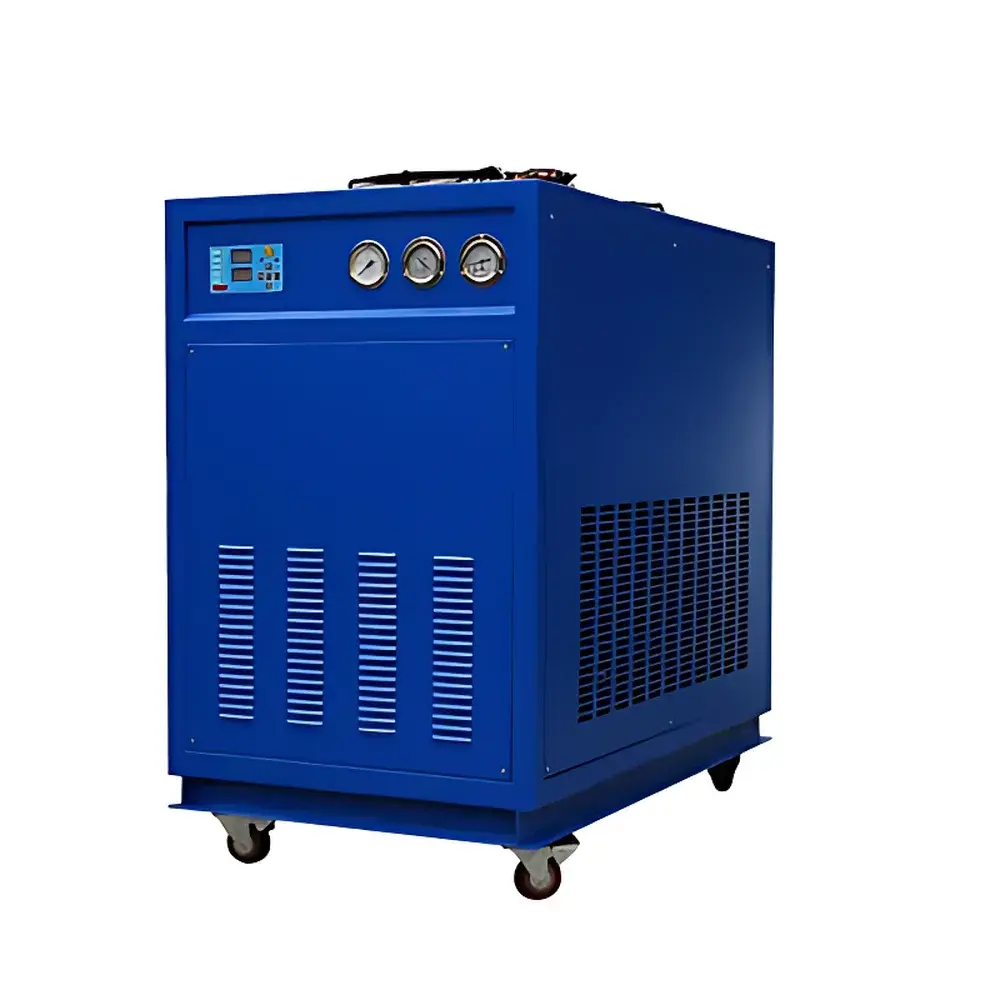
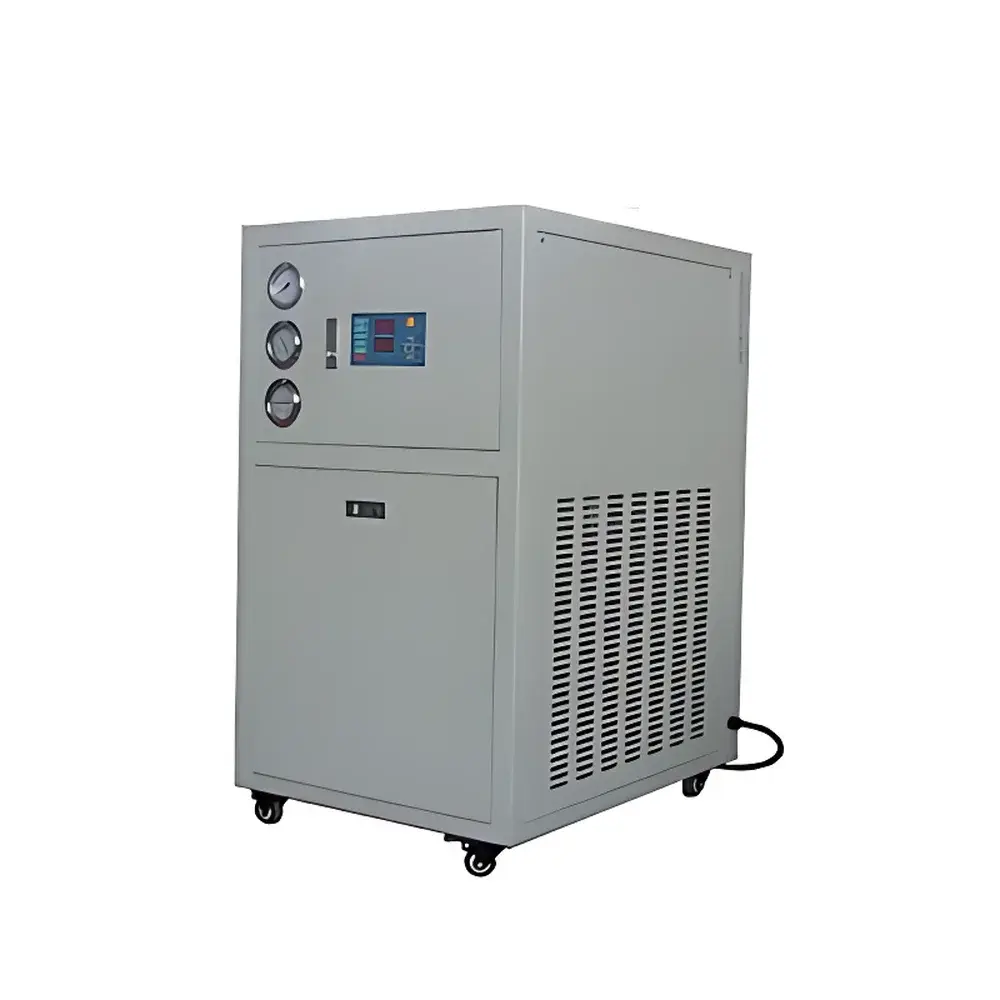
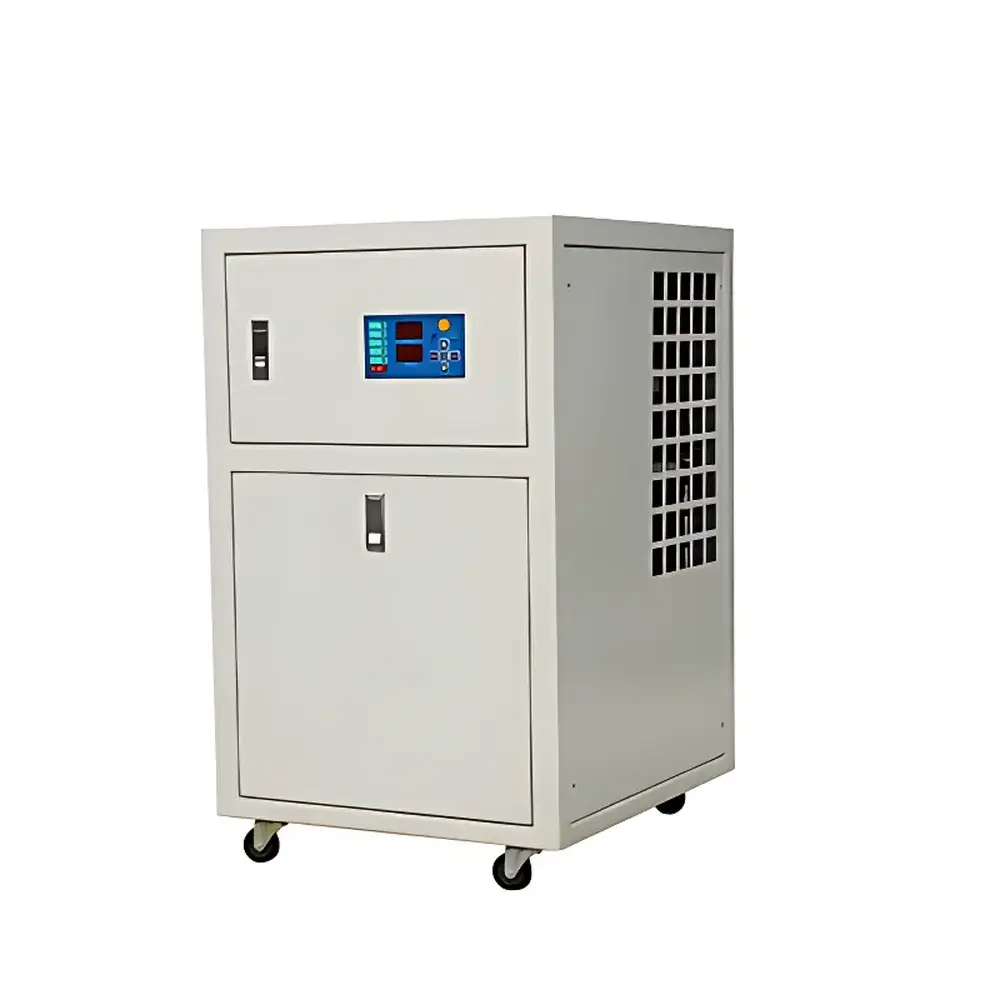
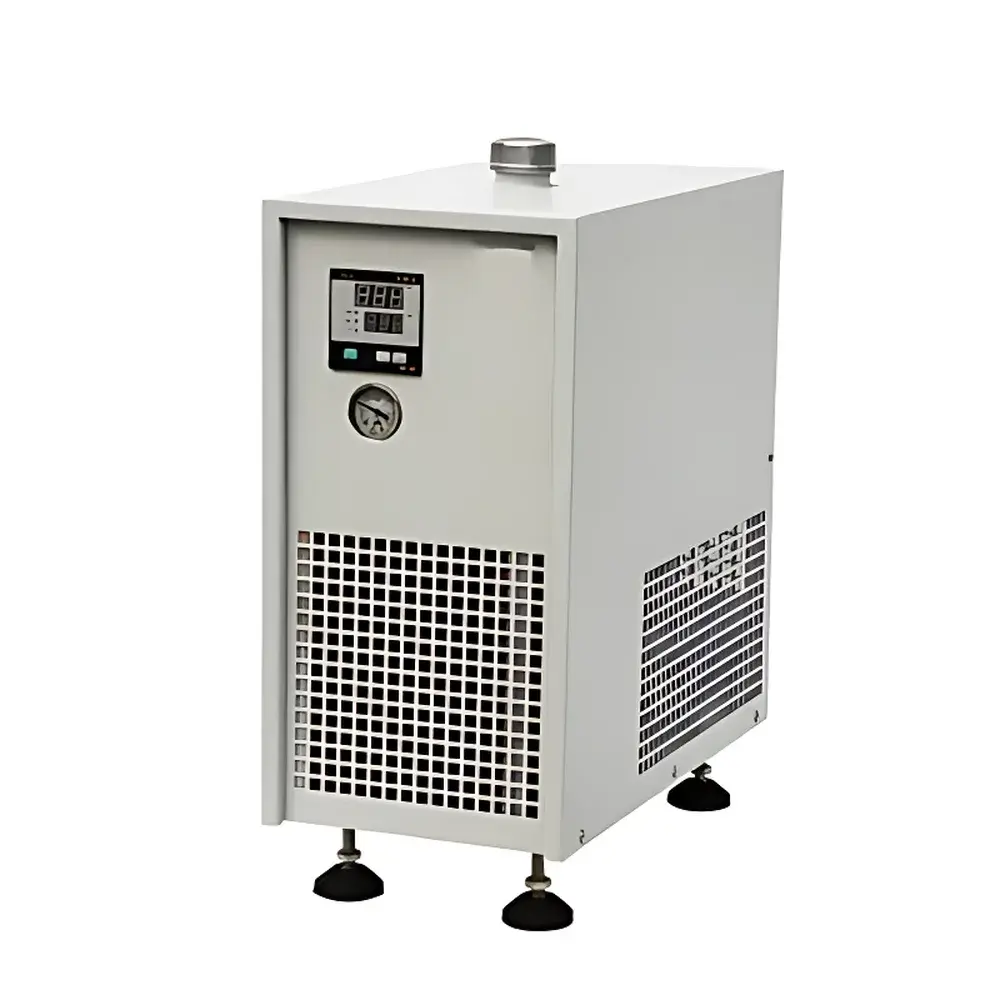
Tianfeng LS-12000W Integrated Circulating Chiller
| Brand | Tianfeng |
|---|---|
| Origin | Shanghai, China |
| Manufacturer Type | Direct Manufacturer |
| Product Category | Domestic |
| Model | Tianfeng-LS-12000W |
| Instrument Type | Integrated Unit |
| Cooling Method | Water-Cooled |
| Temperature Control Range | 0–10 °C |
| Cooling Capacity | 12 kW |
| Temperature Stability | ±0.1 °C |
| Circulation Pump Pressure | 2.0 bar |
| Circulation Flow Rate | 2 L/min |
| Reservoir Volume | 85 L |
| Operating Mode | Continuous Duty |
| Power Input | 5.1 kW |
| Electrical Supply | 220 V, 50 Hz |
| Safety Protections | Compressor Overheat Protection, Overcurrent Protection, High/Low Pressure Switches, Overtemperature Cut-off |
| Dimensions (L×W×H) | 1200 × 715 × 1105 mm |
| Noise Level | Low |
| Construction | Stainless Steel Reservoir & Pump |
| Compressor | Scroll Type |
| Control System | Digital PID Temperature Controller (Optional RKC Controller Available) |
| Key Components | Imported Expansion Valve (Italy/Germany), Solenoid Valves, Siemens/Schneider/Omron Electrical Components |
Overview
The Tianfeng LS-12000W Integrated Circulating Chiller is a precision-engineered, water-cooled thermal management system designed for stable, continuous-duty operation in demanding laboratory and industrial environments. It operates on the vapor-compression refrigeration cycle, utilizing a high-efficiency scroll compressor, thermostatically regulated expansion valve, and optimized heat exchanger geometry to deliver consistent cooling performance across variable thermal loads. Unlike air-cooled units, this chiller employs an external water source—typically a facility cooling tower or centralized chilled water loop—to reject condenser heat, enabling higher thermodynamic efficiency and lower ambient noise emission. Its core function is to maintain a tightly controlled coolant temperature (0–10 °C) with ±0.1 °C stability while delivering a calibrated flow of 2 L/min at up to 2.0 bar pressure—critical parameters for sustaining optimal operating conditions in sensitive analytical instrumentation.
Key Features
- Integrated architecture with compact footprint (1200 × 715 × 1105 mm), facilitating installation in space-constrained laboratories or equipment enclosures.
- Stainless steel reservoir (85 L capacity) and circulation pump ensure corrosion resistance, long-term fluid integrity, and compatibility with deionized or inhibited coolant formulations.
- Digital PID temperature controller with real-time display provides precise setpoint adjustment and closed-loop feedback regulation; optional RKC controller available for enhanced repeatability and protocol-based ramp/soak profiles.
- Comprehensive safety architecture including compressor overheat protection, high/low refrigerant pressure cutoffs, overcurrent detection, and independent overtemperature alarm—fully compliant with IEC 61000-6-2/6-4 electromagnetic compatibility standards.
- Low-noise scroll compressor and vibration-damped mounting minimize acoustic interference in acoustically sensitive lab environments such as electron microscopy suites or low-vibration optical labs.
- Continuous-duty rating supports uninterrupted operation over extended periods—validated for >8,000 hours mean time between failures (MTBF) under nominal load conditions.
Sample Compatibility & Compliance
The LS-12000W is engineered to serve as a primary coolant source for high-heat-flux laboratory instruments requiring stable thermal management—including graphite furnace atomic absorption spectrometers (GFAAS), inductively coupled plasma optical emission spectrometers (ICP-OES), inductively coupled plasma mass spectrometers (ICP-MS), X-ray fluorescence (XRF) analyzers, X-ray diffractometers (XRD), scanning electron microscopes (SEM), and transmission electron microscopes (TEM). Its 0–10 °C operating range aligns with manufacturer-specified coolant inlet requirements for most high-end vacuum and plasma systems. The unit complies with ISO 9001:2015 quality management system standards and meets CE marking requirements for electrical safety (EN 61000-6-2, EN 61000-6-4) and mechanical safety (EN ISO 12100). While not inherently 21 CFR Part 11–compliant, its digital controller supports audit-trail-capable data logging when integrated with validated third-party SCADA or LIMS platforms per GLP/GMP documentation workflows.
Software & Data Management
The standard control interface provides local setpoint configuration, real-time temperature/pressure readouts, and fault-code diagnostics via a backlit LCD panel. For networked deployment, optional RS-485 Modbus RTU or Ethernet TCP/IP interfaces enable integration into centralized building management systems (BMS) or laboratory information management systems (LIMS). Logged operational data—including inlet/outlet temperatures, runtime hours, compressor cycles, and alarm history—can be exported in CSV format for trend analysis and preventive maintenance scheduling. When paired with validated software modules, the chiller supports electronic signature capture, user access level management, and change-control logging—key prerequisites for FDA-regulated QC/QA environments operating under 21 CFR Part 11 Annex 11 guidelines.
Applications
Beyond analytical instrumentation support, the LS-12000W serves critical thermal regulation roles across multiple domains: in semiconductor fabrication, it stabilizes laser diode junction temperatures during photolithography alignment; in materials science, it maintains constant bath temperature for differential scanning calorimetry (DSC) and dynamic mechanical analysis (DMA) sample stages; in pharmaceutical development, it controls jacketed reactor temperatures during lyophilization process validation; and in precision machining labs, it regulates spindle oil temperature to mitigate thermal drift in coordinate measuring machines (CMMs) and ultra-precision lathes. Its ability to sustain sub-ambient coolant delivery with minimal temperature hysteresis makes it suitable for applications where thermal-induced measurement drift must remain below ±0.05 °C/hour.
FAQ
What is the recommended maximum return water temperature for safe operation?
The chiller is rated for continuous operation with return coolant temperatures ≤40 °C. Exceeding this threshold increases condensing pressure, accelerating compressor wear and reducing system efficiency.
Can this unit be integrated into a facility’s central cooling water infrastructure?
Yes—the water-cooled condenser is designed for connection to municipal or tower-supplied cooling water within 25–35 °C inlet temperature range and ≥1.5 bar supply pressure.
Is remote monitoring and control supported out of the box?
Standard configuration includes local HMI only; RS-485 Modbus or Ethernet communication modules are optional accessories requiring factory configuration.
Does the stainless steel reservoir meet USP Class VI or ASTM F899 biocompatibility requirements?
The 304 stainless steel construction conforms to ASTM A240 and is widely accepted for non-sterile coolant circuits; however, full USP Class VI certification requires end-user validation under specific fluid contact protocols.
What maintenance intervals are recommended for optimal longevity?
Compressor oil analysis every 4,000 hours, refrigerant charge verification annually, and condenser coil inspection quarterly—per ASHRAE Guideline 0-2019 for HVAC&R equipment reliability assurance.



