
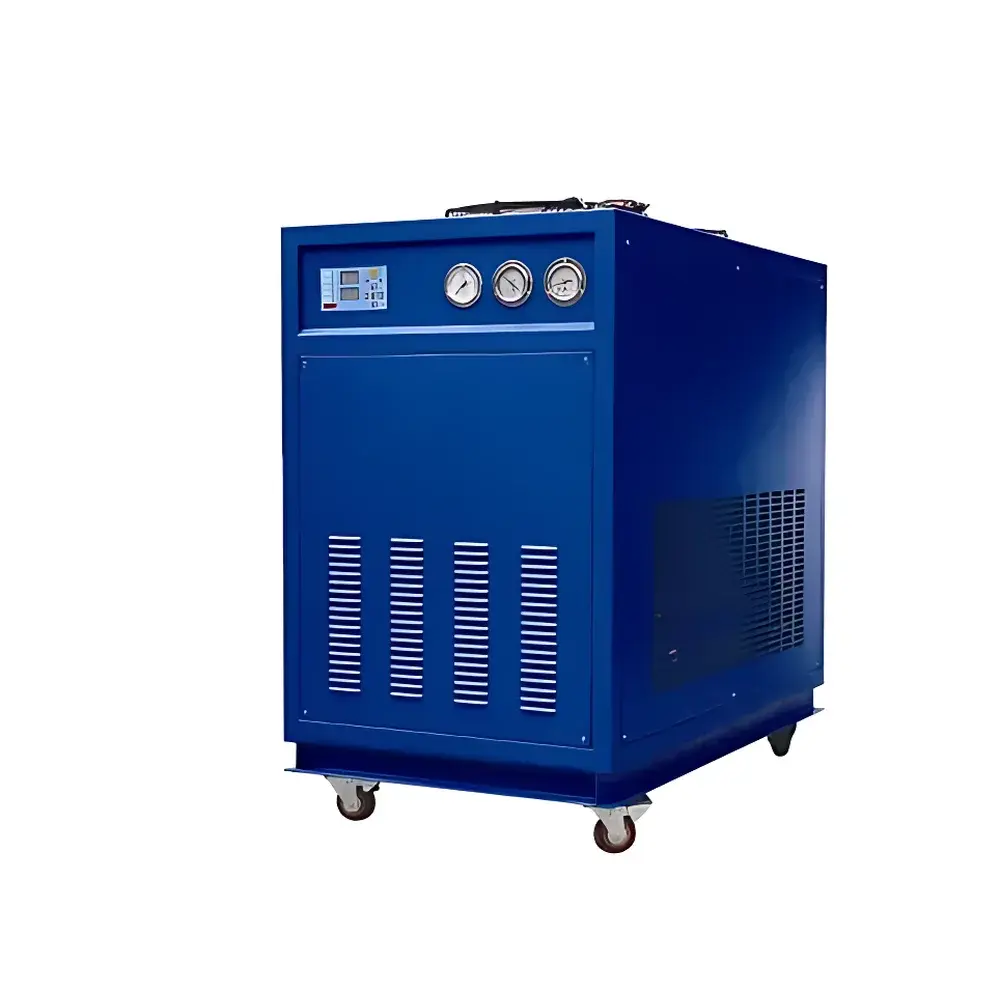
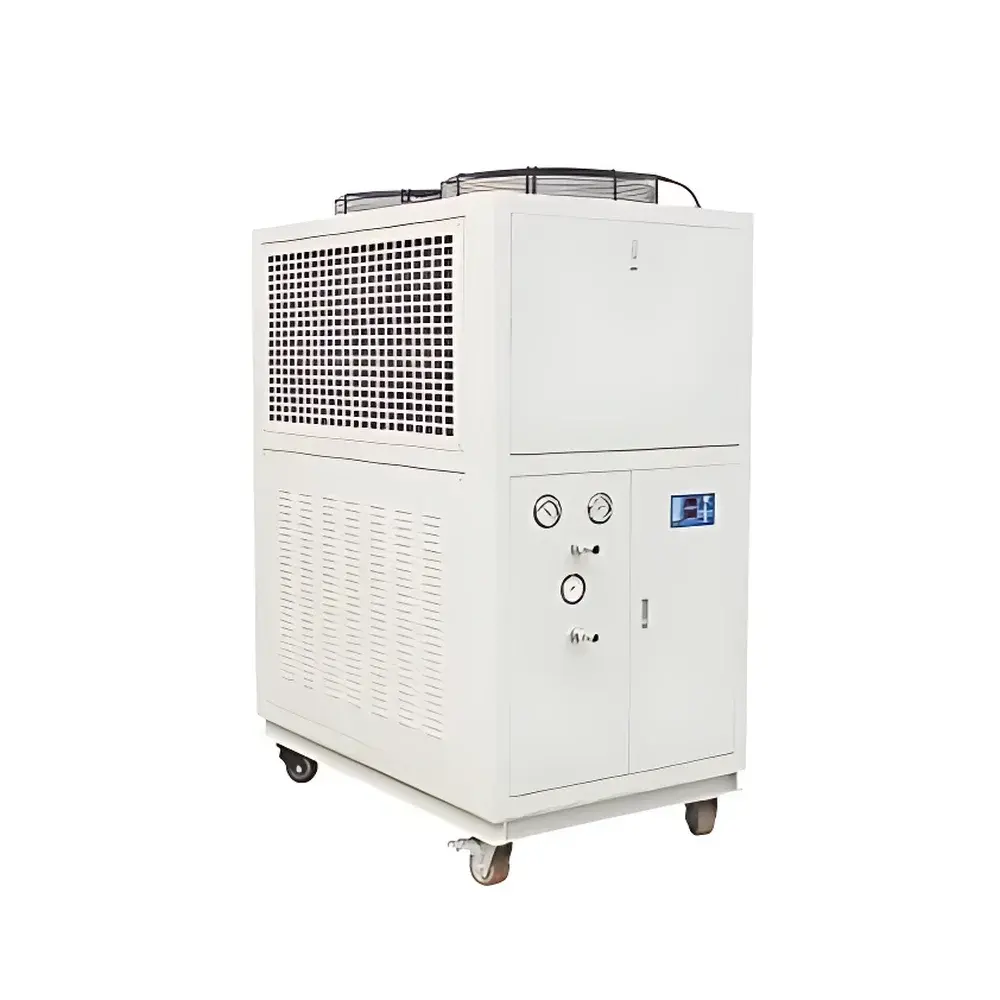
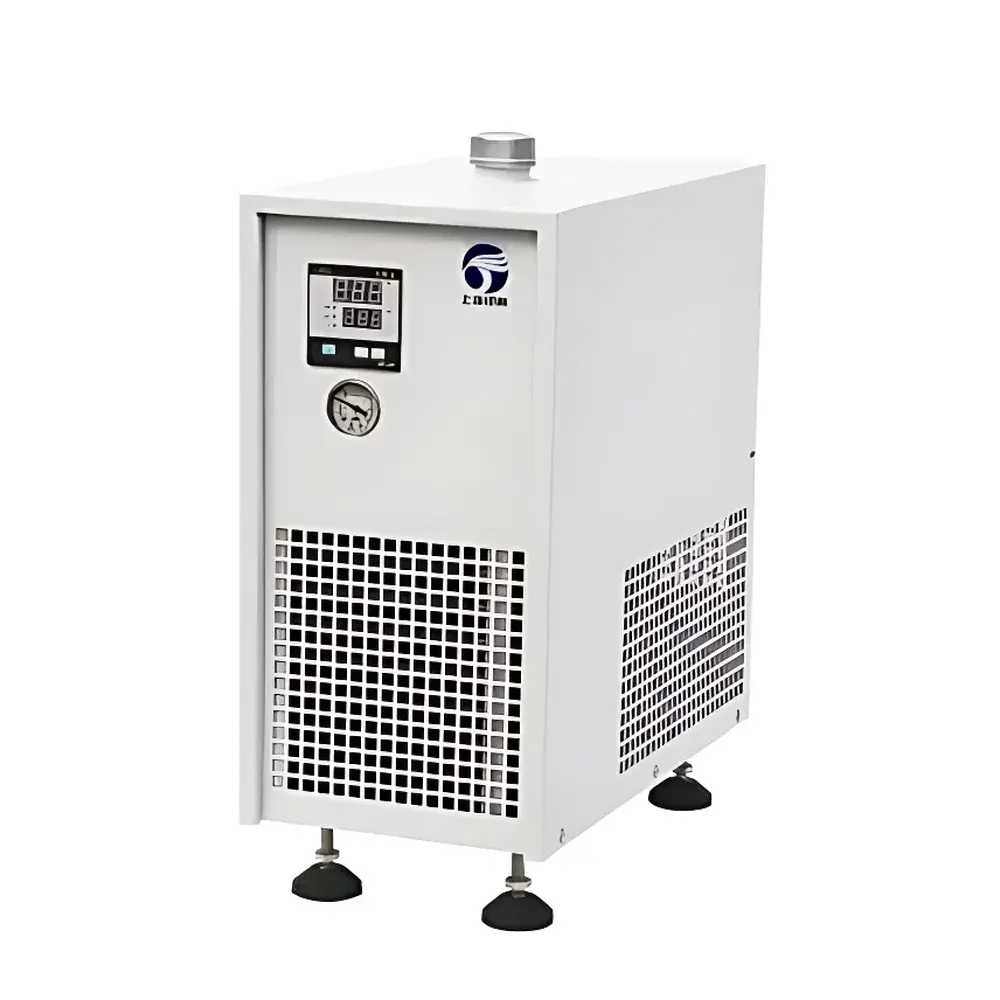
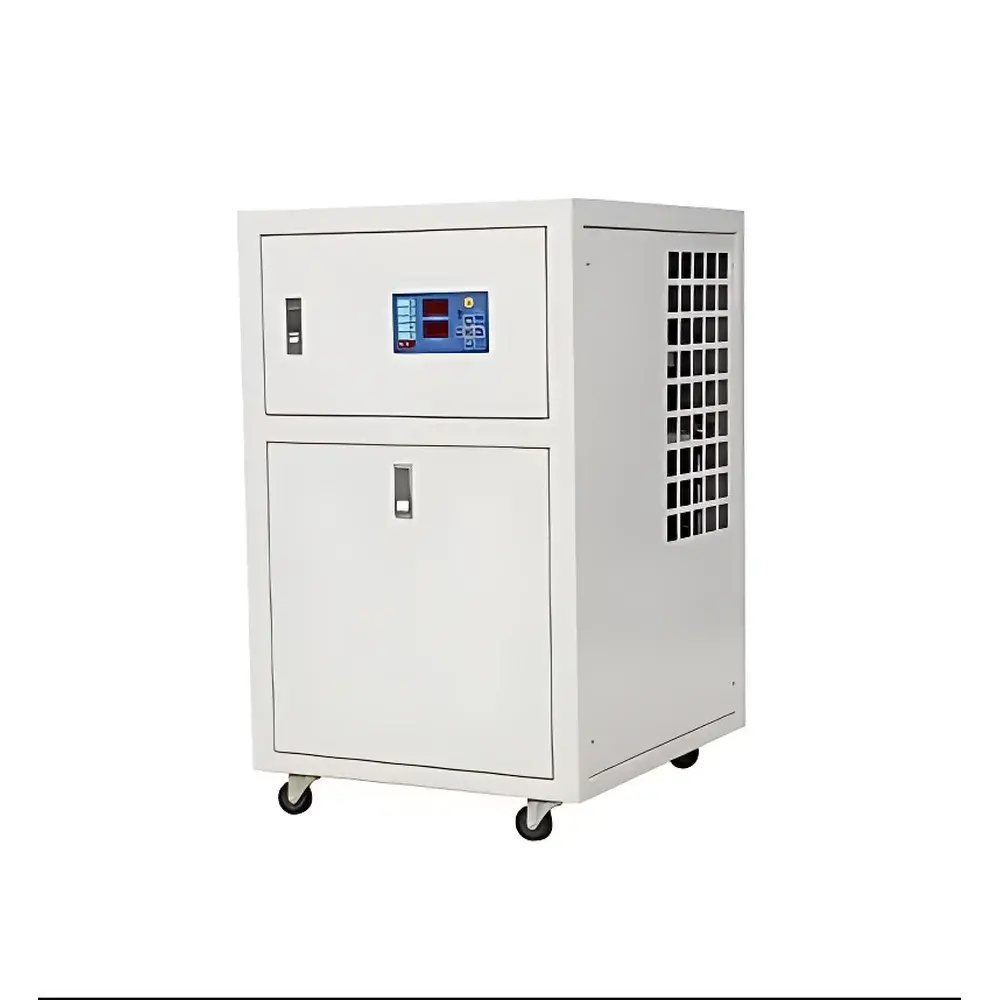
Tianfeng LS-2.33 Compact Laser Circulating Chiller
| Brand | Tianfeng |
|---|---|
| Origin | Shanghai, China |
| Manufacturer Type | Direct Manufacturer |
| Instrument Type | Integrated Circulating Chiller |
| Cooling Method | Water-Cooled |
| Refrigeration Capacity | 7.38 kW (6346.8 kcal/h) |
| Temperature Stability | ±0.1°C (typical at setpoint) |
| Pump Pressure Range | 0–2 kgf/cm² |
| Pump Flow Rate | 0–60 L/min |
| Reservoir Volume | 45 L |
| Operating Temperature Range | 5–30°C (chilled water outlet) |
| Power Supply | 220 V, 50 Hz |
| Compressor | Scroll-type, imported high-efficiency unit |
| Safety Protections | Compressor overheat, overcurrent, high/low pressure, and overtemperature protection |
| Dimensions (L×W×H) | 800 × 600 × 1065 mm |
| Noise Level | ≤65 dB(A) |
| Construction | Stainless steel reservoir and pump housing |
| Control System | Digital PID temperature controller (standard Chinese OEM |
| Compliance | ISO 9001:2000 certified design and manufacturing process |
Overview
The Tianfeng LS-2.33 Compact Laser Circulating Chiller is an integrated, water-cooled precision temperature control system engineered for stable thermal management of high-heat-load laboratory and industrial equipment. Based on the principle of vapor-compression refrigeration—utilizing a scroll compressor, thermostatic expansion valve, and forced-convection condenser—the chiller delivers consistent chilled water output within a controlled range of 5–30°C, with typical temperature stability of ±0.1°C at steady state. Its compact footprint (800 × 600 × 1065 mm) and integrated architecture make it suitable for space-constrained environments such as analytical instrument rooms, laser laboratories, and pilot-scale manufacturing cells. Designed to meet the demanding thermal requirements of sensitive optoelectronic and vacuum-based instrumentation, the LS-2.33 ensures minimal thermal drift during extended operation—critical for maintaining signal integrity in techniques including X-ray diffraction (XRD), scanning electron microscopy (SEM), and inductively coupled plasma mass spectrometry (ICP-MS).
Key Features
- High-efficiency scroll compressor with low-vibration operation and extended service life under continuous duty cycles
- Stainless steel reservoir and circulation pump housing for corrosion resistance and long-term fluid compatibility with deionized water or inhibited glycol mixtures
- Digital PID temperature controller with real-time display of outlet water temperature, adjustable setpoint resolution of 0.1°C, and programmable ramp/soak profiles
- Integrated safety suite: compressor overheat protection, high/low refrigerant pressure cutoffs, motor overcurrent detection, and outlet temperature overlimit alarm
- Adjustable flow rate (0–60 L/min) and pressure (0–2 kgf/cm²) via calibrated bypass valve and centrifugal pump with ceramic shaft seal
- Low-noise design (<65 dB[A] at 1 m) achieved through acoustic insulation of compressor compartment and vibration-dampened mounting
- Modular electrical architecture using CE-certified components from Siemens, Schneider Electric, and Omron for reliability and traceability
- Compliance with ISO 9001:2000 quality management standards across design, production, and final functional testing
Sample Compatibility & Compliance
The LS-2.33 is compatible with a broad spectrum of heat-generating laboratory and industrial equipment requiring precise coolant temperature regulation. Validated applications include graphite furnace atomic absorption spectrometers (GFAAS), ICP-OES and ICP-MS plasma sources, XRF and XRD goniometers, SEM/TEM column cooling circuits, laser marking/cutting/welding systems (CO₂, fiber, and UV), and high-speed CNC spindles. The unit operates exclusively with clean, low-conductivity coolant (e.g., deionized water or 20–30% propylene glycol solution); direct connection to municipal water supply is not supported. All wetted materials—including reservoir, pump head, and tubing connections—are electropolished 304 stainless steel, compliant with USP Class VI and FDA-recommended material contact standards for non-sterile laboratory use. While not certified to UL 61010-1 or EN 61000-6-3 out-of-the-box, the chiller’s electromagnetic compatibility (EMC) profile meets basic industrial emission limits per CISPR 11 Group 2, Class A.
Software & Data Management
The LS-2.33 operates as a standalone analog-controlled system with no embedded firmware, cloud connectivity, or proprietary software interface. Temperature setpoints and operational status are managed exclusively via front-panel membrane keypad and dual-line LCD. For integration into GLP/GMP environments, analog 4–20 mA output signals (optional) can be configured for remote temperature monitoring and logging via external SCADA or LIMS platforms. All safety interlocks generate dry-contact fault signals for hardwired integration into facility-wide emergency shutdown sequences. Audit trail functionality is not natively provided; however, when paired with validated third-party data loggers (e.g., Omega OM-DAQPRO-5300 series), the unit supports 21 CFR Part 11–compliant temperature recordkeeping when deployed with appropriate procedural controls and electronic signature workflows.
Applications
- Laboratory instrumentation: Stabilization of plasma torches in ICP systems, detector cooling in XRF/XRD, and thermal management of electron optical columns in SEM/TEM
- Laser systems: Active cooling of CO₂, Nd:YAG, fiber, and ultrafast lasers to maintain wavelength stability and beam quality
- Materials processing: Mold temperature control in precision injection molding, die cooling in metal additive manufacturing support structures
- Mechanical engineering: Hydraulic oil temperature regulation in CNC machining centers to minimize thermal growth-induced dimensional error
- Vacuum technology: Condenser cooling for turbomolecular pumps and cryopanels in high-vacuum deposition systems
- Pharmaceutical R&D: Controlled cooling of jacketed reactors and chromatography column ovens during method development
FAQ
What is the maximum allowable inlet water temperature for the condenser side?
The unit is rated for ambient cooling water inlet temperatures up to 35°C. Sustained inlet temperatures above 40°C significantly reduce refrigeration efficiency and may trigger high-pressure cutout protection.
Can this chiller operate continuously for 24/7 laboratory duty cycles?
Yes—the scroll compressor and sealed bearing pump are rated for uninterrupted operation at full load, provided ambient conditions remain within specification (10–35°C, <80% RH) and routine maintenance (filter cleaning, refrigerant charge verification) is performed per manufacturer guidelines.
Is the reservoir volume sufficient for integration with large-volume external loops?
With a 45 L internal reservoir and 60 L/min max flow, the LS-2.33 is optimized for closed-loop systems with total circuit volumes under 120 L. For larger secondary loops, an external expansion tank and flow-balancing valve are recommended.
Does the unit support remote start/stop or alarm signaling?
Standard configuration includes dry-contact fault outputs (compressor trip, overtemp, flow loss) and optional 4–20 mA temperature output. Modbus RTU or Ethernet/IP interfaces are not available.
What coolant types are approved for use?
Deionized water (resistivity ≥1 MΩ·cm) or aqueous solutions containing ≤30% USP-grade propylene glycol. Ethylene glycol, alcohol-based coolants, and tap water are prohibited due to corrosion and scaling risks.
Related Products



