
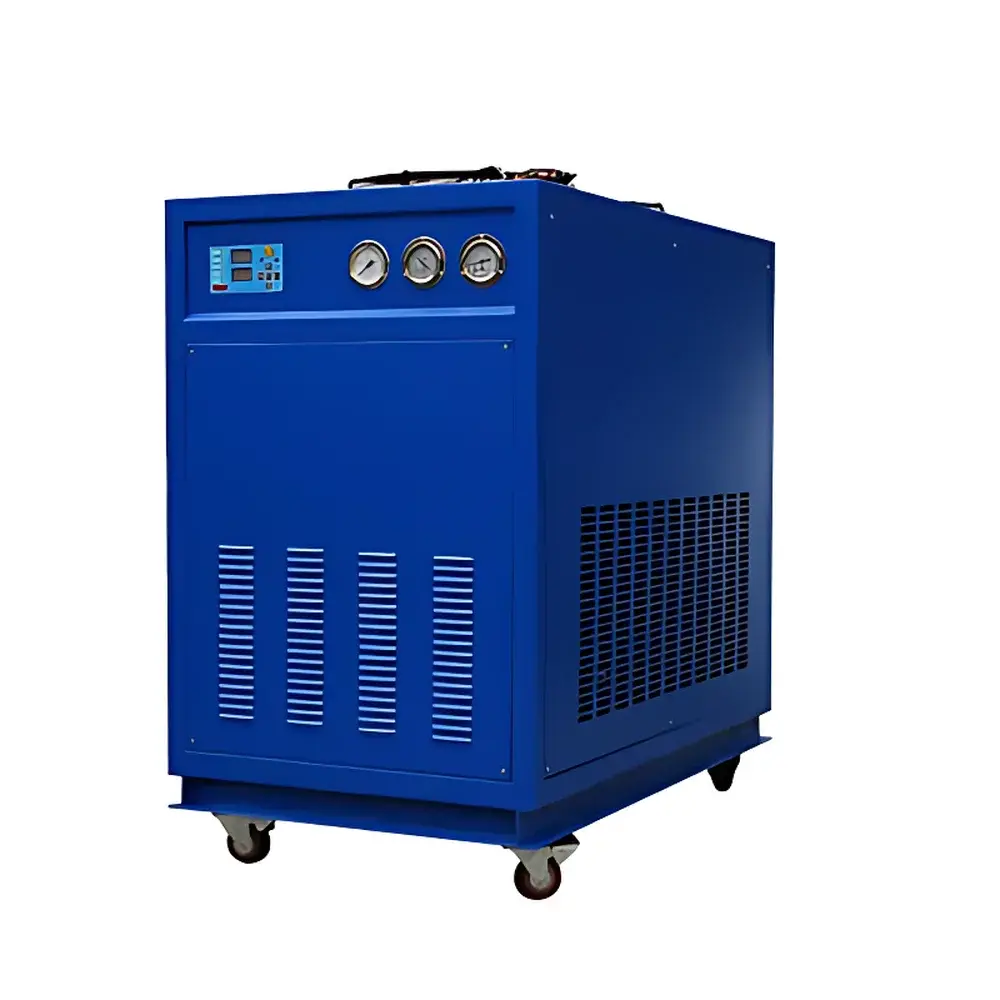
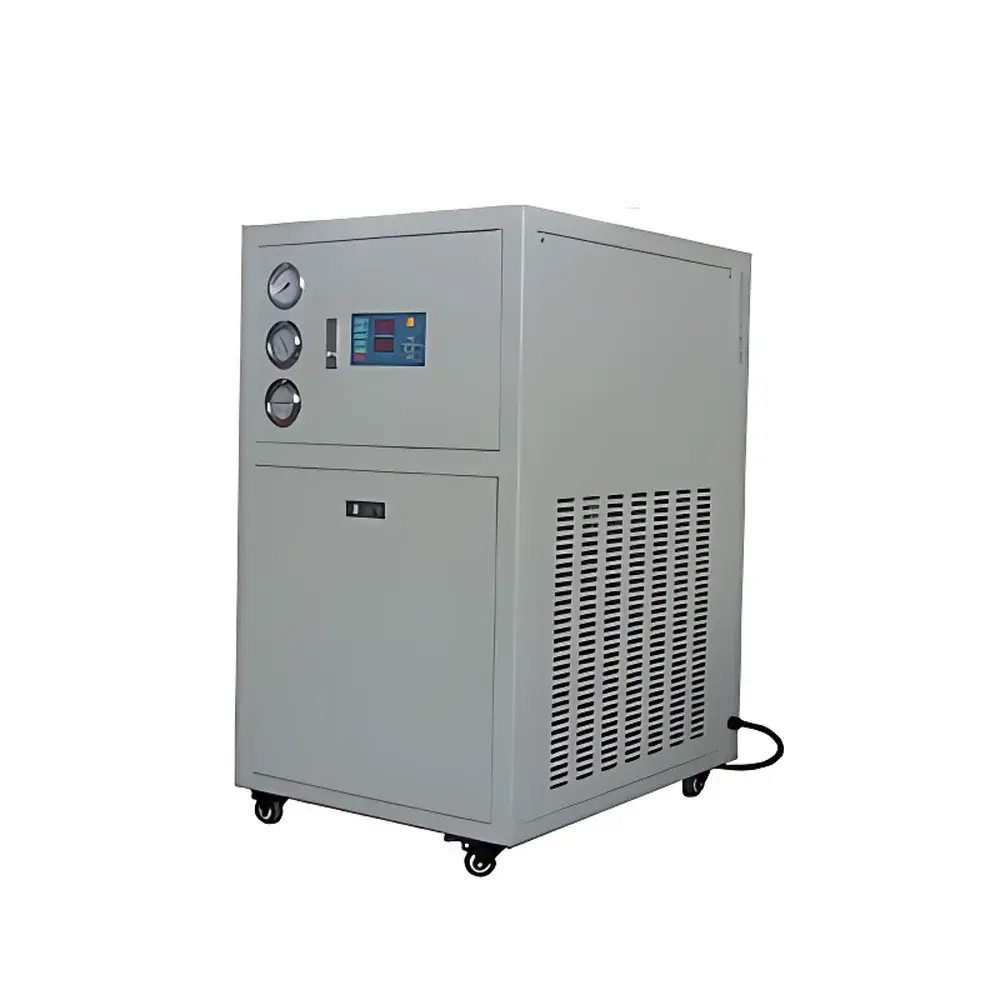
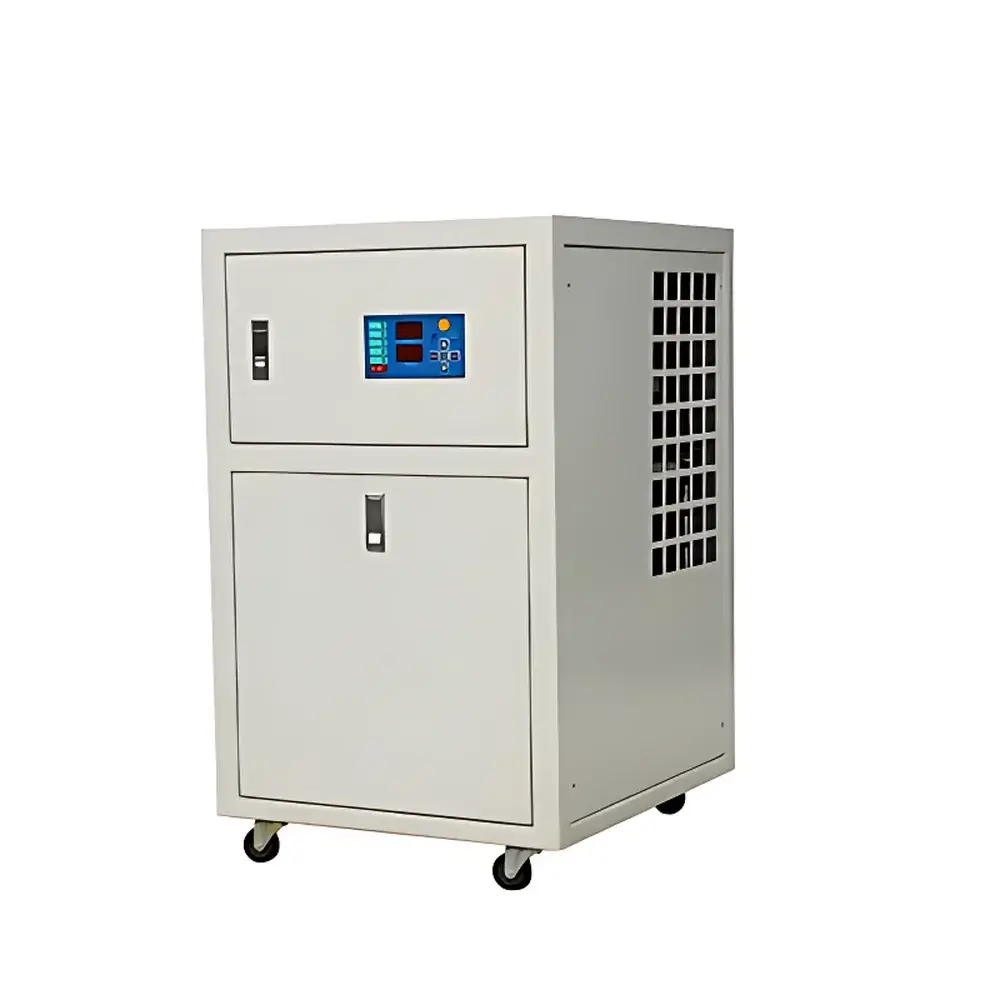
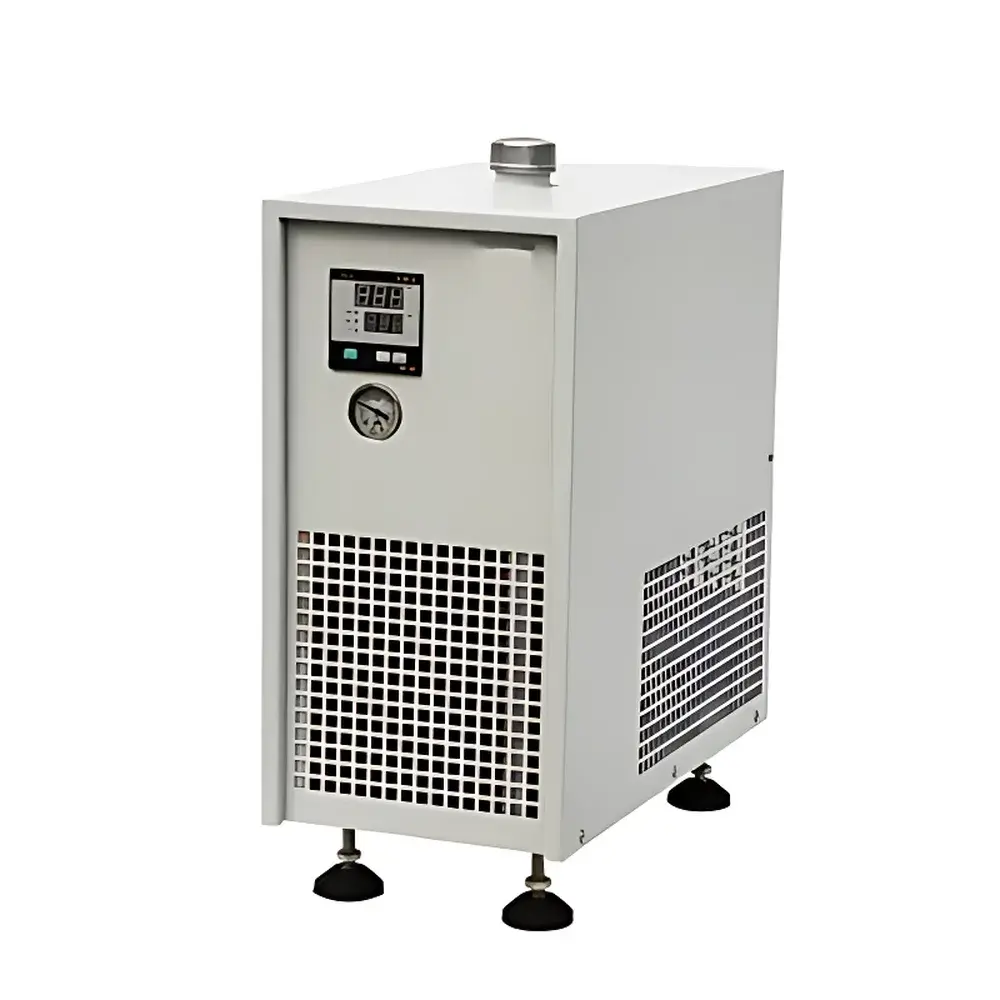
Tianfeng LS-20KW Integrated Circulating Chiller
| Brand | Tianfeng |
|---|---|
| Origin | Shanghai, China |
| Manufacturer Type | Direct Manufacturer |
| Equipment Type | Integrated Circulating Chiller |
| Cooling Method | Water-Cooled |
| Temperature Control Range | 0–40 °C |
| Temperature Stability | ±0.1 °C |
| Refrigeration Capacity | 20 kW (at 12 °C inlet / 7 °C outlet water) |
| Circulating Pump Pressure | 2.0 bar (max) |
| Circulating Flow Rate | 38 L/min |
| Reservoir Volume | 180 L |
| Power Input | 7.15 kW |
| Supply Voltage | 220 V, 50 Hz |
| Dimensions (L×W×H) | 1350 × 800 × 1580 mm |
| Compressor | High-Efficiency Scroll Compressor |
| Safety Protections | Compressor overheat, overcurrent, high/low pressure, and overtemperature protection |
| Construction | Stainless steel reservoir and pump |
| Control System | Digital PID temperature controller (standard Chinese OEM |
| Operating Mode | Continuous duty |
Overview
The Tianfeng LS-20KW Integrated Circulating Chiller is an industrial-grade, water-cooled refrigeration system engineered for precise thermal management of laboratory and production equipment requiring stable, continuous coolant delivery. It operates on the vapor-compression refrigeration cycle, utilizing a high-efficiency scroll compressor, thermostatic expansion valve (TEV), and optimized heat exchanger design to deliver consistent cooling performance across demanding applications. Designed for integration with analytical instruments—including graphite furnace atomic absorption spectrometers (GFAAS), inductively coupled plasma optical emission spectrometers (ICP-OES), ICP-mass spectrometers (ICP-MS), X-ray fluorescence (XRF) and X-ray diffraction (XRD) systems, scanning electron microscopes (SEM), and transmission electron microscopes (TEM)—this chiller maintains process-critical components at tightly regulated temperatures to ensure measurement repeatability, detector stability, and long-term instrument reliability.
Key Features
- Stable temperature control within ±0.1 °C across the full operating range of 0–40 °C, achieved via digital PID regulation and high-resolution temperature sensing
- Integrated stainless steel reservoir (180 L capacity) and corrosion-resistant circulation pump delivering up to 38 L/min at 2.0 bar maximum pressure
- Robust mechanical architecture featuring a low-noise scroll compressor, imported expansion and solenoid valves (Italy/Germany), and UL/CE-certified electrical components (Siemens, Schneider, Omron)
- Dual-mode operation: fixed-setpoint constant-temperature mode and adaptive intelligent temperature modulation responsive to real-time thermal load fluctuations
- Comprehensive safety suite including compressor overheat, overcurrent, high/low refrigerant pressure, and reservoir overtemperature protection with fault signal output
- Continuous-duty rated design validated for 24/7 operation under nominal load conditions; suitable for unattended laboratory or production floor deployment
- Compact footprint (1350 × 800 × 1580 mm) with castor-mounted base for flexible positioning and reconfiguration within constrained lab spaces
Sample Compatibility & Compliance
This chiller is compatible with all standard laboratory instrumentation requiring external liquid cooling via 1/2″–3/4″ NPT or BSP threaded connections. Its flow and pressure characteristics meet OEM specifications for major analytical platforms, including PerkinElmer, Thermo Fisher Scientific, Agilent, Shimadzu, and Bruker systems. The unit complies with ISO 9001:2015 quality management requirements and incorporates safety features aligned with IEC 61000-6-2 (EMC immunity) and IEC 61000-6-4 (EMC emissions). While not certified to FDA 21 CFR Part 11, its digital controller supports audit-ready operational logs when paired with external data acquisition systems—facilitating GLP/GMP-aligned documentation workflows in regulated pharmaceutical and clinical research environments.
Software & Data Management
The LS-20KW employs a standalone embedded controller with LED-based digital display of setpoint, actual temperature, flow status, and alarm codes. No proprietary software or driver installation is required. All operational parameters—including temperature setpoint, pump enable/disable, and alarm reset—are accessible via front-panel membrane buttons. For integration into centralized lab monitoring networks, optional analog (4–20 mA) or digital (RS-485 Modbus RTU) interface modules are available upon request. These allow remote readout of temperature, flow confirmation, and fault status signals—enabling synchronization with building management systems (BMS) or laboratory information management systems (LIMS) for predictive maintenance logging and environmental compliance reporting.
Applications
- Atomic Spectroscopy: Stabilizes graphite furnace and plasma torch cooling circuits to minimize spectral drift and improve detection limits in GFAAS and ICP-based analyses
- Electron Microscopy: Maintains optimal thermal equilibrium in SEM/TEM column cooling jackets and detector cryo-shields, reducing thermal lensing and signal noise
- X-ray Instrumentation: Regulates anode and detector temperatures in XRF and XRD systems to preserve crystal lattice integrity and photon counting accuracy
- Laser Systems: Provides stable coolant supply for diode-pumped solid-state (DPSS) lasers, fiber lasers, and ultrafast amplifiers used in LIBS, MALDI, and ablation applications
- Industrial Process Support: Serves as a secondary cooling loop for vacuum coating systems, semiconductor wafer handling stages, and high-speed CNC spindles requiring sub-0.2 °C thermal stability
FAQ
What is the recommended inlet/outlet water temperature differential for optimal chiller efficiency?
For maximum refrigeration efficiency and compressor longevity, maintain a 3–5 °C ΔT between inlet and outlet water—e.g., 12 °C in / 7 °C out. Return water temperature should not exceed 40 °C to prevent excessive head pressure and premature wear.
Can this chiller be integrated into a facility’s central cooling water loop?
Yes—the unit is configured for water-cooled condenser operation and accepts facility-supplied cooling water at ≤35 °C inlet temperature with ≥8 °C ΔT across the condenser. A flow switch and pressure regulator are recommended for interfacing with municipal or chilled-water plant infrastructure.
Is the stainless steel reservoir suitable for deionized or inhibited glycol solutions?
The 304 stainless steel tank and wetted components are compatible with DI water and aqueous ethylene glycol mixtures up to 30% concentration. For higher glycol ratios or aggressive additives, consult the chemical compatibility chart provided in the technical manual prior to use.
Does the chiller support external temperature feedback control from the host instrument?
Standard configuration uses internal sensor feedback only. However, the optional RS-485 Modbus interface enables external setpoint override and closed-loop coordination with instrument-native thermal management controllers—subject to protocol mapping and commissioning by qualified field personnel.



