
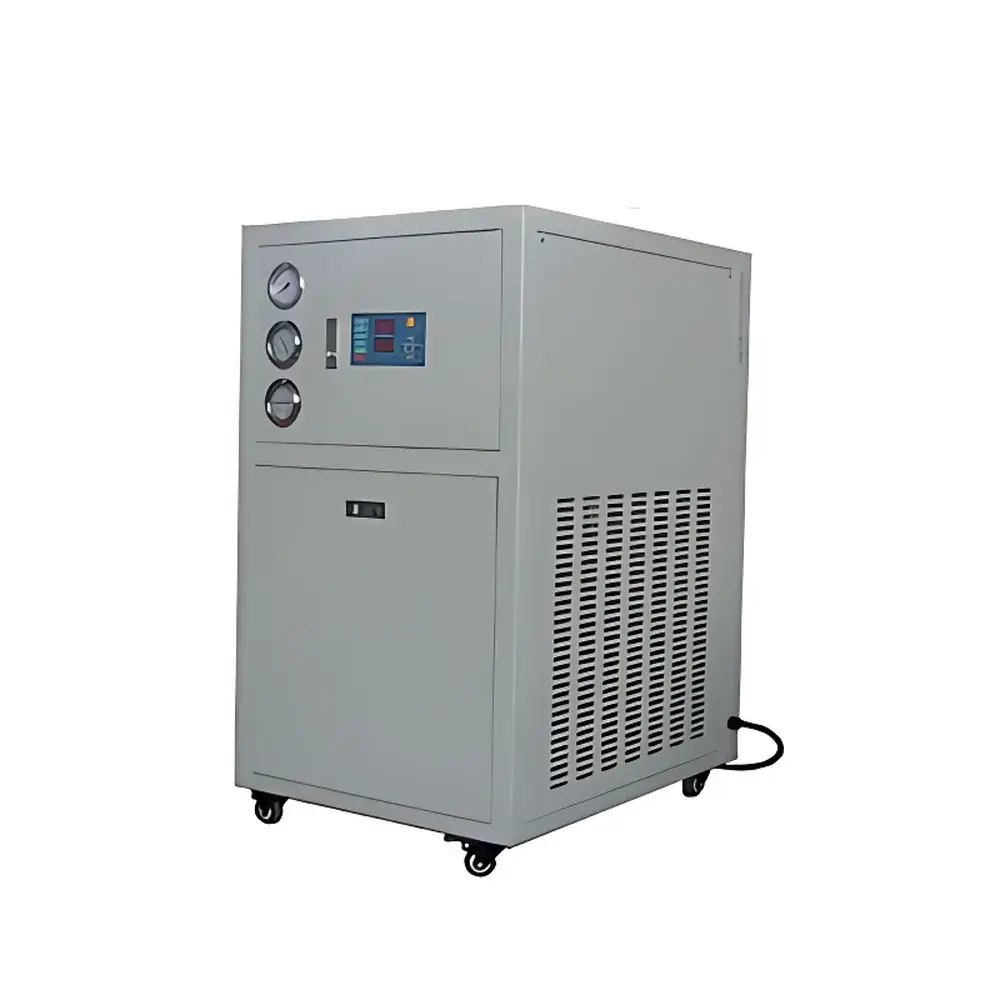
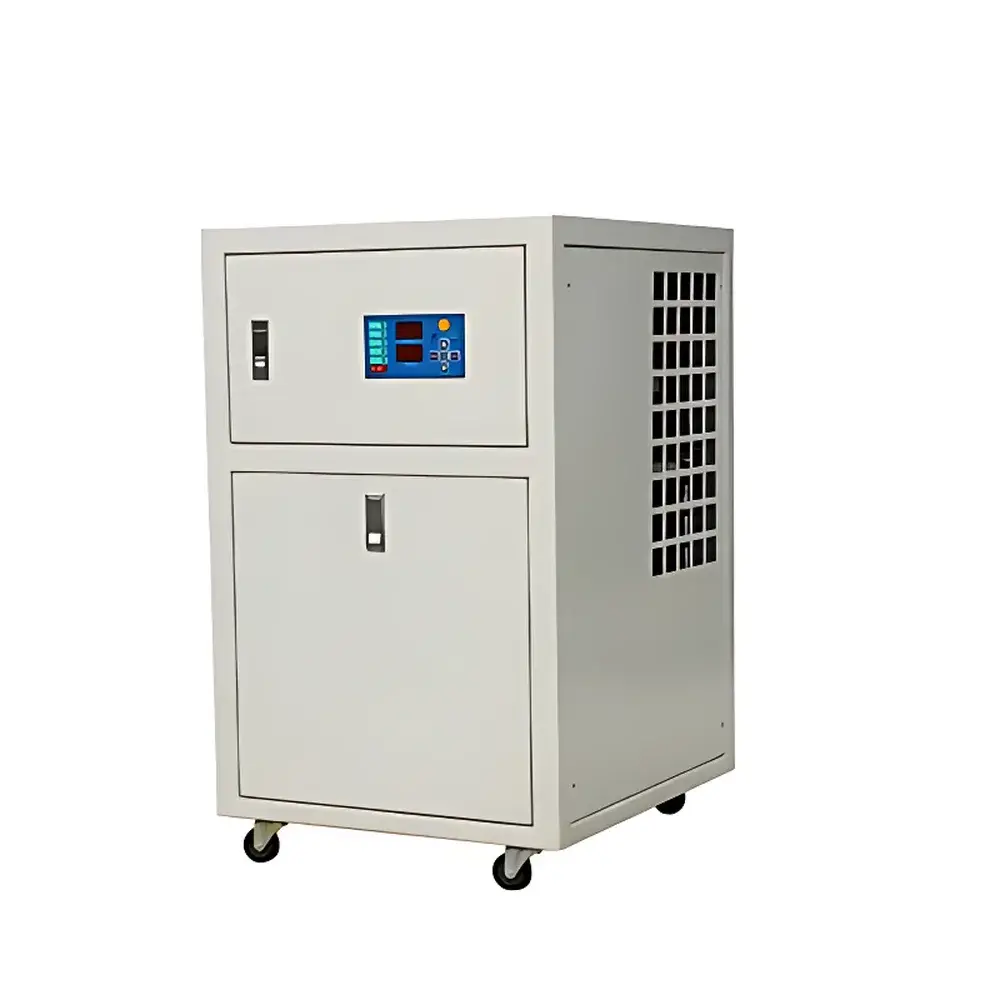
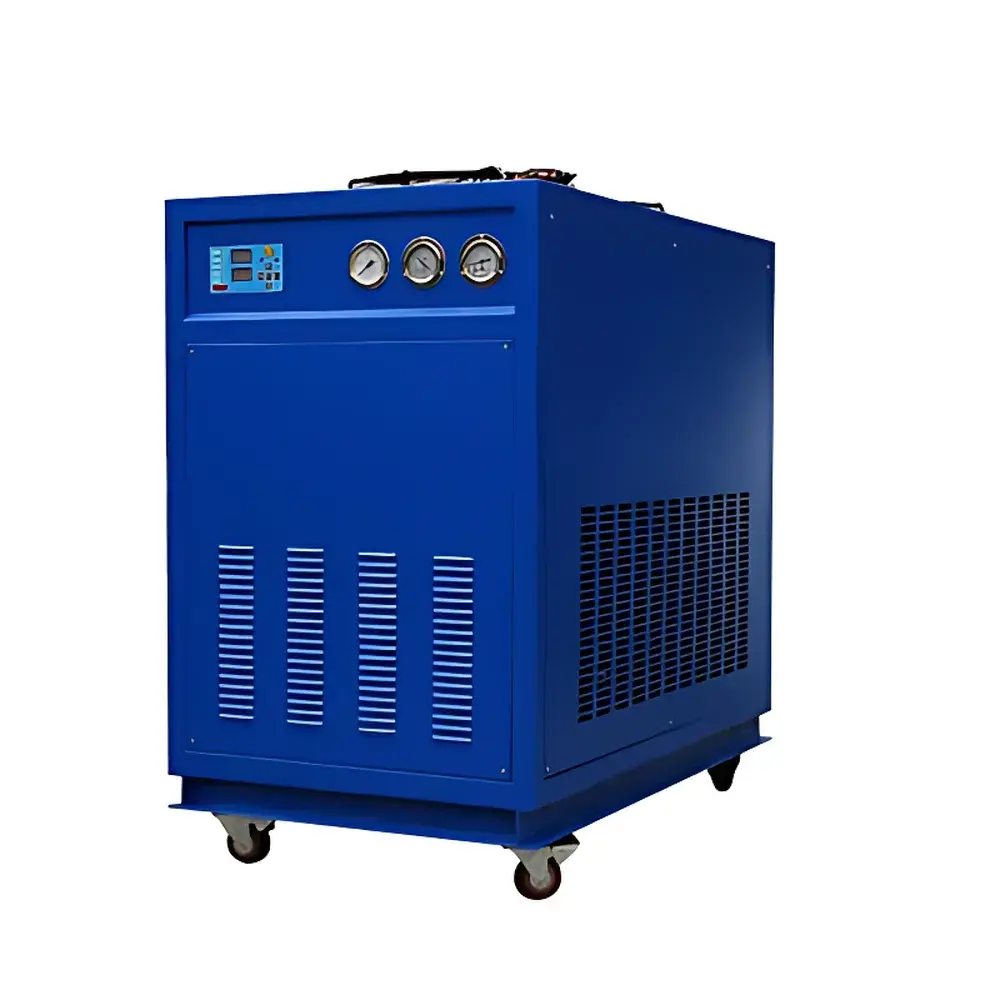
Tianfeng LS-3KW Integrated Circulating Chiller
| Brand | Tianfeng |
|---|---|
| Origin | Shanghai, China |
| Manufacturer Type | Direct Manufacturer |
| Product Category | Domestic |
| Model | Tianfeng-LS-3KW |
| Instrument Type | Integrated Unit |
| Cooling Method | Water-Cooled |
| Temperature Control Range | 0–40 °C |
| Refrigeration Capacity | 300–9000 W |
| Temperature Stability | ±0.1 °C |
| Circulating Pump Pressure | 2.0 bar |
| Circulating Pump Flow Rate | 38 L/min |
| Reservoir Volume | 5–550 L |
| Operating Mode | Continuous |
| Rated Refrigeration Capacity | 3.0 kW |
| Water Outlet Pressure | 0–2 kgf/cm² |
| Power Consumption | 1.8 kW |
| Reservoir Volume (Standard) | 45 L |
| Dimensions (L×W×H) | 800×600×1065 mm |
| Power Supply | 220 V, 50 Hz |
| Safety Protections | Compressor Overheat Protection, Overcurrent Protection, High/Low Pressure Switches, Overtemperature Alarm |
| Construction | Stainless Steel Reservoir & Pump |
| Compressor Type | Scroll Compressor |
| Temperature Controller | Domestic High-Precision PID Controller (Optional RKC Japan) |
| Key Components | Imported Expansion Valves & Solenoid Valves (Italy/Germany), Siemens/Schneider/Omron Electrical Components |
Overview
The Tianfeng LS-3KW Integrated Circulating Chiller is a precision-engineered, water-cooled temperature control system designed for continuous-duty laboratory and industrial applications requiring stable thermal management. It operates on vapor-compression refrigeration principles, utilizing a high-efficiency scroll compressor, optimized refrigerant circuitry, and a stainless-steel reservoir to deliver consistent cooling performance across demanding operational cycles. Engineered for reliability under 24/7 operation, the unit maintains setpoint temperatures within ±0.1 °C across its full 0–40 °C control range—critical for instruments sensitive to thermal drift, such as analytical spectrometers, electron microscopes, and laser-based systems. Its integrated architecture eliminates external piping complexity while ensuring compact footprint (800 × 600 × 1065 mm) and mobility-friendly design—making it suitable for benchtop deployment in analytical labs, QC facilities, and pilot-scale R&D environments.
Key Features
- Stainless steel reservoir and circulation pump—resistant to corrosion and compatible with deionized water, glycol-water mixtures, and other common heat-transfer fluids.
- Digital PID temperature controller with real-time display of outlet fluid temperature; optional upgrade to RKC (Japan) controller for enhanced repeatability and programmable ramp/soak profiles.
- Multi-layer safety architecture: compressor overheat protection, high/low refrigerant pressure cutoffs, overcurrent sensing, and independent overtemperature alarm with relay output for external interlock integration.
- Adjustable flow rate (0–38 L/min) and pressure (up to 2.0 bar) via calibrated bypass valve—enabling precise matching to instrument coolant inlet requirements.
- Low-noise operation (<65 dB[A] at 1 m) achieved through acoustic insulation, vibration-dampened mounting, and optimized fan/compressor dynamics.
- Energy-efficient scroll compressor with >95% volumetric efficiency and extended service life under continuous load conditions.
- Compliance-ready electrical system featuring CE-marked Siemens, Schneider, or Omron contactors, relays, and overload protection—supporting integration into ISO/IEC 17025-accredited lab infrastructure.
Sample Compatibility & Compliance
The LS-3KW chiller is routinely deployed as a thermal management solution for high-value analytical instrumentation including graphite furnace atomic absorption spectrometers (GFAAS), inductively coupled plasma optical emission spectrometers (ICP-OES), ICP-mass spectrometers (ICP-MS), X-ray fluorescence (XRF) and X-ray diffraction (XRD) systems, scanning electron microscopes (SEM), and transmission electron microscopes (TEM). Its stable output meets the stringent thermal stability requirements specified in ASTM E177 (Standard Practice for Use of the Terms Precision and Bias in ASTM Test Methods) and supports GLP/GMP-aligned workflows where equipment qualification (IQ/OQ/PQ) mandates documented temperature uniformity and reproducibility. The unit’s stainless-steel wetted parts comply with USP for extractables profiling when used with pharmaceutical-grade coolants, and its electrical safety design conforms to IEC 61010-1 for laboratory equipment.
Software & Data Management
While the standard LS-3KW operates via front-panel PID interface, optional RS485 Modbus RTU or Ethernet TCP/IP communication modules enable remote monitoring and control via LabVIEW, MATLAB, or custom SCADA platforms. Data logging (temperature, flow status, fault codes) can be synchronized with laboratory information management systems (LIMS) using configurable alarm thresholds and timestamped event reporting. For regulated environments, optional 21 CFR Part 11-compliant software packages provide electronic signatures, audit trails, and user-access-level controls—facilitating compliance with FDA, EMA, and MHRA requirements for instrument data integrity.
Applications
- Materials Characterization: Thermal stabilization of XRD goniometers and SEM/TEM column cooling jackets to minimize thermal lensing and stage drift during long-duration acquisitions.
- Elemental Analysis: Precise coolant delivery to ICP torch interfaces and detector housings—preventing signal noise from thermal expansion-induced misalignment.
- Laser Systems: Heat extraction from CO₂, fiber, and ultrafast laser gain media and optics mounts, sustaining beam quality and pulse stability per ISO 11554 specifications.
- Pharmaceutical QC: Controlled cooling of dissolution apparatus baths and HPLC column ovens in accordance with USP and guidelines.
- Plastics & Polymers Research: Mold temperature regulation in lab-scale injection molding units to study crystallinity kinetics and residual stress formation.
- Vacuum Deposition: Maintaining optimal target and substrate temperatures in sputtering and e-beam evaporation systems to ensure stoichiometric film growth.
FAQ
What is the recommended maximum return water temperature for continuous operation?
For optimal compressor longevity and refrigeration efficiency, return water temperature should not exceed 40 °C. Sustained inlet temperatures above this threshold increase condensing pressure and accelerate oil degradation.
Can the chiller operate with 30% ethylene glycol/water mixture?
Yes—the stainless steel reservoir, pump, and heat exchanger are fully compatible with glycol concentrations up to 40%. Viscosity correction must be applied when calculating effective flow rate and pressure drop.
Is the unit suitable for cleanroom environments?
With optional HEPA-filtered air intake and low-particulate internal construction, the LS-3KW meets ISO Class 5 (Class 100) compatibility requirements when installed with proper ventilation and coolant filtration.
Does the chiller support external temperature feedback control?
Yes—via optional 0–10 V or 4–20 mA analog input, allowing closed-loop control based on process-side sensor readings rather than chiller outlet temperature alone.
What documentation is provided for IQ/OQ validation?
Tianfeng supplies Factory Acceptance Test (FAT) reports, calibration certificates for onboard sensors (traceable to NIST standards), and customizable URS-compatible validation protocols upon request.



