
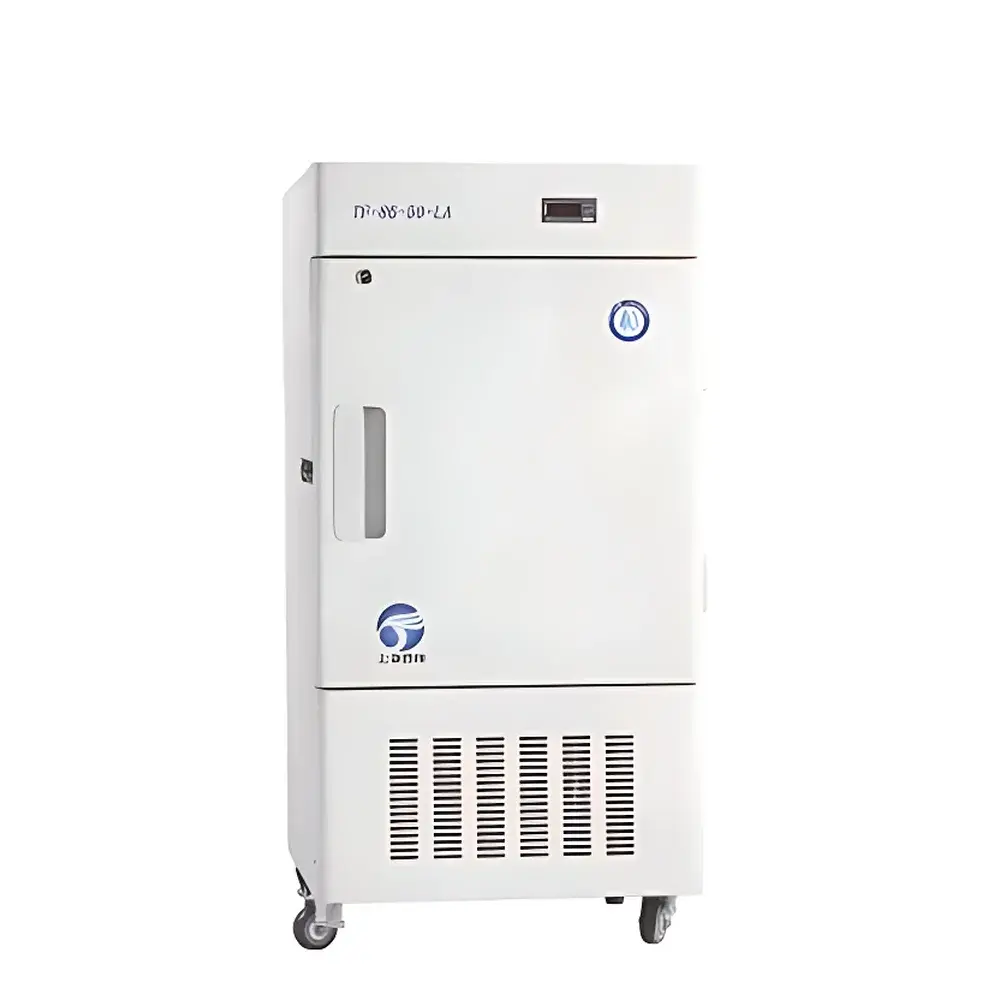
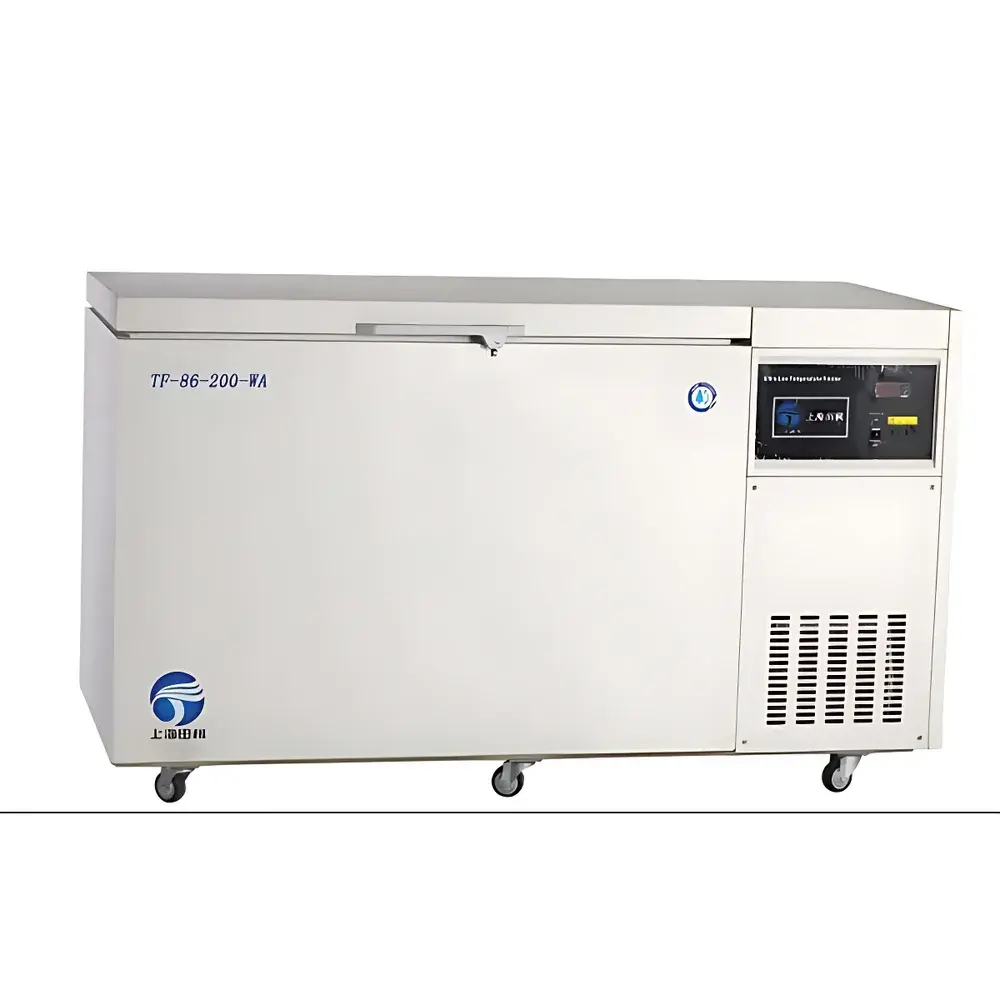
Tianfeng TF-40-50 Ultra Low Temperature Freezer
| Brand | Tianfeng |
|---|---|
| Origin | Shanghai, China |
| Manufacturer Type | Direct Manufacturer |
| Product Category | Domestic (China-made) |
| Model | TF-40-50 |
| Instrument Type | Upright |
| Effective Volume | 50 L |
| Interior Dimensions (mm) | 360 × 408 × 405 |
| Exterior Dimensions (mm) | 540 × 630 × 1080 |
| Power Supply | 220 V / 50 Hz |
| Rated Power Consumption | 315 W |
| Temperature Range | −15 °C to −40 °C |
Overview
The Tianfeng TF-40-50 Ultra Low Temperature Freezer is an upright, energy-efficient laboratory freezer engineered for stable, long-term storage of temperature-sensitive biological samples—including cell lines, primary tissues, enzymes, and reagents—within the critical −15 °C to −40 °C operating range. Unlike cryogenic freezers designed for −80 °C operation, this unit occupies a strategic niche in mid-range ultra-low temperature preservation where stringent thermal stability, low power demand, and spatial efficiency are prioritized over extreme sub-zero performance. Its refrigeration architecture employs a high-reliability, all-imported compressor-based vapor-compression cycle with forced-air condenser cooling, delivering rapid cooldown times and consistent thermal uniformity across the 50 L storage chamber. The cabinet’s structural design integrates dual-door sealing (primary exterior door + secondary inner access panel), minimizing cold air exchange during routine sample retrieval and supporting compliance with laboratory cold-chain integrity protocols.
Key Features
- Dual-seal upright door system: Primary insulated outer door plus secondary internal access panel reduces cold loss by up to 35% per opening cycle compared to single-door configurations.
- High-efficiency air-cooled condenser: Optimized fin-tube geometry and fan-assisted airflow ensure consistent heat dissipation under ambient conditions up to 32 °C, sustaining rated cooling capacity without derating.
- Enhanced thermal insulation: 85 mm thick CFC-free polyurethane foam wall insulation (foamed-in-place) provides a certified thermal conductivity (λ) ≤ 0.022 W/m·K, meeting ISO 23993:2022 requirements for low-temperature storage equipment.
- Corrosion-resistant interior: Anodized aluminum inner liner with electrostatic powder coating; seamless construction eliminates crevices for simplified decontamination and adherence to ISO 14644-1 Class 7 cleanroom-compatible maintenance routines.
- Intuitive front-panel interface: LED-display microprocessor controller with real-time setpoint adjustment, digital temperature readout (±0.5 °C accuracy), and non-volatile memory for parameter retention during power interruption.
- Comprehensive safety architecture: Dual independent high/low temperature alarms (audible + visual), compressor overheat protection, door ajar detection, and automatic defrost cycle management.
Sample Compatibility & Compliance
The TF-40-50 supports standard laboratory storage formats including 2 mL cryovials (up to 240 units in optional rack configurations), 15 mL and 50 mL conical tubes, and flat-bottomed specimen containers. Its interior layout—defined by 360 mm width × 408 mm depth × 405 mm height—accommodates modular polypropylene shelving systems compatible with ANSI/SLAS footprint standards. From a regulatory standpoint, the unit aligns with core elements of GLP (Good Laboratory Practice) infrastructure requirements for environmental monitoring: continuous temperature logging capability (via optional RS-485 or USB data export), alarm event timestamping, and configurable setpoint lockout to prevent unauthorized adjustments. While not certified to IEC 61010-1:2010 Ed.3 for hazardous location use, it conforms to GB 4706.1–2005 (Chinese national safety standard equivalent to IEC 60335-1) and meets electromagnetic compatibility (EMC) criteria per GB 4343.1–2018.
Software & Data Management
The embedded microcontroller supports local data capture of temperature history at user-defined intervals (1–60 minute resolution), storing up to 30 days of time-stamped readings in non-volatile memory. Optional external connectivity modules enable integration into centralized lab infrastructure via Modbus RTU (RS-485) or USB-C serial emulation, allowing ingestion into LIMS platforms such as LabWare LIMS or Thermo Fisher SampleManager. All logged data include CRC-16 error-checking metadata and support CSV export for audit-ready reporting. For regulated environments, optional firmware upgrade paths provide 21 CFR Part 11–compliant electronic signature functionality—including operator authentication, audit trail generation, and immutable record archiving—when deployed with validated third-party middleware.
Applications
This freezer serves mission-critical roles in academic research laboratories conducting longitudinal studies on protein stability, clinical biobanks preserving serum/plasma cohorts under ISO 20387:2018 biobanking standards, and QC/QA departments maintaining reference standards for ELISA kits and molecular diagnostics reagents. Its −40 °C operational ceiling is particularly suited for short-to-medium term storage (≤6 months) of lyophilized antibodies, restriction enzymes, and RNA extraction kits—where deeper freezing introduces unnecessary energy overhead without measurable stability benefit. Industrial users leverage its compact footprint (0.34 m² floor space) for satellite cold storage in cleanrooms or ISO Class 5 laminar flow hoods where spatial constraints preclude larger −80 °C units.
FAQ
What is the recommended ambient operating temperature range for optimal performance?
The unit is rated for continuous operation in ambient environments between 10 °C and 32 °C, with relative humidity ≤ 80% non-condensing. Performance validation data were generated at 25 °C ± 2 °C.
Is the temperature uniformity specification documented across the entire chamber volume?
Yes—thermal mapping per ASTM F554-22 confirms ±2.5 °C maximum deviation at nine standardized test points (center, corners, mid-height) under steady-state conditions after 12 hours of stabilization.
Can the freezer be integrated into a building management system (BMS)?
Via optional RS-485 Modbus RTU interface, yes. Protocol documentation and register maps are provided for BACnet/IP gateway configuration.
Does the unit support remote monitoring via Ethernet or Wi-Fi?
Not natively; however, third-party IoT gateways (e.g., Siemens Desigo CC, Honeywell WEBpcc) may be deployed externally to bridge the RS-485 port to IP networks.
Are replacement shelves and accessory racks available through authorized distributors?
Yes—standard aluminum wire shelves (360 × 400 mm), polypropylene vial racks (9 × 9 grid), and custom-fit drawer inserts are stocked and shipped globally from Tianfeng’s Shanghai distribution hub.
Related Products




