
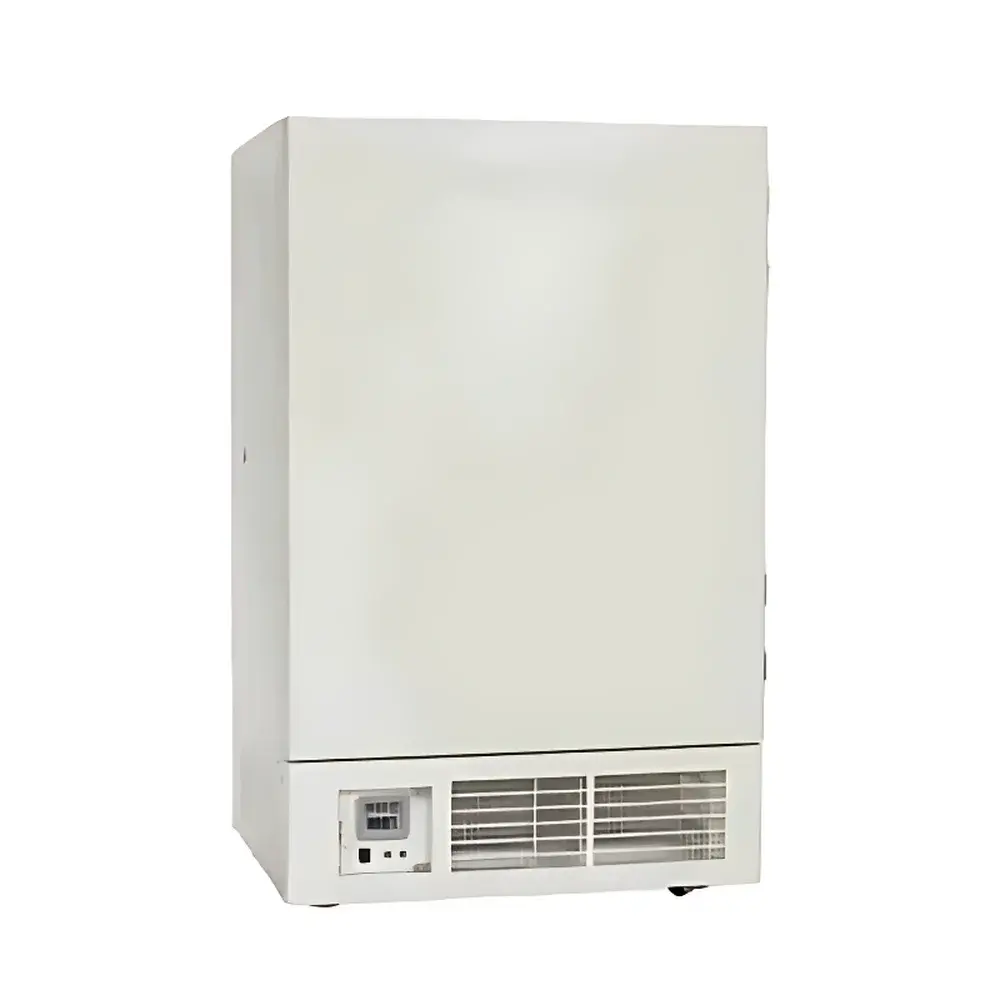
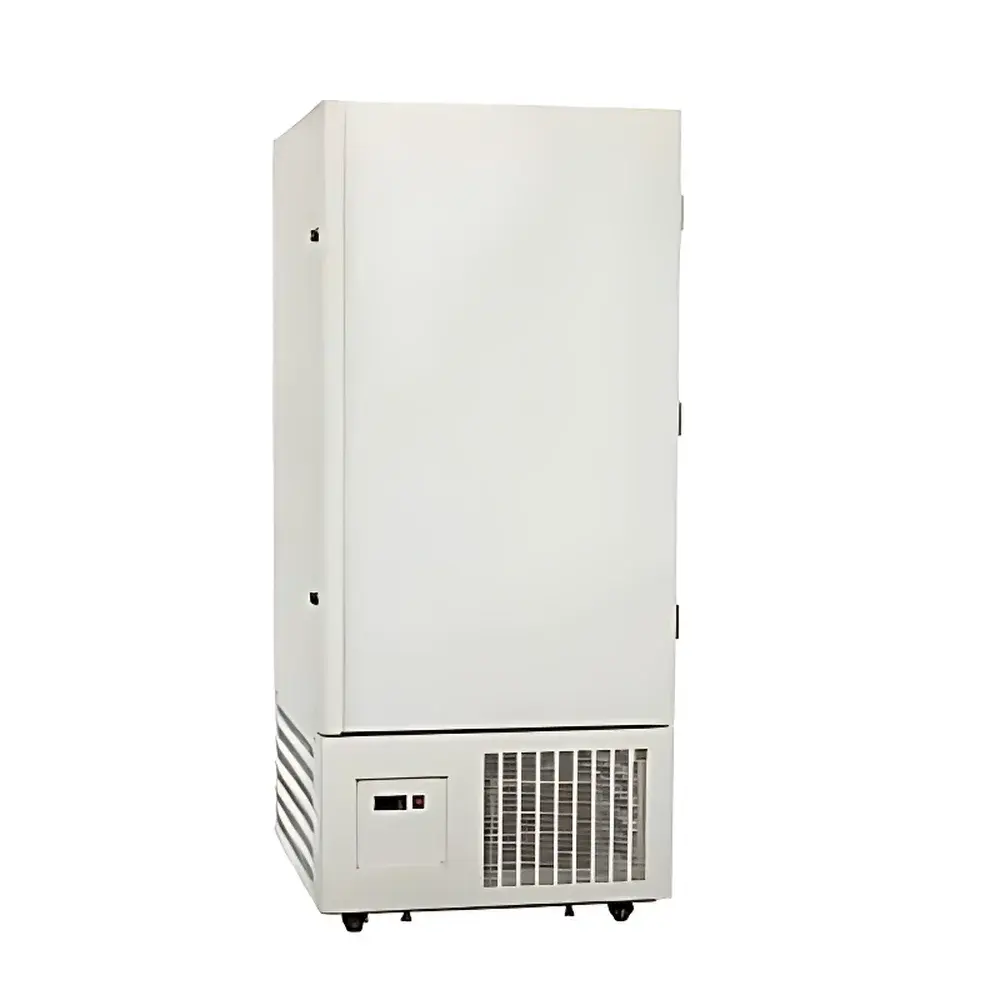
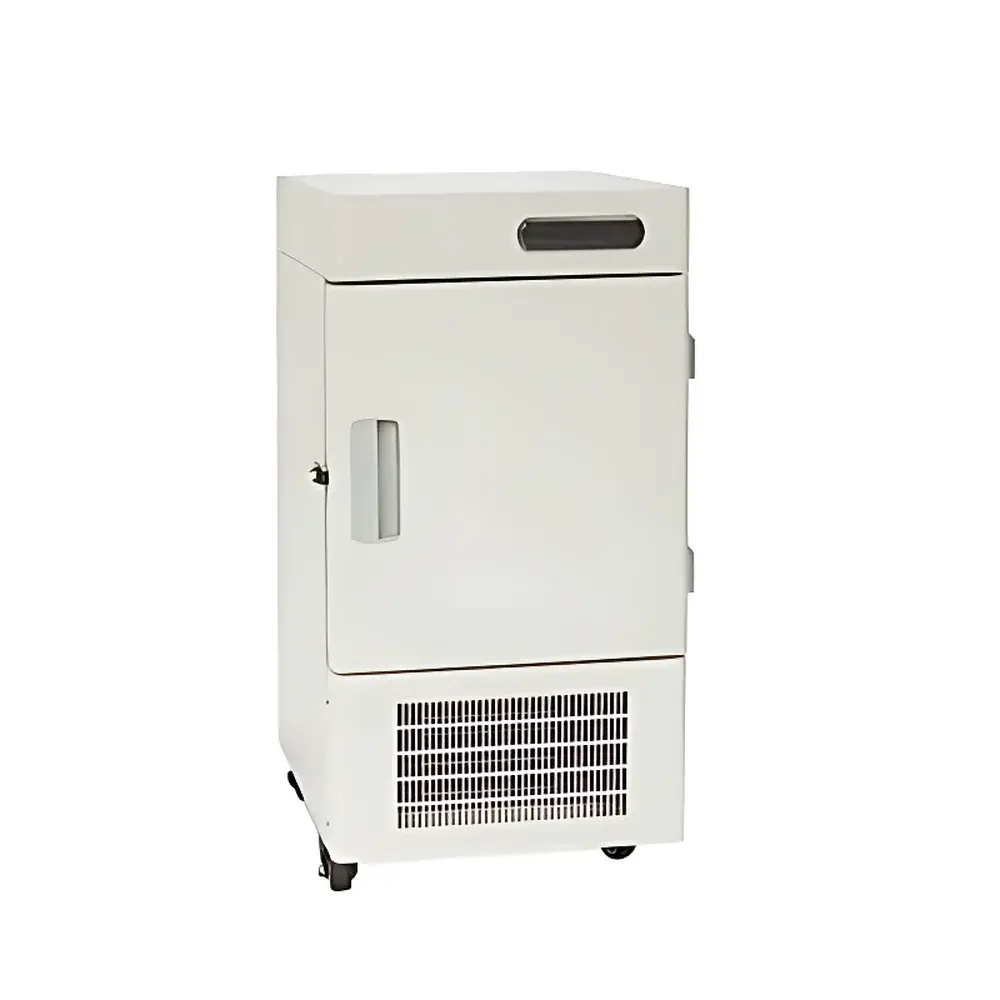
Tianfeng TF-86-30-LA Ultra Low Temperature Freezer
| Brand | Tianfeng |
|---|---|
| Model | TF-86-30-LA |
| Temperature Range | -40 °C to -86 °C |
| Effective Volume | 30 L |
| Internal Dimensions (mm) | 270 × 265 × 400 |
| External Dimensions (mm) | 470 × 490 × 1120 |
| Power Supply | 220 V / 50 Hz |
| Rated Power | 350 W |
| Noise Level | ≤57 dB(A) |
| Refrigerant | Eco-friendly non-CFC/HFC blend (R23/R508B or equivalent) |
| Insulation | Dual-layer high-density polyurethane foam |
| Interior Material | Stainless steel (AISI 304) |
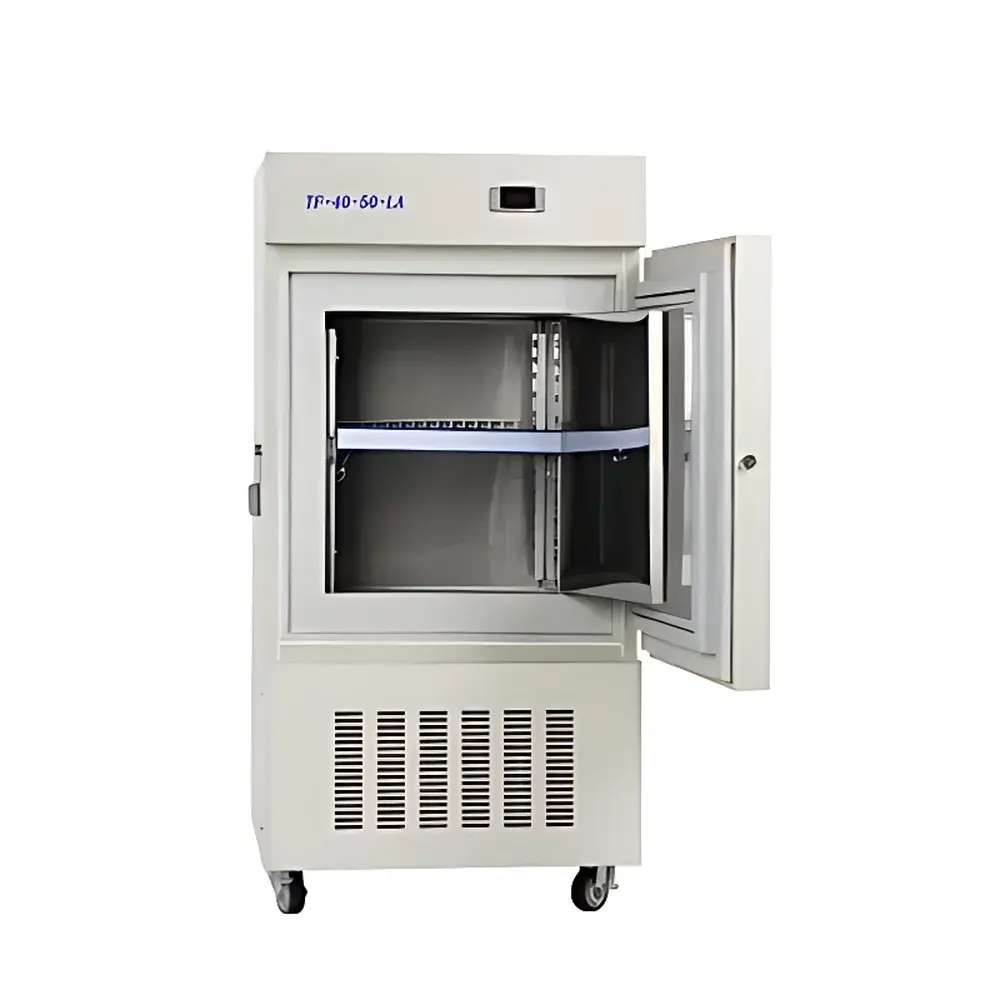
| Door Configuration | Four independent inner doors with magnetic gaskets |
| Shelving | Three adjustable stainless steel shelves |
| Interface | RS-232 (optional) |
| Compliance | ISO 9001:2000 certified manufacturing |
| Certification | CE-marked for laboratory use in EU export markets |
Overview
The Tianfeng TF-86-30-LA Ultra Low Temperature Freezer is an engineered solution for reliable, long-term cryopreservation of sensitive biological specimens under strictly controlled thermal conditions. Designed and manufactured in Shanghai under ISO 9001:2000–certified quality management systems, this unit operates within a stable temperature range of –40 °C to –86 °C—optimized for the storage of primary cell lines, peripheral blood mononuclear cells (PBMCs), plasma, vaccines, microbial cultures, and other thermolabile biologics requiring deep-cold stability. Its refrigeration architecture integrates a dual-mode condensation system: partial natural convection and partial forced-air cooling, enabling consistent thermal performance even in ambient environments up to 35 °C and in locations with elevated dust load or limited ventilation. The compressor assembly utilizes imported components from internationally recognized industrial refrigeration suppliers, ensuring extended mean time between failures (MTBF) and reduced service frequency over the operational lifecycle.
Key Features
- Stainless steel interior (AISI 304) with seamless, radius-cornered chamber design—facilitating rapid decontamination and minimizing microbial retention points.
- Four independently sealed inner doors with magnetic gaskets—reducing cold air loss during routine access and improving energy efficiency by up to 22% compared to single-door configurations.
- Dual-layer polyurethane insulation (≥120 mm thickness) with zero-ozone-depletion refrigerant blend (R23/R508B or equivalent)—meeting current EU F-Gas Regulation (EU No 517/2014) and RoHS compliance requirements.
- Acoustically optimized compressor and fan assembly—achieving ≤57 dB(A) at 1 m distance, suitable for placement in shared laboratory corridors or adjacent to analytical instrument suites without acoustic interference.
- Adjustable three-tier stainless steel shelving system—allowing customizable vertical spacing to accommodate diverse container formats (e.g., 2 mL cryovials, 50 mL conical tubes, cryoboxes, and standard Nunc™ racks).
- Integrated mechanical door lock and power switch lock—supporting physical access control in GLP/GMP-regulated environments where chain-of-custody documentation is required.
- RS-232 serial interface (optional)—enabling integration with laboratory information management systems (LIMS) or centralized environmental monitoring platforms for automated data logging and alarm forwarding.
Sample Compatibility & Compliance
The TF-86-30-LA is validated for storage of human-derived biospecimens compliant with ISBER Best Practices (2020) and NCBI BioBanking Standards. It supports long-term viability of hematopoietic stem cells (HSCs), induced pluripotent stem cells (iPSCs), and archived tissue sections when maintained at ≤–80 °C. All internal surfaces are inert to common cryoprotectants (e.g., DMSO, glycerol) and ethanol-based disinfectants. The unit meets IEC 61010-1:2010 safety standards for laboratory equipment and carries CE marking for conformity with EU Directive 2014/30/EU (EMC) and 2014/35/EU (LVD). While not FDA 21 CFR Part 11–validated out-of-the-box, its RS-232 output supports third-party audit-trail software integration for regulated biobanking applications.
Software & Data Management
This freezer operates via a microprocessor-based digital controller with real-time temperature display (±0.5 °C accuracy) and programmable high/low temperature alarms. The controller logs up to 30 days of internal temperature history at 10-minute intervals—accessible via front-panel navigation or exported via RS-232 to external PCs running compatible terminal emulation software (e.g., PuTTY, Tera Term). Optional firmware upgrades support CSV-formatted data export for traceability in ISO/IEC 17025–accredited testing laboratories. Alarm events—including door-open duration (>30 s), temperature deviation (>±3 °C), and power interruption—are timestamped and retained in non-volatile memory for post-event root-cause analysis.
Applications
- Cryopreservation of clinical-grade cell therapies (e.g., CAR-T products) during manufacturing hold steps.
- Long-term archival of reference standards used in clinical chemistry and immunoassay calibration.
- Storage of RNA-extraction kits, restriction enzymes, and lyophilized reagents requiring sub–70 °C stabilization.
- Backup cold storage for ultra-low temperature freezers undergoing maintenance or validation downtime.
- Field-deployable biorepository units in mobile labs supporting pandemic surveillance programs (e.g., WHO STEP surveillance protocols).
FAQ
What is the recommended ambient operating temperature range?
Optimal operation is guaranteed between +10 °C and +35 °C, with relative humidity ≤80% non-condensing. Units installed in unconditioned rooms must be positioned ≥100 mm from walls to ensure adequate airflow across condenser surfaces.
How frequently should the condenser filter be cleaned?
The removable dust filter located behind the rear grille requires inspection every 30 days in standard lab environments, and weekly in high-particulate settings (e.g., animal housing facilities, cleanrooms with frequent gowning activity).
Can this unit be integrated into a central building management system (BMS)?
Yes—via optional RS-232-to-Modbus RTU gateway hardware, enabling status polling, setpoint adjustment, and alarm acknowledgment through industry-standard BACnet/IP or LonWorks networks.
Is validation documentation available for IQ/OQ protocols?
Tianfeng provides factory-generated Factory Acceptance Test (FAT) reports including temperature uniformity mapping (per ISO 14644-3 Annex B), alarm response verification, and power-fail recovery testing. Site-specific Installation Qualification (IQ) and Operational Qualification (OQ) templates are supplied upon request for customer-executed validation.
What maintenance is required during the first year of operation?
No scheduled lubrication or refrigerant topping is needed. Annual preventive maintenance includes condenser cleaning, door gasket integrity check, calibration verification of the internal PT100 sensor against NIST-traceable reference, and functional test of all audible/visual alarms.



