
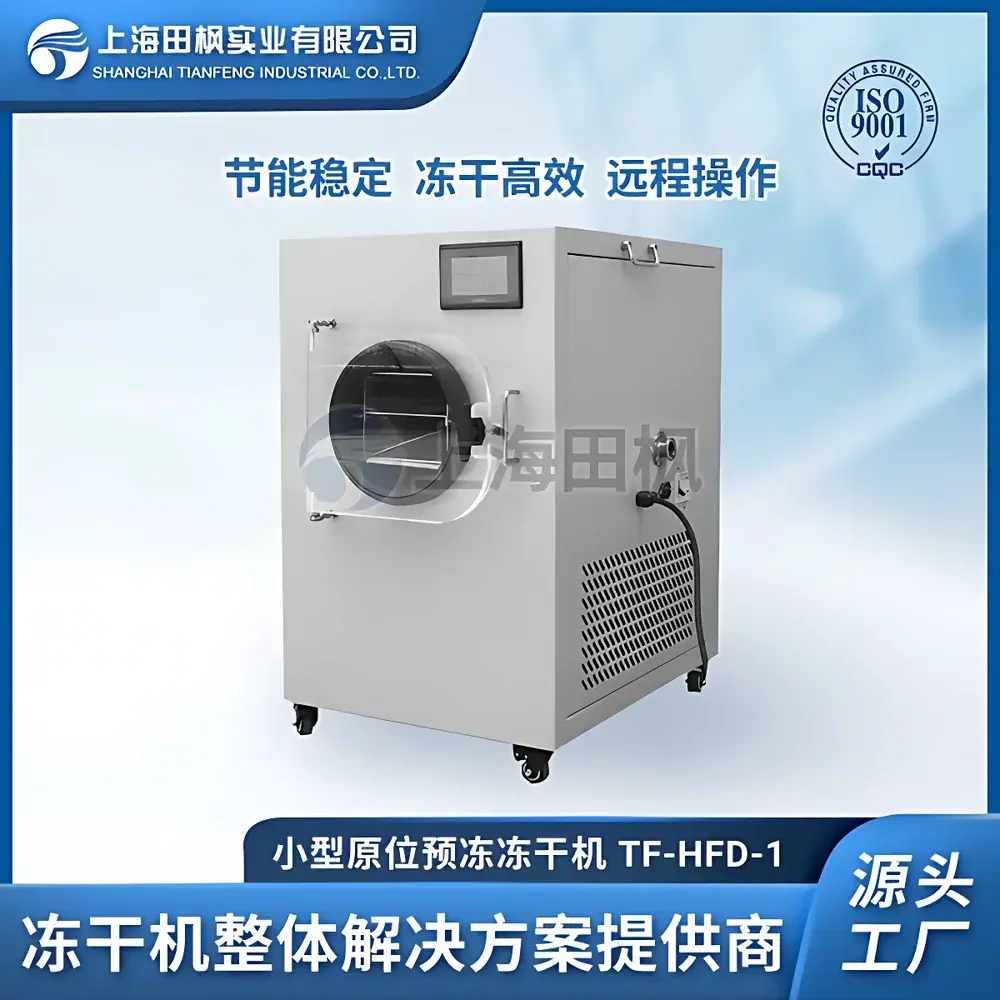
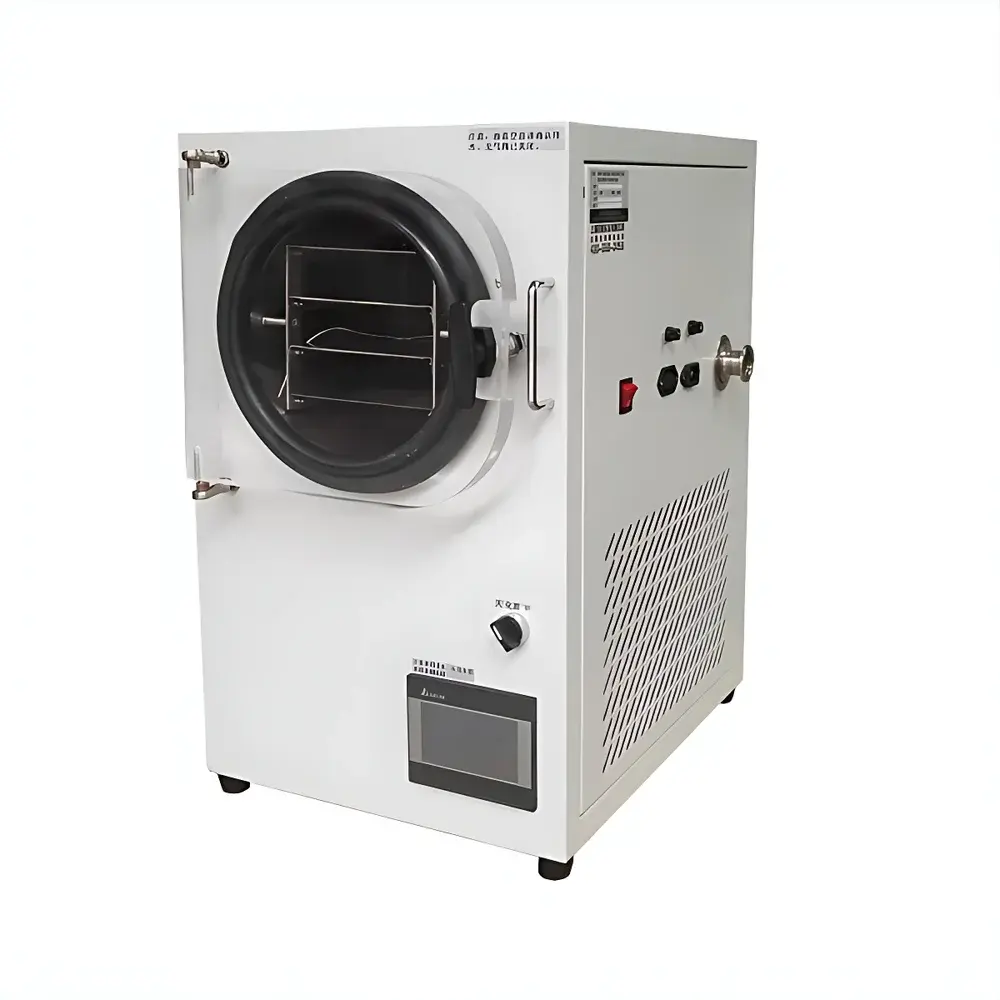
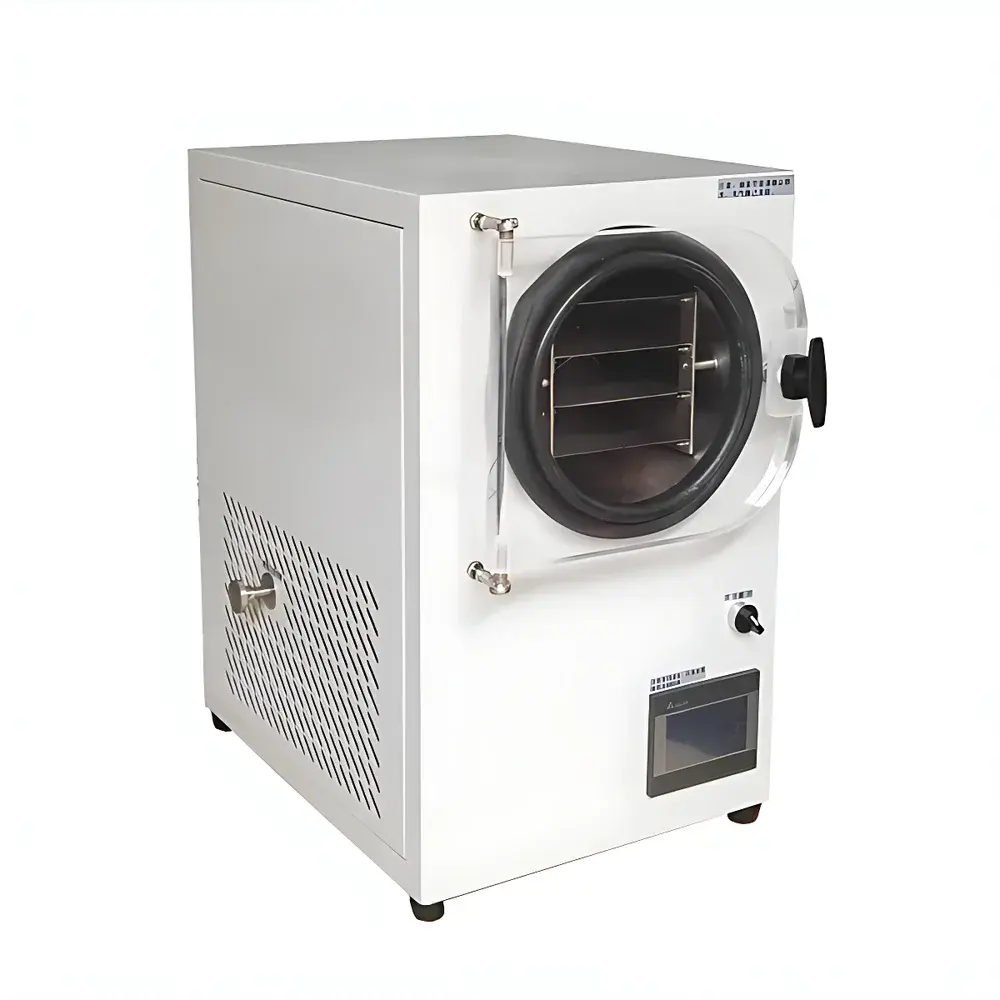
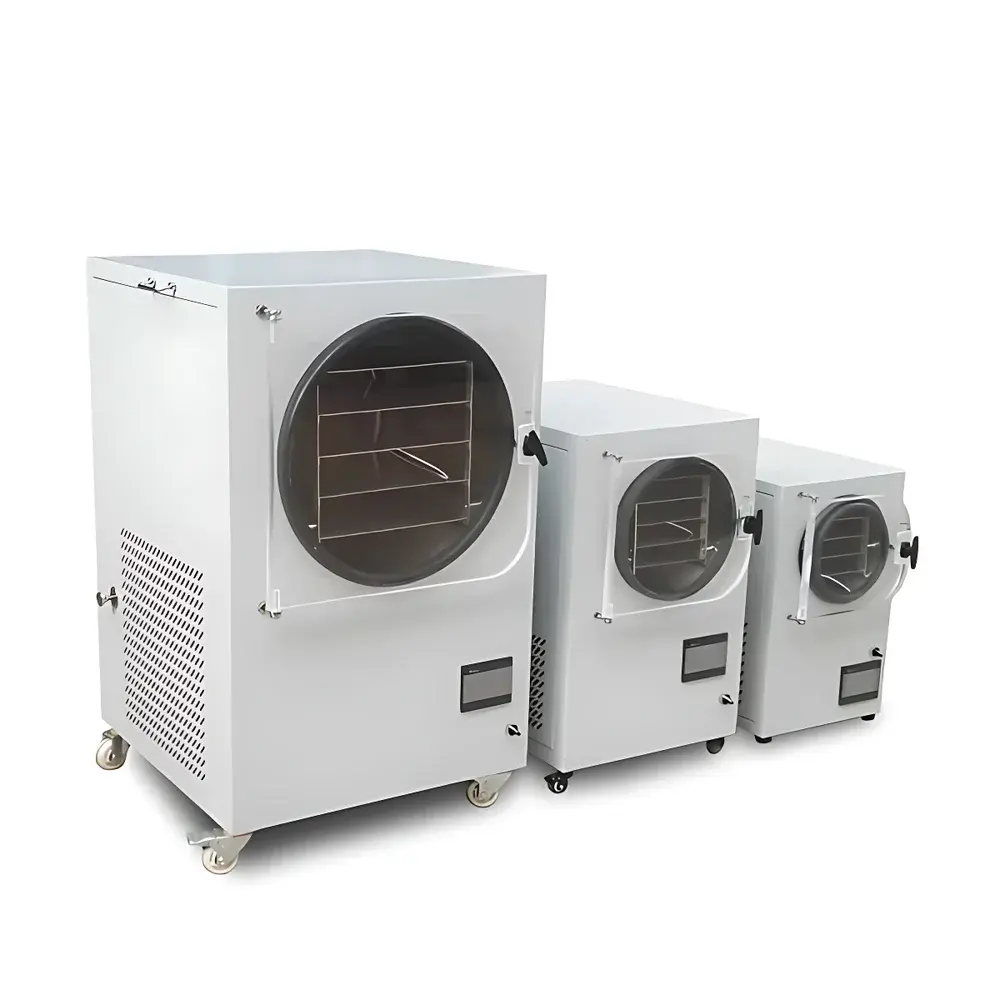
Tianfeng TF-HFD-1 Benchtop Laboratory Freeze Dryer
| Brand | Tianfeng |
|---|---|
| Origin | Shanghai, China |
| Manufacturer Type | Direct Manufacturer |
| Equipment Type | Standard Shelf-Type Freeze Dryer |
| Application Scope | Research & Development Laboratories, Pilot-Scale Food Processing, Nutraceutical R&D |
| Freeze-Drying Area | 0.1 m² |
| Ultimate Vacuum (Empty Chamber) | 10 Pa |
| Condenser Capacity (24 h) | 1 kg |
| Condenser Temperature | ≤ −40 °C |
| Shelf Dimensions | 145 mm × 275 mm |
| Power Supply | 220 V, 50 Hz |
| Rated Power | 750 W |
| Overall Dimensions (W×D×H, excl. door/handle) | 400 × 550 × 700 mm |
| Construction Material | SUS304 Stainless Steel Chamber & Trays |
| Viewing Window | Transparent Acrylic Door |
| Control System | Touchscreen Interface with Real-Time Graphical Data Logging |
| Defrost Mode | One-Touch Automatic Defrost |
| Heating Method | Electric Shelf Heating |
| Compliance | Designed for GLP-aligned workflows |
Overview
The Tianfeng TF-HFD-1 is a compact, benchtop shelf-type freeze dryer engineered for precision lyophilization in academic laboratories, food science R&D centers, and nutraceutical development facilities. It operates on the fundamental principle of sublimation—removing water from frozen samples under deep vacuum while maintaining low thermal input to preserve labile compounds such as vitamins, enzymes, probiotics, and heat-sensitive phytochemicals. Unlike industrial-scale systems, the TF-HFD-1 integrates laboratory-grade performance within a footprint of just 0.12 m³, making it suitable for shared instrumentation spaces or quality control labs with limited floor area. Its design adheres to core freeze-drying thermodynamics: freezing at ≤ −40 °C ensures complete eutectic solidification of aqueous matrices; subsequent primary drying occurs under sustained vacuum (≤10 Pa) to enable efficient ice sublimation; secondary drying follows with controlled shelf heating (electrically regulated) to remove bound moisture without thermal degradation. This unit is not intended for GMP manufacturing but is validated for method development, stability testing, and small-batch prototype production.
Key Features
- Integrated touchscreen HMI with real-time graphical display of shelf temperature, condenser temperature, chamber pressure, and time-resolved drying curves—enabling immediate visual assessment of process progression.
- Original-position freeze-drying architecture: samples are frozen directly on the heated shelf, eliminating transfer-induced crystallization disruption and ensuring consistent ice nucleation morphology.
- SUS304 stainless steel chamber and sample trays provide corrosion resistance, ease of cleaning, and compliance with food-contact material standards (FDA 21 CFR §178.3570).
- Acrylic front door offers full optical access to monitor structural changes during drying—critical for optimizing cycle parameters for delicate matrices like fruit purees or microbial cultures.
- One-touch automatic defrost system reduces downtime between cycles and prevents manual intervention errors that may compromise vacuum integrity or condenser efficiency.
- Low-noise, high-efficiency refrigeration circuit with imported compressors delivers stable condenser performance at ≤ −40 °C, supporting reliable ice capture across diverse sample loads up to 1 kg per batch.
- Energy-conscious design: rated power consumption of 750 W enables continuous operation without dedicated circuit upgrades—ideal for university core facilities and startup incubators.
Sample Compatibility & Compliance
The TF-HFD-1 accommodates a broad range of biological and food-derived samples, including but not limited to: fruit and vegetable slices/purees, pet food formulations, herbal extracts, bacterial and yeast suspensions, protein solutions, and vitamin-enriched gels. Its 0.1 m² shelf area supports up to six standard 145 mm × 275 mm trays, enabling parallel processing of heterogeneous formulations. All operational parameters—including shelf ramp rates, hold durations, vacuum setpoints, and final desorption temperatures—are fully programmable and reproducible. While the unit does not carry CE or UL certification out-of-the-box, its architecture aligns with foundational requirements of ISO 13485 (for medical device R&D), ISO 22000 (food safety management), and USP (sterile processing guidance). Raw data logs (temperature, pressure, time) are timestamped and exportable in CSV format—supporting internal GLP documentation and preliminary process validation protocols.
Software & Data Management
The embedded control firmware provides non-volatile storage of up to 100 user-defined drying protocols. Each protocol includes multi-step temperature/vacuum profiles, with adjustable ramp rates (0.1–5.0 °C/min) and dwell times (1–999 min). During operation, the system records data at 1-second intervals and overlays live curves on the 7-inch capacitive touchscreen. Post-run, users can export complete datasets—including shelf temp, condenser temp, chamber pressure, and elapsed time—to USB flash drives for offline analysis in MATLAB, Python (Pandas), or Excel. Audit trails are maintained locally: all parameter modifications, start/stop commands, and alarm events are logged with UTC timestamps. Though the system lacks native 21 CFR Part 11 electronic signature capability, its deterministic logging behavior facilitates third-party integration with LIMS platforms via RS-232 or optional Ethernet module.
Applications
- Food science research: stabilization of anthocyanins in berry powders, retention of volatile aromatics in coffee extracts, and texture preservation in freeze-dried pet treats.
- Nutraceutical development: lyophilization of probiotic strains (e.g., Lactobacillus rhamnosus) with cryoprotectant screening, and vitamin C–fortified snack formulations requiring minimal oxidative loss.
- Botanical R&D: dehydration of Ginseng root slices and Salvia miltiorrhiza extracts while preserving diterpenoid quinones and tanshinones.
- Academic teaching labs: hands-on demonstration of phase diagrams, mass transfer kinetics, and collapse temperature determination using model sucrose-mannitol systems.
- QC/QA support: accelerated stability studies of lyophilized reference standards under ICH Q1A(R3) conditions.
FAQ
What is the maximum batch capacity for aqueous solutions?
The TF-HFD-1 is rated for 1 kg of total water content per cycle—not total sample mass. For typical fruit purees (≈85% water), this corresponds to ~6–7 kg of wet material. Optimal loading assumes uniform distribution across the shelf surface to avoid localized vapor flow restriction.
Can the system be used for sterile processing?
No. The TF-HFD-1 lacks steam-in-place (SIP) capability, HEPA filtration, or ISO Class 5 chamber certification. It is intended for non-sterile R&D use only.
Is remote monitoring supported?
Standard configuration includes local touchscreen control only. Optional RS-232 or Ethernet modules enable external PC-based supervision and data streaming, subject to custom firmware provisioning.
How frequently should the vacuum pump oil be changed?
Under normal operation (≤4 hrs/day, ambient temperature <30 °C), oil replacement is recommended every 500 operating hours or annually—whichever occurs first—to maintain ≤10 Pa base pressure performance.
Does the unit include a vacuum pump?
Yes. A dual-stage rotary vane vacuum pump is integrated into the main chassis, pre-connected and calibrated. No external pump purchase is required for basic operation.
Related Products



