
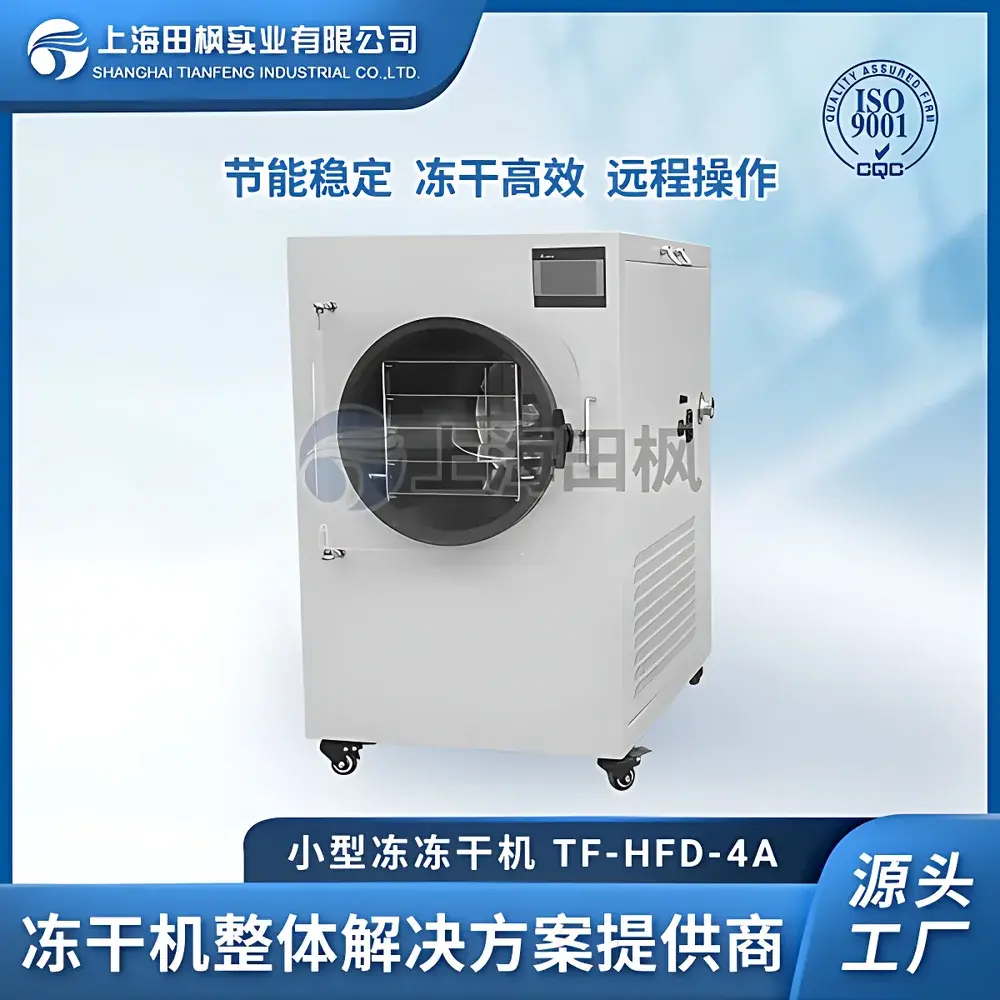
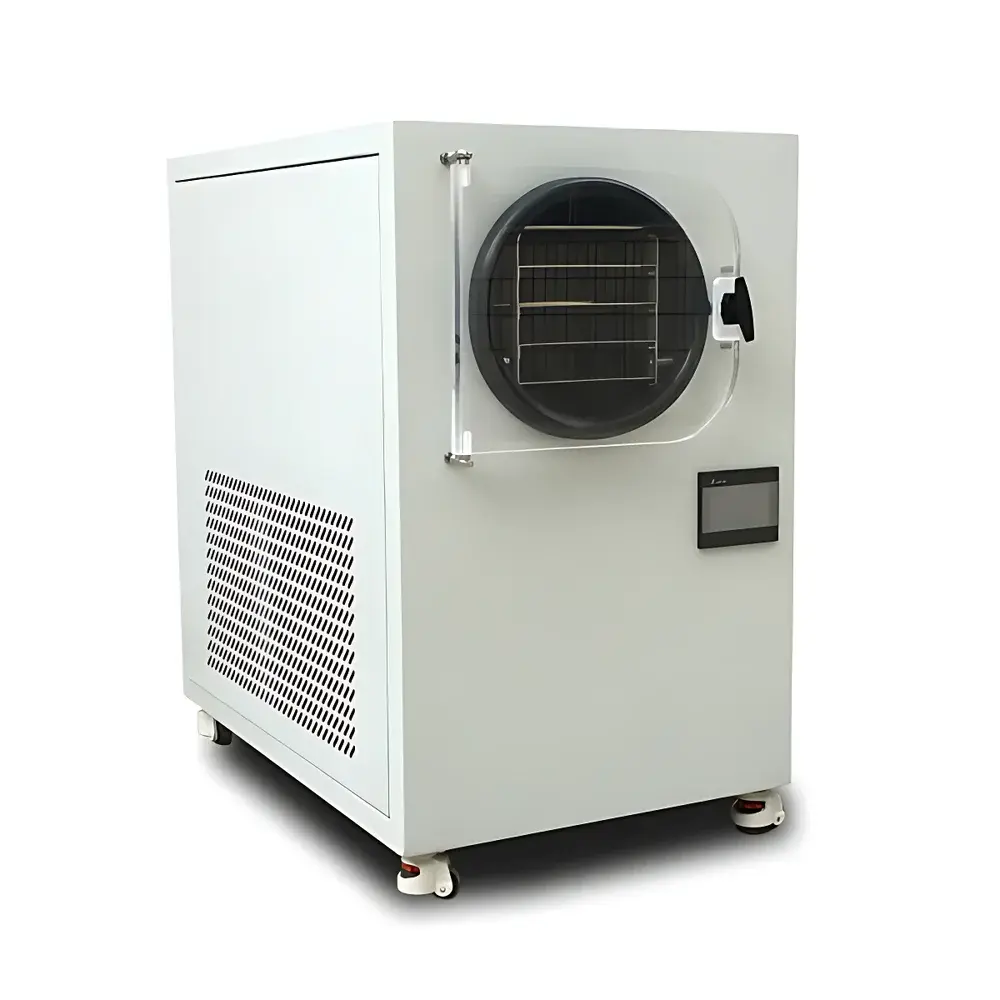
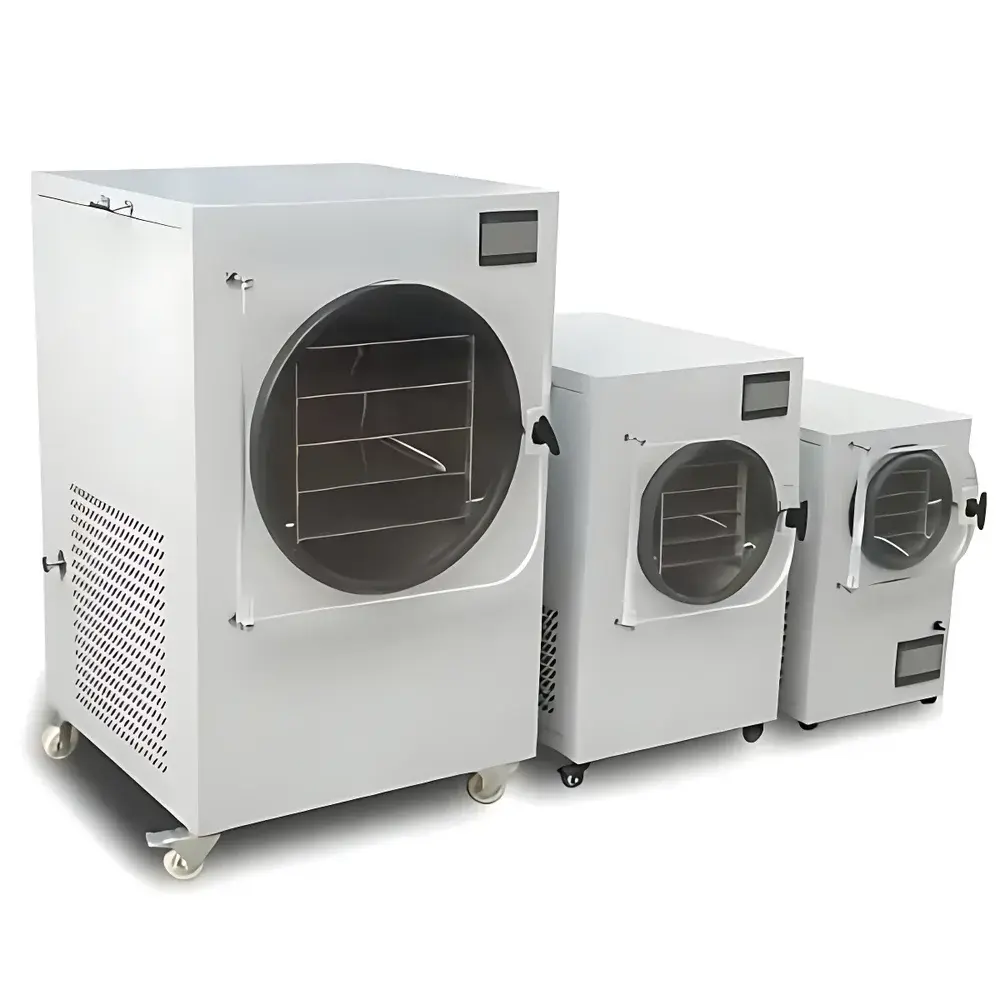
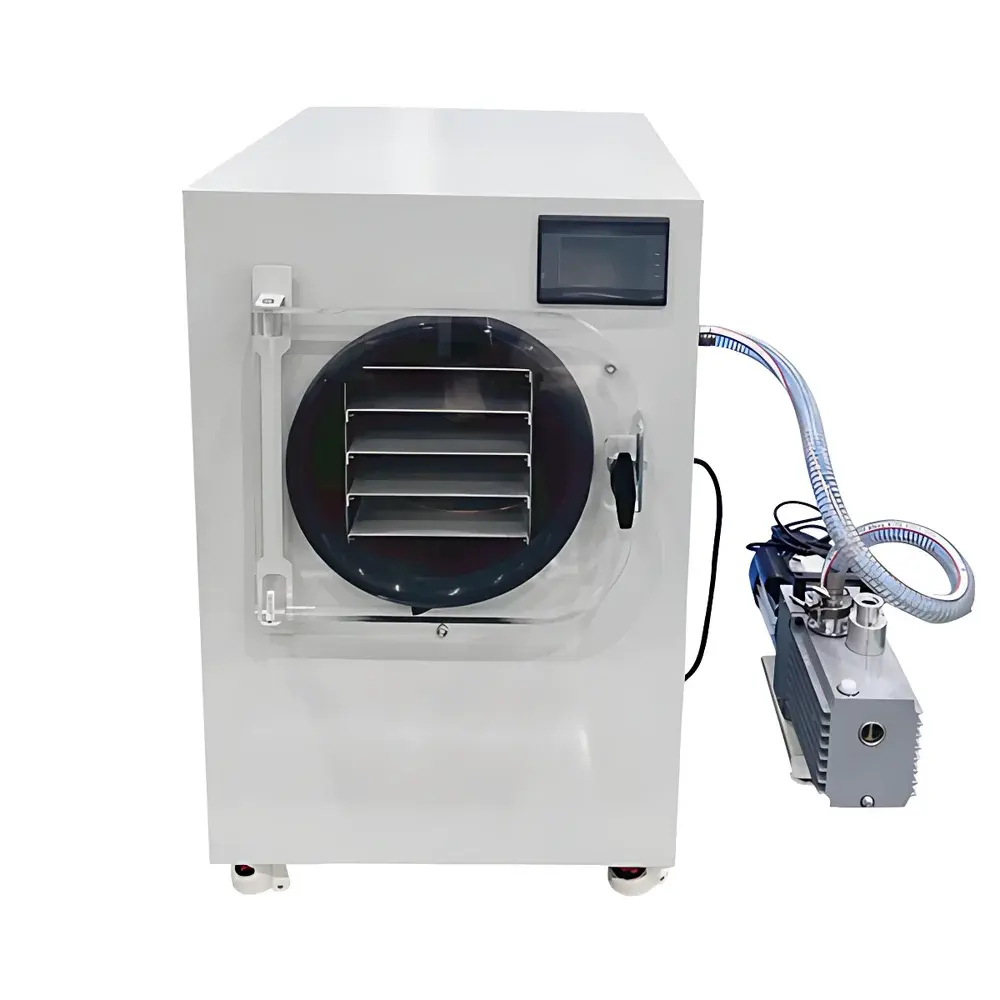
Tianfeng TF-HFD-4A Peach-Scented Benchtop Freeze Dryer
| Brand | Tianfeng |
|---|---|
| Origin | Shanghai, China |
| Manufacturer Type | Direct Manufacturer |
| Product Category | Domestic |
| Model | TF-HFD-4A |
| Instrument Type | Standard Shelf-Type Freeze Dryer |
| Application Scope | Pilot-Scale |
| Freeze-Drying Area | 0.4 m² |
| Ultimate Vacuum | 10 Pa (at no-load) |
| Condenser Temperature | ≤ −70 °C |
| Water Capture Capacity | 6 kg/24 h |
| Condenser Dimensions | 200 mm × 450 mm |
| Power Supply | 220 V, 50 Hz |
| Power Consumption | 2600 W |
| Main Unit Dimensions | 600 × 900 × 950 mm (L×W×H, excluding door and handles) |
| Construction Material | SUS304 stainless steel chamber and trays |
| Control Interface | Touchscreen with real-time shelf temperature and process curve display |
| Defrosting | One-Touch Automatic Defrost |
| Safety Features | Over-Temperature Protection, Vacuum Interlock |
Overview
The Tianfeng TF-HFD-4A Peach-Scented Benchtop Freeze Dryer is a pilot-scale, in-situ freeze drying system engineered for precision, repeatability, and operational simplicity in laboratory and small-batch production environments. It operates on the physical principle of sublimation—removing water from frozen samples under deep vacuum (≤10 Pa) while maintaining temperatures below the eutectic point, thereby preserving thermolabile compounds, structural integrity, and biological activity. Unlike conventional hot-air or spray drying methods, this process avoids liquid-phase transition, minimizing denaturation, oxidation, and morphological collapse. Designed for versatility across food science, nutraceutical development, herbal extract stabilization, and biopreservation, the TF-HFD-4A integrates a high-efficiency condenser (≤−70 °C), stainless-steel chamber architecture, and intelligent PID-controlled shelf temperature management—ensuring consistent primary and secondary drying phases across diverse sample matrices.
Key Features
- In-situ freezing and drying capability eliminates manual transfer between freezer and dryer—reducing contamination risk and improving process reproducibility.
- Transparent acrylic observation door enables real-time visual monitoring of ice sublimation, cake formation, and endpoint detection without breaking vacuum.
- SUS304 stainless steel chamber and sample trays meet FDA-compliant material standards for food-grade and GMP-adjacent applications.
- Touchscreen HMI with embedded data logging displays real-time shelf temperature, chamber pressure, condenser temperature, and full lyophilization curves (time vs. T° and P).
- User-definable multi-step drying protocols—including ramp-hold segments for controlled primary drying and isothermal secondary drying—support method development per USP , ISO 22081, and ICH Q5C guidelines.
- One-touch automatic defrost function reduces downtime between cycles; integrated over-temperature and vacuum-failure interlocks comply with IEC 61010-1 safety requirements.
- Optimized thermal design achieves low power draw (2600 W nominal) and stable operation under continuous 24-hour duty cycles—validated for ≥6 kg water removal capacity per 24 hours.
Sample Compatibility & Compliance
The TF-HFD-4A accommodates heterogeneous samples including pet food formulations, fruit purees (e.g., peach, strawberry), probiotic suspensions, botanical extracts, enzyme solutions, and diagnostic reagent stocks. Its 0.4 m² shelf area supports up to four standard 200 mm × 450 mm trays. All wetted surfaces are electropolished SUS304, facilitating clean-in-place (CIP) procedures and compatibility with alcohol-based sanitizers. While not certified for sterile manufacturing, the unit meets essential design criteria referenced in ISO 20933 (freeze-drying equipment for pharmaceuticals) and aligns with GLP documentation expectations for lab-scale stability studies. Vacuum integrity and temperature uniformity across shelves have been verified per ASTM F2337–22 Annex A2 test protocols.
Software & Data Management
Data acquisition is handled via an onboard embedded controller supporting CSV export of time-stamped parameters (shelf T°, chamber pressure, condenser T°, elapsed time). The interface logs ≥30 days of continuous operation history with timestamped event markers (e.g., “Vacuum reached”, “Primary drying completed”, “Defrost initiated”). Audit trails include operator ID entry (optional), parameter change timestamps, and system error codes—meeting foundational requirements for 21 CFR Part 11 compliance when paired with networked backup and user-access controls. No cloud connectivity is built-in; local USB export ensures data sovereignty and simplifies validation in regulated QC labs.
Applications
- Pet food R&D: Preservation of raw meat, organ meats, and functional supplements without Maillard reaction or lipid oxidation.
- Functional food development: Stabilization of anthocyanins, polyphenols, and live cultures in fruit- and herb-based snacks.
- Traditional medicine: Lyophilization of decoction concentrates and volatile oil-loaded granules while retaining marker compound profiles.
- Academic research: Method optimization for cryoprotectant screening, collapse temperature mapping, and residual moisture quantification (via Karl Fischer post-run analysis).
- Biotech prototyping: Small-batch drying of viral vectors, monoclonal antibody formulations, and cell lysates prior to analytical characterization.
FAQ
What is the maximum sample load volume per cycle?
The 0.4 m² shelf area supports approximately 4–6 L of aqueous solution (assuming 10–15 mm fill depth), yielding ~0.6–0.9 kg dry mass depending on solids content.
Does the system support shelf temperature control during freezing?
Yes—programmable pre-freeze ramps and holds allow controlled nucleation and annealing, critical for crystalline vs. amorphous matrix formation.
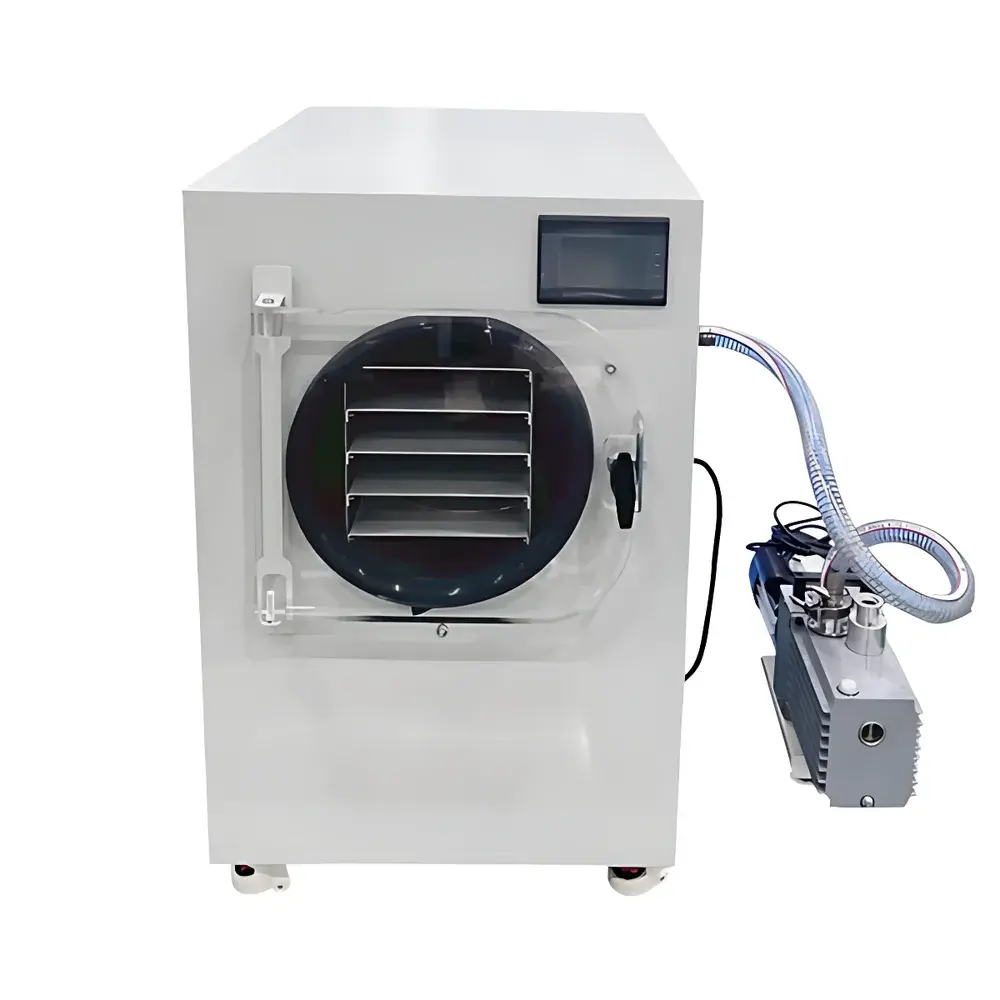
Is the vacuum pump included?
No—the TF-HFD-4A requires an external oil-lubricated or dry scroll vacuum pump capable of achieving ≤10 Pa base pressure; recommended pumping speed: ≥12 m³/h.
Can the unit be validated for GMP use?
It provides the foundational hardware and data logging required for IQ/OQ execution; however, formal PQ must be performed by the end user against defined product-specific acceptance criteria.
What maintenance intervals are recommended?
Condenser coil inspection every 200 operating hours; vacuum pump oil change every 500 hours; door seal cleaning and torque verification quarterly.



