
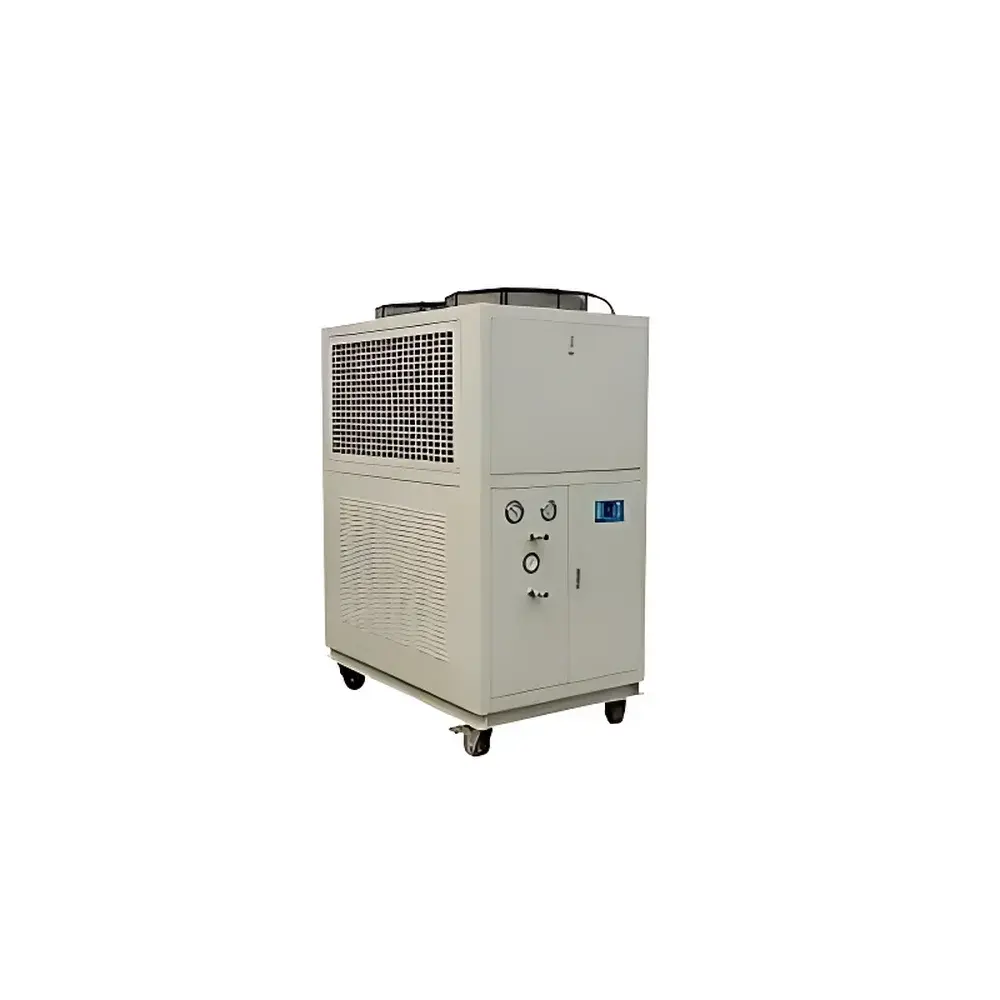
Tianfeng TF-LS-1P Air-Cooled Circulating Chiller
| Brand | Tianfeng |
|---|---|
| Origin | Shanghai, China |
| Manufacturer Type | Direct Manufacturer |
| Equipment Type | Integrated Air-Cooled Circulating Chiller |
| Cooling Method | Air-Cooled |
| Temperature Range | 4–40 °C |
| Cooling Capacity | 2500 W |
| Temperature Stability | ±0.1 °C |
| Circulation Pump Pressure | 2.0 bar |
| Circulation Flow Rate | 38 L/min |
| Reservoir Volume | 27 L |
| Operation Mode | Continuous Duty |
Overview
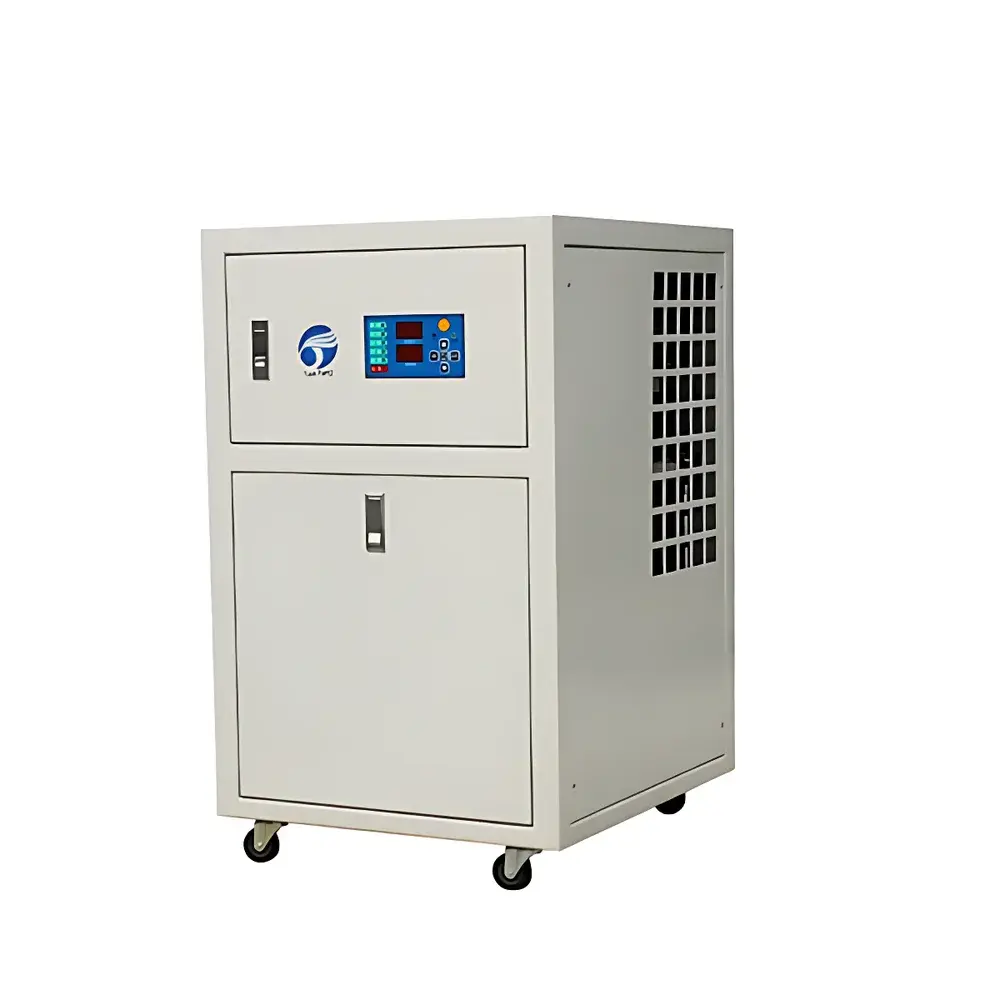
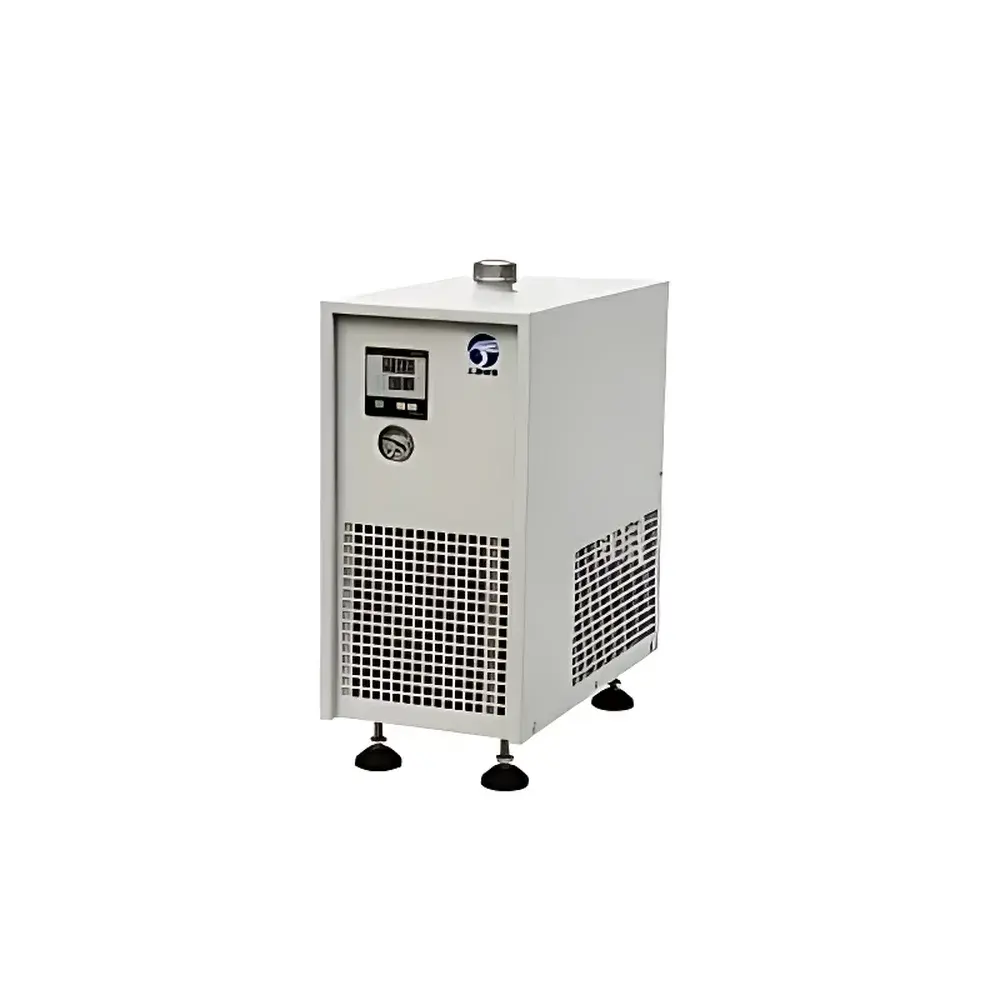
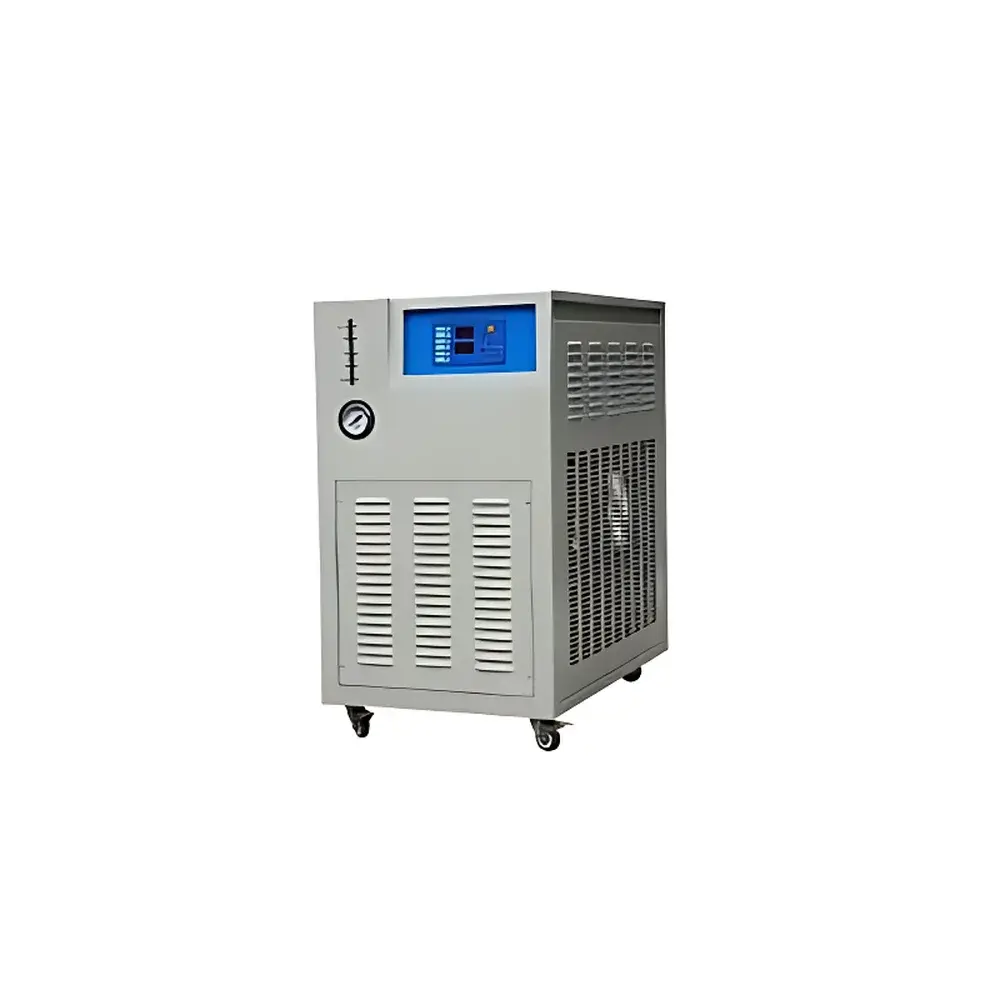
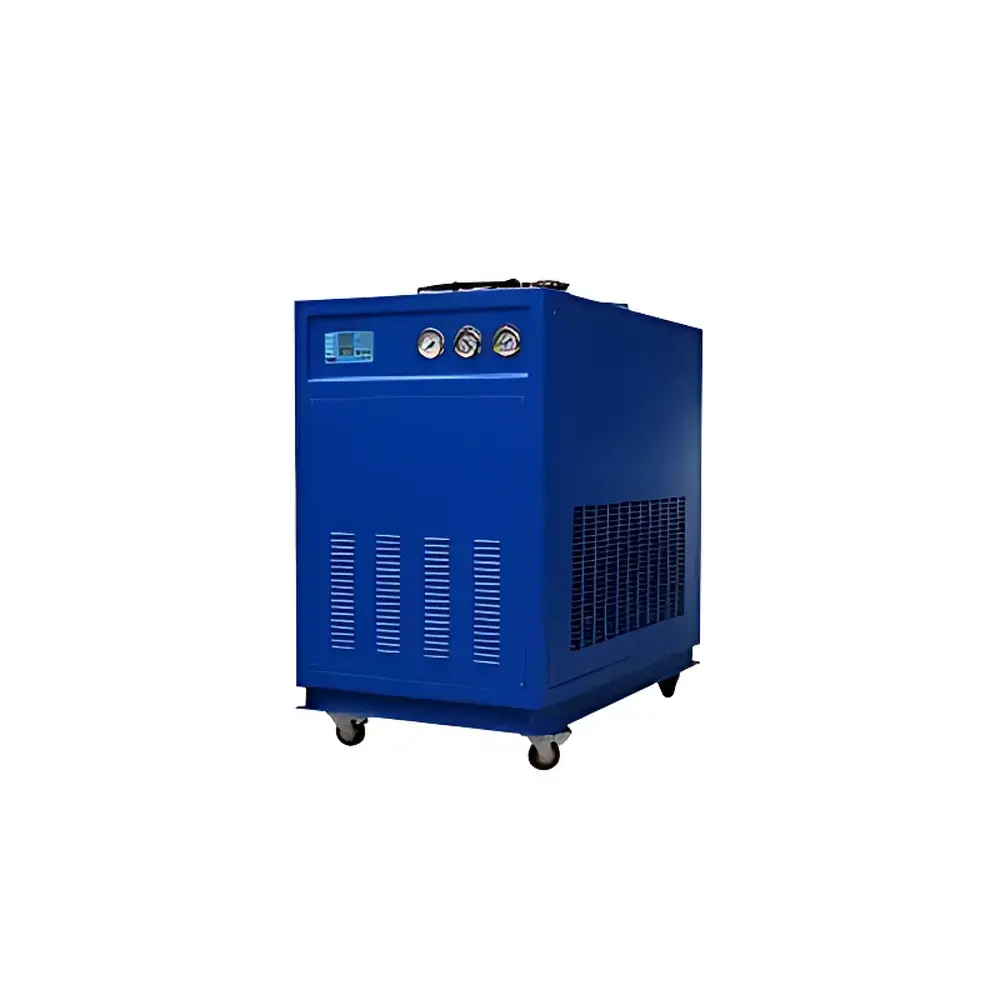
The Tianfeng TF-LS-1P is an integrated air-cooled circulating chiller engineered for precise thermal management in laboratory and light industrial environments. It operates on the vapor-compression refrigeration cycle, utilizing R22 refrigerant (in compliance with current regional regulatory allowances for legacy equipment servicing) and a high-efficiency hermetic rotary compressor. Heat rejection occurs via a finned-tube condenser assembly—comprising copper tubes with aluminum fins—and a low-noise external-rotor fan, delivering consistent airflow of 1000 m³/h. Unlike water-cooled systems requiring external cooling towers or facility water loops, this unit achieves self-contained heat dissipation through ambient air, simplifying installation and reducing infrastructure dependency. Its compact footprint (650 × 550 × 915 mm) and 27 L stainless-steel 304 reservoir support benchtop or floor-mounted deployment in analytical labs, spectroscopy suites, laser cooling applications, and small-scale process validation setups.
Key Features
- Stable temperature control within ±0.1 °C across the full 4–40 °C operating range, enabled by digital PID temperature regulation and high-resolution NTC sensor feedback.
- High-flow circulation system: 38 L/min at 2.0 bar pressure, driven by a corrosion-resistant centrifugal pump with 0.37 kW motor output—optimized for low-head, high-volume delivery to external equipment.
- Robust mechanical architecture: Condenser constructed using mechanically expanded copper-aluminum finned-tube design; evaporator configured as a submerged coil-in-tank for uniform thermal exchange.
- Comprehensive safety protection suite: Compressor overheat detection, high/low pressure cutouts, phase failure monitoring, overload relay, and tank overtemperature safeguard—each logged and displayed via the front-panel controller.
- Pre-charged and factory-tested: Unit arrives fully charged with refrigerant, evacuated, and validated for performance against nominal cooling capacity (2.5 kW at 20 °C ambient), minimizing commissioning time.
Sample Compatibility & Compliance
The TF-LS-1P interfaces seamlessly with standard laboratory instrumentation requiring external coolant circulation—including UV-Vis spectrophotometers, ICP-OES plasma sources, HPLC column ovens, electrophoresis power supplies, and laser diode mounts. Its 304 stainless-steel reservoir and DN25 inlet/outlet ports ensure chemical compatibility with deionized water, glycol-water mixtures (up to 30% v/v), and other non-corrosive heat-transfer fluids. While not certified to UL 61010-1 or CE Machinery Directive out-of-box, the unit adheres to baseline electrical safety principles per IEC 60335-1 and incorporates grounding continuity, double insulation on control circuits, and IP20-rated enclosure. For GLP/GMP-regulated environments, optional audit-trail-capable controllers (with timestamped setpoint changes and alarm history) may be integrated upon request.
Software & Data Management
The embedded digital controller provides real-time display of reservoir temperature, setpoint, pump status, and fault codes. All parameters are adjustable via membrane keypad with intuitive menu navigation. While the base model lacks Ethernet or USB connectivity, it supports analog 0–10 V or 4–20 mA external setpoint input for integration into centralized building management systems (BMS) or PLC-controlled workflows. Optional RS485 Modbus RTU interface enables remote monitoring of temperature, flow status, and compressor run hours—facilitating predictive maintenance scheduling and logbook compliance per ISO/IEC 17025 Clause 5.9.
Applications
- Optical instrumentation cooling: Stabilizing detector temperatures in FTIR and Raman spectrometers to reduce dark current drift and improve signal-to-noise ratio.
- Chromatography support: Maintaining consistent column oven and detector block temperatures in GC and HPLC systems to ensure retention time reproducibility.
- Laser thermal management: Providing stable coolant supply to diode-pumped solid-state (DPSS) lasers and fiber laser amplifiers where thermal lensing must be minimized.
- Material testing: Conditioning environmental chambers, tensile testers, and rheometers requiring controlled fluid-loop thermal coupling.
- Electrochemical cell regulation: Enabling isothermal operation during cyclic voltammetry and battery cycling studies where electrolyte temperature directly affects reaction kinetics.
FAQ
What refrigerant does the TF-LS-1P use, and is it compliant with current environmental regulations?
The unit uses R22 refrigerant. While R22 is phased out under the Montreal Protocol in new equipment, it remains permissible for service and maintenance of existing units in many jurisdictions. Replacement with R407C or R410A requires full system redesign and is not supported as a field retrofit.
Can this chiller operate continuously at 4 °C ambient temperature?
Yes—the unit is rated for continuous duty across ambient conditions from 10 °C to 43 °C. At low ambient temperatures (<15 °C), optional low-ambient head-pressure control kits are recommended to prevent compressor short-cycling.
Is the reservoir compatible with 30% ethylene glycol solution?
Yes. The 304 stainless-steel tank and EPDM-sealed pump housing resist degradation from glycol-based coolants up to 30% concentration. Ensure pH remains between 6.5–8.5 to avoid long-term passivation loss.
Does the chiller include flow monitoring or low-flow shutdown?
No. The base configuration lacks inline flow sensing. Users integrating with sensitive instruments should install external flow switches (e.g., SIEMENS Desigo FX) in the return line for interlocked shutdown.
What is the expected service interval for the compressor and pump?
Under typical lab usage (8 hrs/day, 5 days/week), the Hitachi rotary compressor is rated for >30,000 operational hours. The Suzhou Dengfeng pump requires bearing inspection every 12 months or 5,000 hours—whichever occurs first.



