
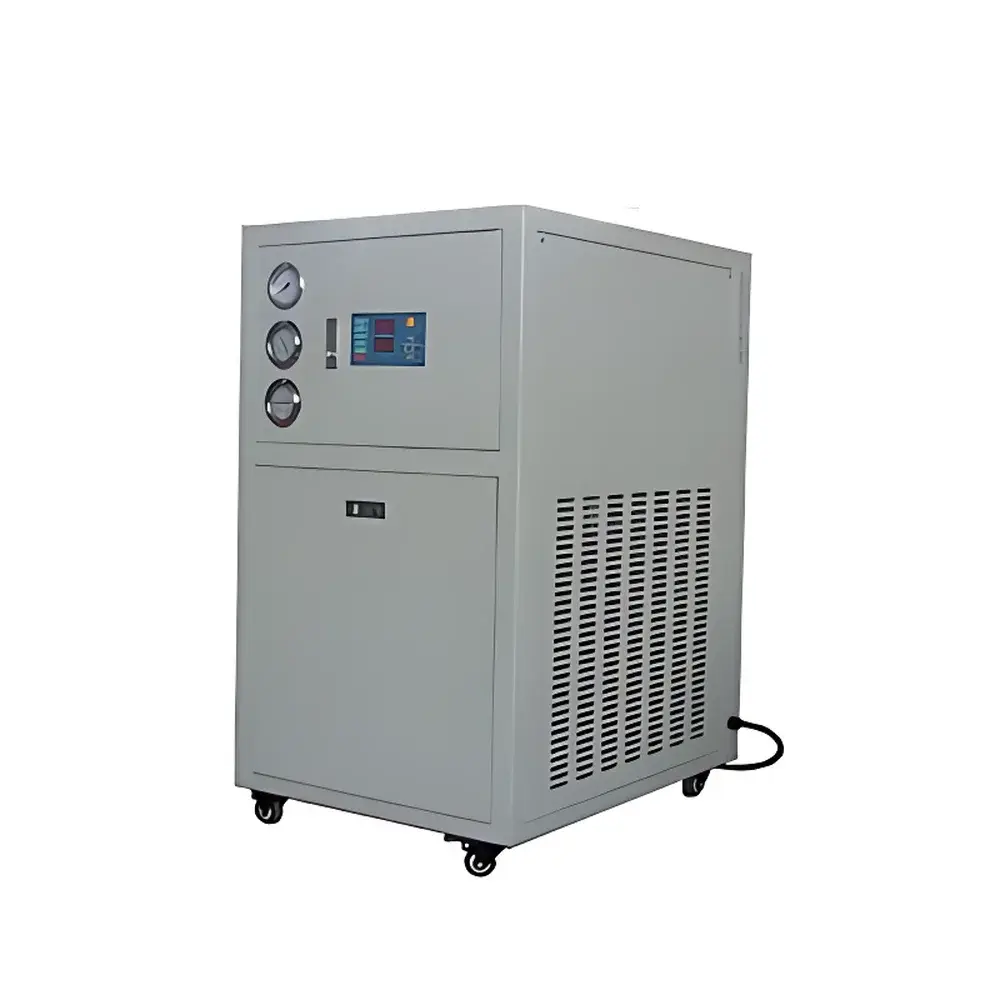
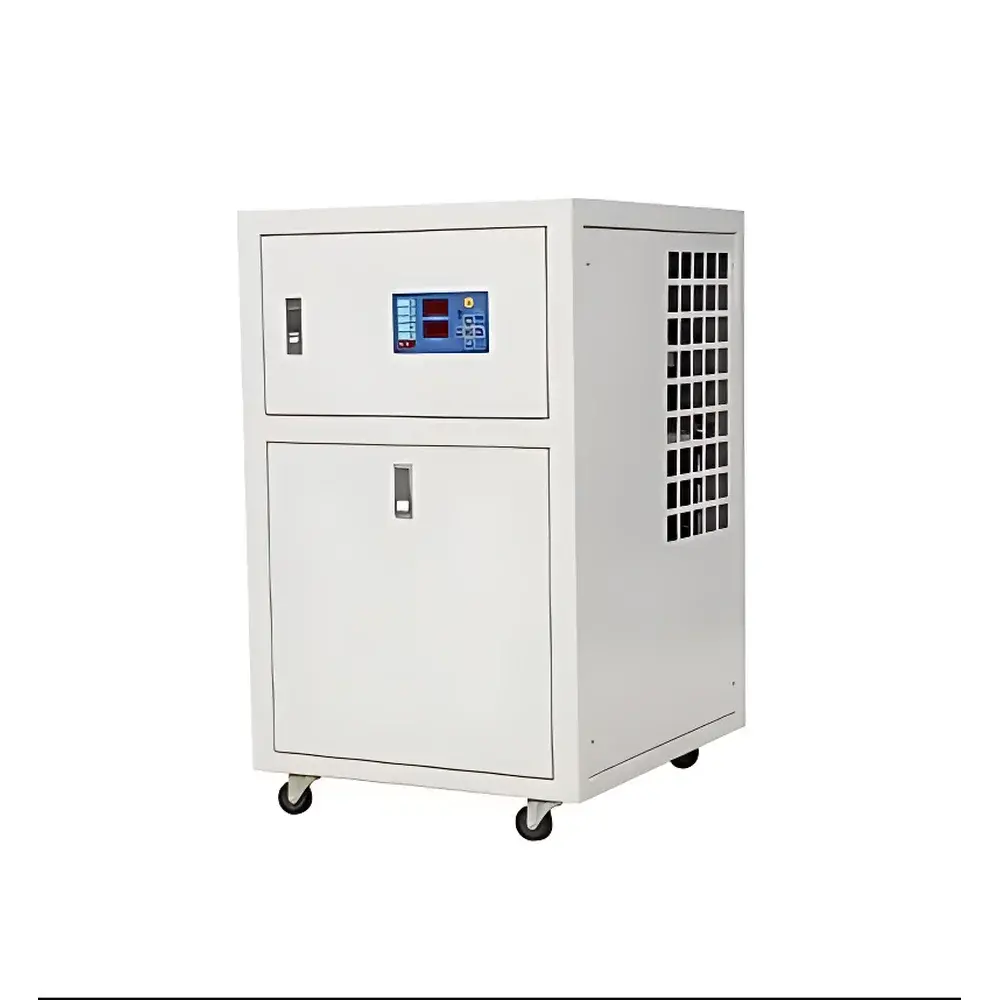
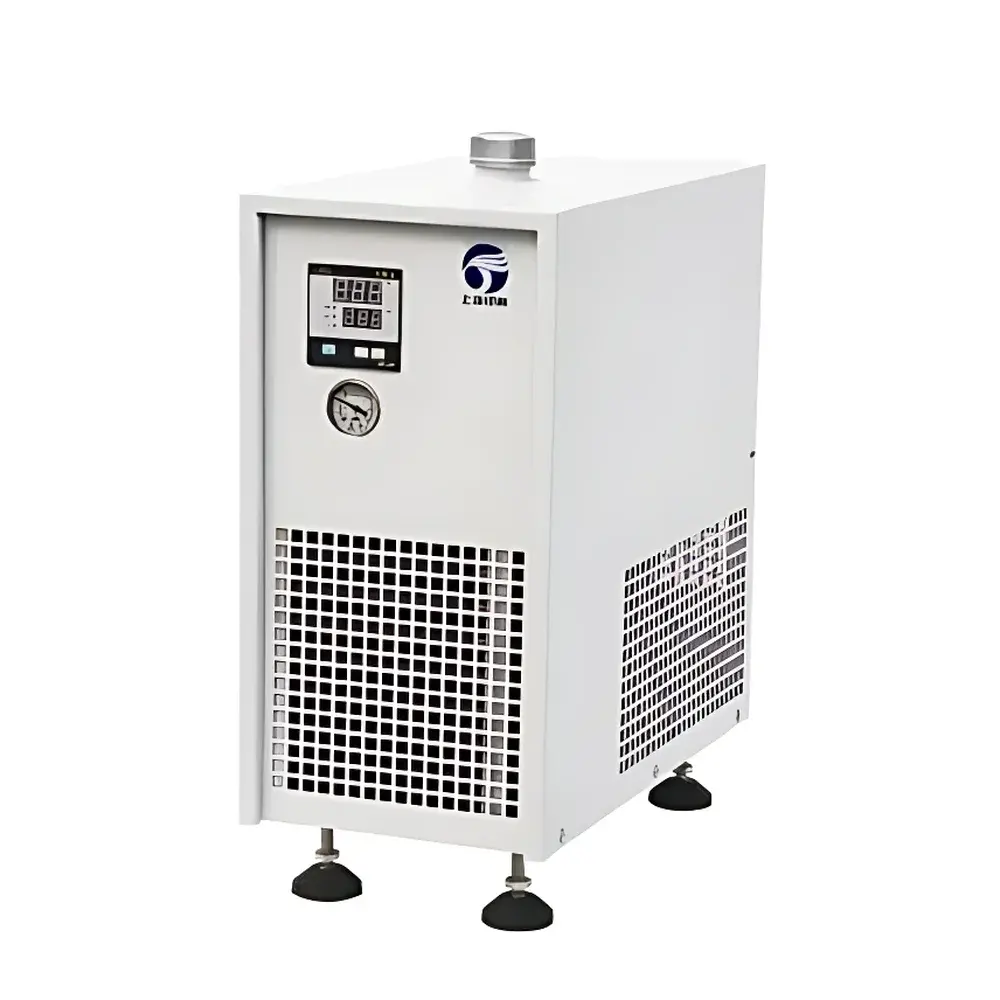
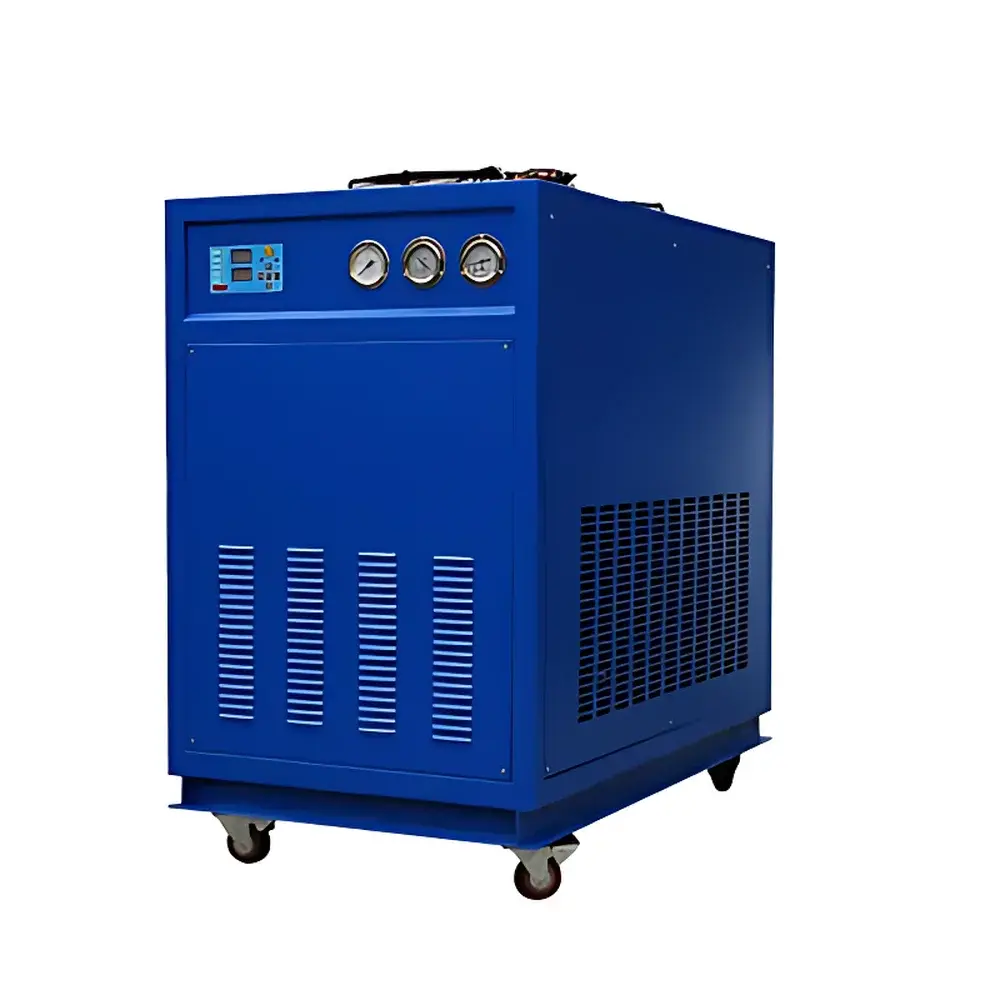
Tianfeng TF-LS-3.5KW Integrated Circulating Chiller
| Brand | Tianfeng |
|---|---|
| Origin | Shanghai, China |
| Manufacturer Type | Direct Manufacturer |
| Instrument Type | Integrated Circulating Chiller |
| Cooling Method | Water-Cooled |
| Refrigeration Capacity | 3.5 kW |
| Temperature Stability | ±0.3 °C (typical, at 20 °C setpoint) |
| Circulating Pump Pressure | 0–2 kgf/cm² |
| Circulating Flow Rate | 0–60 L/min |
| Reservoir Volume | 45 L |
| Power Input | 1.8 kW |
| Voltage/Frequency | 220 V / 50 Hz |
| Dimensions (L×W×H) | 800 × 600 × 1065 mm |
| Compressor | Scroll-type, High-Efficiency |
| Safety Protections | Compressor overheat, overcurrent, high/low pressure, and overtemperature protection |
| Construction | Stainless steel reservoir and pump |
| Temperature Control | Digital PID controller (standard Chinese OEM unit |
| Noise Level | ≤65 dB(A) |
| Operating Ambient Temperature | ≤35 °C |
| Supply Water Temperature Range | 5–30 °C |
| Recommended Return Water Temperature | ≤40 °C |
Overview
The Tianfeng TF-LS-3.5KW Integrated Circulating Chiller is a precision-engineered thermal management system designed for continuous, stable cooling of heat-generating laboratory and industrial equipment. It operates on a closed-loop refrigeration cycle using R22 or R407C refrigerant (model-dependent), integrating a scroll compressor, high-efficiency condenser, expansion valve (imported from Italy or Germany), and a stainless-steel insulated reservoir. The chiller delivers consistent coolant output within a controlled temperature range of 5–30 °C, with typical temperature stability of ±0.3 °C at steady-state operation—critical for applications requiring thermal reproducibility. Its water-cooled architecture enables integration into facility cooling water circuits, reducing ambient heat rejection and improving energy efficiency compared to air-cooled alternatives. Designed for uninterrupted 24/7 operation, the unit complies with IEC 61000-6-2 (immunity) and IEC 61000-6-4 (emission) electromagnetic compatibility standards, and meets CE safety requirements for Class I electrical equipment.
Key Features
- Integrated compact design with footprint of 0.48 m²—optimized for limited lab floor space and mobile deployment.
- High-reliability scroll compressor delivering stable refrigeration capacity of 3.5 kW at standard conditions (chilled water inlet 12 °C, outlet 7 °C; ambient cooling water 30 °C in, 40 °C out).
- Digital PID temperature controller with real-time LED display of outlet water temperature; supports both fixed-setpoint and intelligent adaptive control modes.
- Stainless-steel reservoir (45 L) and circulation pump resistant to corrosion from deionized water, glycol-water mixtures (up to 30% v/v), and common laboratory coolants.
- Adjustable flow rate (0–60 L/min) and pressure (0–2 kgf/cm²) via calibrated bypass and impeller regulation—enabling matched hydraulic performance for diverse instrument interfaces.
- Comprehensive safety suite: compressor overheat protection, high/low refrigerant pressure cutoffs, motor overcurrent detection, and reservoir overtemperature alarm.
- Modular electrical architecture featuring certified components from Siemens, Schneider Electric, and Omron—ensuring long-term operational integrity under variable load conditions.
- Low-noise operation (<65 dB[A] at 1 m), suitable for shared laboratory environments where acoustic compliance is required per ISO 15710.
Sample Compatibility & Compliance
The TF-LS-3.5KW is engineered to interface with analytical and materials characterization instruments requiring precise thermal stabilization, including graphite furnace atomic absorption spectrometers (GFAAS), inductively coupled plasma optical emission spectrometers (ICP-OES), inductively coupled plasma mass spectrometers (ICP-MS), X-ray fluorescence (XRF) analyzers, X-ray diffractometers (XRD), scanning electron microscopes (SEM), and transmission electron microscopes (TEM). It also supports laser-based systems (e.g., laser cutting, marking, welding), vacuum deposition tools, and high-speed spindles. All wetted surfaces meet USP Class VI biocompatibility requirements for non-contact coolant pathways. While not intrinsically rated for hazardous locations, the unit conforms to GLP infrastructure guidelines for auxiliary equipment validation—supporting IQ/OQ documentation packages. Electrical safety certification aligns with GB 4706.1–2005 (equivalent to IEC 60335-1) and RoHS Directive 2011/65/EU.
Software & Data Management
This chiller operates as a standalone hardware-controlled system without embedded firmware-based data logging or network connectivity. Temperature setpoints, flow status, and fault codes are displayed locally via a 4-digit LED interface. For integration into automated laboratories, analog 0–10 V or 4–20 mA process signals (optional configuration) enable external supervisory control via PLC or SCADA systems. Alarm outputs are provided as dry-contact relay signals (NO/NC), compatible with building management systems (BMS) and centralized lab monitoring platforms. While the base unit does not support FDA 21 CFR Part 11-compliant electronic records, optional RKC controller variants (e.g., RKC CD901 series) offer password-protected parameter access, event timestamping, and audit trail export—facilitating GMP-aligned validation workflows when deployed in pharmaceutical QC labs.
Applications
- Materials Analysis: Maintains optimal detector and source temperatures in XRD and SEM systems to minimize thermal drift during long-duration scans; stabilizes plasma torch coolant in ICP-MS to preserve ion transmission efficiency.
- Laser Systems: Regulates diode-pumped solid-state (DPSS) and fiber laser head temperatures, preventing wavelength shift and power instability during continuous-wave operation.
- Electron Microscopy: Supplies chilled water to TEM column cooling jackets and specimen stage chillers, reducing thermal vibration and enhancing imaging resolution.
- Thermal Processing: Controls mold temperature in polymer characterization rigs and calorimetry accessories, ensuring repeatability in DSC and TMA measurements.
- Vacuum & Thin-Film Equipment: Manages thermal load on diffusion pumps and sputter targets, extending component service life and maintaining film uniformity.
- Pharmaceutical Manufacturing Support: Cools jacketed reactors and lyophilizer condenser plates in pilot-scale API synthesis and freeze-drying development.
FAQ
What is the recommended maximum return water temperature?
The unit is rated for continuous operation with return water ≤40 °C. Exceeding this threshold increases compressor discharge temperature and reduces refrigeration efficiency—potentially triggering high-pressure cutout protection.
Can this chiller operate with ethylene glycol solutions?
Yes—up to 30% v/v aqueous glycol mixtures are compatible with the stainless-steel fluid path and pump seals. Viscosity increase must be accounted for in flow calibration.
Is remote monitoring supported natively?
No native Ethernet or USB interface is included. Remote supervision requires optional analog I/O modules or third-party IoT gateways interfacing with the relay alarm outputs and analog control inputs.
Does the chiller meet ISO 9001 quality system requirements?
Tianfeng holds ISO 9001:2000 certification (certificate #SH01/00123, valid through 2025); manufacturing, testing, and documentation processes follow traceable QA procedures aligned with Clause 8.2.4 (Monitoring and Measurement of Processes).
What maintenance intervals are recommended?
Compressor oil and refrigerant levels should be verified annually; condenser water-side fouling inspection every 6 months; filter drier replacement every 24 months under continuous operation.



