
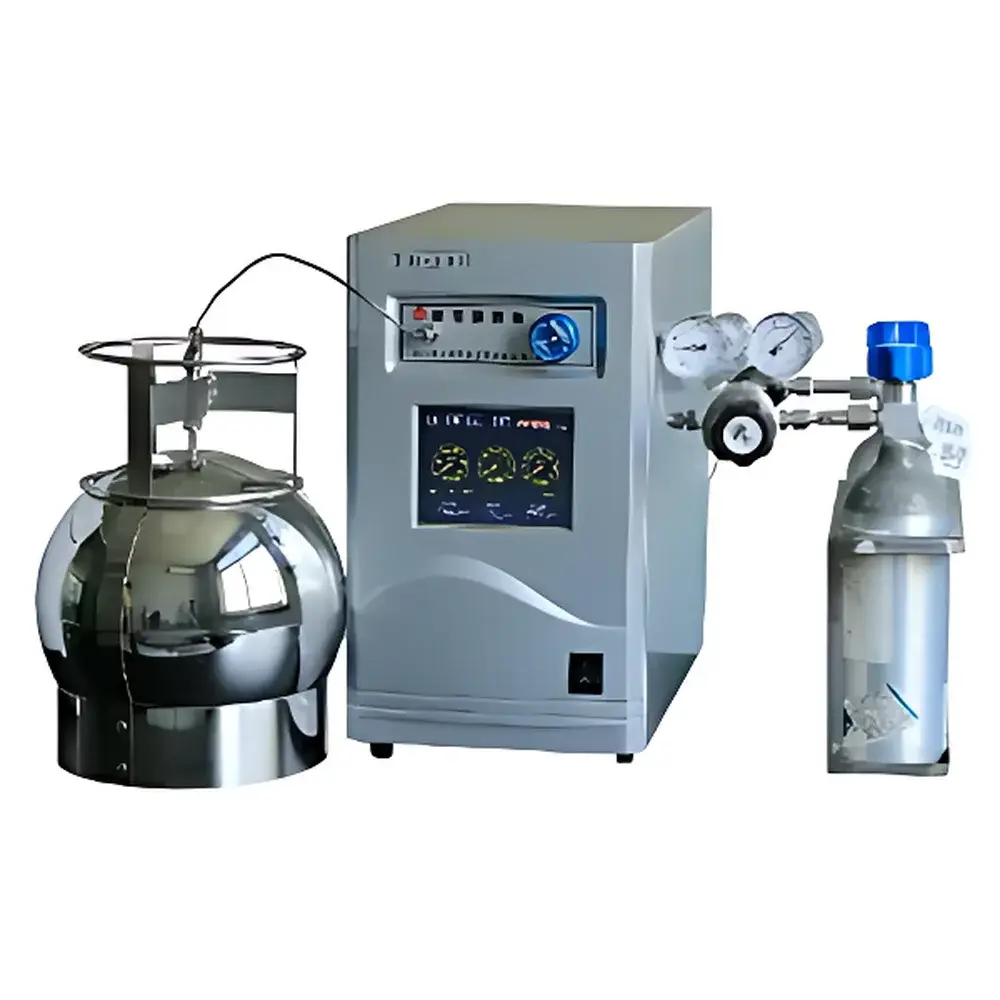
Tianhong TH-303 Offline Dynamic Gas Dilution System
| Brand | Tianhong |
|---|---|
| Origin | Hubei, China |
| Manufacturer Type | Authorized Distributor |
| Product Category | Domestic |
| Model | TH-303 Offline Dynamic Dilution System |
| Price Range | USD 16,800 – 25,200 (based on exchange rate ~¥120,000–¥180,000) |
| Dilution Ratio | Up to 1:1500 (minimum achievable concentration dependent on source gas purity and flow stability) |
| Output Pressure | Up to 35 psi (gauge) without external booster |
| Gas Pathways | 3 independent MFC-controlled channels |
| Control Interface | LCD touchscreen with parameter-driven dilution logic |
| Compliance Reference | HJ 759–2015 — Ambient Air—Determination of Volatile Organic Compounds (VOCs) by Canister Sampling Coupled with GC-MS |
Overview
The Tianhong TH-303 Offline Dynamic Dilution System is an engineered solution for precise, trace-level calibration gas preparation in environmental air monitoring laboratories. It operates on the principle of dynamic dilution—using mass flow controllers (MFCs) to meter high-concentration standard gases and ultra-high-purity diluent gas (typically nitrogen or zero air) into a mixing chamber, where turbulent diffusion ensures homogeneous blending prior to delivery into evacuated sampling containers. Unlike continuous online dilution systems, the TH-303 is designed for offline batch-mode operation: users configure target dilution ratios, set individual channel flows, initiate mixing, and collect the resulting low-concentration gas stream directly into Tedlar® bags, stainless-steel canisters (e.g., SUMMA®-coated), or other certified VOC storage vessels. This architecture eliminates carryover risk between calibration points and supports strict adherence to method-defined equilibration times prior to analysis.
Key Features
- Triple independent gas pathways, each regulated by a calibrated thermal-mass-flow controller with full-scale ranges selectable per application (e.g., 0–50 sccm, 0–500 sccm, 0–5 L/min) to accommodate diverse source gas concentrations and final target levels.
- Dilution ratio programmability up to 1:1500, enabling generation of sub-ppbv (parts-per-quadrillion by volume) VOC standards from ppm-level parent gases—critical for method validation under EPA TO-15, ASTM D6196, and HJ 759–2015.
- Passive pressurization capability: the system delivers diluted gas at up to 35 psi (gauge) without requiring external compressors or pressure regulators—ensuring compatibility with standard canister-filling protocols and minimizing adsorption losses during transfer.
- Intuitive LCD touchscreen interface with built-in dilution calculator; users input source concentration, target concentration, and total output flow to auto-generate MFC setpoints—reducing operator error and supporting audit-ready parameter logging.
- Stainless-steel wetted path construction (316L SS fittings, EPDM-free seals) minimizes VOC adsorption and outgassing, maintaining integrity of reactive compounds such as aldehydes, terpenes, and sulfur-containing species.
Sample Compatibility & Compliance
The TH-303 is validated for use with certified reference materials (CRMs) traceable to NIST or CNAS-accredited providers, including PAMS (Photochemical Assessment Monitoring Stations) and TO-14A/TO-15 target analyte blends. Its design conforms to the instrumental requirements specified in HJ 759–2015 for dynamic dilution-based calibration gas preparation in ambient VOC monitoring workflows. While not a certified GLP instrument per se, its parameter-locking capability, non-volatile memory storage of configuration files, and timestamped operation logs support alignment with ISO/IEC 17025 quality management systems. When integrated into a documented calibration procedure—including pre-use leak checks, post-dilution verification via independent analyzer (e.g., GC-FID or GC-MS), and CRM lot tracking—the system satisfies data integrity expectations for regulatory submissions to Chinese MEE or international equivalency frameworks.
Software & Data Management
The TH-303 operates autonomously via embedded firmware; no PC connection is required for routine operation. All user inputs—including MFC setpoints, dwell times, dilution ratios, and session timestamps—are stored locally in non-volatile memory for minimum 12 months. Optional USB export enables transfer of configuration history (.csv) for inclusion in laboratory information management systems (LIMS). Though lacking native 21 CFR Part 11 compliance features (e.g., electronic signatures, role-based access control), the system’s deterministic behavior, reproducible flow profiles, and immutable parameter records facilitate retrospective audit readiness when paired with procedural controls (e.g., dual-operator verification, logbook cross-referencing).
Applications
- Preparation of multi-component VOC calibration standards for canister-based ambient air monitoring networks (e.g., national air quality stations, industrial fence-line monitoring).
- Generation of bracketing standards for GC-MS quantification curves in accordance with HJ 759–2015 and EPA Method TO-15.
- Verification of field instrument linearity and detection limits using trace-level challenge gases.
- Development and validation of new sorbent tube or canister sampling methods requiring precisely defined low-concentration exposure atmospheres.
- Supporting QA/QC programs for accredited environmental testing laboratories seeking CNAS or CMA recognition.
FAQ
Can the TH-303 be used with compressed air as a diluent gas?
Yes, provided the air is purified to <1 ppb total hydrocarbons and dew point ≤ −40 °C; however, nitrogen is strongly recommended for VOC applications to avoid oxidation artifacts and background interference.
Is the system compatible with SUMMA canisters?
Yes—the 35 psi output pressure meets standard canister pressurization requirements; users must ensure proper passivation and evacuation prior to filling.
Does the TH-303 support automated sequence programming for unattended multi-point calibrations?
No—it is manually initiated per dilution event; however, saved configurations allow rapid replication of prior setups.
What maintenance is required for long-term MFC accuracy?
Annual recalibration against NIST-traceable flow standards is recommended; filter elements should be inspected quarterly and replaced if particulate loading is observed.
Can I dilute two different standard gases simultaneously into separate collection vessels?
Not concurrently—the three gas paths feed a single mixing chamber; sequential dilution of multiple sources is supported via reconfiguration between runs.
Related Products







