
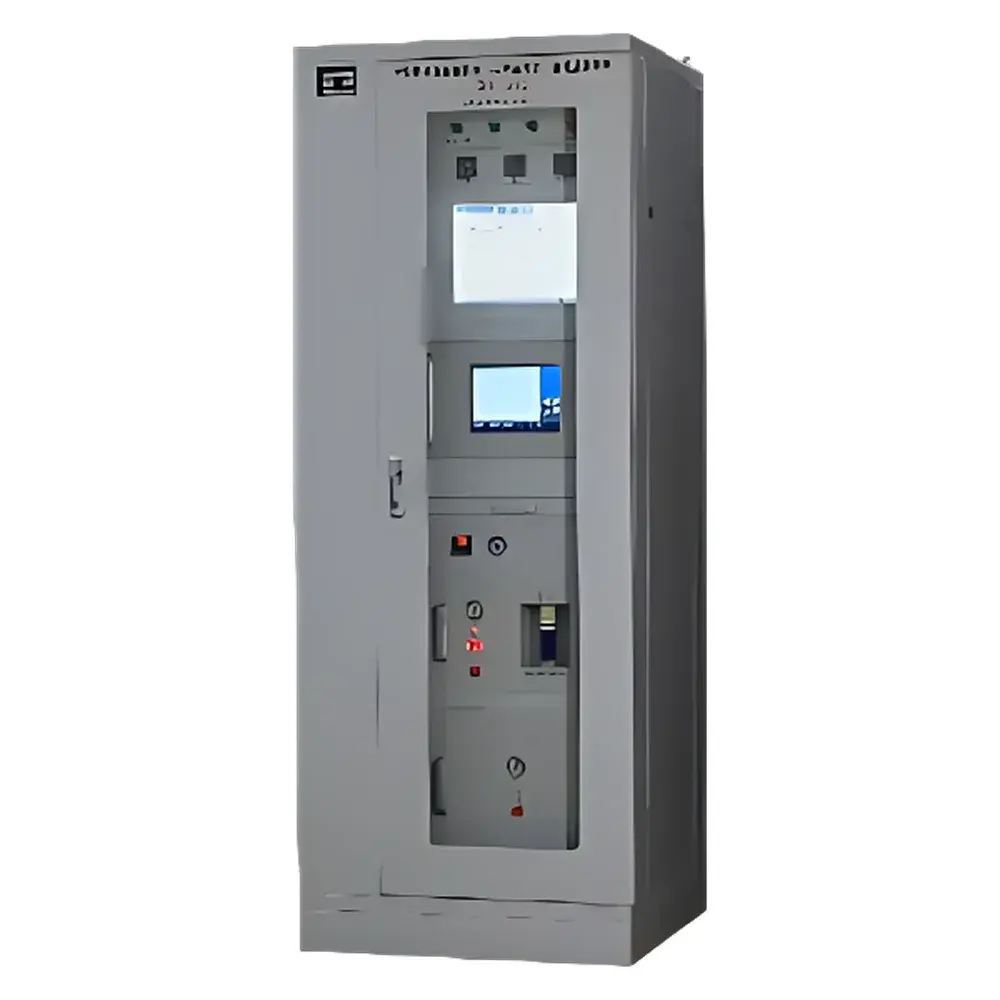
Tianhong TH-830 Fixed Source VOC Online Monitoring System (Gas Chromatography-Based)
| Brand | Tianhong |
|---|---|
| Origin | Hubei, China |
| Manufacturer Type | Authorized Distributor |
| Country of Origin | China |
| Model | TH-830 Fixed Source VOC Online Monitoring System (Gas Chromatography-Based) |
| Price Range | USD 25,000 – 39,000 |
Overview
The Tianhong TH-830 Fixed Source VOC Online Monitoring System is a fully automated, continuous emission monitoring system (CEMS) engineered for real-time quantification of volatile organic compounds (VOCs) from stationary industrial exhaust streams. It employs dual-detector gas chromatography (GC) architecture—integrating flame ionization detection (FID) for hydrocarbon-species quantification (e.g., methane, non-methane hydrocarbons [NMHC], benzene, toluene, xylene) and flame photometric detection (FPD) for sulfur-containing compounds (e.g., methanethiol, hydrogen sulfide, carbonyl sulfide). The system utilizes proprietary column switching with center-cutting and back-flush techniques to achieve high-resolution separation of co-eluting analytes under demanding stack conditions. All sample transport lines, valves, and detector zones are actively heated to 180 °C to prevent condensation, adsorption, or thermal degradation—critical for maintaining measurement integrity in high-humidity, high-temperature, or chemically aggressive flue gas environments.
Key Features
- Integrated dual-GC/FID-FPD platform enabling simultaneous NMHC, BTEX (benzene, toluene, ethylbenzene, xylenes), and sulfur compound analysis in a single analytical cycle
- Full-path high-temperature conditioning: 180 °C heated sample line, oven, transfer lines, and detector compartments eliminate water vapor condensation and minimize VOC wall losses
- Sulfur-passivated stainless-steel flow path components—including valves, connectors, and GC columns—to ensure quantitative recovery of reactive sulfur species without surface adsorption
- Auto-startup and unattended operation: pre-programmed sequence initiates calibration, zero/span checks, and sample injection upon power-up; no manual intervention required during routine monitoring
- Robust mechanical architecture compliant with GB 50236-96 for field welding and piping integrity, supporting long-term deployment in industrial settings with vibration, dust, and corrosive ambient exposure
- Modular design allows configuration tailoring—e.g., expanded BTEX panels, extended sulfur speciation modules, or integration with particulate filtration and moisture removal subsystems
Sample Compatibility & Compliance
The TH-830 is validated for use with flue gases containing up to 20% v/v moisture, ≤500 ppm H₂S, and particulate loadings <10 mg/m³ (with optional inline filtration). It meets the technical performance requirements outlined in HJ 1013–2018 for NMHC CEMS and aligns with the methodological rigor of HJ/T 38–1999 and JJG 700–2016. System-level data reporting conforms to HJ/T 212–2005 transmission protocols for environmental monitoring networks. All hardware and firmware support audit-ready electronic records, including instrument status logs, calibration history, and raw chromatographic data—facilitating GLP-aligned quality assurance and regulatory review under China’s Ministry of Ecology and Environment (MEE) frameworks.
Software & Data Management
The embedded control software provides ISO/IEC 17025-aligned data handling: automatic peak integration using retention time locking, multi-point linear/nonlinear calibration curve generation, and uncertainty propagation per IUPAC guidelines. Raw chromatograms and processed results are timestamped and stored locally (≥180 days) with SHA-256 hash verification. Remote access enables secure data export via TLS 1.2-encrypted FTP or OPC UA interfaces. Audit trails comply with MEE data integrity requirements—supporting full traceability of user actions, method changes, and instrument parameter adjustments. Optional cloud synchronization enables centralized fleet monitoring across multiple emission points.
Applications
The TH-830 is deployed at regulated emission outlets in petrochemical refineries, coating and printing facilities, leather tanning plants, and synthetic resin manufacturing units. It supports compliance reporting for GB 16297–1996 (emission limits), GB 3095–1996 (ambient air quality), and provincial VOC reduction mandates. Its high-temperature stability makes it suitable for monitoring catalytic oxidizer bypass streams, regenerative thermal oxidizer (RTO) exhaust, and direct-stack sampling from fluidized bed reactors where conventional GC systems suffer from column fouling or detector drift.
FAQ
What regulatory standards does the TH-830 meet for NMHC monitoring?
It satisfies HJ 1013–2018 and HJ/T 38–1999 for NMHC CEMS performance, including accuracy (±10% of reference value), repeatability (≤5% RSD), and response time (<300 s).
Can the system detect both aromatic and sulfur compounds simultaneously?
Yes—the dual-channel GC configuration with FID and FPD detectors operates in parallel, with synchronized injection and independent data acquisition for each compound class.
Is the system compatible with existing environmental data platforms?
Yes—it supports HJ/T 212–2005 protocol for real-time data transmission to provincial and national environmental monitoring centers.
How is calibration maintained during continuous operation?
Automated daily zero/span verification uses certified standard gases; multi-point calibration is scheduled weekly or triggered by drift thresholds, with full audit logging.
What maintenance intervals are recommended for field operation?
No routine consumable replacement is required within 6 months; annual preventive maintenance includes detector cleaning, column reconditioning, and valve actuator validation per GB/T 19022–2003 guidelines.
Related Products







