
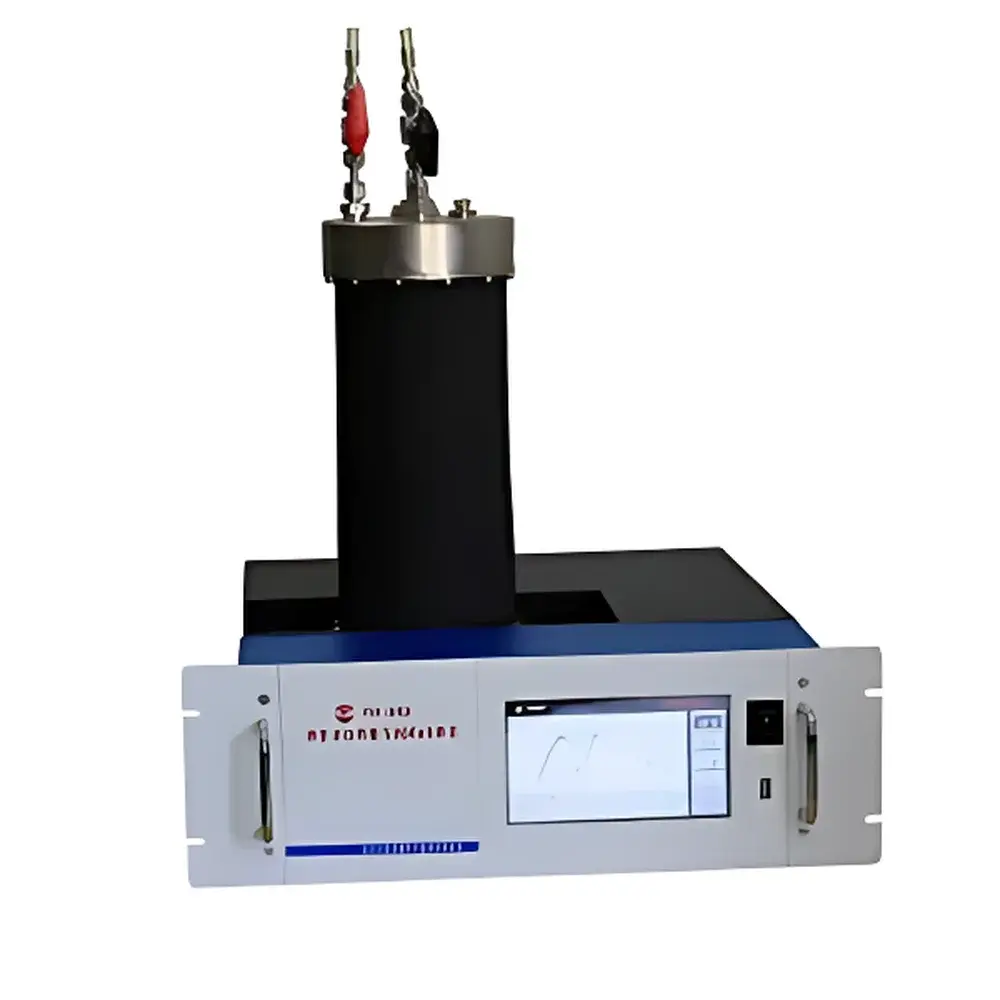
Tianhong TH-852 Fourier Transform Infrared (FTIR) Online VOCs and Hazardous Air Pollutants (HAPs) Emission Analyzer
| Brand | Tianhong |
|---|---|
| Origin | Hubei, China |
| Manufacturer Type | Authorized Distributor |
| Country of Origin | China |
| Model | TH-852 |
| Pricing | Available Upon Request |
| Measurement Principle | Extractive FTIR Spectroscopy |
| Spectral Range | 2.5–12 µm |
| Target Analytes | >300 IR-active compounds including VOCs and HAPs |
| Response Time | <1 s per spectrum |
| Compliance | EPA Method 300, JJG 700–1999 |
Overview
The Tianhong TH-852 is an extractive Fourier Transform Infrared (FTIR) online emission analyzer engineered for continuous, real-time quantification of volatile organic compounds (VOCs) and hazardous air pollutants (HAPs) from stationary industrial sources. It operates on the physical principle of interferometric infrared absorption spectroscopy: a broadband IR beam passes through a gas cell containing extracted flue or process gas; spectral interference patterns generated by a Michelson interferometer are digitized and Fourier-transformed to yield high-resolution absorbance spectra. Each compound exhibits unique vibrational-rotational absorption features across the mid-infrared range (2.5–12 µm), enabling simultaneous identification and quantification without chemical separation. Designed for integration into CEMS (Continuous Emission Monitoring Systems), the TH-852 delivers second-level spectral acquisition and supports multi-component analysis—critical for regulatory reporting, process optimization, and fugitive emission verification in dynamic stack environments.
Key Features
- Extractive sampling configuration with heated sample line (up to 180 °C), Peltier-cooled gas cell, and moisture removal module to ensure representative, condensation-free measurement of hot, humid, or particulate-laden flue gases.
- High-fidelity Michelson interferometer with laser-referenced mirror positioning, delivering spectral resolution down to 0.5 cm⁻¹ and long-term optical stability under industrial vibration and thermal cycling.
- Comprehensive onboard spectral library covering >300 IR-active species—including aliphatic/aromatic hydrocarbons (e.g., benzene, xylene, toluene), oxygenates (methanol, formaldehyde, acetone), halogenated compounds (chloroform, vinyl chloride), nitrogen oxides (NO, NO₂), sulfur dioxide, hydrogen sulfide, and chemical warfare agent simulants (e.g., sarin, mustard gas analogs).
- Modular software architecture allowing seamless spectral library updates via certified calibration files; no hardware modification required when expanding analyte coverage or adapting to new regulatory requirements.
- Integrated self-diagnostic routines—including interferogram quality assessment, detector signal-to-noise monitoring, and optical alignment validation—to support unattended operation over extended maintenance intervals.
Sample Compatibility & Compliance
The TH-852 is validated for use with extractive gas streams from combustion processes, catalytic oxidizers, solvent recovery units, and semiconductor process tools. Sample conditioning includes filtration (≤1 µm), heating (to prevent condensation), and optional dilution for high-concentration applications. The system meets the performance criteria outlined in U.S. EPA Method 300 for extractive FTIR measurement of vapor-phase organic and inorganic emissions, including minimum detection limits (MDLs), precision (RSD ≤10% at 2×MDL), and interference rejection capability. It also conforms to JJG 700–1999, China’s national metrological verification regulation for gas analyzers, ensuring traceability to national standards. While not intrinsically rated for Class I Div 1 hazardous areas, it may be deployed in safe-zone enclosures with appropriate purge systems per IEC 60079-14 guidelines.
Software & Data Management
The TH-852 runs on embedded Linux-based firmware with a web-accessible interface supporting remote configuration, real-time spectral visualization, and automated report generation. Quantitative analysis employs classical least-squares (CLS) and partial least-squares (PLS) algorithms, with optional multivariate curve resolution (MCR) for overlapping peaks. All raw interferograms and processed spectra are timestamped and stored locally (≥30 days) with configurable cloud backup. Audit trails record user actions, calibration events, and parameter changes in compliance with GLP/GMP principles. Data export formats include CSV, NetCDF, and XML, compatible with third-party CEMS data acquisition systems (e.g., Siemens Desigo, Honeywell Experion) and regulatory portals such as China’s National Emission Permit Management Information Platform.
Applications
- Petrochemical refineries: Monitoring benzene, toluene, ethylbenzene, and xylenes (BTEX) during fluid catalytic cracking (FCC) and reforming unit exhaust.
- Electronics manufacturing: Real-time tracking of isopropyl alcohol (IPA), acetone, and N-methyl-2-pyrrolidone (NMP) in cleanroom abatement stacks.
- Automotive and aerospace coating lines: Quantifying styrene, methyl ethyl ketone (MEK), and hexamethylene diisocyanate (HDI) during spray booth ventilation control.
- Chemical parks and industrial clusters: Multi-point source attribution using spectral fingerprinting and time-resolved concentration mapping.
- Waste incineration facilities: Co-monitoring of dioxin precursors (e.g., chlorobenzenes, chlorophenols) alongside CO, NOₓ, and SO₂.
FAQ
What regulatory methods does the TH-852 comply with?
It is designed and verified per U.S. EPA Method 300 and JJG 700–1999. Full method implementation documentation—including calibration protocols, interference testing reports, and QA/QC checklists—is provided with each system.
Can the TH-852 measure low-concentration VOCs in high-moisture flue gas?
Yes. Its heated sampling train (up to 180 °C), thermoelectrically cooled gas cell, and integrated Nafion™ or permeation dryer modules maintain dew point control and minimize water vapor spectral interference.
Is spectral library customization supported for site-specific compounds?
Yes. Certified spectral reference files (in ASTM E1421-compliant format) can be imported via secure FTP; all new entries undergo internal validation against NIST SRM 2244 reference mixtures before activation.
What cybersecurity measures are implemented in the embedded software?
The system enforces TLS 1.2+ encrypted web access, role-based authentication (admin/operator/auditor), disabled default credentials, and periodic firmware updates signed with Tianhong’s private key.
Does the TH-852 require routine optical recalibration?
No. The laser-referenced interferometer and temperature-stabilized optics eliminate the need for daily or weekly wavelength recalibration; annual verification against polystyrene film standard is recommended per JJG 700–1999.
Related Products







