
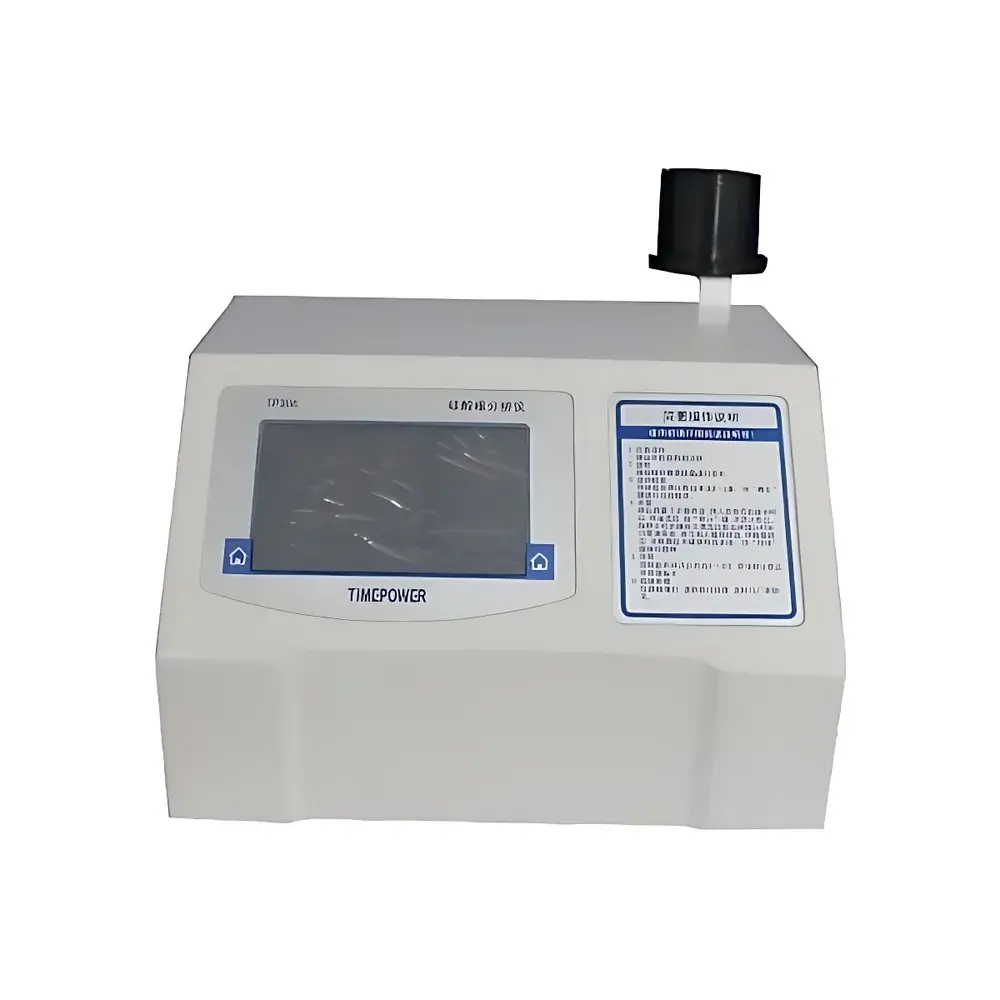
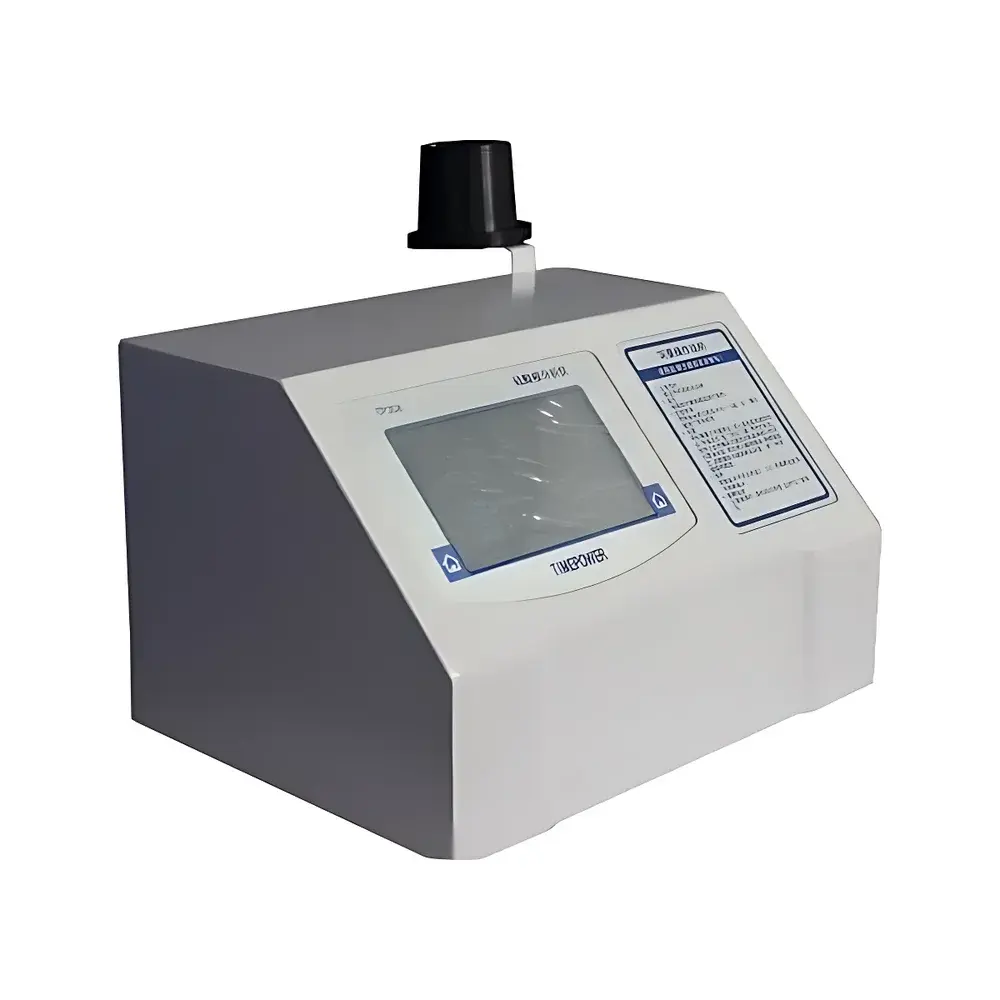
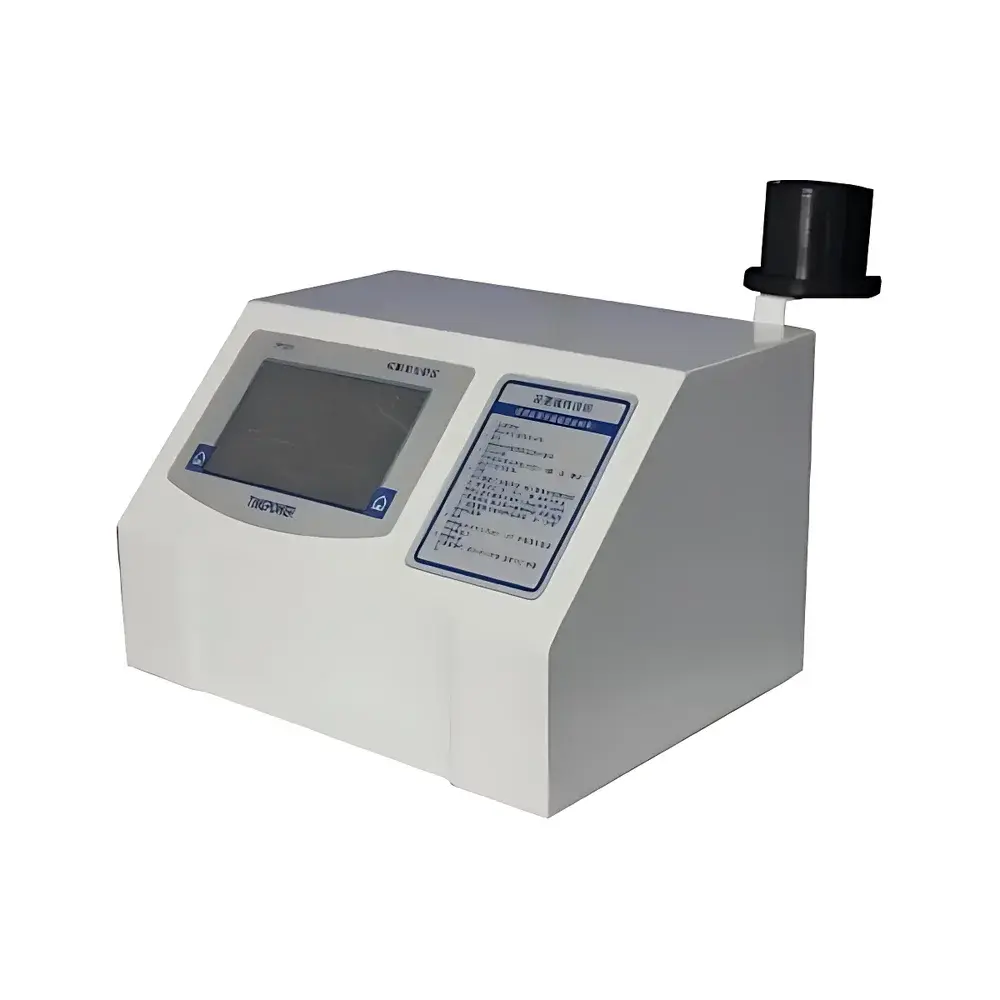
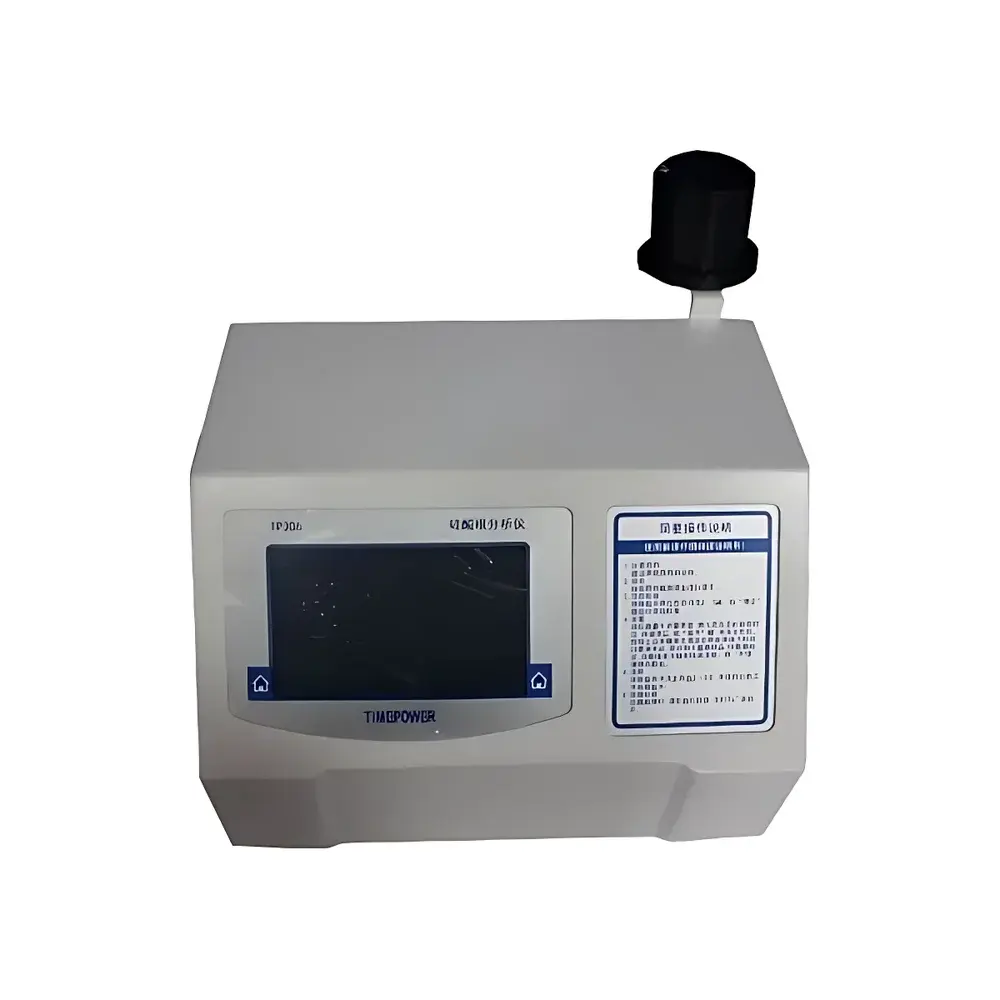
TimePower TP-306 Laboratory Silica Analyzer
| Brand | TimePower |
|---|---|
| Origin | Beijing, China |
| Manufacturer Type | Direct Manufacturer |
| Instrument Type | Benchtop Laboratory Analyzer |
| Model | TP-306 |
| Measurement Principle | Molybdenum Blue Colorimetric Method (Silicomolybdic Acid Reduction) |
| Display | 5.0-inch TFT Touchscreen (Chinese UI) |
| Optical Source | Imported Monochromatic Cold Light LED |
| Detection Range | Typical for soluble silica (SiO₂) in ultra-pure water (0–200 µg/L, extendable to 1000 µg/L with dilution) |
| Detection Limit | ≤1 µg/L (as SiO₂) |
| Repeatability | ≤±2% FS |
| Calibration | Automatic Blank Calibration & Background Compensation |
| Data Storage | Cyclic memory for ≤256 test records |
| Power Supply | AC 220 V ±10%, 50/60 Hz |
| Dimensions | 320 × 260 × 180 mm |
| Weight | ~4.2 kg |
Overview
The TimePower TP-306 Laboratory Silica Analyzer is a dedicated benchtop photometric instrument engineered for the quantitative determination of soluble silica (expressed as SiO₂) and hydrolyzable silicates in ultrapure water matrices. It operates on the internationally standardized molybdenum blue colorimetric method—specifically, the reduction of silicomolybdic acid complex to molybdenum blue under controlled acidic conditions, followed by spectrophotometric quantification at 815 nm. This principle is referenced in ASTM D859-22 (Standard Test Method for Silica in Water) and aligns with ISO 10523:2023 (Water quality — Determination of pH) for ancillary measurement control. Designed for high-reliability operation in power plant chemistry labs, semiconductor fab QC environments, and pharmaceutical water system validation, the TP-306 delivers trace-level sensitivity essential for monitoring boiler feedwater, condensate, and ultrapure process water where silica scaling or deposition poses critical operational risk.
Key Features
- 5.0-inch capacitive touchscreen interface with native Chinese-language firmware—optimized for lab technicians in domestic and multinational manufacturing facilities.
- Integrated optical architecture featuring an imported monochromatic cold-light LED source, ensuring long-term photometric stability (>10,000 hours MTBF), minimal thermal drift, and low power consumption (≤12 W).
- Dedicated background compensation algorithm that dynamically corrects for sample turbidity, reagent blank variability, and cuvette surface effects—critical for sub-5 µg/L silica measurements in deionized water.
- Automated timing sequence with audible/visual prompts for digestion, color development, and measurement phases—reducing operator dependency and inter-test variability.
- Onboard blank calibration routine that nullifies electronic zero drift and photodetector offset prior to each analysis batch, enhancing day-to-day reproducibility.
- Robust PCB layout utilizing surface-mount technology (SMT) and conformal coating—engineered for continuous operation in controlled laboratory environments with ambient temperature ranges of 10–35 °C and relative humidity ≤80% RH (non-condensing).
Sample Compatibility & Compliance
The TP-306 accepts standard 10-mm pathlength quartz or high-transmission glass cuvettes (10 × 10 × 45 mm). It is validated for use with ASTM D859-compliant reagents—including ammonium molybdate, oxalic acid, and 1-amino-2-naphthol-4-sulfonic acid (ANSA)—and supports both manual and semi-automated sample introduction. While not certified for GLP/GMP production release testing per se, its data integrity features—including timestamped measurement logs, non-editable cyclic storage (256 entries), and audit-ready calibration history—support alignment with internal QA protocols and FDA 21 CFR Part 11–informed documentation practices when deployed within regulated water system monitoring workflows.
Software & Data Management
Data are stored internally in non-volatile memory with automatic overwrite logic upon reaching capacity. Each record includes date/time stamp, measured absorbance, calculated SiO₂ concentration (µg/L), calibration status flag, and operator ID field (manually entered). Export is supported via USB 2.0 port to CSV-formatted files compatible with LIMS integration or Excel-based trending. Firmware updates are performed offline using FAT32-formatted USB drives—no cloud connectivity or remote access functionality is implemented, preserving network security in isolated lab networks.
Applications
- Monitoring silica breakthrough in mixed-bed ion exchange and EDI units serving power generation demineralization trains.
- Validation of silicon removal efficiency in semiconductor ultrapure water (UPW) distribution loops per SEMI F63 guidelines.
- QC testing of purified water (PW) and water for injection (WFI) in pharmaceutical manufacturing per USP Silica.
- Corrosion product tracking in steam cycle chemistry programs—particularly where silicate dissolution from turbine deposits contributes to secondary circuit fouling.
- Research applications involving silica sol-gel kinetics, colloidal stability studies, and membrane fouling mechanism analysis.
FAQ
What is the detection limit for soluble silica using the TP-306?
The instrument achieves a practical detection limit of ≤1 µg/L SiO₂ under optimized reagent and procedural conditions, consistent with ASTM D859 sensitivity requirements for ultrapure water analysis.
Does the TP-306 support multi-point calibration?
Yes—it accommodates up to five-point calibration curves using NIST-traceable silica standards (e.g., 0, 5, 20, 50, 100 µg/L), with linear regression and correlation coefficient (r²) display.
Can the analyzer be used for seawater or wastewater samples?
No—the TP-306 is purpose-built for low-conductivity, low-turbidity matrices (e.g., <1 µS/cm). High-ionic-strength or particulate-laden samples require pre-filtration, dilution, and matrix-matched calibration—not supported out-of-the-box.
Is English-language firmware available?
Firmware is shipped with Chinese UI only; no official English localization is provided by the manufacturer. Third-party translation of menu labels is not recommended due to potential misalignment with safety-critical prompts.
How often must the optical path be cleaned or serviced?
The sealed LED–detector module requires no routine optical maintenance. Cuvette holder and sample chamber should be wiped with lint-free tissue after each use; annual verification of photometric linearity using neutral density filters is advised.
Related Products







