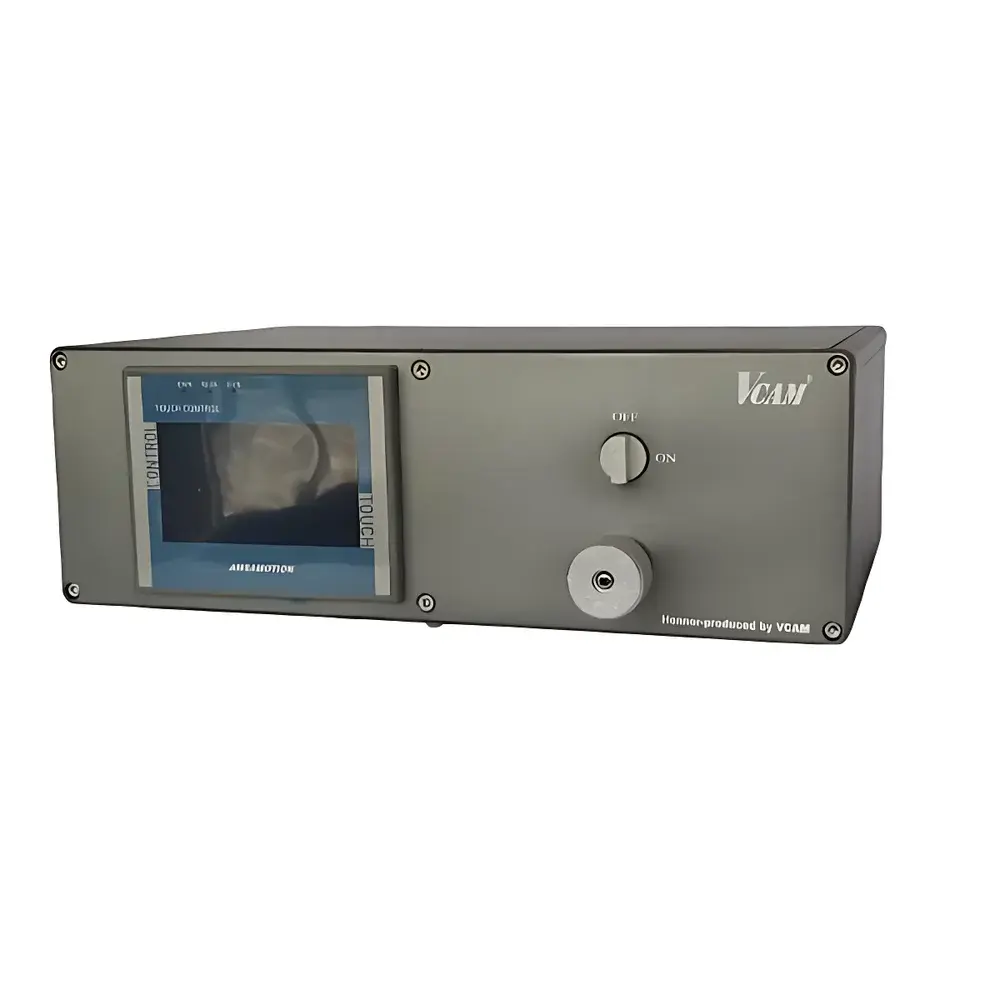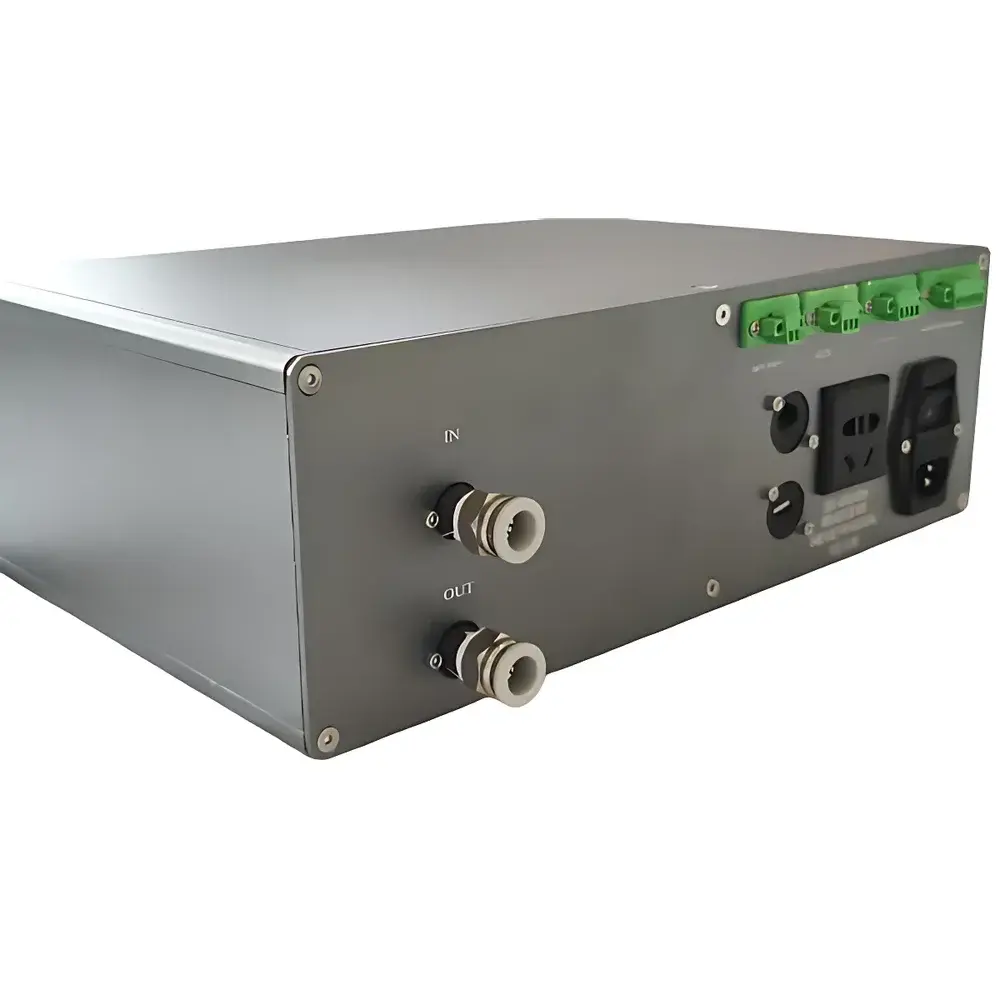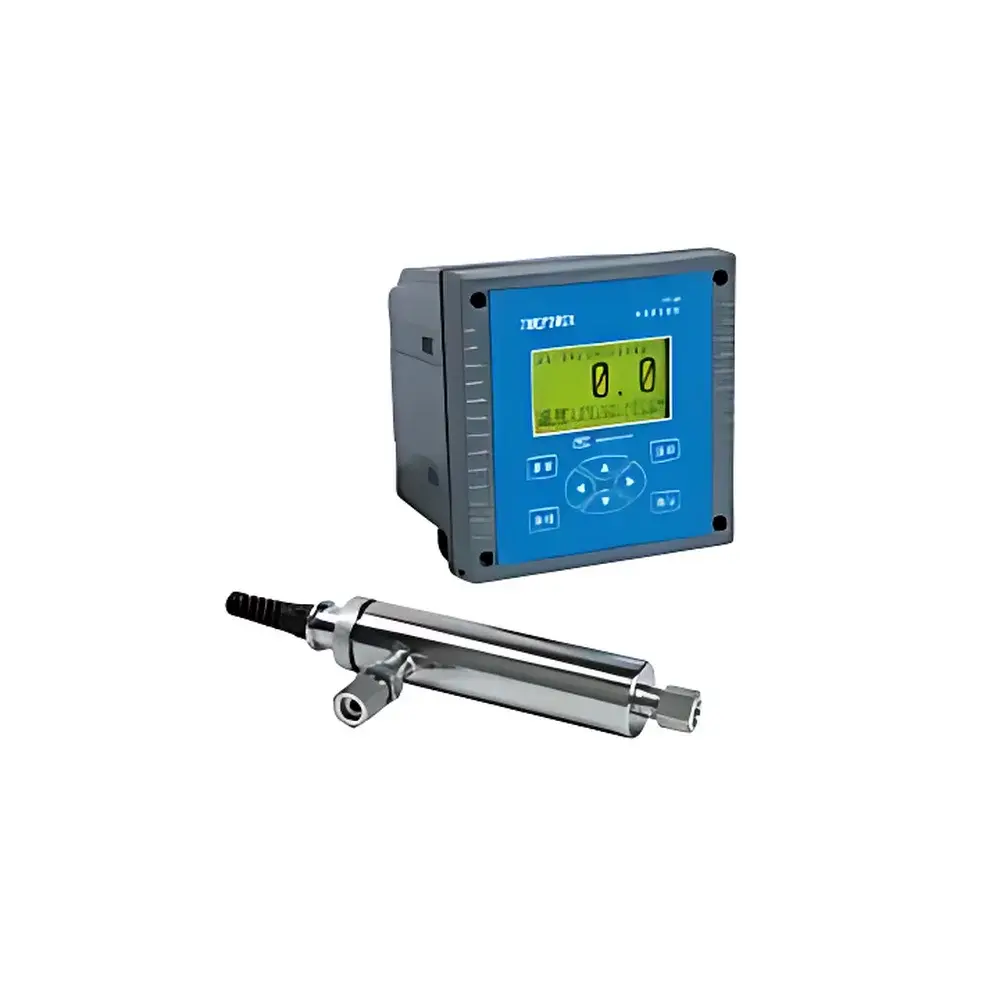
TimePower TP120 Online Conductivity Analyzer
| Brand | TimePower |
|---|---|
| Origin | Beijing, China |
| Manufacturer Type | Direct Manufacturer |
| Model | TP120 |
| Price | Upon Request |
Overview
The TimePower TP120 Online Conductivity Analyzer is an industrial-grade, microprocessor-controlled conductivity measurement system engineered for continuous, real-time monitoring of aqueous solution conductivity in demanding process environments. It operates on the fundamental principle of two-electrode (or four-electrode) conductometric measurement: a known sinusoidal excitation voltage (1–3 kHz) is applied across a pair of parallel or cylindrical electrodes with a fixed geometric cell constant (K), and the resulting current is measured to calculate solution conductance. By incorporating temperature compensation via an integrated Pt1000 sensor and applying standardized algorithms per ISO 7888 and ASTM D1125, the TP120 delivers traceable, stable conductivity values across wide dynamic ranges—from ultrapure water (0.000 µS/cm) to highly conductive brines (up to 30,000 µS/cm). Designed for permanent installation in piping manifolds or flow-through cells, it meets the operational rigor required in power generation, chemical synthesis, wastewater treatment, pharmaceutical water systems (PW/WFI), and food & beverage production lines.
Key Features
- High-precision 24-bit A/D conversion with embedded single-chip microcontroller for real-time signal processing and auto-ranging
- Multi-range conductivity measurement supported by interchangeable electrode cell constants: K = 0.01, 0.1, 1.0, and 10.0 cm⁻¹—each optimized for specific conductivity regimes
- Automatic temperature compensation (ATC) using Pt1000 RTD sensor, with compensation range from 0 to 60 °C and sample temperature operating window of 5–60 °C
- Optically isolated analog current outputs (0–10 mA, 0–20 mA, or 4–20 mA) with ≤1% FS output accuracy and load capacity <300 Ω—ensuring noise immunity in electrically noisy plant environments
- IP65-rated NEMA 4X enclosure with robust polycarbonate housing, enabling reliable outdoor or semi-outdoor deployment without additional weatherproofing
- Non-volatile memory with >10-year data retention after power loss; circular buffer stores historical conductivity and temperature readings for trend analysis and audit readiness
- Configurable dual SPDT alarm relays (AC 250 V / 5 A or DC 30 V / 5 A), field-programmable for high/low limit, rate-of-change, or maintenance alerts
Sample Compatibility & Compliance
The TP120 is validated for use with low-conductivity feedwater (e.g., boiler makeup, RO permeate), process streams in fertilizer synthesis (NH₃, urea solutions), metallurgical electrolytes, municipal drinking water, and clean-in-place (CIP) rinse validation in biopharma. Electrode selection follows IEC 60746-3 guidance: K = 0.01 cm⁻¹ electrodes are recommended for ultrapure water (100 µS/cm). The analyzer supports GLP/GMP-compliant operation through configurable audit trail logging (via optional RS485 Modbus RTU interface), and its measurement methodology aligns with ISO 7888 (electrical conductivity of water), ASTM D1125 (standard test method for electrical conductivity of water), and pharmacopeial requirements for conductivity testing (USP , EP 2.2.38).
Software & Data Management
While the TP120 operates as a standalone, panel-mounted analyzer with local LCD interface (128×64 dot-matrix, Chinese-language menu), it integrates seamlessly into centralized SCADA and DCS platforms via its standard RS485 serial port supporting Modbus RTU protocol. Configuration, calibration history, alarm logs, and real-time parameter streaming (conductivity, temperature, status flags) can be retrieved programmatically. All stored data—including calibration dates, sensor drift logs, and user-modified settings—are retained indefinitely in EEPROM with timestamped records. Optional PC-based configuration utility (Windows-compatible) enables advanced setup including custom temperature compensation curves, relay hysteresis tuning, and output linearization tables—supporting FDA 21 CFR Part 11 compliance when deployed with electronic signature and access control layers.
Applications
- Continuous monitoring of condensate and feedwater purity in thermal power plants (ASTM D1125 Class I/II)
- Real-time control of demineralization efficiency in ion exchange and EDI skids
- Concentration verification of acid/base solutions in chemical dosing loops (e.g., H₂SO₄, NaOH)
- Wastewater effluent compliance tracking against local discharge limits (e.g., EPA 40 CFR Part 136)
- In-line verification of cleaning cycle endpoints during CIP/SIP validation in sterile manufacturing
- Monitoring of conductivity drift in ultrafiltration and reverse osmosis permeate streams
FAQ
What electrode constant should I select for measuring ultrapure water (≤0.1 µS/cm)?
For ultrapure water applications, a K = 0.01 cm⁻¹ electrode is mandatory. Use of higher-constant electrodes introduces significant polarization and stray capacitance errors; pairing with a sealed, low-volume flow cell is strongly advised.
Does the TP120 support automatic temperature compensation for non-aqueous solvents?
No—the built-in Pt1000 compensation and factory calibration curves are optimized exclusively for aqueous solutions per ISO 7888. Non-aqueous media require manual correction or third-party calibration.
Can the analog output be configured for linear vs. square-root scaling?
Yes—output scaling is fully programmable via front-panel menu or Modbus register; linear, square-root, and user-defined polynomial mapping are supported.
Is the device suitable for hazardous area installation?
The base TP120 unit is not intrinsically safe or explosion-proof certified (e.g., ATEX/IECEx). For Zone 1/2 installations, it must be housed in an approved purge cabinet or used with remotely mounted, certified transmitters.
How often does the system require calibration verification?
Per ASTM D1125 and USP , daily verification with traceable standards (e.g., KCl 1413 µS/cm at 25 °C) is recommended for critical applications; quarterly full recalibration is typical for non-GMP processes.
Related Products