
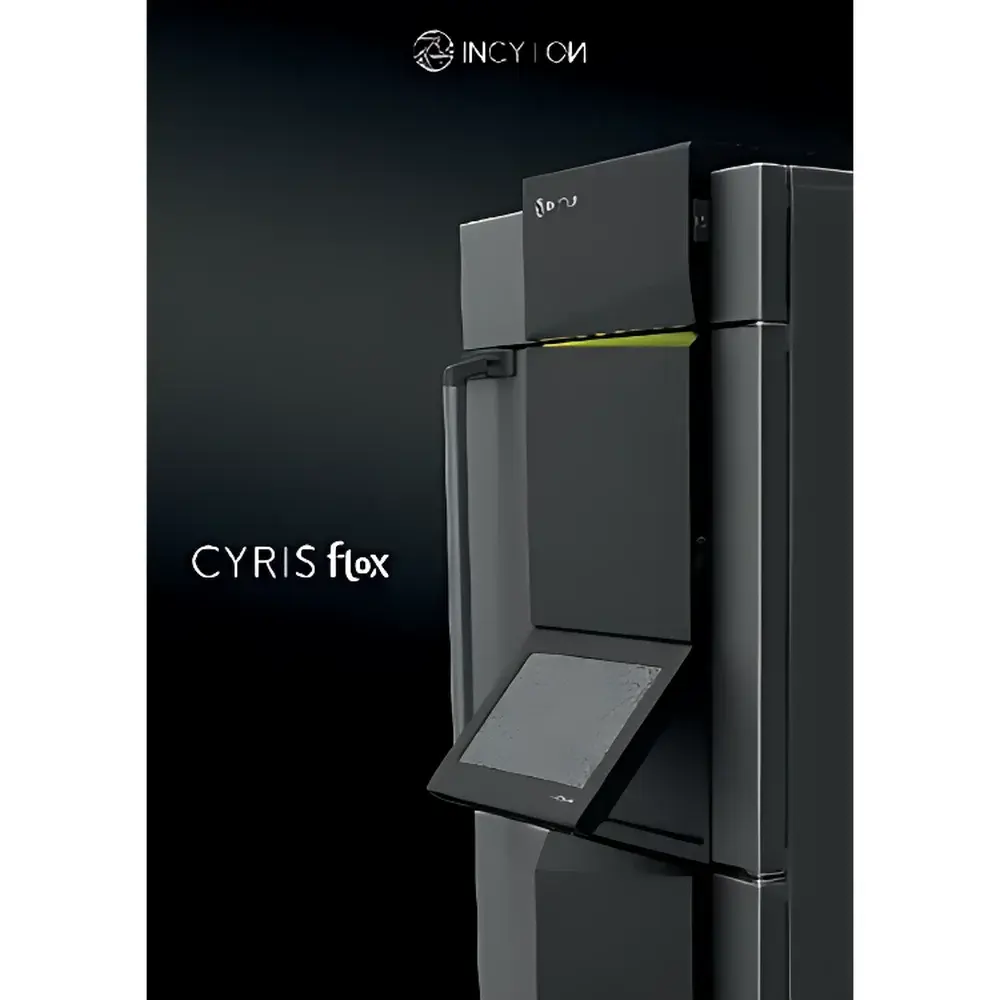
TissueGnostics incyton flox Multi-Parameter Live-Cell Energy Metabolism Analyzer
| Brand | TissueGnostics |
|---|---|
| Origin | Germany |
| Manufacturer Type | Original Equipment Manufacturer (OEM) |
| Product Category | Imported Instrument |
| Model | incyton flox |
| Pricing | Upon Request |
Overview
The TissueGnostics incyton flox is a fully integrated, label-free, real-time multi-parameter live-cell energy metabolism analyzer engineered for longitudinal functional phenotyping of adherent and suspension cells, primary tissues, and 3D organoid cultures. Based on simultaneous dual-sensor microphysiometry—combining high-resolution extracellular flux measurement (oxygen consumption rate, OCR; extracellular acidification rate, ECAR) with real-time impedance-based cell monitoring (ECIS)—the system captures dynamic bioenergetic responses in physiologically relevant microenvironments. Unlike endpoint assays or single-modality platforms, incyton flox operates on the principle of continuous, non-invasive, multi-dimensional readout: metabolic activity (OCR/ECAR), structural integrity (impedance), and morphological evolution (digital holographic microscopy) are acquired synchronously at sub-minute temporal resolution over days to weeks. This architecture enables rigorous quantification of mitochondrial respiration, glycolytic flux, membrane integrity, proliferation kinetics, and stress-induced morphodynamic transitions—all within a single experimental run under tightly controlled environmental conditions.
Key Features
- 24-well parallel assay format with independent per-well environmental control and sensor calibration
- Simultaneous real-time measurement of OCR, ECAR, dissolved oxygen concentration, and cellular impedance (TEER & barrier function)
- Integrated digital holographic microscopy (DHM) for label-free, quantitative phase imaging—enabling automatic cell counting, confluence mapping, and morphology parameter extraction (e.g., area, perimeter, granularity, motility index)
- Precise environmental regulation: temperature control range 5°C above ambient to 50°C (±0.1°C stability); O2 modulation from 1% to 20% (v/v); programmable humidity maintenance
- Automated sterile operation including UV-C irradiation cycle and HEPA-filtered gas handling
- 24-channel precision liquid handling module with six independent reagent reservoirs—supporting multi-step, time-resolved pharmacological perturbations (e.g., oligomycin, FCCP, rotenone/antimycin A sequences)
- Reusable assay plates compatible with standard tissue culture protocols; open reagent architecture eliminates vendor lock-in and reduces long-term operational cost
- Unattended operation capability for experiments spanning up to 60 days, with full data logging and hardware fault monitoring
Sample Compatibility & Compliance
The incyton flox supports a broad spectrum of biologically relevant samples: primary human/murine cells (e.g., cardiomyocytes, neurons, hepatocytes), immortalized lines (HepG2, HeLa, U2OS), co-cultures, spheroids, and thin tissue explants (≤300 µm thickness). All measurements comply with GLP-aligned data integrity standards: audit trails, electronic signatures, and user-access controls are embedded in the acquisition software. The platform is designed to support regulatory submissions requiring adherence to ISO/IEC 17025, ASTM E2579 (cellular assay validation), and FDA 21 CFR Part 11-compliant workflows. Environmental control parameters (temperature, O2, humidity) are continuously logged with NIST-traceable calibration certificates available upon request.
Software & Data Management
Acquisition and analysis are performed via CYRIS® Software Suite v5.x—a modular, scriptable platform supporting automated protocol execution, real-time visualization, and batch processing. Raw sensor signals undergo proprietary noise-reduction algorithms and are normalized to cell number (via DHM-derived confluence) and well-specific background. Built-in modules include Seahorse-style mitochondrial stress test analysis, glycolysis stress test interpretation, kinetic impedance modeling (e.g., barrier recovery, cytotoxicity onset), and correlative heatmap generation linking OCR/ECAR dynamics to morphometric features. Export formats include CSV, HDF5, and MIA-compatible .cif files for integration with MATLAB, Python (via PyCYRIS API), and commercial statistical packages. Data archives are encrypted and version-controlled with SHA-256 checksum verification.
Applications
- Mitochondrial functional profiling: basal respiration, ATP-linked respiration, proton leak, maximal respiratory capacity, spare respiratory capacity, non-mitochondrial oxygen consumption
- Glycolytic phenotype assessment: basal ECAR, glycolytic capacity, glycolytic reserve, compensatory glycolysis under mitochondrial inhibition
- Toxicology screening: time- and dose-dependent evaluation of drug-induced mitochondrial dysfunction (e.g., APAP hepatotoxicity), metabolic inflexibility, and adaptive bioenergetic remodeling
- Regenerative medicine: metabolic priming of stem cells, differentiation trajectory mapping via bioenergetic shifts, senescence-associated metabolic decline
- Immunometabolism: activation-state profiling of T cells, macrophages, and dendritic cells under normoxic/hypoxic conditions
- Disease modeling: metabolic dysregulation in neurodegeneration, diabetes, cancer, and rare mitochondrial disorders
FAQ
What sample types are validated for use with incyton flox?
Primary cells, immortalized lines, 3D spheroids, and thin ex vivo tissue sections (<300 µm) have been experimentally validated. Suspension cells require optional microcarrier or fibronectin-coated plate adaptation.
Is the system compliant with FDA 21 CFR Part 11 requirements?
Yes—CYRIS® Software includes role-based access control, electronic signatures, full audit trail logging, and data integrity safeguards aligned with Part 11 Annex 11 expectations.
Can assay plates be reused across experiments?
Yes—proprietary surface chemistry allows ≥10 cycles of sterilization (UV-C + ethanol wash) without signal drift, provided identical cell types and protocols are maintained.
What is the minimum detectable OCR change?
System sensitivity is optimized for physiological ranges: typical detection limit is 0.5 pmol/min/104 cells under standard culture conditions, with inter-assay CV <8% (n=48 wells, same passage).
Does incyton flox support hypoxia-reoxygenation studies?
Yes—programmable O2 control enables precise stepwise transitions between defined oxygen tensions (e.g., 1% → 21% → 1%) with millisecond-level gas switching synchronization to sensor acquisition.



