
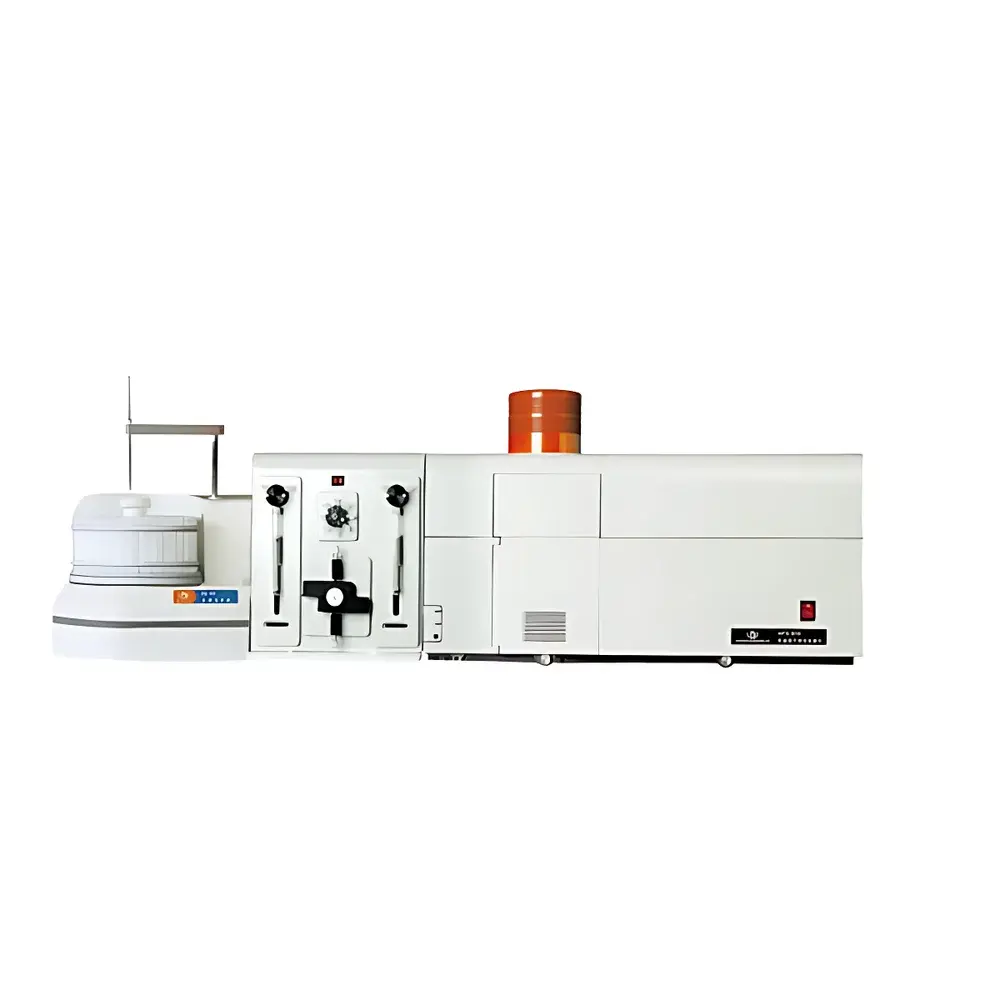
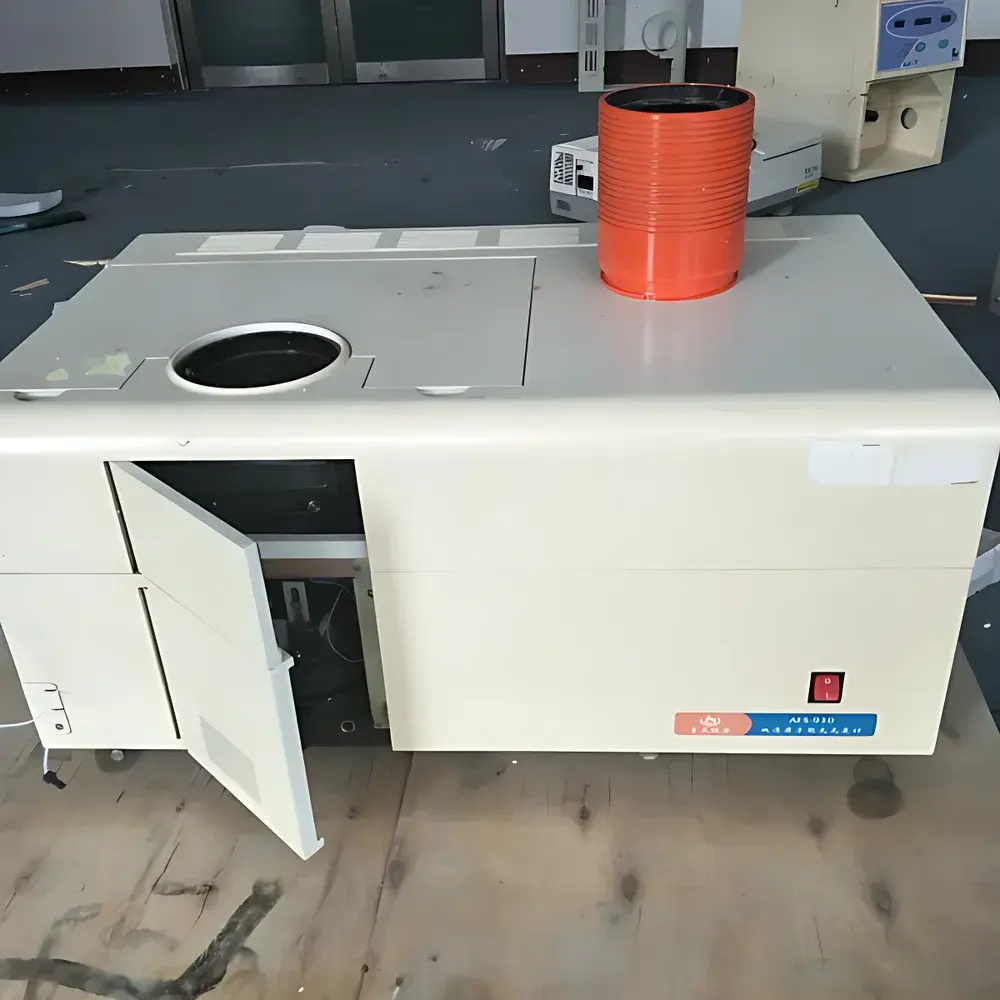
Titan Instruments AFS-930 Multi-Channel Atomic Fluorescence Spectrometer (Refurbished)
| Brand | Titan Instruments |
|---|---|
| Origin | Beijing, China |
| Model | AFS-930 |
| Instrument Type | Multi-channel Atomic Fluorescence Spectrometer |
| Sample Introduction | Continuous Flow Hydride Generation |
| Detectable Elements | As, Se, Bi, Hg, Te, Sn, Ge, Pb, Zn, Cd, Au |
| Relative Standard Deviation (RSD) | <1% |
| Linear Dynamic Range | >3 orders of magnitude |
| Detection Limits | As, Se, Pb, Bi, Sb, Te, Sn < 0.01 µg/L |
| Condition | Factory-refurbished unit with full functional validation |
Overview
The Titan Instruments AFS-930 is a factory-refurbished multi-channel atomic fluorescence spectrometer engineered for trace-level quantification of hydride-forming and cold-vapor elements in environmental, pharmaceutical, food safety, and geological laboratories. It operates on the principle of atomic fluorescence spectroscopy (AFS), where analyte atoms—generated in situ via hydride generation (HG) or cold vapor (CV) techniques—are excited by a high-intensity hollow cathode lamp (HCL) or electrodeless discharge lamp (EDL), and the resulting resonance fluorescence is measured at right angles to the excitation path. This optical geometry minimizes background scatter and ensures high signal-to-noise ratios. The AFS-930 employs continuous-flow hydride generation, enabling rapid sample throughput, precise reagent delivery control, and minimized memory effects—critical for routine regulatory analysis requiring GLP-compliant reproducibility.
Key Features
- Multi-channel simultaneous detection architecture supporting up to four elements per run without hardware reconfiguration
- Integrated continuous-flow hydride generation system with programmable gas–liquid separation and precise carrier gas flow control (0–500 mL/min)
- Dual-channel monochromator with holographic grating (1200 lines/mm) and thermoelectrically stabilized photomultiplier tube (PMT) detectors
- Automated lamp alignment and intensity optimization routines reducing operator dependency and inter-laboratory variability
- Robust quartz-trap atomizer with integrated cooling and optimized residence time for enhanced atomization efficiency and reduced interferences
- On-board diagnostics including lamp energy monitoring, gas pressure verification, and reaction coil integrity checks
Sample Compatibility & Compliance
The AFS-930 accommodates aqueous samples across matrices including drinking water, wastewater, soil extracts (EPA Method 7063), rice flour (GB 5009.11–2023), and biological tissues (after acid digestion per ISO 17294-2). Its detection capability aligns with major regulatory frameworks: EPA 200.9 and 1631 for mercury; ISO 11969 for arsenic in water; and Chinese National Standard GB/T 223.82–2018 for selenium in food. All refurbished units undergo full performance qualification (PQ) against ASTM D5673-19 criteria—including linearity verification, RSD assessment at 10× detection limit, and carryover testing per USP . System logs support audit-ready documentation for FDA 21 CFR Part 11 compliance when paired with validated LIMS integration.
Software & Data Management
The instrument is supplied with Titan’s AFS-Control v3.2 software (English UI), compliant with Windows 10/11 64-bit environments. It features method-driven workflows, real-time spectral preview, automatic baseline correction, and peak deconvolution for overlapping signals (e.g., As and Se co-elution). Data files are stored in vendor-neutral .csv and .xml formats, with embedded metadata (operator ID, calibration date, instrument serial, audit trail timestamps). Software supports electronic signatures, user role-based access control (admin/operator/auditor), and export of reports conforming to ISO/IEC 17025 clause 7.8. Raw data and processed results are timestamped and cryptographically hashed to ensure integrity during regulatory inspections.
Applications
- Regulatory monitoring of arsenic and mercury in municipal drinking water per WHO Guidelines and EU Directive 2020/2184
- Speciation-unresolved total Se quantification in fortified cereals and dietary supplements (AOAC 2015.02)
- High-throughput screening of Pb and Cd in edible oils and infant formula (CAC/GL 19-1995)
- Geochemical surveying of Sb and Bi in stream sediments using aqua regia extraction (ISO 11466)
- QC release testing of active pharmaceutical ingredients (APIs) for catalyst residue metals (ICH Q3D Stage 3)
FAQ
Is this unit covered by a warranty?
Yes—each refurbished AFS-930 carries a 12-month limited parts-and-labor warranty from date of commissioning, inclusive of on-site technician support for installation and initial operational qualification.
Can the system be upgraded to support newer elements such as Co or Ni?
No—the AFS-930’s optical and electronics architecture is optimized for Group IV–VI hydride-forming elements and Hg/Cd/Zn; it does not support transition metal analysis via flame or graphite furnace AAS coupling.
What documentation accompanies the instrument?
A complete PQ report, refurbishment log, lamp certification records, NIST-traceable calibration certificate for As standard (SRM 3102a), and software validation summary are provided digitally and in hard copy.
Is remote diagnostics supported?
Yes—via secure TLS-encrypted VNC session with pre-authorized IP whitelisting; all remote access events are logged with user ID and timestamp per ISO 27001 Annex A.8.2.3.






