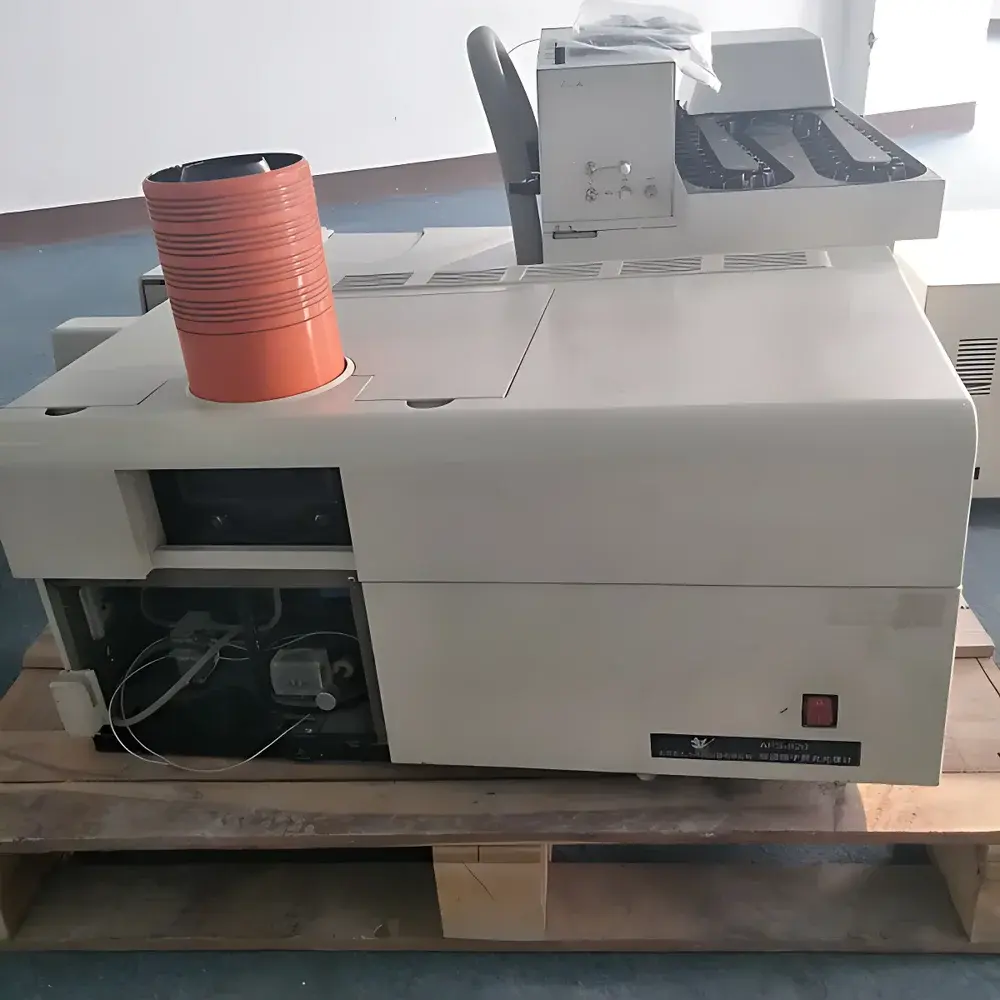
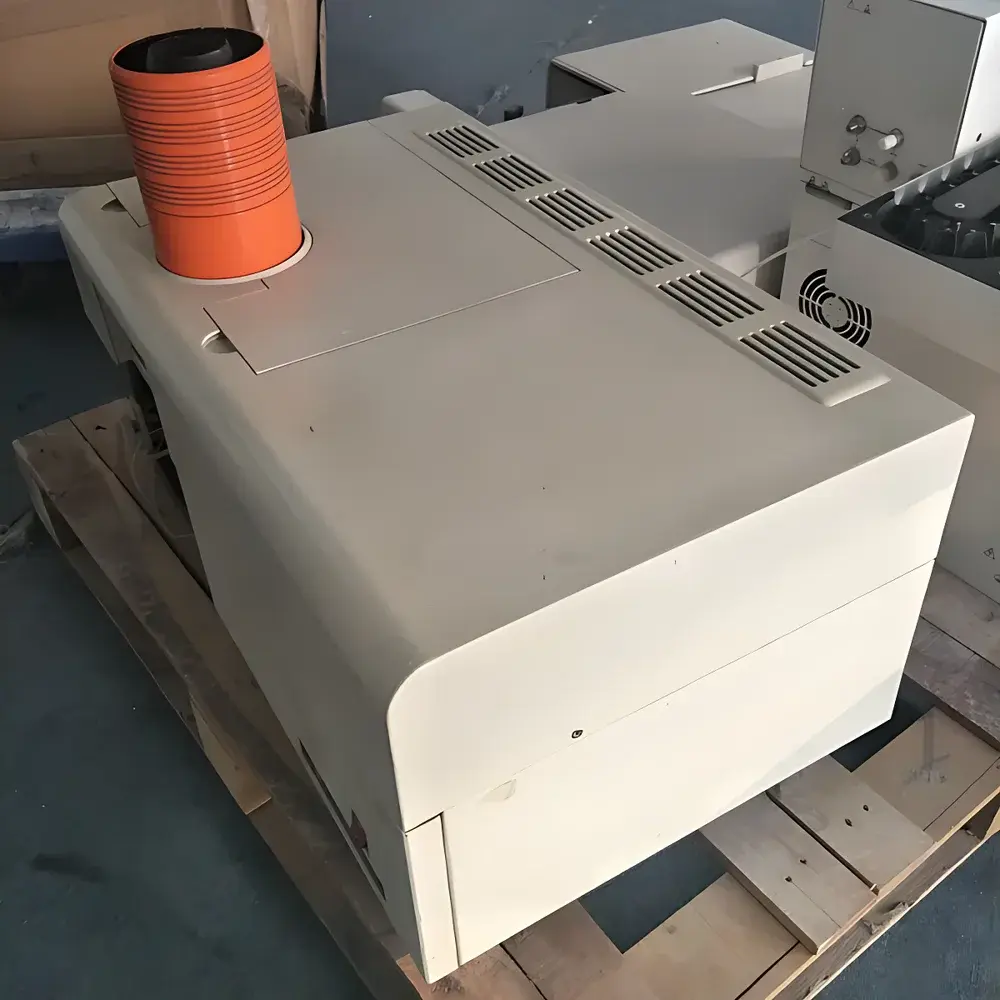
Titan Instruments WX-AFS-820 Atomic Fluorescence Spectrometer Repair Service
| Brand | Titan Instruments |
|---|---|
| Origin | Beijing, China |
| Manufacturer Type | Authorized Distributor |
| Instrument Type | Analytical Instrument |
| Model | WX-AFS-820 |
| Service Fee Range | USD 700–1,400 (excl. parts) |
| Response Time | Within 12 hours |
| Service Scope | Maintenance, calibration, fault diagnosis, component replacement, and performance validation for domestic and imported atomic fluorescence spectrometers |
| Technician Experience | 10+ years in AFS system servicing |
| Compliance Support | ASTM D5673, ISO 11929, GB/T 223.74–2008, USP <233> |
Overview
The Titan Instruments WX-AFS-820 is a hydride-generation atomic fluorescence spectrometer designed for ultra-trace determination of arsenic (As), mercury (Hg), selenium (Se), antimony (Sb), bismuth (Bi), lead (Pb), tin (Sn), tellurium (Te), cadmium (Cd), and zinc (Zn) in environmental, pharmaceutical, food safety, and geological matrices. This service offering provides comprehensive repair and preventive maintenance for the WX-AFS-820 platform, ensuring continued compliance with regulatory measurement requirements. The instrument operates on the principle of atomic fluorescence spectroscopy (AFS): analyte elements are chemically reduced to volatile hydride species or cold-vapor forms, atomized in a quartz cell under argon shielding, and excited by a high-intensity hollow cathode lamp (HCL) or electrodeless discharge lamp (EDL). Resulting fluorescence emission is collected at right angles to the excitation path, delivering sub-ppt detection limits and high selectivity against spectral interferences. Our repair protocol follows metrologically traceable procedures aligned with ISO/IEC 17025–compliant laboratory practices.
Key Features
- Full-system diagnostics including optical alignment verification, lamp intensity profiling, gas flow calibration (Ar carrier and H2 reducing gas), and reaction chamber integrity testing
- Replacement and functional validation of critical consumables: quartz atomization cells, peristaltic pump tubing, hydride generation modules, and photomultiplier tube (PMT) assemblies
- Electronic subsystem refurbishment: high-voltage PMT power supply stabilization, analog-to-digital conversion linearity correction, and microcontroller firmware integrity checks
- Gas-tightness verification across all fluidic pathways using helium leak detection (sensitivity ≤ 1×10⁻⁹ mbar·L/s)
- Post-repair performance qualification per manufacturer-specified criteria: detection limit verification (e.g., As ≤ 0.01 µg/L), precision assessment (RSD ≤ 3% at 10× LOD), and carryover evaluation (< 0.5%)
Sample Compatibility & Compliance
This service supports instruments used in laboratories performing regulated analyses under EPA Method 1631E (mercury in water), GB 5009.11–2014 (As in food), and SN/T 2058–2008 (heavy metals in cosmetics). All repair documentation includes a Certificate of Service with traceable calibration records, part-level serial numbers, and technician certification credentials. Procedures conform to Good Laboratory Practice (GLP) and support audit readiness for FDA 21 CFR Part 11-compliant data management environments. No modifications are made to original factory firmware or hardware architecture—only authorized OEM-equivalent components are installed.
Software & Data Management
Repair includes verification of native Titan AFS software (v3.2.x or later) functionality, including method loading, real-time signal monitoring, peak integration algorithm stability, and report export integrity (PDF, CSV, XML). Where applicable, we validate compatibility with LIMS interfaces via ASTM E1482-compliant data exchange protocols. Audit trail logs are preserved and verified for continuity; no data deletion or system reinstallation occurs unless explicitly requested and documented under change control.
Applications
Our technicians routinely service WX-AFS-820 units deployed in municipal drinking water labs (arsenic monitoring), pharmaceutical QC labs (catalyst metal residue testing per ICH Q2(R2)), agricultural soil testing facilities (Hg bioavailability studies), and contract environmental testing organizations (EPA-certified wastewater analysis). Repairs address recurring failure modes: hydride generation inefficiency due to clogged gas–liquid separators, PMT signal drift from aging dynode chains, lamp current instability affecting excitation reproducibility, and argon pressure regulation faults compromising atom cloud homogeneity.
FAQ
Do you replace original manufacturer parts?
Yes—we source and install only OEM-specified or ISO 9001-certified equivalent components, with full traceability documentation provided.
Can you restore instrument performance to factory specifications?
Yes—post-repair validation includes full performance qualification against Titan Instruments’ published technical specifications and relevant national standard methods.
Is remote diagnostic support available before dispatching a technician?
Yes—clients may share raw signal logs, error codes, and operational videos for preliminary root-cause analysis at no charge.
How long does typical on-site repair take?
Most field repairs are completed within one business day; complex board-level electronics work may require bench-based turnaround of 3–5 working days.
Do you offer extended service contracts?
Yes—annual maintenance agreements include two scheduled preventive visits, priority response SLA (4-hour remote, 24-hour on-site), and discounted labor rates for unscheduled interventions.
Related Products