
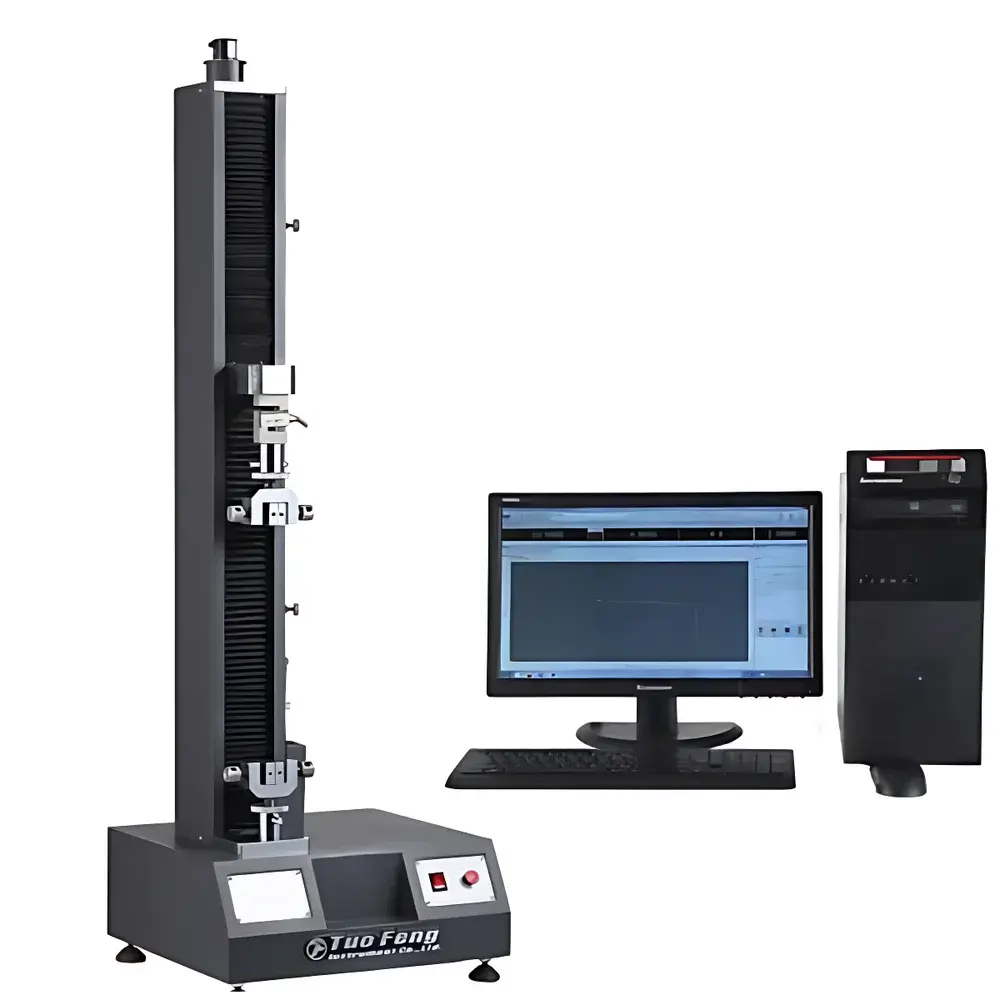
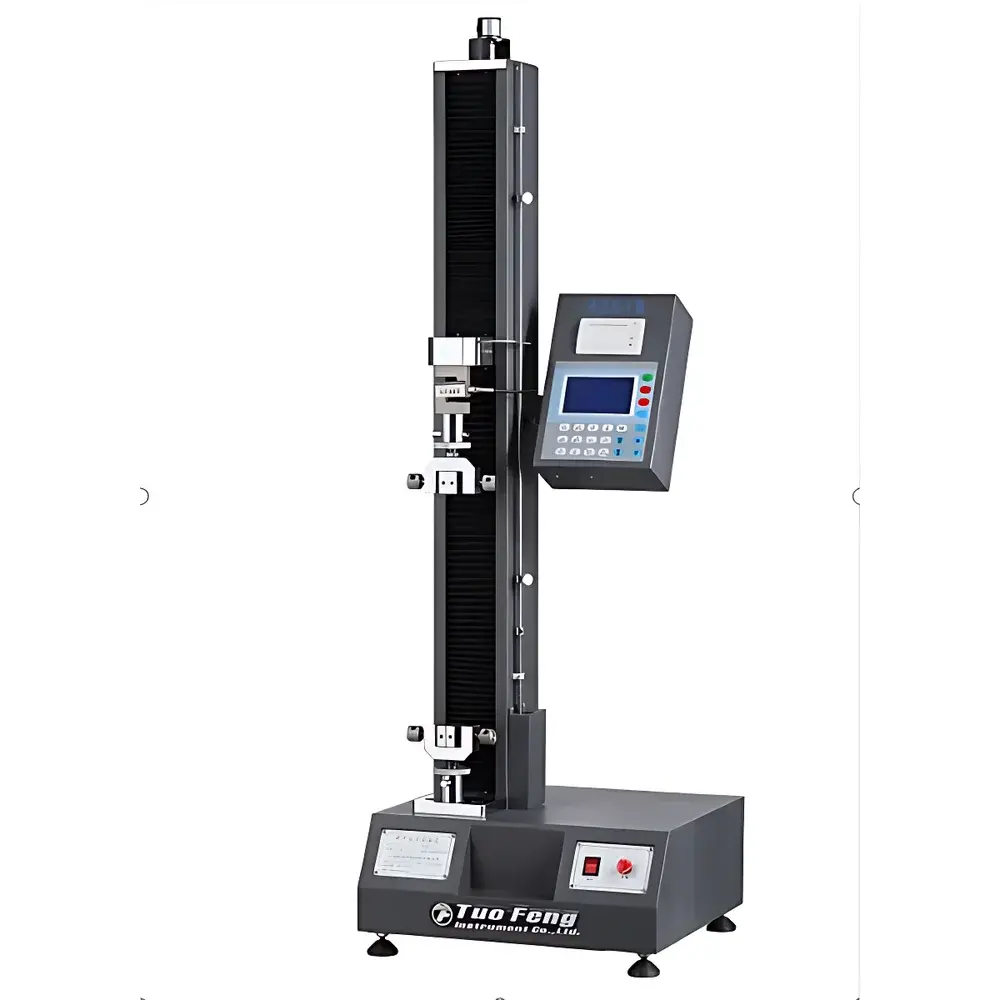
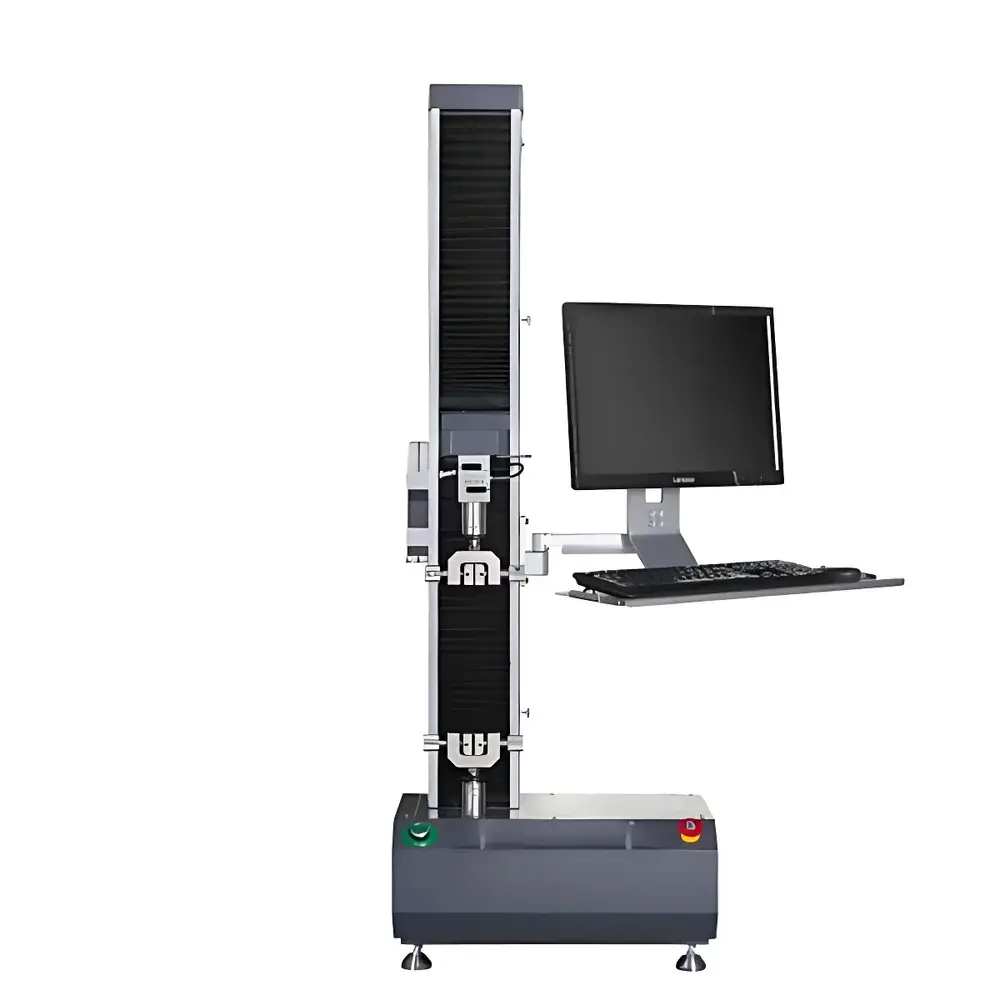
TOFENG TFW-224 Universal Testing Machine for Biomaterials
| [Brand | TOFENG |
|---|---|
| Origin | Shanghai, China |
| Manufacturer Type | Direct Manufacturer |
| Instrument Type | Electromechanical Tensile Tester |
| Max Test Load | 5 kN |
| Load Measurement Range | 0.4%–100% FS |
| Load Accuracy | ±0.5% of reading |
| Crosshead Travel | 700 mm |
| Displacement Resolution | ±0.5% of reading |
| Compliance Standards | ASTM D638, ISO 527, GB/T 1040, ISO 11843, USP <1209>, ISO 10993-12] |
Overview
The TOFENG TFW-224 Universal Testing Machine for Biomaterials is an electromechanical tensile tester engineered for high-reproducibility mechanical characterization of soft and semi-rigid biological materials under controlled uniaxial loading conditions. Based on servo-controlled linear actuation and precision load cell transduction, the system implements standardized force-displacement measurement principles aligned with ISO 10993-12 (biological evaluation of medical devices — sample preparation and reference materials) and ASTM D638 (tensile properties of plastics), enabling quantification of tensile strength, elongation at break, Young’s modulus, tear resistance, peel adhesion, and puncture performance. Its rigid C-frame architecture, integrated crosshead guidance, and real-time closed-loop control ensure minimal compliance error and consistent strain rate application—critical for compliant substrates such as hydrogels, decellularized tissues, electrospun scaffolds, suture materials, and biodegradable films.
Key Features
- High-fidelity 5 kN load cell with ±0.5% accuracy across 0.4–100% full scale, calibrated to traceable NIST-equivalent standards
- Adjustable crosshead travel of 700 mm (extendable upon request), accommodating specimens from microfibers to multi-layer tissue constructs
- Variable-speed actuation (0.01–500 mm/min, infinitely adjustable), supporting quasi-static and dynamic testing protocols per ISO 6892-1 and ASTM E8
- Dual-mode displacement sensing: high-resolution optical encoder (±0.5% accuracy) + optional extensometer integration for true strain measurement
- Integrated safety architecture: electronic limit switches, emergency stop circuitry, overload protection (>110% FS), and programmable return-to-home sequences
- Modular fixture interface compatible with pneumatic grips, wedge clamps, peel fixtures, and custom-designed biomaterial holders (e.g., tissue punch mounts, suture anchors)
Sample Compatibility & Compliance
The TFW-224 accommodates diverse specimen geometries—including filaments (diameter ≥50 µm), thin films (thickness 10–500 µm), hydrogel discs (Ø 6–25 mm), and porous scaffolds—without requiring adhesive bonding or excessive preloading. Its low-force sensitivity and minimal inertia enable stable measurement of low-modulus biomaterials (e.g., collagen gels, alginate hydrogels, chitosan membranes) while maintaining linearity in higher-stiffness regimes (e.g., PCL electrospun mats, PLA sutures). The system supports full regulatory alignment: test methods conform to ISO 10993-12 for extractables/leachables sample preparation, ASTM F2100 for surgical mask material tensile validation, and USP for mechanical integrity assessment of parenteral packaging components. All test sequences are audit-ready for GLP and GMP environments, with configurable user permissions and electronic signature support.
Software & Data Management
The Windows-based TOFENG TestSuite v4.2 provides ISO/IEC 17025-compliant data acquisition and analysis. It supports multi-mode control (constant load, constant displacement, ramp-to-failure, cyclic loading), real-time plotting of stress–strain, force–time, and displacement–time curves, and automated calculation of ASTM/ISO-defined parameters—including ultimate tensile strength, yield point (0.2% offset), elongation at break, secant modulus, and peel adhesion energy (N/mm). Raw data exports to CSV, XML, and PDF formats; all test logs include timestamped metadata (operator ID, calibration status, environmental conditions). Software features built-in 21 CFR Part 11 compliance modules: electronic audit trail, role-based access control, and immutable record retention. Custom script extensions allow integration with LIMS platforms or MATLAB-based post-processing pipelines.
Applications
- Mechanical validation of 3D-bioprinted constructs under physiological strain rates
- Tensile and burst strength testing of wound dressings and hemostatic patches per ISO 10993-10
- Peel adhesion quantification of pressure-sensitive bioadhesives (e.g., microneedle patches)
- Compression–relaxation hysteresis analysis of soft tissue-mimetic hydrogels
- Long-term creep and stress relaxation profiling under simulated in vivo loading
- Quality control of resorbable suture materials per USP and ISO 10993-12
FAQ
Does the TFW-224 comply with FDA 21 CFR Part 11 requirements for electronic records?
Yes—the software includes configurable audit trails, electronic signatures, and data integrity safeguards meeting Part 11 Annex A expectations for regulated laboratories.
Can the system be used for cyclic fatigue testing of biodegradable implants?
Yes, when equipped with optional high-cycle controller firmware and low-friction linear guides, it supports up to 10⁶ cycles at frequencies ≤5 Hz with load stability <±1% RMS.
Is third-party calibration certification available?
TOFENG provides UKAS-accredited calibration certificates (traceable to NPL standards) upon request, including uncertainty budgets per ISO/IEC 17025.
What is the minimum specimen thickness the system can reliably test?
With appropriate grip geometry and preload optimization, the system achieves stable measurements on specimens as thin as 15 µm (e.g., ultrathin PVA films, exosome-loaded nanofibers).
Do you offer application-specific fixture design services?
Yes—TOFENG’s engineering team collaborates with academic and industrial clients to develop ISO-aligned fixtures for specialized biomaterials, including vascular graft torsion adapters and cartilage compression platens.



