
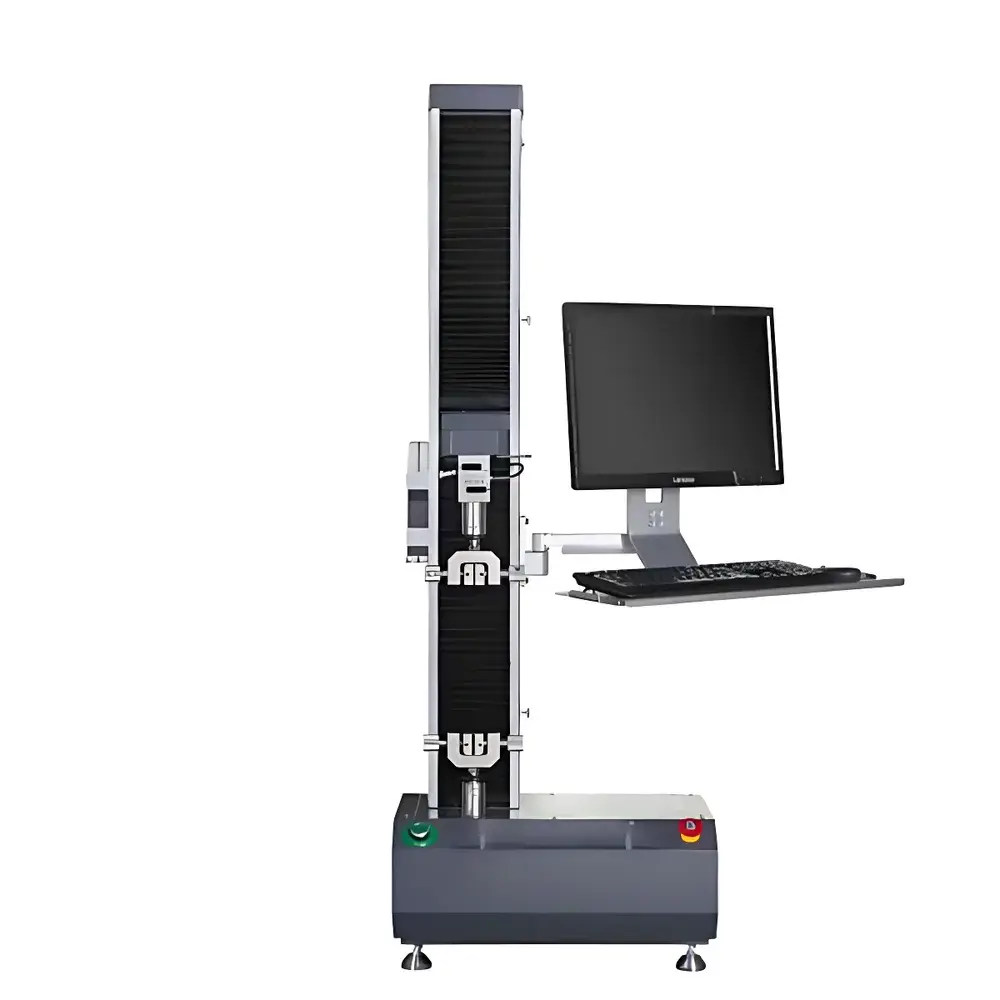
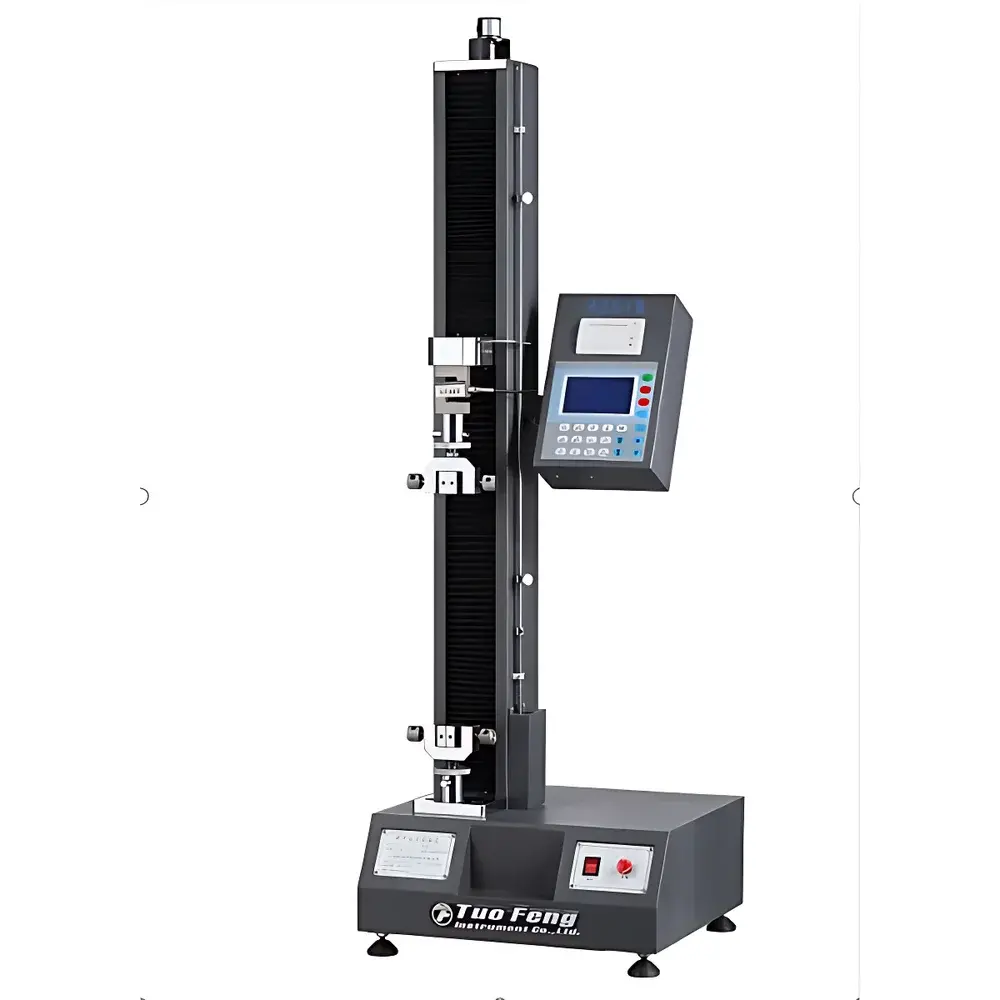
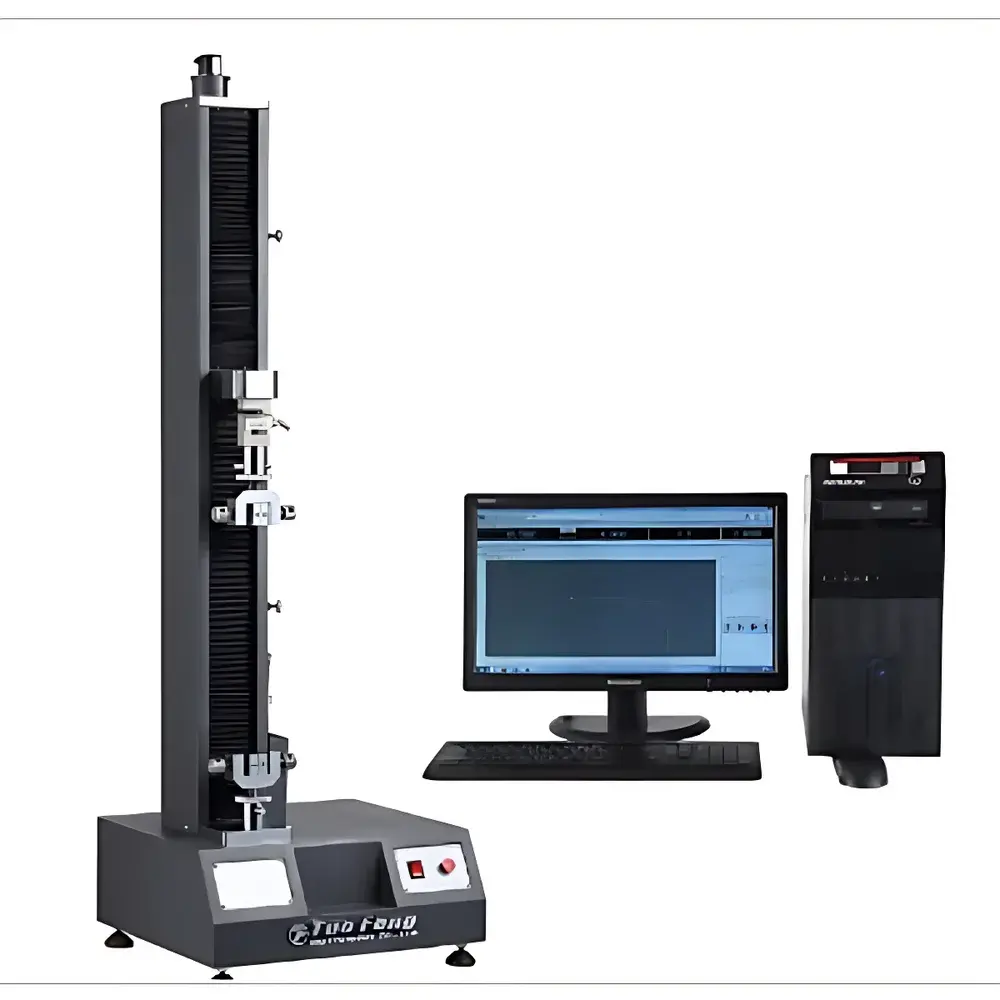
TOFENG TFW-249 Computer-Controlled Electronic Tensile Testing Machine for Yarn and Fibrous Materials
| Key | Brand: TOFENG |
|---|---|
| Origin | Shanghai, China |
| Manufacturer | Yes |
| Type | Electronic Tensile Testing Machine |
| Model | TFW-249 |
| Max Test Load | 5 kN |
| Force Measurement Range | 0.4%–100% FS |
| Force Accuracy | ±0.5% of reading |
| Crosshead Travel | 700 mm |
| Displacement Resolution | ±0.5% of reading |
| Compliance Standards | GB, ISO 13934, ISO 2062, ASTM D2256, ASTM D5035, JIS L1013, DIN EN ISO 13934-1 |
Overview
The TOFENG TFW-249 is a precision-engineered computer-controlled electronic tensile testing machine specifically optimized for mechanical characterization of yarns, monofilaments, multifilament strands, textile fibers, and related soft quasi-linear materials. It operates on the fundamental principle of uniaxial static tension—applying controlled, programmable force to a specimen while simultaneously measuring load (via high-stability load cell) and axial displacement (via optical encoder-based crosshead positioning). Designed in accordance with international textile testing standards—including ISO 13934-1 (determining breaking force and elongation of fabrics), ISO 2062 (yarn tensile properties), ASTM D2256 (tensile properties of yarns), and ASTM D5035 (breaking force and elongation of textile fabrics)—the TFW-249 delivers repeatable, traceable, and audit-ready data required for R&D labs, quality control departments, and third-party certification facilities. Its rigid dual-column frame, servo-controlled AC motor drive, and real-time closed-loop feedback architecture ensure minimal compliance error and high reproducibility across low-force (<10 N) and medium-force (up to 5 kN) test regimes typical of fiber-to-yarn transition analysis.
Key Features
- High-resolution force measurement system calibrated to ±0.5% of reading across 0.4–100% full scale, eliminating range-switching artifacts and ensuring consistency from fine silk filaments to coarse industrial twines.
- 700 mm vertical crosshead travel with three-speed motorized adjustment (fast/medium/slow), enabling rapid setup and precise positioning for specimens of varying gauge lengths—from short-length yarn snippets (e.g., 25 mm clamping length per ISO 2062) to extended filament spools.
- Optical encoder-based displacement sensing with ±0.5% accuracy, synchronized with load acquisition at up to 1 kHz sampling rate, supporting accurate calculation of modulus, yield point, and breaking elongation.
- Integrated electronic limit switches and emergency stop circuitry compliant with IEC 61800-5-2 functional safety requirements for laboratory equipment.
- Modular fixture interface accommodating standardized pneumatic, wedge-type, and roller-clamp configurations—fully customizable for yarn slippage mitigation, loop strength evaluation, or knot integrity testing.
- Thermally stabilized load cell housing and anti-vibration base mounting reduce environmental drift and improve long-term zero stability during multi-hour QC batch runs.
Sample Compatibility & Compliance
The TFW-249 supports a broad spectrum of fibrous and thin-section specimens: single-filament nylon or polyester (denier <10), spun cotton or wool yarns (Ne 10–100), aramid and carbon fiber tows, medical sutures, elastomeric braids, paper strips, and polymer-coated textiles. All mechanical tests adhere to defined gauge lengths, pre-tension protocols, and extension rates specified in ISO 2062 (20 mm/min for yarns), ASTM D2256 (300 mm/min for high-speed yarn testing), and GB/T 3916 (Chinese national standard for yarn tensile performance). The system’s mechanical design and software logic are validated against ISO/IEC 17025 calibration traceability requirements, and raw data output meets GLP-compliant audit trails when paired with optional 21 CFR Part 11-enabled software modules.
Software & Data Management
The embedded Windows-based testing platform (compatible with Windows 10/11 LTS versions) provides full control over test sequencing, parameter definition, and post-processing analytics. Users may select from multiple control modes—including constant rate of extension (CRE), constant rate of loading (CRL), and load-hold or displacement-hold dwell functions. Real-time plotting supports simultaneous display of force–time, force–displacement, stress–strain, and % elongation curves. Automated calculations include tenacity (cN/tex), breaking strength (MPa), initial modulus (N/tex), elongation at break (%), and work-to-break (mJ). Data export is supported in CSV, XML, and PDF formats; all test files contain embedded metadata (operator ID, timestamp, environmental conditions, calibration certificate ID). Optional audit trail logging, electronic signatures, and role-based access control align with FDA 21 CFR Part 11 and EU Annex 11 regulatory expectations.
Applications
- Quality assurance of staple fiber blends during spinning process validation
- Comparative tensile analysis of natural vs. synthetic yarns under controlled RH (50% ±2%) and temperature (20°C ±2°C)
- Evaluation of moisture regain effects on cotton yarn strength via preconditioning per ISO 139
- Development testing of biodegradable PLA or PHA-based textile filaments
- Adhesion strength assessment of coated yarns using peel fixtures per ASTM D903
- Statistical process control (SPC) of ring-spun vs. rotor-spun yarn batches using Cp/Cpk reporting tools
- Root cause analysis of weaving breakage through correlation of tenacity CV% and elongation variability
FAQ
What standards does the TFW-249 support out-of-the-box?
It natively implements test methods from ISO 13934-1, ISO 2062, ASTM D2256, ASTM D5035, JIS L1013, and GB/T 3916—with preloaded test templates, unit conversions, and pass/fail thresholds.
Can the system be integrated into an existing LIMS or MES environment?
Yes—via TCP/IP or RS232 serial protocol, the TFW-249 supports bidirectional data exchange using ASTM E1382-compliant messaging; custom API integration is available upon request.
Is calibration documentation provided with shipment?
Each unit ships with a factory-issued calibration certificate traceable to NIM (National Institute of Metrology, China) and includes uncertainty budgets per ISO/IEC 17025 Annex A.
Does the machine support high-humidity or elevated-temperature testing?
While the base configuration operates in ambient lab conditions (10–35°C, 30–80% RH), optional environmental chamber coupling (−10°C to +80°C, 10–95% RH) is available for climate-dependent yarn behavior studies.
How is data integrity ensured during long-duration fatigue or creep tests?
The controller employs non-volatile memory buffering and automatic power-fail recovery; all acquired points are time-stamped with microsecond resolution and stored redundantly on internal SSD and external NAS mounts.



