
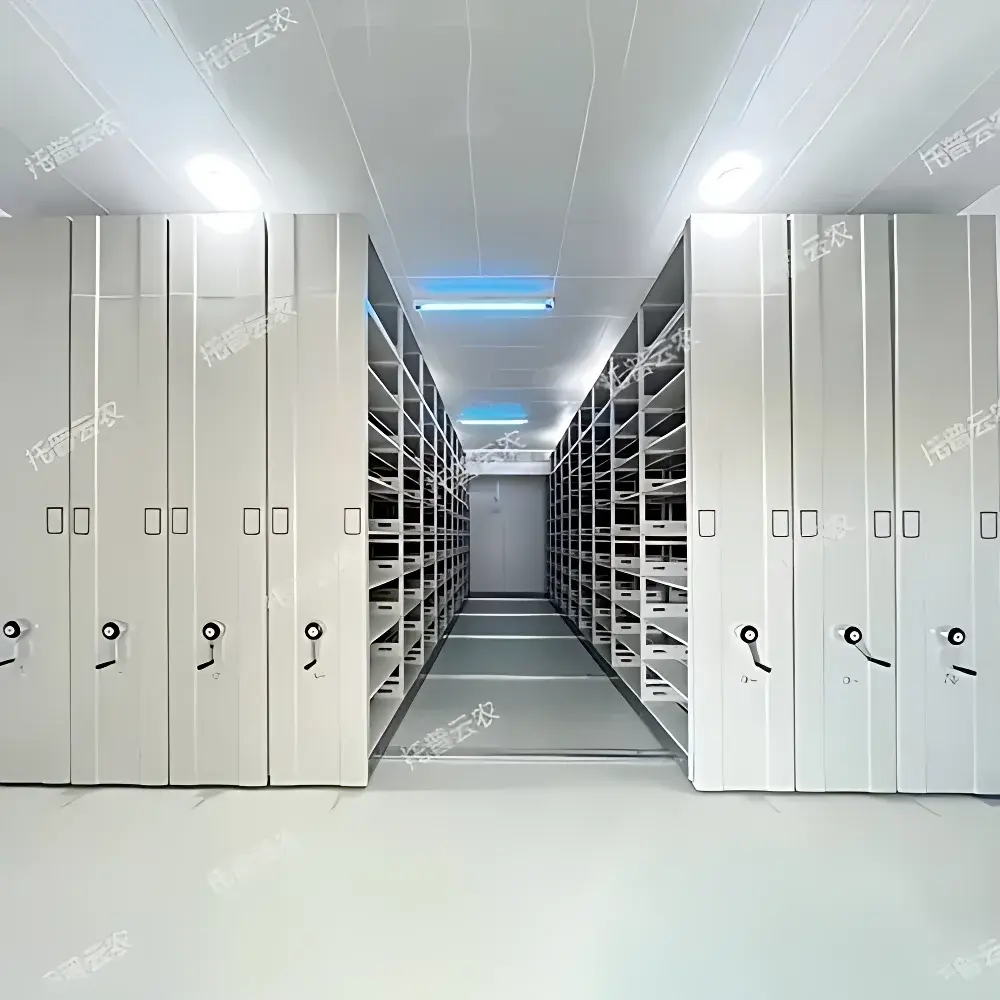
Top Cloud-agri Germplasm Resource Repository System – Plant Growth Chamber with Multi-Zone Low-Temperature Storage and Environmental Control
| Brand | Top Cloud-agri |
|---|---|
| Origin | Zhejiang, China |
| Manufacturer Type | Direct Manufacturer |
| Product Origin | Domestic (China) |
| Model | Germplasm Resource Repository System |
| Pricing | Upon Request |
Overview
The Top Cloud-agri Germplasm Resource Repository System is a purpose-engineered, multi-compartment environmental control chamber designed specifically for the long-term, medium-term, short-term, and ex situ conservation of plant genetic resources. It integrates precision-controlled low-temperature storage, ultra-low humidity conditioning, and modular climate zoning—based on internationally recognized germplasm preservation protocols defined by the Food and Agriculture Organization (FAO) and the International Treaty on Plant Genetic Resources for Food and Agriculture (ITPGRFA). The system operates across six distinct operational zones: Long-Term Storage (–20 ± 2 °C, ≤45 ± 5 %RH), Medium-Term Storage (–4 ± 2 °C, ≤45 ± 5 %RH), Automated Medium-Term Storage (with robotic arm and 2D/3D vision-guided retrieval), Short-Term Storage (0–10 °C, ≤60 ± 5 %RH), In Vitro Culture Chamber (4–35 °C, 40–80 %RH), and Desiccation Room (15 ± 2 °C, ≤15 ± 5 %RH). Each zone maintains traceable, stable environmental parameters to ensure genetic integrity, viability retention, and compliance with ISO 20673:2019 (Plant genetic resources — Guidelines for genebank management) and national GB/T 3543.4–2021 (Standards for Seed Testing — Moisture Determination).
Key Features
- Dual redundant refrigeration units (imported compressors) with automatic failover logic—ensuring uninterrupted temperature stability during component maintenance or fault conditions.
- Cryogenic-grade desiccation system utilizing low-temperature rotary desiccant wheels, enabling continuous dehumidification even at sub-zero operating temperatures—a critical requirement for seed moisture equilibration per ISTA Rule 5.3.
- Structural envelope composed of double-sided stainless steel/PUR insulated panels (B1 fire-rated, formaldehyde-free), with seamless floor sealing and anti-mold epoxy coating for biological containment integrity.
- PLC-based central controller with dual-stage alarm hierarchy (local audible/visual + remote SMS/email notification), integrated real-time logging, and configurable setpoint hysteresis to prevent thermal cycling stress on stored samples.
- Cloud-connected mobile application (iOS/Android) supporting authenticated remote monitoring, parameter adjustment, alarm acknowledgment, and audit trail export—fully compliant with GLP Annex 11 and FDA 21 CFR Part 11 data integrity requirements.
- Modular, height-adjustable racking system with optimized airflow pathways; supports standardized seed storage containers (e.g., aluminum foil pouches, glass vials, cryotubes) while maintaining uniform vertical temperature gradients (< ±0.5 °C deviation).
- Integrated air curtain vestibule and ceiling-mounted cold air diffusers with laminar flow distribution—minimizing thermal shock during door openings and ensuring spatial homogeneity per ISO 17025 calibration practices.
Sample Compatibility & Compliance
The system accommodates diverse germplasm formats including orthodox seeds, recalcitrant tissue explants (in vitro), pollen, embryos, and DNA extracts. All storage modules conform to FAO’s Genebank Standards (2021 edition) for viability monitoring intervals, regeneration scheduling, and duplication protocols. The automated variants meet ISO/IEC 17025:2017 clause 7.7 (sampling and handling) and support full chain-of-custody documentation. Humidity control systems are validated per ASTM E2054–20 (Standard Practice for Calibration of Hygrometers), and temperature uniformity is verified using NIST-traceable thermistors in accordance with ICH Q5C stability testing guidelines.
Software & Data Management
Embedded firmware delivers continuous environmental logging at 1-minute resolution, with encrypted local storage (SD card + internal SSD) and synchronized cloud backup via TLS 1.3. Data exports support CSV, PDF, and XML formats compatible with LIMS integration (e.g., LabVantage, Thermo Fisher SampleManager). Audit trails record user identity, timestamp, action type (e.g., setpoint change, alarm reset), and IP address—retained for ≥15 years as required under Chinese GB/T 22239–2019 (Cybersecurity等级 protection) and EU GDPR Article 32. Role-based access control (RBAC) enforces separation of duties between operators, supervisors, and auditors.
Applications
- Long-term conservation of base collections for national genebanks and CGIAR centers.
- Pre-breeding material storage under controlled deterioration protocols (ISTA Standard 2023).
- In vitro propagation support for clonal crops (e.g., potato, banana) requiring precise photoperiod and humidity staging.
- Seed drying and conditioning prior to cryo-storage or shipment under Phytosanitary Certificate (ISPM 23) requirements.
- Climate-resilience research—facilitating controlled-stress experiments (e.g., drought priming, cold acclimation) across developmental stages.
- International exchange logistics—providing documented environmental history for phytosanitary compliance and SMTA (Standard Material Transfer Agreement) fulfillment.
FAQ
What is the recommended calibration frequency for temperature and humidity sensors?
Annual calibration against NIST-traceable reference standards is advised; internal validation checks occur automatically every 24 hours.
Does the system support integration with existing institutional LIMS or ERP platforms?
Yes—via RESTful API and HL7-compliant webhooks; custom middleware development support is available upon request.
Can the automated storage modules handle non-standard container sizes?
Robotic arms are configurable for vial diameters from 12 mm to 30 mm and heights up to 120 mm; custom gripper tooling is offered for specialized vessels.
Is remote firmware update capability available?
Firmware updates are delivered over secure OTA (Over-The-Air) channels with cryptographic signature verification and rollback functionality.
How is data sovereignty ensured for cloud-stored environmental logs?
All cloud infrastructure resides within China’s mainland data centers (Alibaba Cloud Hangzhou Zone), with optional private cloud deployment for institutions requiring full data residency control.
Related Products





