
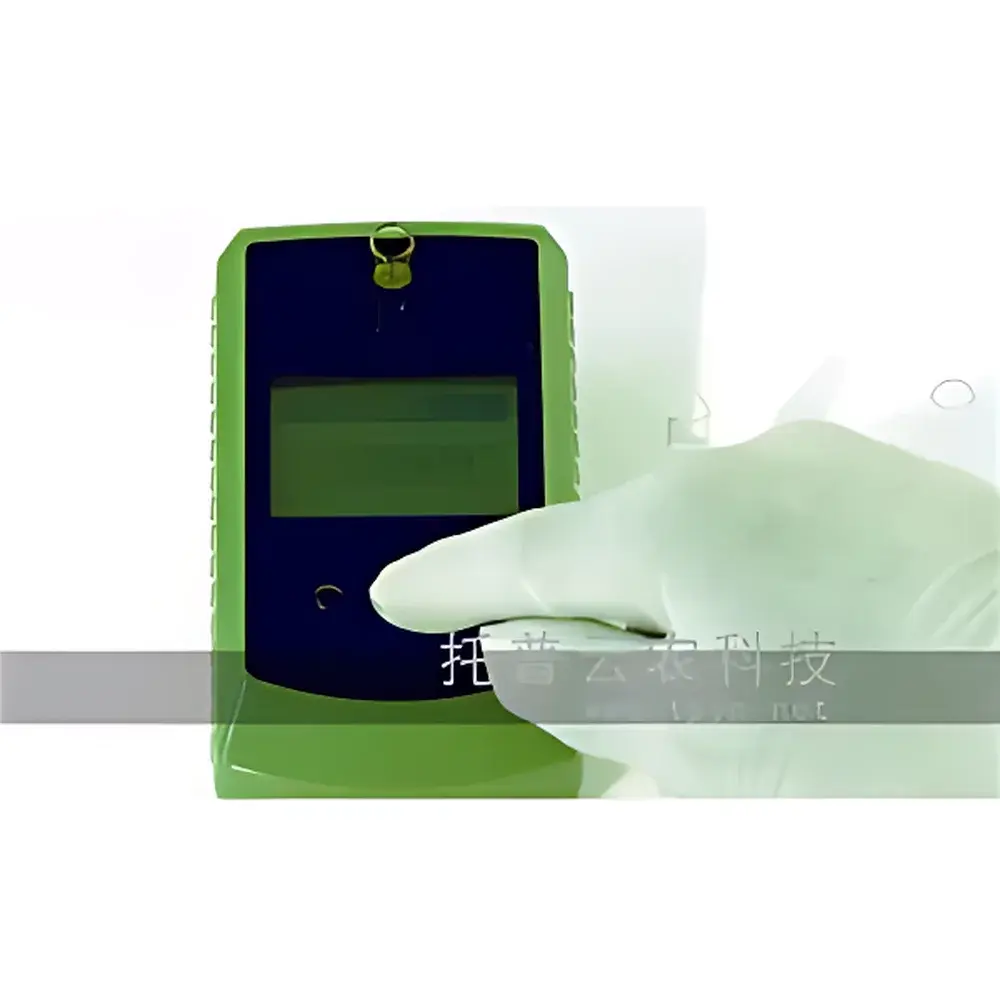
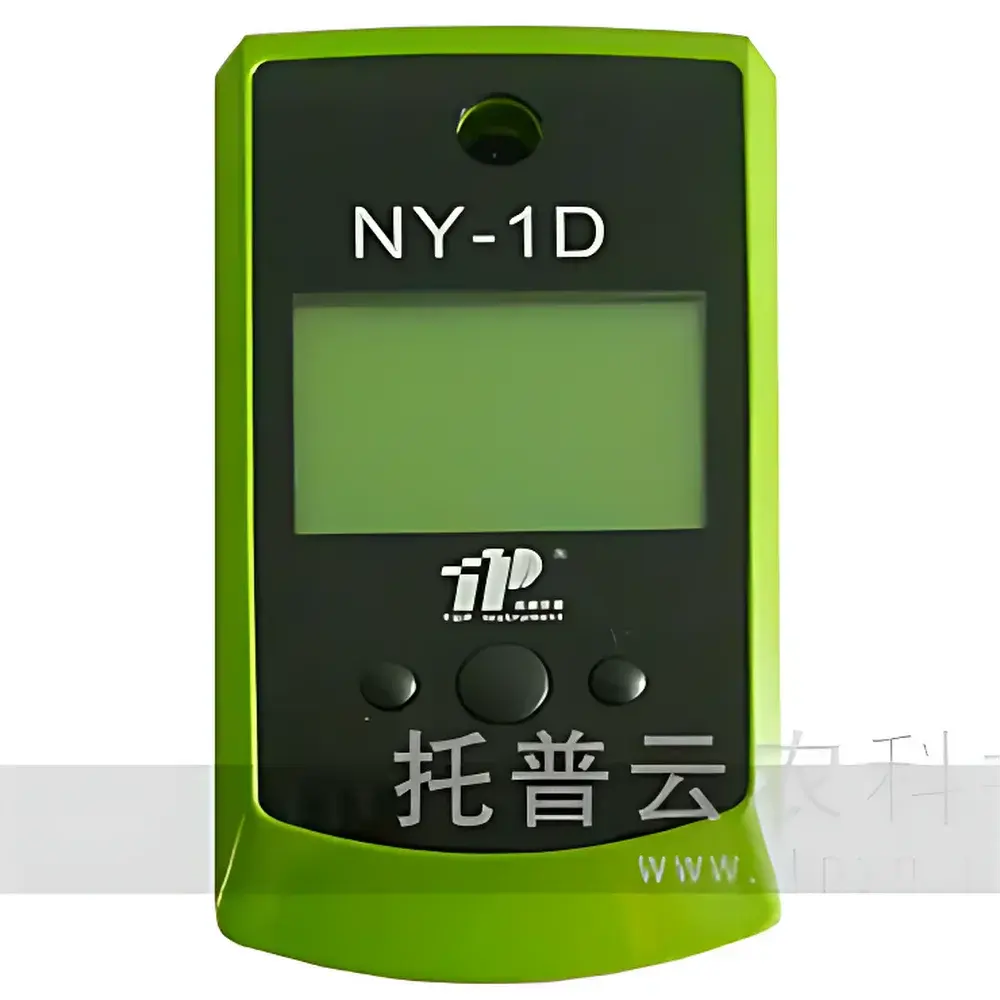
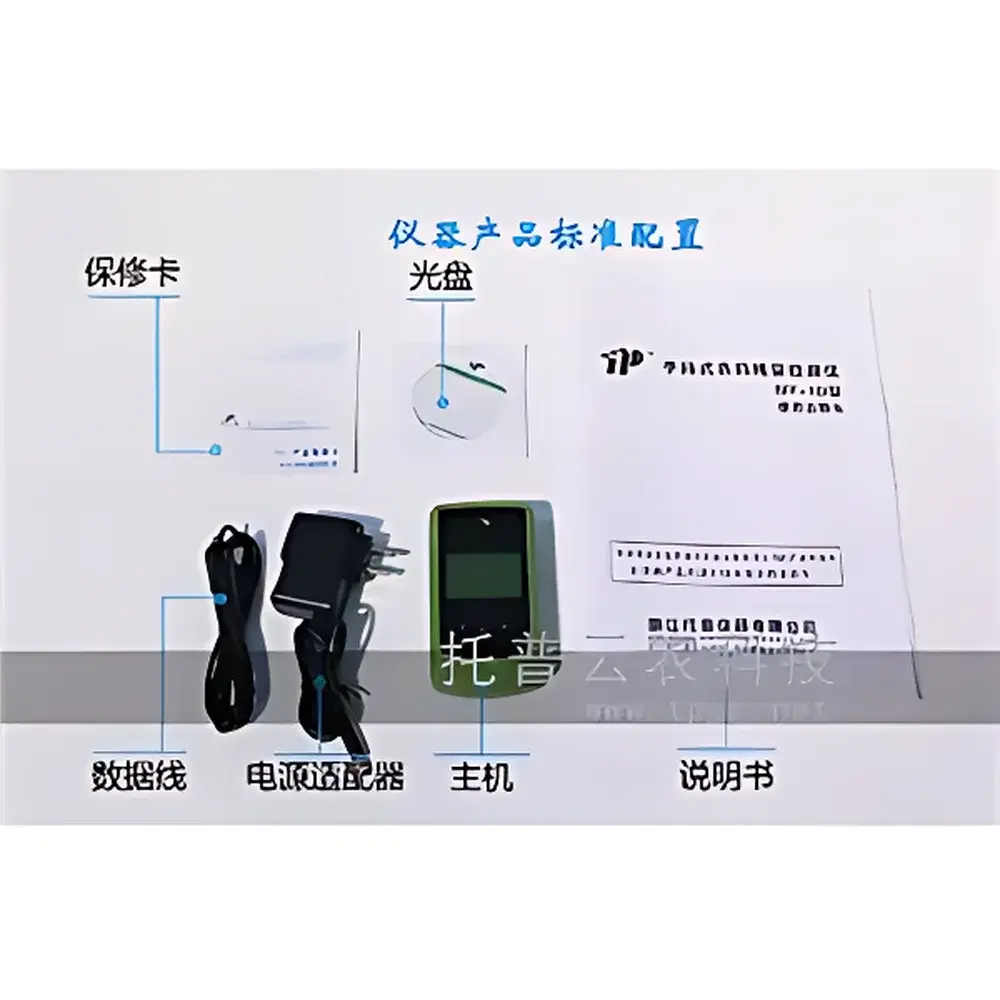
Top Cloud-agri NY-1D Handheld Pesticide Residue Rapid Tester
| Brand | Top Cloud-agri |
|---|---|
| Origin | Zhejiang, China |
| Manufacturer Type | Direct Manufacturer |
| Country of Origin | China |
| Model | NY-1D |
| Price | USD 495 (approx.) |
| Measurement Error | ±5% |
| Transmittance Accuracy | ±3% |
| Transmittance Repeatability | ±2% |
| Linearity Error | ±5% |
| Operating Temperature | 0–40 °C |
| Operating Humidity | 35–85% RH |
| Power Supply | Built-in 3.7 V Li-ion Battery + External 5 V DC Input |
| Display | Backlit Chinese LCD |
| Data Storage Capacity | 500 test records |
| Interface | USB 2.0 |
| Key Switches | Panasonic tactile membrane keys |
Overview
The Top Cloud-agri NY-1D Handheld Pesticide Residue Rapid Tester is a field-deployable, enzyme inhibition-based analytical instrument engineered for the qualitative and semi-quantitative detection of organophosphorus and carbamate pesticides in agricultural commodities. It operates on the principle of acetylcholinesterase (AChE) inhibition assay—where residual pesticide compounds suppress enzymatic activity in a standardized reaction, resulting in measurable changes in chromogenic substrate hydrolysis. The degree of inhibition (%) is calculated and displayed directly as an index correlated with pesticide concentration relative to established reference thresholds (e.g., WHO/FAO MRLs). Designed for frontline screening rather than confirmatory analysis, the NY-1D supports rapid triage at points of origin, distribution hubs, and retail checkpoints—including farmers’ markets, supermarket quality control labs, cooperative packing houses, and municipal food safety inspection teams. Its compact form factor (185 × 85 × 45 mm), low power consumption, and integrated battery enable continuous operation for up to 8 hours per full charge—making it suitable for extended field surveys without dependency on fixed infrastructure.
Key Features
- Enzyme inhibition assay platform with pre-calibrated AChE reagent cartridges—no manual dilution or pipetting required.
- Automated result interpretation: real-time calculation and display of inhibition rate (%) with pass/fail color-coded indicators aligned to national screening criteria (GB/T 5009.199–2003).
- Dual-power architecture: rechargeable 3.7 V lithium-ion battery with state-of-charge indicator + universal 5 V DC input compatibility for continuous operation during lab-based batch testing.
- Programmable reaction timing (1–10 min increments) and adjustable backlight duration (5–60 s) to accommodate variable ambient lighting and operator workflow preferences.
- Self-calibrating optical path with stable halogen-tungsten broadband source—designed for >50,000 measurement cycles without lamp replacement.
- Auto-timed assay sequence with built-in countdown, auto-shutdown after 15 minutes of inactivity, and zero-point drift compensation.
- On-device data management: stores up to 500 timestamped test records with sample ID, inhibition rate, operator code, and environmental metadata (temperature/humidity).
Sample Compatibility & Compliance
The NY-1D accepts homogenized extracts from fresh produce (leafy greens, tomatoes, apples, cucumbers), dried tea leaves, cereal grains (rice, wheat), surface water, and soil slurries—following standardized extraction protocols (e.g., QuEChERS-lite preparation or acetone/water solvent partitioning). All assays comply with the foundational methodology outlined in China’s GB/T 5009.199–2003 “Rapid Detection Method for Organophosphorus and Carbamate Pesticides in Vegetables and Fruits” and align with AOAC Official Method 2007.01 for qualitative enzyme inhibition screening. While not intended for regulatory enforcement or GLP-compliant reporting, its performance characteristics meet ISO/IEC 17025:2017 requirements for non-accredited screening laboratories conducting internal food safety verification. Instrument calibration and maintenance logs are traceable via embedded audit trail functionality within the companion software.
Software & Data Management
The NY-1D interfaces with Top Cloud-agri’s proprietary C/S architecture Food Safety Monitoring Platform (v3.2+), accessible via web browser (Chrome/Firefox/Edge) or Android mobile application (API Level 21+). Uploaded datasets retain full contextual integrity—including GPS-tagged sampling location (when enabled via paired smartphone), operator ID, instrument serial number, and environmental conditions. The platform supports longitudinal trend visualization (inhibition rate vs. time), statistical aggregation (mean/max/min across batches), and customizable report generation (PDF/Excel export). All data reside in encrypted AES-256 storage with role-based access control (RBAC), versioned backups, and immutable log entries compliant with FDA 21 CFR Part 11 principles for electronic records. Remote firmware updates ensure ongoing alignment with evolving national residue surveillance guidelines.
Applications
- Routine pre-harvest scouting on commercial farms to assess spray interval efficacy and harvest readiness.
- Point-of-sale verification at wholesale markets and supermarket receiving docks to enforce vendor compliance agreements.
- Mobile extension of municipal food safety supervision programs—integrated with regional digital inspection workflows.
- Training and capacity building for cooperative extension agents and rural agro-input retailers performing community-level food safety outreach.
- Supplemental screening in academic extension labs where GC-MS or LC-MS/MS resources are limited or inaccessible.
FAQ
What types of pesticides does the NY-1D detect?
It detects organophosphorus (e.g., chlorpyrifos, diazinon, malathion) and carbamate (e.g., carbaryl, methomyl, aldicarb) compounds based on their shared inhibition of acetylcholinesterase activity.
Can the NY-1D quantify exact pesticide concentrations?
No—it reports inhibition rate (%) as a semi-quantitative indicator; quantitative confirmation requires chromatographic methods (GC-MS/LC-MS/MS) per ISO 17025-accredited protocols.
Is reagent compatibility limited to Top Cloud-agri consumables?
Yes—the system uses proprietary lyophilized AChE and DTNB substrate cartridges calibrated specifically for the NY-1D’s optical path and thermal profile.
How often does the instrument require recalibration?
Factory calibration remains valid for 12 months under normal use; field recalibration is performed automatically before each test cycle using blank reference standards.
Does the cloud platform support multi-user collaboration?
Yes—administrators can assign hierarchical roles (e.g., field technician, QA supervisor, regulatory auditor) with granular permissions for data viewing, editing, exporting, and audit log access.





