
Top Cloud-agri TP-PhenoMS-VL2 Portable Visible-Light Plant Phenotyping System
| Brand | Top Cloud-agri |
|---|---|
| Origin | Zhejiang, China |
| Manufacturer Type | Direct Manufacturer |
| Region of Origin | Domestic (China) |
| Model | TP-PhenoMS-VL2 |
| Pricing | Available Upon Request |
| Imaging Sensor | 26 MP Industrial RGB Camera |
| Light Source | Uniform Diffuse LED Panel |
| Dimensions (L×W×H) | 700 × 585 × 688 mm |
| Background Plate Size | 450 × 450 mm |
| Operating Temperature | 0–40 °C |
| Relative Humidity | ≤90% RH |
| Power Consumption | <100 W |
| Image Auto-Naming | Taxonomic (Family/Genus/Species) + Timestamp + Sample ID |
| Batch Analysis Capacity | >40 Morphometric & Chromatic Traits |
| Processing Time per Sample | ≤10 s |
| AI Calibration | One-Click Algorithmic Calibration |
| Data Export Formats | CSV, PNG, JPEG, DOCX, PDF |
| Cloud Integration | Native API Sync with User-Hosted or Vendor Cloud Platform |
Overview
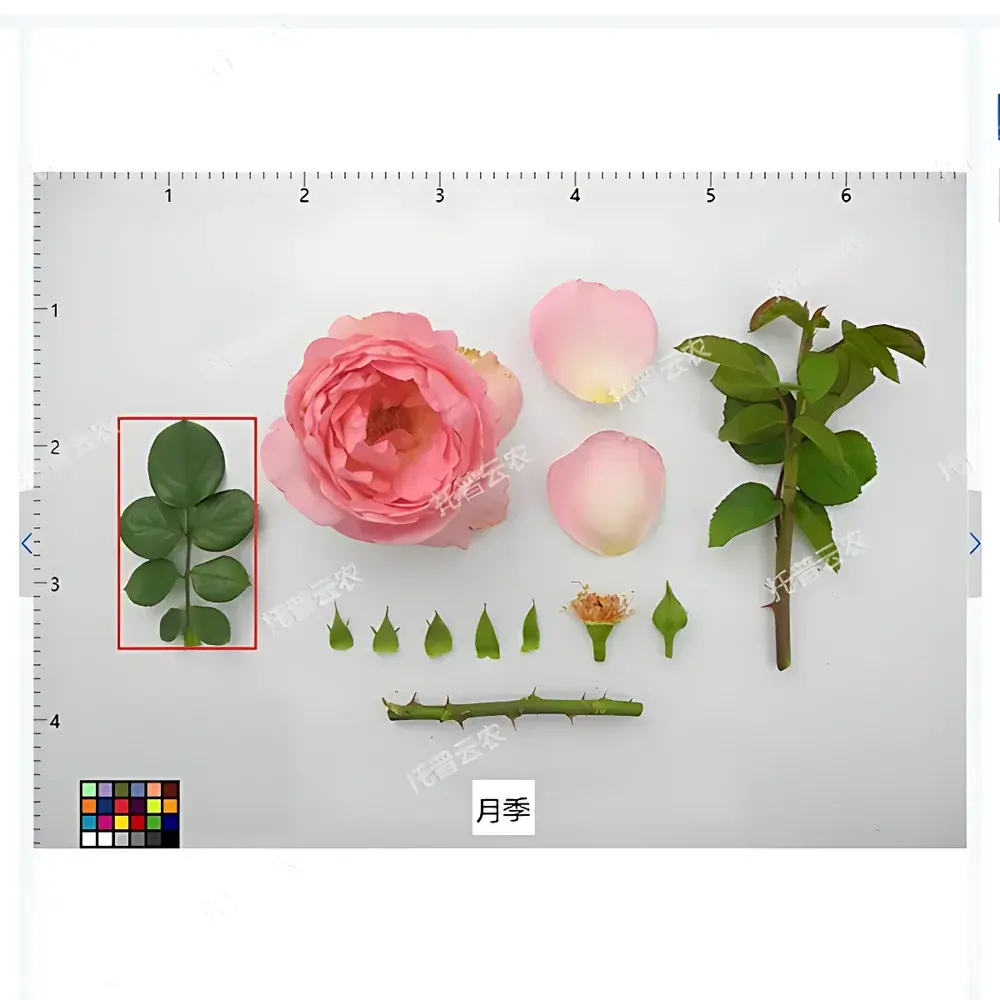
The Top Cloud-agri TP-PhenoMS-VL2 is a portable, vertically integrated visible-light plant phenotyping system engineered for high-fidelity 2D morphological and chromatic trait extraction from small-scale botanical specimens—including flowers, petals, leaves, sepals, stems, and thorns. Unlike field-based or fixed-rig phenotyping platforms, the TP-PhenoMS-VL2 employs a controlled imaging chamber architecture to eliminate ambient lighting variability, ensuring metrological consistency across diverse operational environments: laboratories, growth chambers, greenhouses, vertical farms, and even outdoor field deployments with optional mobile power support. Its core measurement principle relies on calibrated RGB photogrammetry—leveraging uniform diffuse LED illumination and a 26-megapixel industrial-grade sensor—to capture geometrically stable, radiometrically consistent images. This enables reproducible quantification of shape, size, color distribution, texture gradients, and spatial arrangement without destructive sampling or manual intervention. Designed explicitly for non-invasive, high-throughput acquisition, the system bridges the gap between benchtop precision and operational flexibility required in modern plant breeding pipelines, germplasm characterization, and functional genomics studies.
Key Features
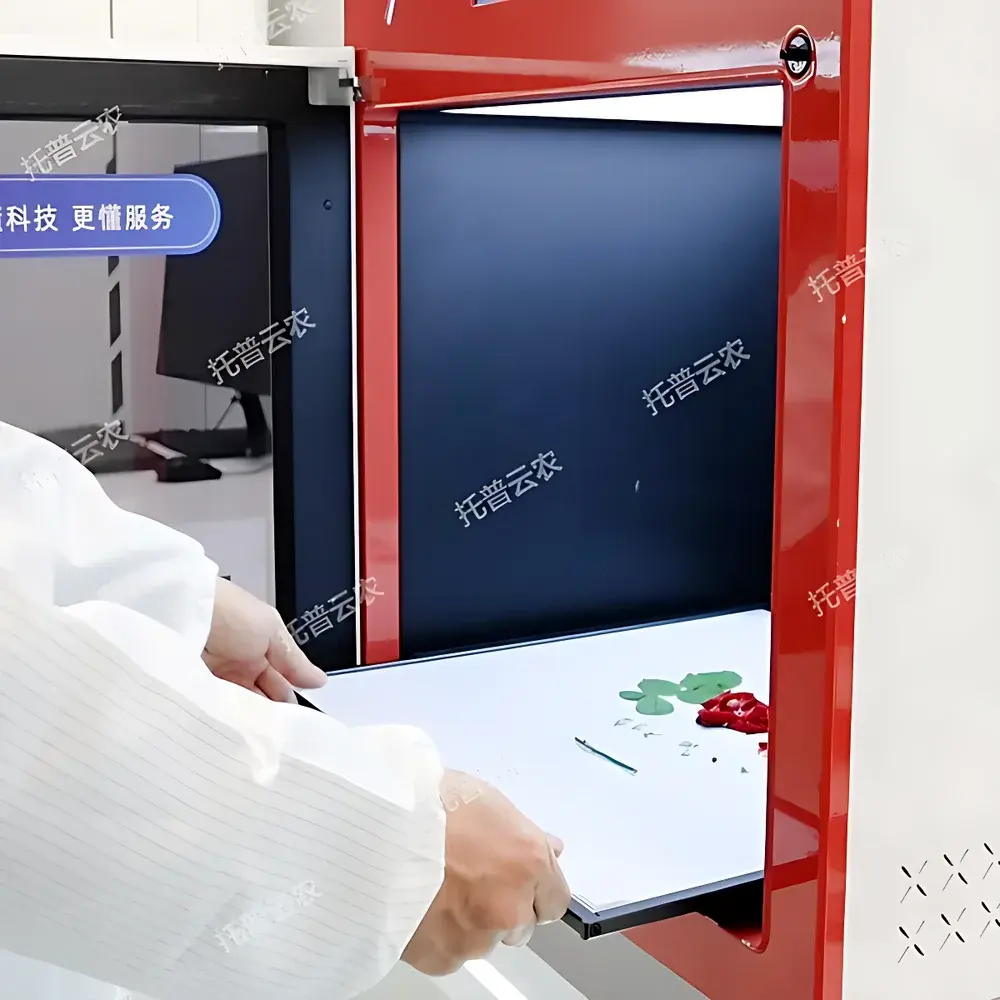
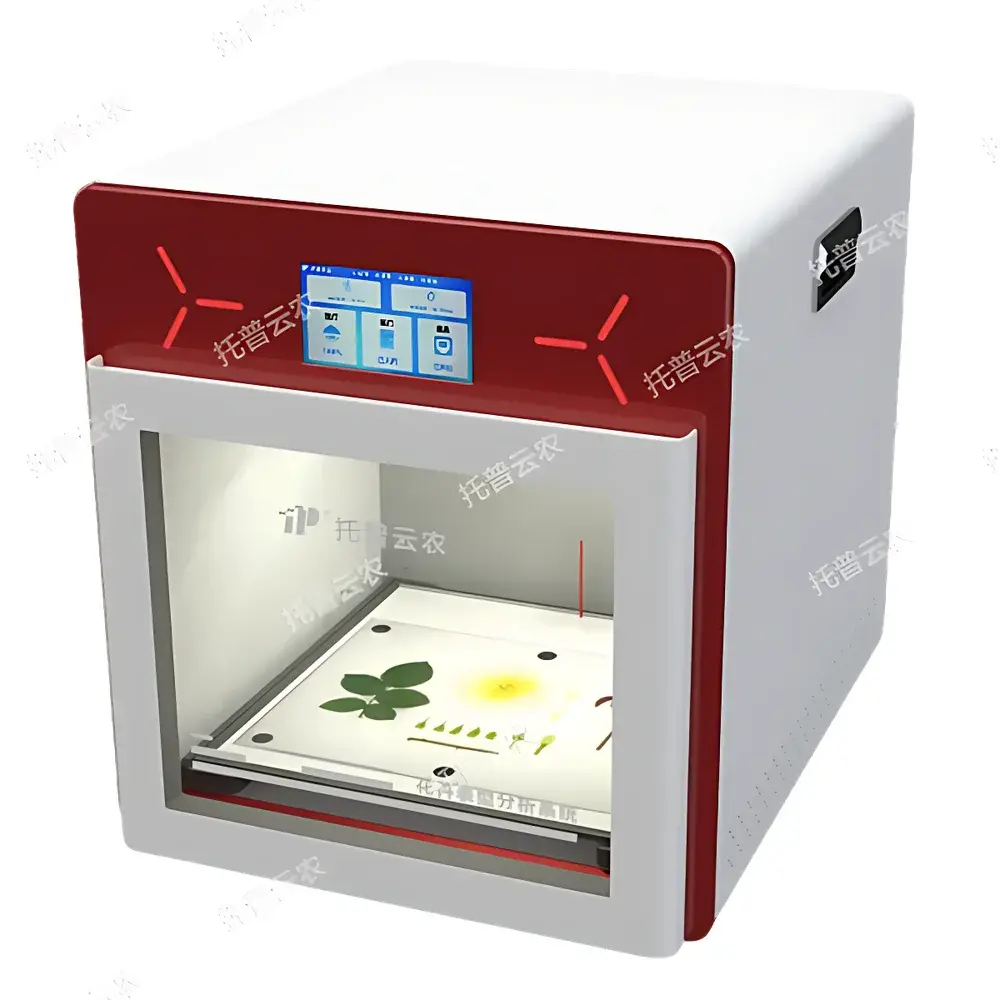
- Modular vertical imaging chamber with retractable sample stage for rapid specimen placement and ergonomic operation
- Automated image metadata tagging: timestamped files named by taxonomic hierarchy (family/genus/species), user-defined sample ID, and acquisition sequence
- In-chamber uniform diffuse LED illumination ensures minimal shadowing and optimal color fidelity across heterogeneous tissue surfaces
- On-device electronic annotation tools: digital scale bar overlay, region-of-interest labeling, and text annotation with export-ready PNG/JPEG output
- Batch processing engine capable of concurrent analysis of ≥40 standardized phenotypic descriptors—including area, perimeter, major/minor axis length, circularity, solidity, convex hull metrics, dominant/subdominant hue (CIELAB L*a*b*), saturation distribution, and discrete organ counting (e.g., petal number, sepal count)
- Embedded deep learning inference module trained on multi-species botanical imagery for automated organ segmentation and anatomical classification (flower vs. leaf vs. stem vs. calyx)
- One-click AI calibration workflow using reference targets to correct lens distortion, lighting gradient, and chromatic aberration—ensuring inter-session comparability
- Local data management interface supporting zoomable thumbnail browsing, selective deletion, bulk export (CSV for metrics; ZIP for annotated images), and template-driven report generation (DOCX/PDF)
- Secure RESTful API integration for bidirectional synchronization with institutional LIMS, cloud-hosted phenomics databases, or custom analytics platforms
Sample Compatibility & Compliance
The TP-PhenoMS-VL2 accommodates intact, unsectioned botanical specimens up to 450 mm × 450 mm in footprint, with height clearance optimized for upright floral architectures and rosette-forming species. It supports whole-plant imaging of seedlings, detached organs (leaves, inflorescences, fruits), and multi-organ assemblies—without requiring fixation, staining, or mounting media. All optical and mechanical components comply with IEC 61000-6-3 (EMC emission standards) and IEC 60950-1 (safety requirements for electrical equipment). While not certified under GLP or ISO 17025, the system’s traceable calibration protocol, audit-log-enabled software, and deterministic image-processing pipeline align with principles outlined in OECD TG 150 (Guidance Document on Plant Biotechnology Test Guidelines) and FAO/IAEA Mutant Variety Database submission requirements. Raw image archives retain EXIF metadata including exposure settings, white balance coefficients, and sensor temperature—facilitating retrospective QA/QC.
Software & Data Management
The embedded Linux-based firmware runs a purpose-built phenotyping application with dual-mode operation: standalone local execution or networked cloud-synchronized mode. All image acquisition, preprocessing, segmentation, and metric computation occur on-device—eliminating dependency on external workstations or internet connectivity during acquisition. The software implements deterministic algorithms compliant with ASTM E2917-22 (Standard Practice for Digital Image Analysis of Biological Specimens), ensuring numerical repeatability across firmware versions. Audit trails record every user action—including manual edits to annotations, calibration events, and export operations—with timestamps and operator IDs. Exported datasets include both raw pixel matrices (16-bit TIFF optional) and structured tabular outputs conforming to MIAPPE v1.1 metadata schema. Report templates are customizable via XML configuration and support dynamic embedding of statistical summaries, comparative charts, and hyperlinked image thumbnails.
Applications
This system serves as a validated tool across multiple domains requiring quantitative plant morphology: forward and reverse genetic screening (e.g., mutant phenotype validation in Arabidopsis or rice), varietal discrimination in ornamental horticulture, drought- or nutrient-stress response profiling in controlled-environment trials, post-harvest quality assessment of cut flowers, and longitudinal monitoring of developmental trajectories in clonal propagation programs. Its portability enables comparative phenotyping across geographically dispersed sites—such as national germplasm banks or multi-location breeding nurseries—while maintaining analytical continuity. In academic research, it facilitates teaching modules on digital phenotyping, computer vision fundamentals, and reproducible data workflows aligned with FAIR principles.
FAQ
Does the system require external computing hardware to perform analysis?
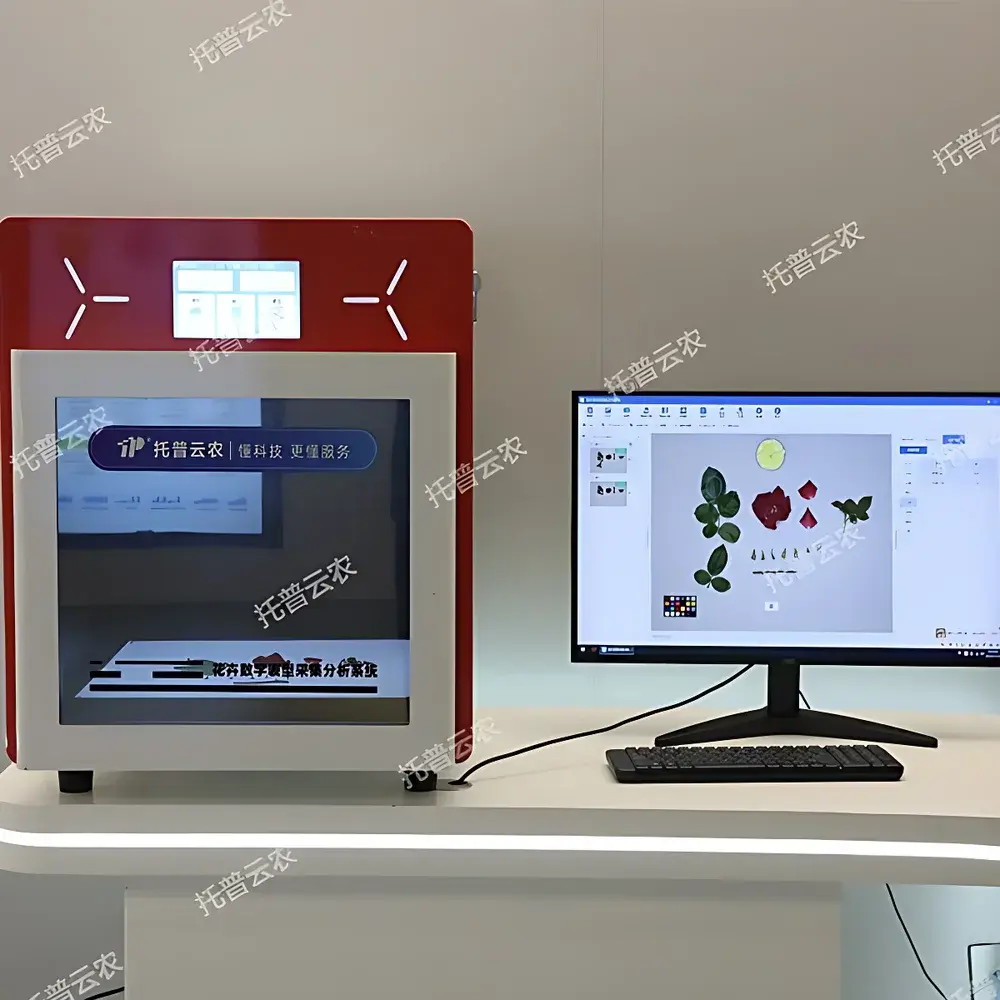
No—full image acquisition, AI-based segmentation, and trait computation occur onboard the integrated ARM-based controller. A display screen and touch interface provide real-time feedback without needing a connected PC.
Can third-party image datasets be imported for analysis?
Yes—the software accepts standard RGB TIFF, PNG, and JPEG files with known physical scale (via embedded or manually entered pixel-to-mm ratio) and performs identical trait extraction as native acquisitions.
Is raw image data preserved alongside processed metrics?
Yes—every acquisition stores the original 26-MP RGB frame, EXIF metadata, and a versioned JSON log containing all algorithmic parameters, calibration state, and user annotations.
How is measurement accuracy verified over time?
The one-click AI calibration uses NIST-traceable grayscale and color checker targets to recompute illumination homogeneity, lens distortion coefficients, and white balance offsets—generating a validation certificate with each session.
What level of technical support and software updates does Top Cloud-agri provide?
Registered users receive biannual firmware releases incorporating new trait algorithms, expanded taxon-specific models, and interoperability enhancements—delivered via encrypted OTA update or USB stick, with full version history and release notes available through the vendor portal.
Related Products




