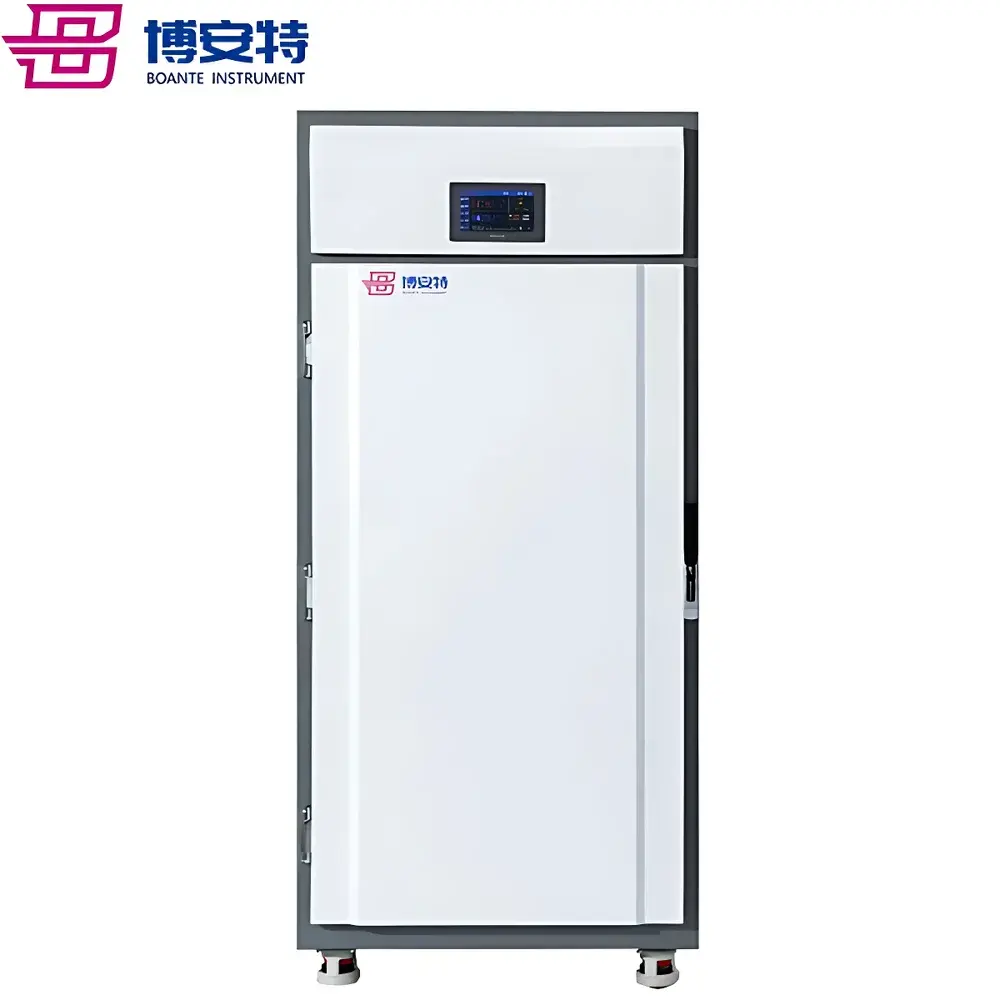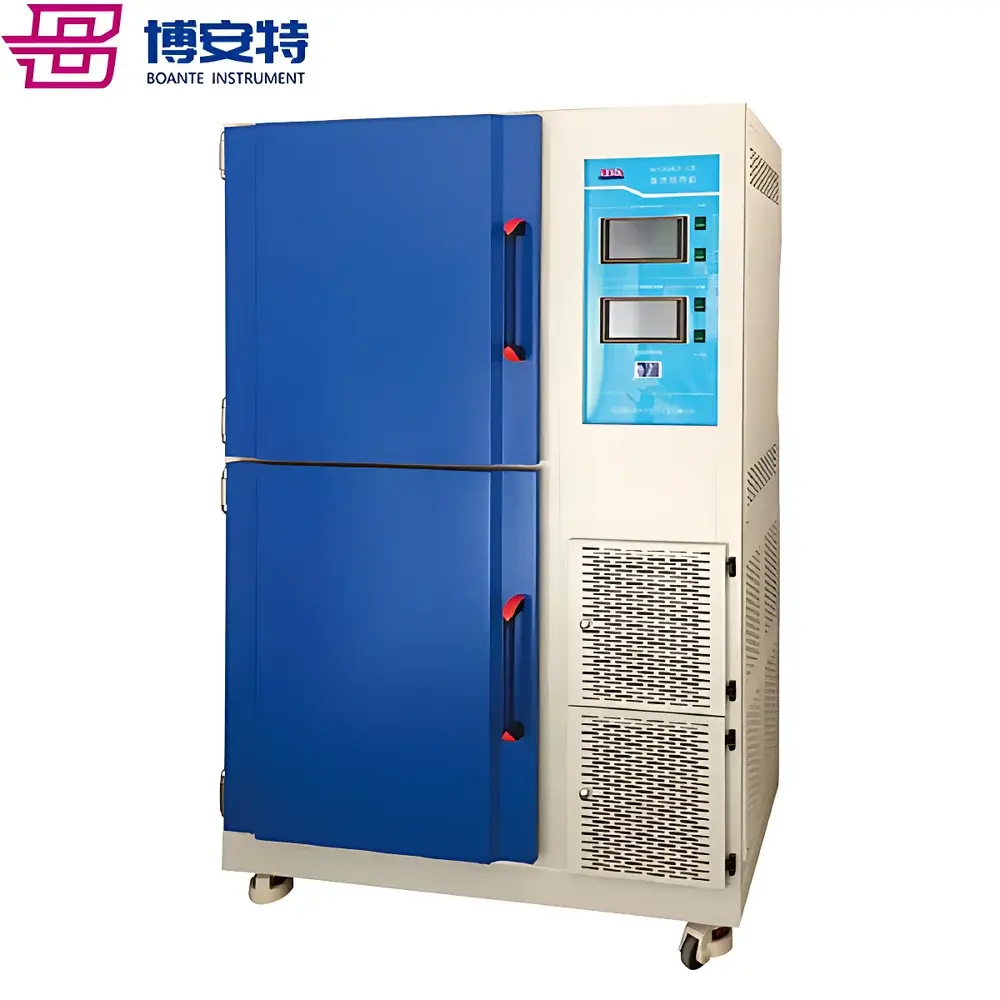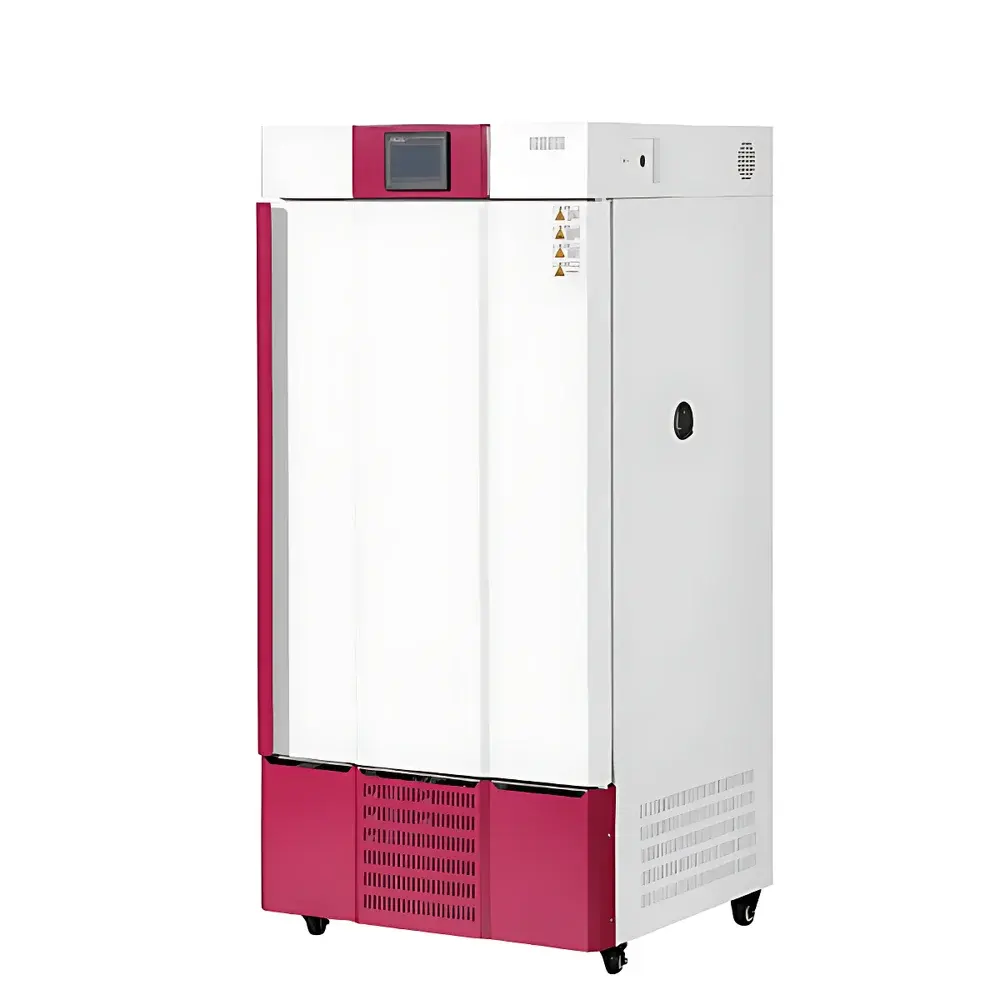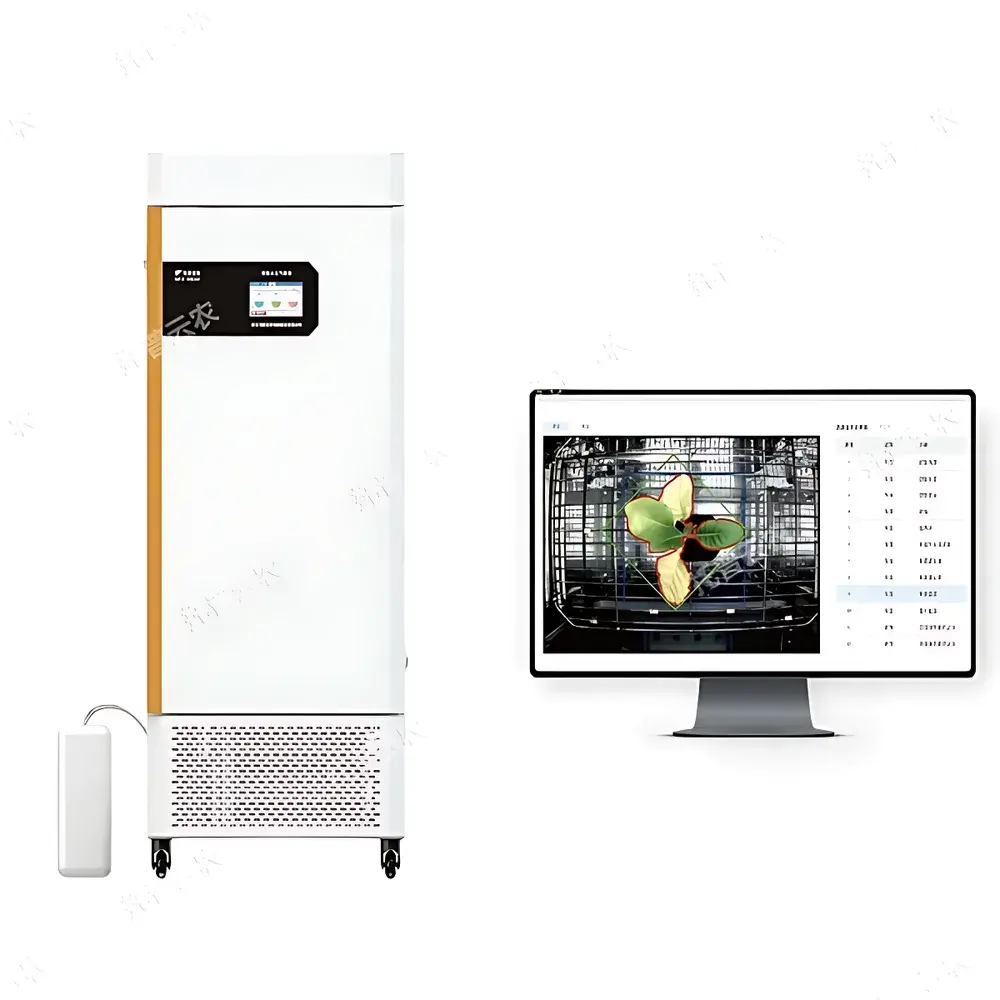
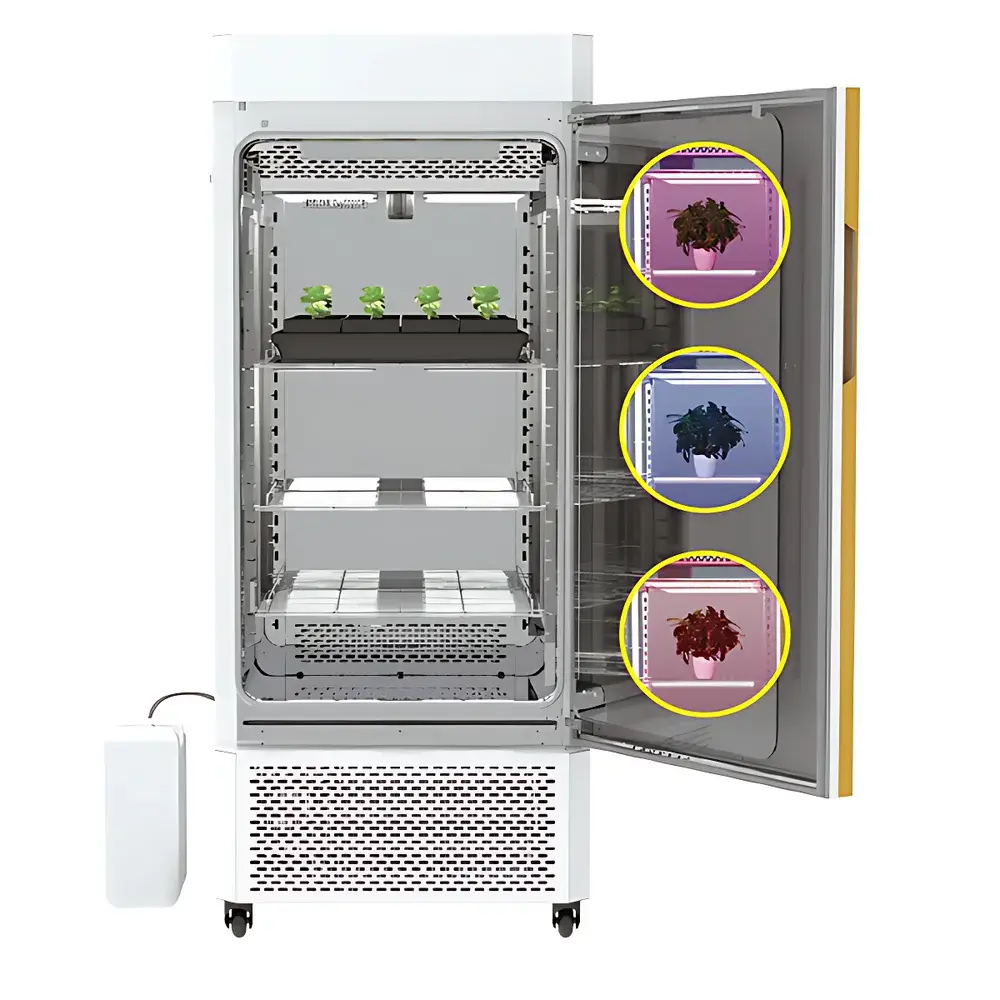
TopCloud-agri TP-R420D-VC & TP-R1000D-VC/VCM Environmental-Controlled Plant Phenotyping System
| Brand | TopCloud-agri |
|---|---|
| Origin | Zhejiang, China |
| Manufacturer Type | Direct Manufacturer |
| Capacity | 420 L / 1000 L |
| Temperature Range | 0–65 °C (light off) |
| Temperature Uniformity | ±0.1 °C (420 L) / ±0.3 °C (1000 L) |
| Humidity Uniformity | ±2 %RH (420 L) / ±3 %RH (1000 L) |
| Illumination Intensity | 0–22,000 lx (measured at 15 cm vertical distance from LED panel) |
| Dimensions (W×D×H) | 762×765×1900 mm (420 L) / 1552×765×1940 mm (1000 L) |
| Lighting Spectrum | Tunable four-channel LED (white/red/blue/infrared), 1004 programmable spectral combinations |
| Imaging Resolution | 11 MP (TP-R420D series) / 12 MP (TP-R1000D series) |
| Touchscreen | 10-inch full-color capacitive display (≥1024×600) |
| Data Export | USB, cloud-based Web platform, WeChat-integrated remote monitoring |
| Compliance | Designed for GLP-aligned experimental traceability |
Overview
The TopCloud-agri TP-R Series Environmental-Controlled Plant Phenotyping System is an integrated climate-controlled incubation platform engineered for high-fidelity, non-invasive plant phenotypic analysis under reproducible environmental conditions. Unlike conventional growth chambers, this system combines precision environmental regulation—spanning temperature, relative humidity, multi-spectral illumination, and laminar airflow—with synchronized visible-light imaging and embedded computational phenotyping. It operates on the principle of controlled-environment phenotyping: by decoupling biological variability from environmental noise, it enables quantitative assessment of morphological, chromatic, and textural traits across developmental stages. The system is designed for longitudinal studies requiring strict adherence to experimental protocols in agricultural genomics, functional crop physiology, stress response screening, and translational plant science.
Key Features
- Precision climate control with dual-range temperature operation (0–65 °C without illumination; 10–50 °C under active lighting), supported by high-resolution PID algorithms ensuring ±0.1 °C uniformity in 420 L units and ±0.3 °C in 1000 L configurations.
- Multi-spectral LED illumination system delivering 0–22,000 lx intensity at 15 cm, with independent control of white, red, blue, and infrared channels—enabling synthesis of 1004 discrete spectra optimized for species-specific photomorphogenesis and photosynthetic efficiency modeling.
- Dual-angle imaging architecture: top-mounted high-resolution camera (11 MP or 12 MP depending on model) and side-view acquisition module provide orthographic and lateral perspectives for 3D trait reconstruction.
- Embedded AI-driven phenotyping engine capable of extracting 67 standardized morphometric, colorimetric, and textural descriptors—including projected leaf area, greenness index (GI), fractal dimension, vein density approximation, and senescence progression metrics—without manual segmentation.
- Modular growth model integration: single-crop models (TP-Rx-D-VC) support species-specific environmental setpoints; multi-crop variants (TP-Rx-D-VCM) accommodate up to three concurrent models, allowing comparative experiments within one chamber.
- Structural integrity features include double-wall insulation with cyclopentane-based polyurethane foam, mirror-finish stainless steel interior with radius-corner design, and 6 mm tempered glass inner door enabling observation without thermal disturbance.
Sample Compatibility & Compliance
The system accommodates a broad range of botanical specimens—from Arabidopsis thaliana seedlings and rice tillers to maize seedlings and small woody cuttings—within adjustable-height shelving and quick-connect LED panels. Its environmental stability meets requirements for ISO 17025-compliant calibration traceability when used in accredited laboratories. While not certified to IEC 61000-4 EMC standards out-of-box, its operational firmware implements timestamped event logging, user-level access control (admin/operator/guest), and immutable parameter-change records—supporting GLP and GMP-aligned documentation practices. All data files generated include unique experiment IDs, QR-coded metadata tags, and SHA-256 checksums for integrity verification.
Software & Data Management
The embedded Linux-based OS hosts a web-accessible dashboard compatible with modern browsers and native WeChat Mini Program integration. Each experiment auto-generates a time-stamped record containing environmental profiles (temperature/humidity/light/airflow), image stacks, derived phenotypic metrics, and operator annotations. Data export supports CSV, JSON, and HDF5 formats via USB mass storage or secure HTTPS upload. Remote functionality includes real-time parameter adjustment, program start/stop, alarm acknowledgment, and push notifications for deviation events (e.g., temperature excursion >±0.5 °C for >2 min). Firmware updates are delivered OTA with version rollback capability and cryptographic signature validation.
Applications
- High-throughput screening of drought-, heat-, or salinity-tolerant germplasm using dynamic canopy closure rate and stomatal conductance proxies.
- Quantitative evaluation of CRISPR-edited lines for pleiotropic effects on leaf architecture, anthocyanin accumulation, and biomass partitioning.
- Phytochemical induction studies correlating light spectral composition with secondary metabolite biosynthesis (e.g., flavonoids, glucosinolates).
- Controlled-environment validation of remote sensing indices (e.g., NDVI, PRI) against ground-truth phenotypic measurements.
- Longitudinal monitoring of root-shoot allometry in hydroponic or aeroponic subsystems interfaced via optional sensor ports.
FAQ
What is the maximum number of concurrent experiments supported per unit?
Each chamber runs one primary experiment session at a time, but supports up to 30 pre-programmed environmental protocols stored onboard, each configurable with up to 99 segments and infinite cycling.
Does the system comply with FDA 21 CFR Part 11 requirements?
It provides foundational elements—electronic signatures, audit trails, and role-based access—but requires site-specific validation to achieve full Part 11 compliance in regulated environments.
Can third-party image analysis software interface with the acquired datasets?
Yes: raw TIFF image sequences and structured phenotype tables (CSV/JSON) are accessible via USB or HTTP API; no proprietary binary wrappers are applied.
Is external CO₂ control available as an option?
Not natively integrated; however, the chamber’s sealed architecture and dedicated ventilation ports permit retrofitting with OEM CO₂ modules meeting ISO 8573-1 Class 2 purity standards.
How is calibration traceability maintained across temperature and humidity sensors?
Factory calibration certificates reference NIST-traceable standards; users may perform field verification using Class A platinum RTDs and chilled-mirror hygrometers per ASTM E2234 guidelines.