
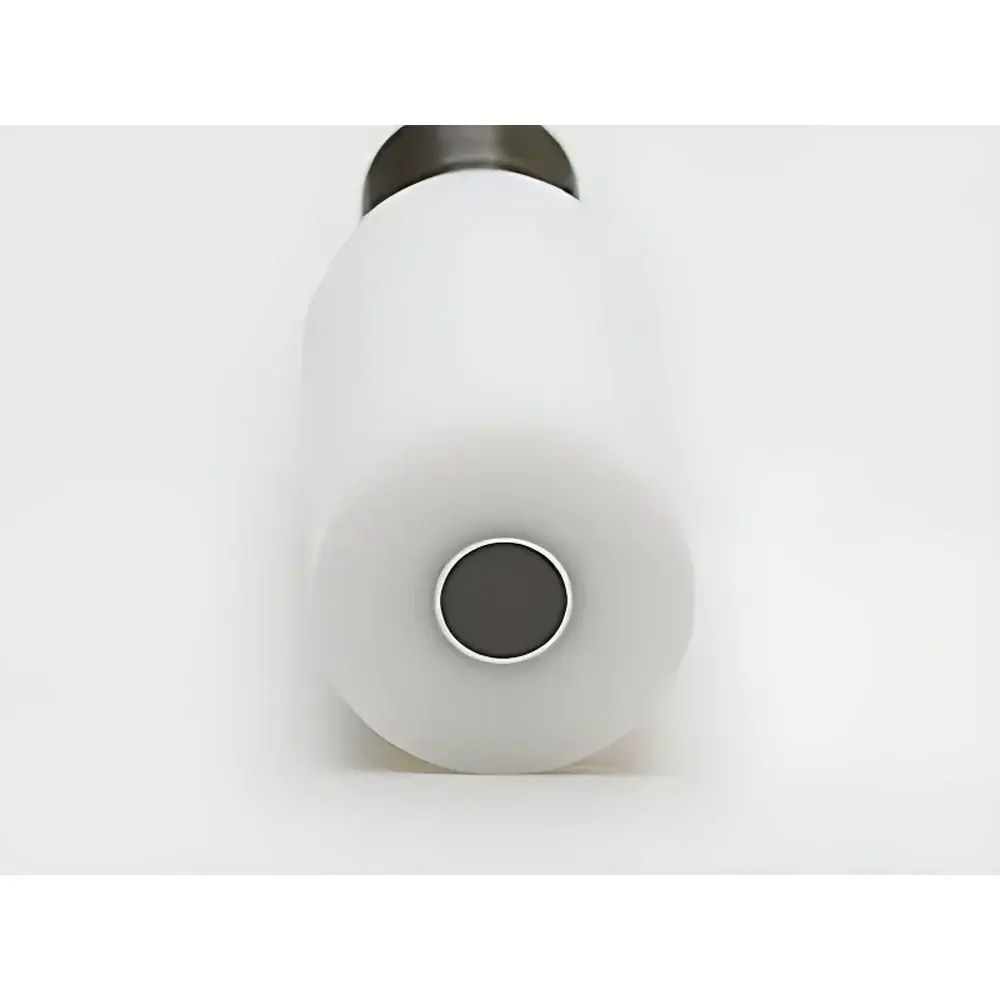
dc-energies RRDE-318 Rotating Ring-Disk Electrode (RRDE)
| Brand | dc-energies |
|---|---|
| Origin | Hubei, China |
| Model | RRDE-318 |
| Ring-Disk Gap | 318 µm |
| Collection Efficiency | 37% |
| Operating Temperature Range | 10–25 °C |
| Disk Electrode Area | 0.2475 cm² |
| Ring Electrode Area | 0.1866 cm² |
| Glassy Carbon Disk Outer Diameter | 5.61 mm |
| Platinum Ring Outer Diameter | 7.92 mm |
| Platinum Ring Inner Diameter | 6.25 mm |
| Disk Material Options | Glassy carbon, platinum, gold |
| Ring Material Options | Glassy carbon, platinum, gold |
| Mechanical Interface | External threaded shaft for stable electrical contact |
Overview
The dc-energies RRDE-318 is a precision-engineered rotating ring-disk electrode system designed for quantitative dual-electrode electrochemical measurements under controlled hydrodynamic conditions. Based on the classical Levich-Koutecký theory and extended by Damjanovic et al., the RRDE operates on the principle of forced convection: rotation of the electrode generates a well-defined laminar flow profile, enabling reproducible mass transport to both disk and ring surfaces. The fixed inter-electrode gap of 318 µm ensures consistent radial diffusion of intermediates generated at the disk to the surrounding ring, while the experimentally calibrated collection efficiency of 37% allows stoichiometric quantification of transient species—such as hydrogen peroxide in oxygen reduction reactions (ORR)—without requiring absolute current calibration. This geometry supports rigorous kinetic analysis, including determination of electron transfer numbers (n), reaction pathways, and surface coverage of adsorbed intermediates. The RRDE-318 is engineered for integration with standard potentiostats and rotating electrode controllers compliant with ASTM D1148 and ISO 13485-aligned laboratory workflows.
Key Features
- Precision-machined dual-electrode architecture with certified 318 µm ring-to-disk separation, validated via scanning electron microscopy (SEM) cross-sectioning
- Modular material configuration: independent selection of disk and ring materials (glassy carbon, platinum, or gold) to match redox potential windows and catalytic requirements
- External-threaded stainless-steel shaft (M6 × 0.75) ensuring low-contact-resistance (< 0.5 Ω) and mechanical stability up to 10,000 rpm
- Geometrically defined active areas: disk area = 0.2475 cm² (±0.5% tolerance), ring area = 0.1866 cm² (±0.7% tolerance), traceable to NIST-traceable calipers
- Thermally stabilized design optimized for operation within 10–25 °C ambient range—minimizing convective drift during long-duration chronoamperometric scans
- Compatible with standard Teflon®-insulated electrode holders and commercial rotator assemblies (e.g., Pine Research AFMSRX, BASi RDE-1)
Sample Compatibility & Compliance
The RRDE-318 supports aqueous and non-aqueous electrolytes (e.g., 0.1 M KOH, 0.1 M HClO₄, 1 M LiPF₆ in EC/DMC) across pH 0–14 and potentials from −1.2 V to +1.8 V vs. RHE, depending on selected electrode materials. Its construction complies with IEC 61010-1 safety standards for laboratory electrochemical cells. For regulated environments—including GLP-compliant battery R&D labs—the electrode’s dimensional repeatability and material certification (including Pt purity ≥99.95% per ASTM B588) support audit-ready documentation. While not intrinsically certified for FDA 21 CFR Part 11, its use in method development for USP and electrochemical assays is established in peer-reviewed literature.
Software & Data Management
The RRDE-318 does not include embedded firmware but interfaces natively with industry-standard electrochemical software platforms—including BioLogic EC-Lab®, CH Instruments CHI760E, and Metrohm Autolab NOVA—enabling synchronized control of rotation speed (0–10,000 rpm), potential sweep parameters, and simultaneous acquisition of disk and ring currents. All raw current-time and current-potential datasets are exported in ASCII or .mpt format, supporting post-processing in MATLAB®, Python (with Pycse or ECpy libraries), or OriginPro for Koutecký-Levich analysis, RRDE collection efficiency correction, and Tafel slope derivation. Audit trails for experimental metadata (rotation rate, temperature, electrode history) can be manually logged or integrated into LIMS via CSV export.
Applications
- Oxygen reduction reaction (ORR) mechanism studies in PEM fuel cell catalyst screening, including peroxide yield quantification (HO₂⁻ %) and electron transfer number (n) calculation
- Oxygen evolution reaction (OER) intermediate trapping on IrO₂ or NiFe LDH anodes using ring detection of O₂ or reactive oxygen species
- Lithium–air battery cathode investigations, monitoring superoxide (O₂⁻) disproportionation kinetics at the ring during discharge
- Electrocatalytic CO₂ reduction pathway analysis—identifying C₂+ product selectivity via ring detection of ethylene oxide or acetaldehyde intermediates
- Homogeneous electrocatalysis studies involving redox mediators (e.g., TEMPO⁺/TEMPO), where the ring monitors mediator regeneration efficiency
- Corrosion science applications, such as real-time detection of Fe²⁺ dissolution products during anodic polarization of steel alloys
FAQ
What is the certified collection efficiency of the RRDE-318, and how is it determined?
The collection efficiency (N = 37%) is experimentally derived using the reversible [Fe(CN)₆]³⁻/⁴⁻ redox couple in 1 M KNO₃ at 1600 rpm, following the methodology outlined in J. Electroanal. Chem. 1972, 36, 27–45. Each batch undergoes individual verification.
Can the disk and ring be operated at independent potentials?
Yes—when used with a bipotentiostat (e.g., Gamry Interface 5000P or PalmSens EmStat GO), the disk and ring electrodes support true dual-potential control for complex reaction schemes.
Is the electrode suitable for high-temperature electrochemistry?
No—the specified operating range is strictly 10–25 °C; thermal expansion beyond this range compromises the 318 µm gap integrity and collection efficiency accuracy.
How is electrical isolation between disk and ring maintained?
A hermetically sealed ceramic insulator (Al₂O₃, 96% purity) separates the two electrodes, providing >10¹² Ω insulation resistance at 100 V DC, verified per IEC 60068-2-17.
Does dc-energies provide calibration certificates or material test reports?
Upon request, certified dimensional inspection reports (per ISO/IEC 17025) and elemental composition certificates (via EDS and XRF) are supplied with each unit.





