
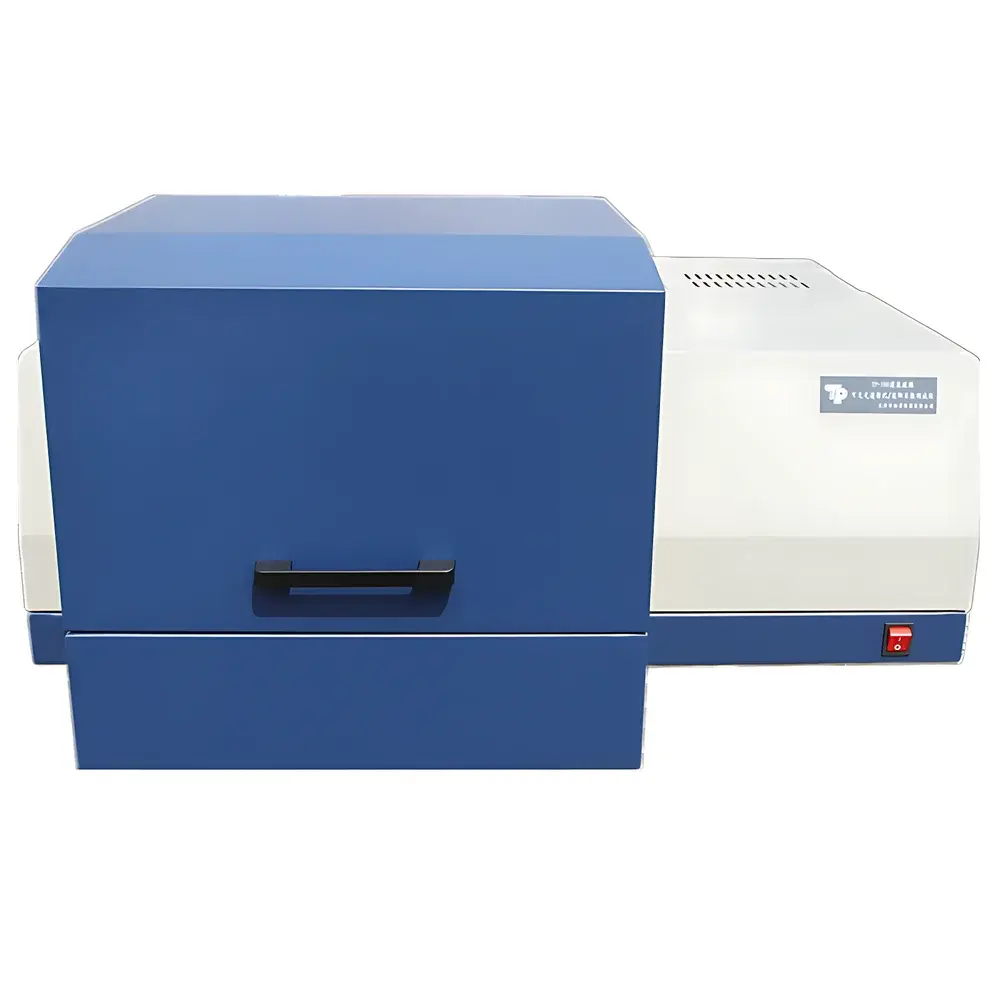
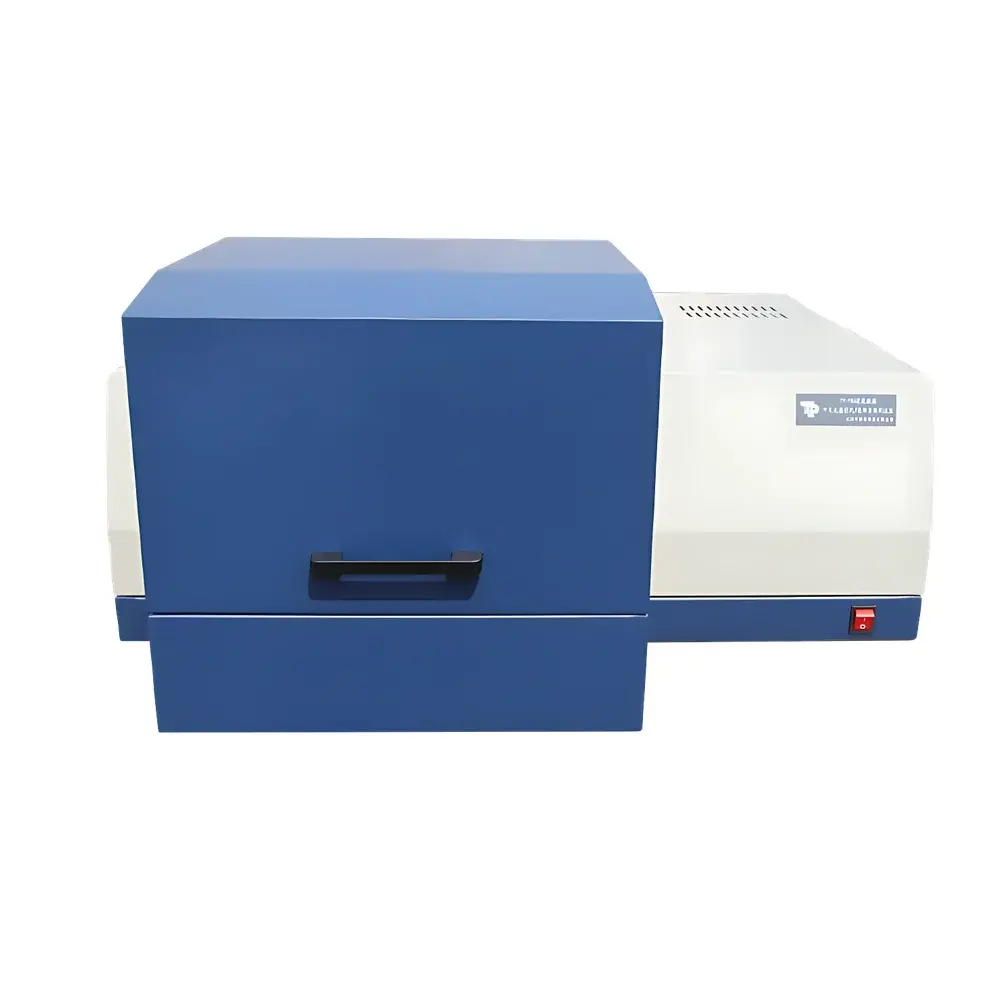
Topo TP760 UV-Vis-NIR Spectrophotometer
| Brand | Topo |
|---|---|
| Origin | Tianjin, China |
| Manufacturer Type | Original Equipment Manufacturer (OEM) |
| Product Category | Domestic |
| Model | TP760 |
| Spectral Range | 280–2500 nm |
| Slit Bandwidth | UV-Vis: 2.0 / 3.0 / 5.0 nm (selectable) |
| NIR | 5.0–20.0 nm (auto/manual) |
| Wavelength Accuracy | ±0.5 nm (UV/VIS), ±2.0 nm (NIR) |
| Wavelength Repeatability | ≤0.3 nm (UV/VIS), ≤1.0 nm (NIR) |
| Photometric Accuracy | ±0.3% T |
| Baseline Flatness | ±0.005 A (200–2500 nm, after 30-min warm-up) |
Overview
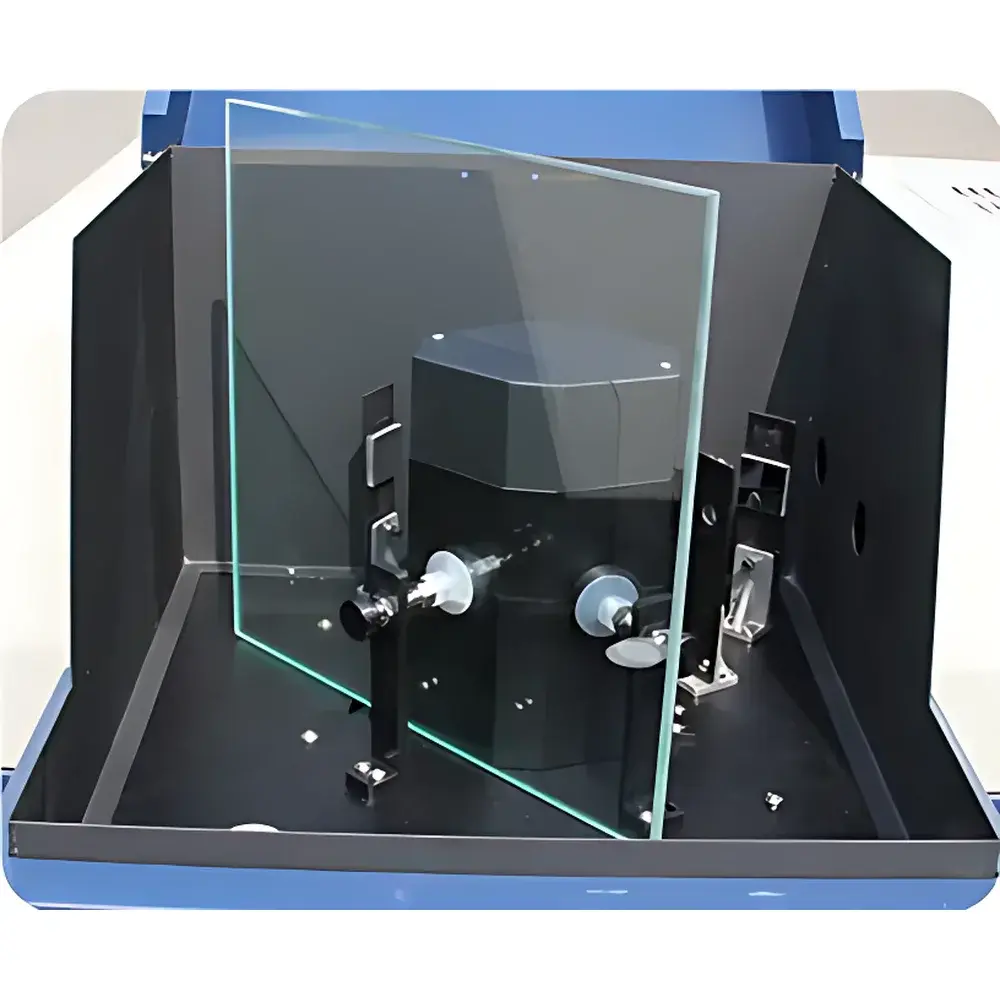
The Topo TP760 UV-Vis-NIR Spectrophotometer is a dual-beam, scanning spectrophotometric system engineered for high-fidelity quantitative and qualitative analysis across the ultraviolet, visible, and near-infrared spectral domains (280–2500 nm). Built upon the proven optical architecture of the TP-720 platform, the TP760 introduces purpose-built mechanical and optical enhancements to accommodate large-format solid samples—up to 300 × 300 × 20 mm—without compromising photometric stability or wavelength fidelity. Its optical design incorporates a holographic grating monochromator, thermally stabilized deuterium and tungsten-halogen light sources, and a dual-detector configuration (Si photodiode for UV-Vis, InGaAs for NIR) optimized for seamless spectral continuity and low-noise signal acquisition. The instrument operates in four fundamental photometric modes: transmittance (%T), absorbance (A), reflectance (%R), and radiant energy (E), supporting both routine QC workflows and method development under regulated environments.
Key Features
- Dual-beam optical path with real-time reference compensation, minimizing drift during extended measurements and ambient temperature fluctuations.
- Modular slit bandwidth selection: fixed 2.0/3.0/5.0 nm in UV-Vis region; continuously adjustable 5.0–20.0 nm in NIR—enabling resolution-flexible method optimization per sample matrix.
- High-precision wavelength drive mechanism with closed-loop encoder feedback, delivering ≤0.3 nm repeatability in UV-Vis and ≤1.0 nm in NIR—critical for spectral library matching and peak identification.
- Baseline flatness of ±0.005 A across full 200–2500 nm range (after 30-minute thermal stabilization), ensuring accurate baseline-corrected quantitation for multi-component analysis.
- Integrated solid-sample stage with precision XYZ adjustment and optional motorized goniometer support for angular reflectance profiling (e.g., solar heat gain coefficient validation).
- Compliance-ready firmware architecture: supports audit trail logging, user access levels, and electronic signature capability—aligned with GLP/GMP documentation requirements.
Sample Compatibility & Compliance
The TP760 accommodates a broad spectrum of sample forms—including rigid architectural glass panes, coated polymer films, painted metal substrates, ceramic tiles, and bulk semiconductor wafers—via its oversized sample compartment and configurable holders. Its mechanical robustness and thermal management system ensure measurement reproducibility across ambient lab conditions (15–30 °C, <70% RH). The system meets core performance criteria referenced in ASTM E308 (computing CIE tristimulus values), ISO 9050 (optical properties of glazing), and EN 410 (glass transmittance characterization). While not pre-certified to FDA 21 CFR Part 11, the software architecture provides configurable controls for electronic record integrity—enabling validation by end users in pharmaceutical, building materials, and coatings QA laboratories.
Software & Data Management
The TP760 ships with TopoSpec Pro—a Windows-based application developed for scientific data acquisition, processing, and reporting. It supports real-time spectral acquisition at up to 1200 nm/min scan speed, differential spectroscopy (sample vs. reference), kinetic time-scan mode, and multi-point mapping. Data export is native to CSV, TXT, and Microsoft Excel (.xlsx) formats; import functionality accepts ASCII-delimited spectral files for comparative overlay and library referencing. The software includes dedicated modules for architectural glass evaluation (e.g., visible light transmittance VLT, solar transmittance Tsol, UV rejection %), paint film thickness estimation via interference fringe analysis, and colorimetric calculation (CIE L*a*b*, ΔE00). All measurement sessions are timestamped and logged with operator ID, instrument serial number, and parameter metadata—facilitating traceability in regulated settings.
Applications
- Architectural glazing certification: determination of photopic transmittance, solar heat gain coefficient (SHGC), and UV-blocking efficacy per ISO 13837 and NFRC 300.
- Automotive and aerospace coating analysis: quantification of pigment dispersion uniformity, film thickness, and weathering-induced spectral shift.
- Optical filter and dichroic mirror characterization: spectral edge steepness, out-of-band rejection, and angle-dependent performance mapping.
- Photovoltaic material R&D: bandgap estimation from Tauc plots, anti-reflection coating optimization, and encapsulant UV stability screening.
- Quality control of transparent polymers and packaging films: haze, yellowness index (YI), and NIR absorption for moisture content inference.
FAQ
What sample dimensions can the TP760 accommodate?
The instrument accepts solid samples up to 300 mm × 300 mm × 20 mm in thickness, with adjustable clamping and alignment features to ensure perpendicular beam incidence.
Is the software compliant with 21 CFR Part 11?
TopoSpec Pro provides foundational elements—including user authentication, audit trail generation, and electronic signature prompts—but final Part 11 compliance requires site-specific validation and IT infrastructure alignment per organizational SOPs.
Can the TP760 measure diffuse reflectance?
Yes—when equipped with an optional integrating sphere accessory (model IS-TP760), the system supports both specular and total reflectance measurements per ASTM E1331 and ISO 7724-2.
How is wavelength calibration verified?
The system supports internal holmium oxide and didymium glass reference standards; users may perform verification checks at defined intervals using certified NIST-traceable filters or lamps.
Does the TP760 support automated mapping or scanning?
While the base configuration offers manual XY positioning, integration with third-party motorized stages (via RS-232 or USB TTL interface) enables programmable grid-based spectral mapping for spatial heterogeneity analysis.






