
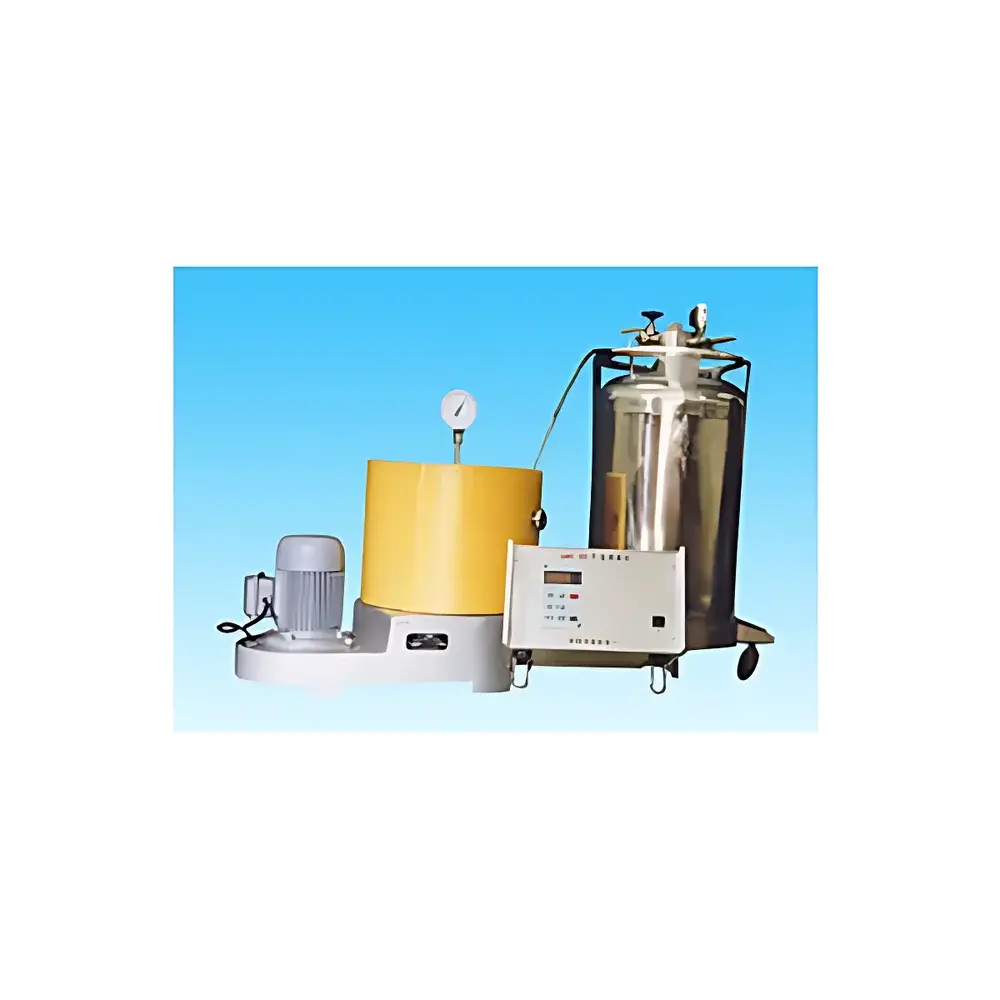
Truelab QM-DY4 Cryogenic Planetary Ball Mill
| Brand | Truelab |
|---|---|
| Origin | Jiangsu, China |
| Manufacturer Type | Authorized Distributor |
| Country of Origin | China |
| Model | QM-DY4 |
| Instrument Type | Planetary Ball Mill |
| Sample Suitability | Hard & Brittle Materials |
| Feed Size | ≤10 mm (brittle), ≤3 mm (other materials) |
| Final Particle Size | ≤0.1 µm |
| Batch Grinding Capacity | 4 L |
| Operating Temperature Range | −40 °C to 20 °C |
| Nitrogen Consumption (0–10 °C) | 4–5 L/h |
| Dimensions (Mill) | 750 × 480 × 520 mm |
| Weight (Mill) | 130 kg |
| Planetary Speed (4L) | 265 rpm (revolution), 530 rpm (rotation) |
| Drive | Gear-driven |
| Control | Microprocessor-based programmable timer with automatic forward/reverse cycling and shutdown |
| Cooling Method | Continuous liquid nitrogen injection into insulated grinding chamber |
Overview
The Truelab QM-DY4 Cryogenic Planetary Ball Mill is an engineered solution for high-energy, low-temperature mechanical alloying, amorphization, nanostructure synthesis, and controlled phase transformation in research and pilot-scale material development. It operates on the principle of planetary motion—where grinding jars rotate on their own axes while simultaneously revolving around a central sun wheel—generating intense centrifugal and Coriolis forces that accelerate impact energy transfer between grinding media and sample. Unlike conventional ball mills, the QM-DY4 integrates a continuous liquid nitrogen (LN₂) delivery system into a thermally insulated milling chamber, enabling sustained operation at cryogenic temperatures down to −40 °C. This thermal stabilization suppresses heat-induced degradation, polymorphic transitions, oxidation, or plastic deformation during milling—critical for temperature-sensitive compounds such as pharmaceutical intermediates, metastable metal oxides, polymer blends, and thermally labile biomaterials.
Key Features
- Cryogenic operation via integrated LN₂ feed line and vacuum-insulated grinding chamber, maintaining stable sub-zero ambient conditions throughout extended milling cycles
- Programmable microcontroller interface supporting precise time-based control, bidirectional rotation sequencing, and automatic termination—ensuring repeatability across batches
- Gear-driven transmission architecture delivering high torque stability and minimal speed drift under load, essential for consistent energy input per unit mass
- Four-jar configuration (each up to 1 L capacity) allowing parallel processing of multiple samples under identical thermal and mechanical conditions
- Robust stainless-steel construction with reinforced jar clamping mechanism and vibration-dampening base frame, minimizing operational noise and structural resonance
- Compliant with ISO 17025-relevant environmental monitoring practices when paired with external temperature logging systems
Sample Compatibility & Compliance
The QM-DY4 accommodates hard, brittle, fibrous, and composite materials—including metals, ceramics, alloys, pharmaceutical actives, catalyst precursors, and battery electrode components—provided initial particle size remains within specified limits (≤10 mm for friable substances; ≤3 mm for ductile or cohesive matrices). Final particle size distribution typically reaches ≤0.1 µm (D₉₀) after optimized milling duration, verified by laser diffraction or SEM-based particle analysis. While not certified to UL/CE standards out-of-the-box, the system meets fundamental electrical safety and mechanical integrity requirements for laboratory use under IEC 61010-1 guidelines. For regulated environments (e.g., GLP-compliant formulation labs), integration with validated LN₂ supply monitoring and audit-trail-capable data loggers is recommended to support traceability per FDA 21 CFR Part 11 Annex 11 expectations.
Software & Data Management
The QM-DY4 utilizes embedded firmware—not PC-dependent software—for all operational logic. All parameters—including total run time, directional cycle count, elapsed LN₂ consumption (when interfaced with flow meter), and real-time temperature feedback (via optional PT100 sensor)—are stored in non-volatile memory with timestamped records accessible via front-panel display navigation. Export functionality is limited to manual screen capture or external datalogger integration. For laboratories requiring electronic record retention, third-party SCADA-compatible analog/digital I/O modules may be installed to relay status signals (start/stop, overtemp alarm, door interlock) into centralized LIMS or ELN platforms.
Applications
- Preparation of nanocrystalline metal powders for additive manufacturing feedstock qualification
- Low-temperature solid-state synthesis of Li-ion cathode materials (e.g., NMC, LFP) without transition-metal reduction or oxygen loss
- Mechanochemical activation of insoluble APIs to enhance dissolution kinetics and bioavailability
- Controlled amorphization of crystalline excipients for improved tablet compaction behavior
- Grinding of cryo-sensitive biological tissues prior to metabolomic extraction protocols
- Rapid screening of multi-component ceramic composites under inert, low-thermal-load conditions
FAQ
What cooling medium is required, and how is it delivered?
Liquid nitrogen (LN₂) is supplied continuously via insulated tubing from an external Dewar (e.g., 30 L vessel) into the jacketed milling chamber. Flow rate is manually regulated to maintain target temperature; typical consumption ranges from 4–5 L/h at ambient inlet conditions (0–10 °C).
Can the mill operate without cryogenic cooling?
Yes—the planetary drive and control system function independently of LN₂ supply; however, maximum allowable continuous runtime without cooling is limited to 15 minutes to prevent thermal damage to seals and bearings.
Is vacuum milling supported?
Vacuum-compatible jars (50–500 mL) are available as accessories and may be used with optional vacuum-pump interface kits; standard operation occurs under ambient or inert-gas-purged atmosphere.
What maintenance intervals are recommended?
Gearbox lubrication every 500 operating hours; inspection of O-rings, jar clamps, and insulation integrity before each cryogenic session; annual calibration of speed sensors and timer accuracy using external tachometer and stopwatch verification.
Does the system comply with Good Manufacturing Practice (GMP) requirements?
As supplied, the QM-DY4 meets general laboratory equipment provisions of EU GMP Annex 15 and USP ; full GMP alignment requires documented IQ/OQ/PQ protocols, change control procedures, and integration with enterprise-level data governance infrastructure.



