
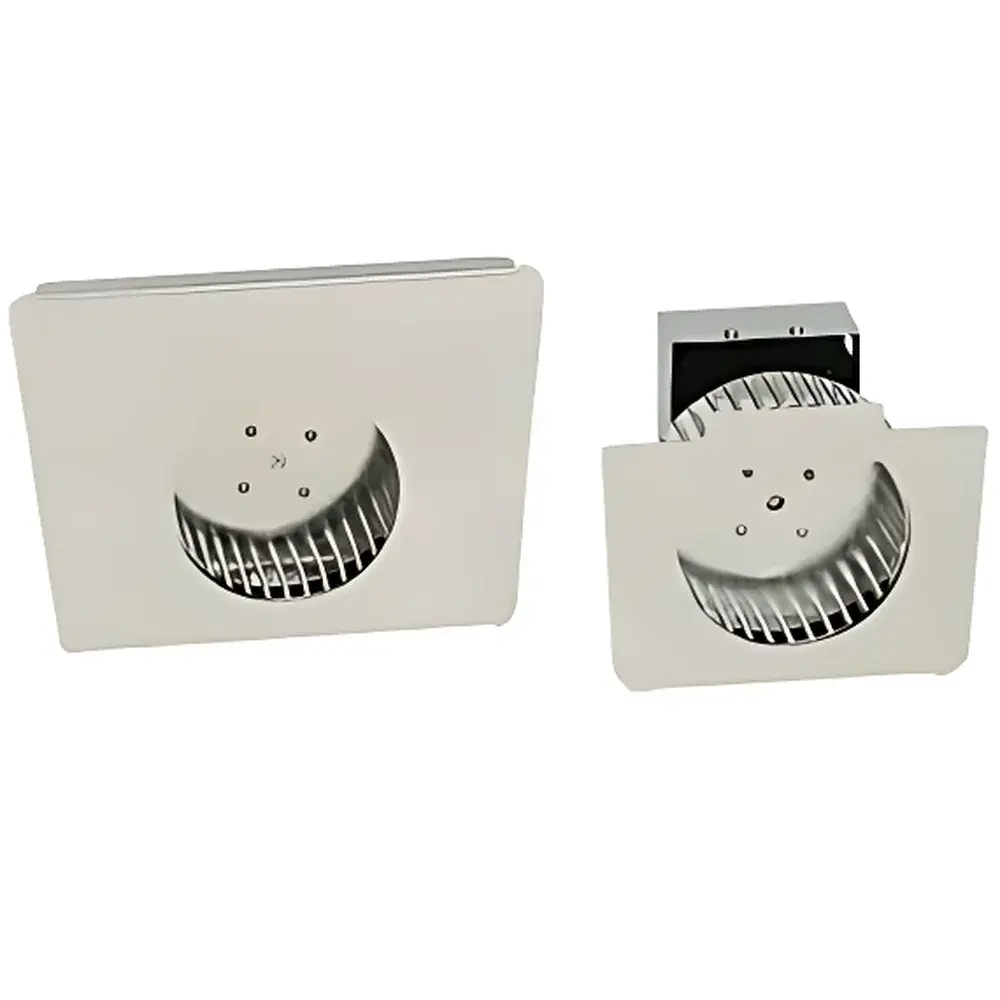
TSE Systems PhenoMaster Running Wheel Module
| Brand | TSE Systems |
|---|---|
| Origin | Germany |
| Model | Running Wheels |
| Application | Modular running wheel system for PhenoMaster/LabMaster platforms |
| Control | Time- and distance-based activation/deactivation mode |
| Rotation Detection | 90° resolution, bidirectional (clockwise/counterclockwise) |
| Load Regulation | Computer-controlled rotational resistance adjustment |
| Drum Spacing | Variable inter-bar spacing for automated motor skill assessment |
| Enclosure Option | CaloWheels sealed chamber for calorimetry-integrated speed-controlled exercise testing |
| Software Integration | Fully compatible with PhenoMaster v5.x+ for user-defined experimental protocols |
Overview
The TSE Systems PhenoMaster Running Wheel Module is a precision-engineered, modular locomotor activity measurement device designed exclusively for integration into the PhenoMaster and LabMaster phenotyping platforms. It operates on the principle of voluntary wheel running—a well-validated, ethologically relevant paradigm for assessing spontaneous physical activity, endurance capacity, circadian rhythm entrainment, and motor coordination in rodents. Unlike forced treadmill protocols, this system captures naturalistic behavior without external stressors, enabling longitudinal monitoring under home-cage conditions. The wheel’s mechanical architecture features low-inertia aluminum drum construction, optical quadrature encoders for high-fidelity rotation tracking, and electromagnetic braking for programmable resistance application—ensuring reproducible workload delivery across repeated sessions.
Key Features
- Bidirectional rotation detection with 90° angular resolution, enabling independent quantification of clockwise and counterclockwise running bouts—critical for evaluating asymmetry in neurological models.
- Time- and distance-gated activation/deactivation logic embedded in PhenoMaster firmware, supporting reward-based paradigms such as run-to-access food or shelter.
- Computer-controlled rotational resistance via integrated electromagnetic torque actuator, allowing dynamic load modulation from 0 to 30 g·cm (typical range), calibrated per ISO 17025-accredited procedures.
- Adjustable inter-bar spacing (2.5–12 mm increments) on the drum surface, facilitating automated assessment of fine motor coordination and paw placement accuracy—particularly valuable in stroke, Parkinson’s, or cerebellar ataxia models.
- Optional CaloWheels enclosure: a thermally insulated, gas-tight chamber with integrated O2/CO2 sensors and differential flow meters, enabling simultaneous indirect calorimetry and speed-controlled exercise protocols compliant with ASTM E2500-18 for metabolic phenotyping.
Sample Compatibility & Compliance
The module supports C57BL/6, BALB/c, CD-1, and DBA/2 mice (18–35 g) and Sprague-Dawley or Wistar rats (150–450 g) using interchangeable drum diameters (11 cm for mice; 22 cm for rats). All hardware complies with IEC 61000-6-2 (EMC immunity) and IEC 61000-6-4 (EMC emission) standards. Data acquisition adheres to ALPACO (Animal Laboratory Phenotyping and Analysis Consortium) metadata guidelines and supports 21 CFR Part 11-compliant audit trails when deployed with PhenoMaster’s GLP/GMP configuration package. Experimental protocols may be aligned with OECD Test Guideline 426 (Neurotoxicity Study) and NIH NOT-OD-15-102 recommendations for rigorous behavioral phenotyping.
Software & Data Management
PhenoMaster v5.4+ provides native support for the Running Wheel Module through a dedicated “Wheel Protocol Builder” interface. Users define multi-phase experiments—including baseline acclimation, ramped load progression, fatigue threshold detection, and recovery intervals—with temporal resolution down to 100 ms. Raw encoder pulses, resistance torque values, and optional calorimetric streams are time-synchronized to microsecond precision via IEEE 1588 PTP clocking. Export formats include HDF5 (for MATLAB/Python analysis), CSV (for Excel/GraphPad Prism), and MIAME-compliant XML for repository submission (e.g., to Mendeley Data or Figshare). Audit logs record operator ID, parameter changes, calibration events, and system health metrics—fully traceable for regulatory submissions.
Applications
- Metabolic phenotyping: Coupling voluntary running with indirect calorimetry to quantify exercise-induced substrate switching (RER dynamics) and energy expenditure kinetics.
- Neurodegenerative disease modeling: Quantifying bradykinesia onset, gait asymmetry, and endurance decline in α-synuclein or tau transgenic lines.
- Circadian biology: Long-term wheel-running actograms synchronized to light-dark cycles for periodogram analysis (Chi-square periodogram, FFT-NLLS).
- Cardiovascular pharmacology: Assessing drug-induced alterations in exercise tolerance and fatigue resistance under graded workload protocols.
- Rehabilitation science: Tracking motor relearning trajectories post-spinal cord injury using variable-bar-spacing skill acquisition assays.
FAQ
Is the Running Wheel Module compatible with third-party data acquisition systems?
Yes—via TTL-triggered pulse output and Modbus TCP API access, enabling synchronization with electrophysiology rigs (e.g., Intan RHD, Plexon OmniPlex) or video-tracking systems (EthoVision XT, DeepLabCut).
What maintenance is required for long-term calibration stability?
Annual verification against NIST-traceable torque and angular displacement standards is recommended; encoder alignment checks every 6 months using TSE’s diagnostic utility suite.
Can multiple wheels operate independently within one PhenoMaster cage unit?
Up to four wheels may be daisy-chained per controller node, each with fully independent protocol scheduling and real-time load adjustment.
Does CaloWheels support respiratory exchange ratio (RER) calculation during active running?
Yes—integrated mass flow controllers and paramagnetic O2/infrared CO2 analyzers enable second-by-second RER derivation with <±0.02 error margin under dynamic load conditions.
How is animal safety ensured during high-resistance protocols?
Hardware-enforced torque ceiling (user-configurable up to 30 g·cm), automatic emergency stop on sustained deceleration (>2 s below 0.5 rpm), and continuous drum surface temperature monitoring (±0.1°C) prevent thermal stress or mechanical strain injury.




