
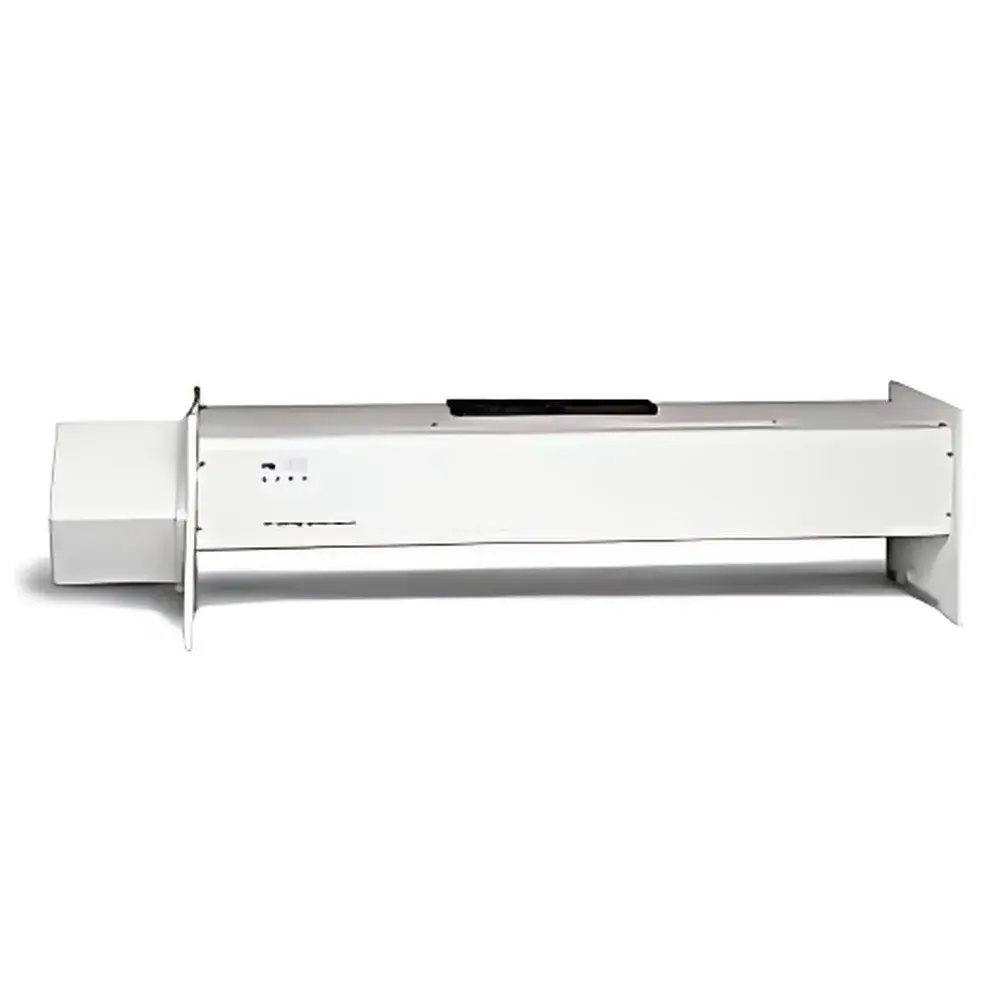
TSI IN-3563 Three-Wavelength Integrating Nephelometer
| Origin | USA |
|---|---|
| Manufacturer Type | Authorized Distributor |
| Origin Category | Imported |
| Model | IN-3563 |
| Pricing | Available Upon Request |
| Instrument Type | Aerosol Nephelometer |
| Detection Limit | 1×10⁻⁷ m⁻¹ to 1×10⁻² m⁻¹ |
| Scattering Angle Range | 7°–170° (with backward scattering defined as 90°–170°) |
| Response Time | <10 s |
| Sample Flow Rate | 20–200 L/min |
| Wavelengths | 450 nm, 550 nm, and 700 nm |
| Integrated Sensors | Temperature, Relative Humidity, Pressure |
Overview
The TSI IN-3563 Three-Wavelength Integrating Nephelometer is an advanced atmospheric aerosol measurement instrument engineered for high-precision, real-time quantification of aerosol light scattering coefficients. Based on the integrating nephelometry principle—where scattered light from aerosol-laden air is collected over a defined solid angle and converted into scattering coefficient (units: m⁻¹)—the IN-3563 delivers exceptional sensitivity down to 1×10⁻⁷ m⁻¹. Developed in collaboration with atmospheric scientists at the University of Washington, this instrument meets rigorous scientific requirements for climate forcing studies, visibility modeling, and regulatory air quality monitoring. Its triple-wavelength optical architecture (450 nm, 550 nm, and 700 nm) enables spectral analysis of scattering behavior, supporting calculations of Ångström exponents and discrimination between fine-mode (e.g., sulfate, organic carbon) and coarse-mode (e.g., dust, sea salt) aerosols. The system operates on a robust, field-deployable platform designed for unattended long-term operation in ambient monitoring stations, aircraft-based campaigns, and controlled laboratory environments.
Key Features
- Triple-wavelength detection (450 nm, 550 nm, 700 nm) for spectrally resolved scattering coefficient measurement and aerosol optical property characterization
- Ultra-low detection limit of 1×10⁻⁷ m⁻¹—two orders of magnitude lower than conventional nephelometers—enabling detection of ultra-clean background air and subtle diurnal aerosol trends
- Full angular integration from 7° to 170°, with configurable mechanical shuttering to isolate backward scattering (90°–170°) for asymmetry parameter estimation
- Integrated temperature, relative humidity, and absolute pressure sensors for real-time environmental correction and traceable data reduction
- Onboard vacuum system maintains stable optical path conditions independent of ambient pressure fluctuations—critical for airborne platforms and high-altitude deployments
- Active background subtraction: simultaneous measurement of sample pressure and temperature enables real-time calculation and removal of Rayleigh scattering contribution from dry air
- Rotating reference shutter provides continuous photomultiplier tube (PMT) dark current calibration and lamp intensity drift compensation, ensuring measurement stability over extended periods
- Adjustable volumetric flow rate (20–200 L/min) optimized for compatibility with standard aerosol sampling inlets and size-selective impactors (e.g., PM₂.₅, PM₁₀)
Sample Compatibility & Compliance
The IN-3563 is compatible with ambient air, chamber-generated aerosols, and filtered or conditioned airstreams. It accepts standard 1/2-inch or 3/4-inch stainless-steel or conductive polymer sampling lines and integrates seamlessly with common aerosol conditioning systems (e.g., Nafion dryers, thermodenuders). Data output conforms to EPA Protocol Gas Monitoring Guidance and aligns with ISO 20678:2019 (Air quality — Instruments for measuring aerosol light scattering) for metrological traceability. The instrument supports GLP-compliant operation through time-stamped, audit-ready data logs; optional firmware upgrades enable 21 CFR Part 11–compliant electronic signatures and user-access controls when deployed in regulated environmental testing laboratories.
Software & Data Management
Data acquisition and configuration are managed via TSI’s proprietary Nephelometer Control Software (v4.x), running on Windows-based host computers. The software provides real-time visualization of scattering coefficients per wavelength, raw detector voltages, environmental sensor readings, and diagnostic status flags. Export formats include CSV, NetCDF, and EPA-compatible .dat files. All measurements are timestamped with UTC synchronization (NTP-supported), and internal memory retains ≥30 days of high-resolution data (1 Hz sampling) in case of communication interruption. Remote monitoring and control are supported via Ethernet or optional RS-232/RS-485 interfaces. Firmware updates preserve calibration constants and support future enhancements to scattering angle partitioning algorithms and humidity-dependent Mie correction libraries.
Applications
- Long-term trend analysis of aerosol scattering in Global Atmosphere Watch (GAW) and IMPROVE network sites
- Aircraft-based vertical profiling of boundary layer aerosol loading and regional transport events
- Source apportionment studies combining nephelometer data with co-located particle number counters, absorption photometers (e.g., Aethalometer), and chemical speciation instruments
- Validation of satellite-derived aerosol optical depth (AOD) products using ground-truth scattering-to-extinction conversion factors
- Controlled-environment exposure studies assessing scattering changes during hygroscopic growth or photochemical aging
- Calibration transfer and intercomparison exercises under ACTRIS and AeroCom protocols
FAQ
What scattering angles does the IN-3563 measure, and how is backward scattering isolated?
The instrument integrates light scattered between 7° and 170° relative to the incident beam. A motorized rotating shutter physically blocks forward-scattered light (7°–90°), allowing dedicated measurement of backward scattering (90°–170°) without optical reconfiguration.
How does the IN-3563 correct for Rayleigh scattering from air molecules?
Using real-time pressure and temperature inputs, the system calculates the theoretical Rayleigh scattering coefficient of dry air at the measured conditions and subtracts it digitally from the total signal—ensuring aerosol-specific scattering is reported.
Is the IN-3563 suitable for use aboard research aircraft?
Yes. Its integrated vacuum system stabilizes the optical cavity against cabin pressure variations, and its shock-isolated optical bench meets DO-160 Section 8 environmental test standards for airborne instrumentation.
Does the instrument require external calibration gases or reference aerosols?
No. Primary calibration is performed at the factory using certified polystyrene latex (PSL) spheres and nitrogen-zero air. Field verification uses zero air and stable scattering standards (e.g., CO₂-saturated air); no consumable calibration gases are needed.
Can humidity effects on scattering be corrected in post-processing?
Yes. The built-in RH sensor enables application of published f(RH) parameterizations (e.g., from ECHAM-HAM or HTAP models) to derive dry-scattering coefficients, provided particle composition assumptions are documented.
Related Products







