
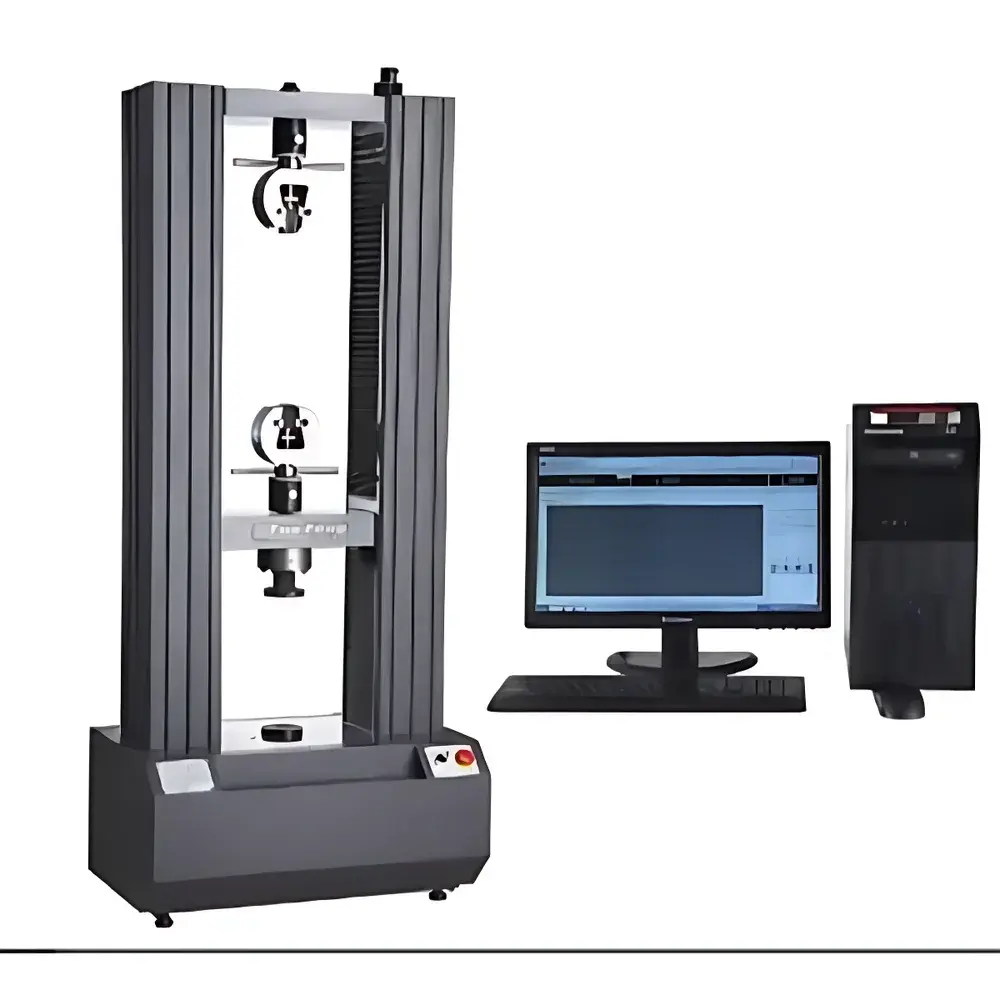
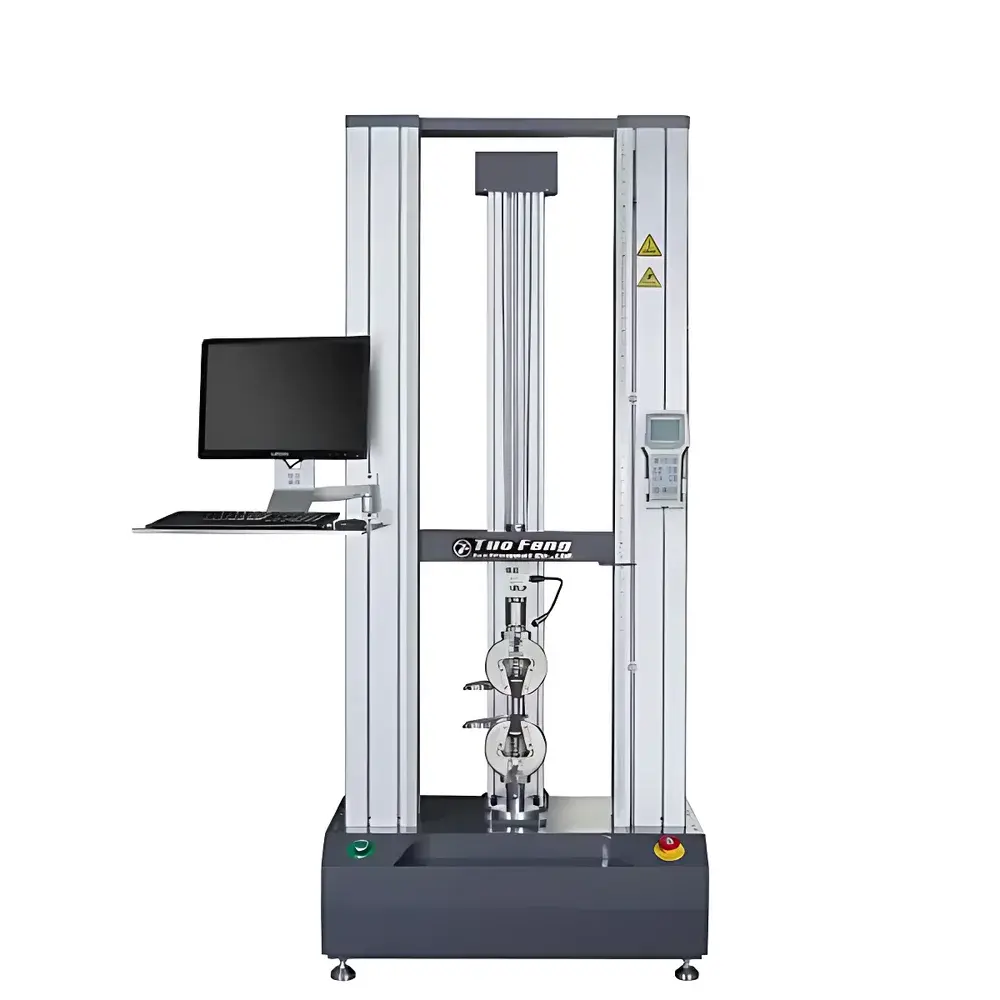
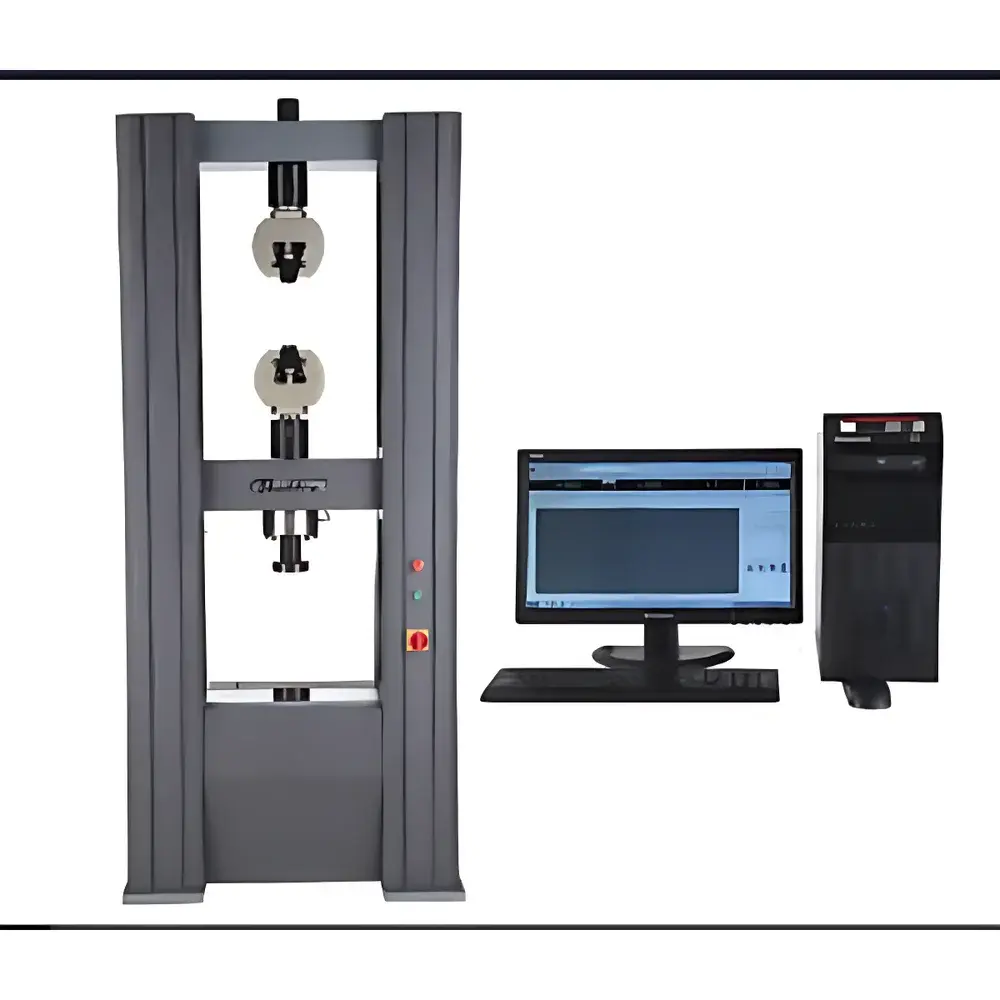
Tuofeng TFW-315 Intelligent Electronic Universal Testing Machine
| Brand | Tuofeng |
|---|---|
| Origin | Shanghai, China |
| Manufacturer Type | Direct Manufacturer |
| Instrument Type | Electromechanical Universal Testing Machine |
| Model | TFW-315 |
| Load Capacity Range | 0.02 N to 300 kN |
| Load Accuracy | ±0.5% |
| Compliance | GB/T 16491–2008, JJG 475–2008, ASTM E4, ISO 7500-1, DIN 51221, JIS B 7721 |
| Control System | PC-based closed-loop servo control with real-time data acquisition |
| Test Modes | Tensile, Compression, Flexure, Shear, Tear, Peel, Burst |
| Software | Multi-language (English/Chinese), GLP-compliant audit trail, CFR 21 Part 11 ready (optional), curve overlay & statistical reporting |
Overview
The Tuofeng TFW-315 Intelligent Electronic Universal Testing Machine is a high-precision electromechanical system engineered for static mechanical property characterization of metallic, polymeric, ceramic, composite, and elastomeric materials. It operates on the principle of closed-loop servo-controlled force and displacement actuation, utilizing a precision ball-screw drive system coupled with a high-resolution load cell and optical encoder-based position feedback. The machine conforms to international metrological and performance standards including ISO 7500-1 (Class 0.5 accuracy), ASTM E4 (verification of force-measuring instruments), and GB/T 16491–2008 (Chinese national standard for electronic universal testing machines). Designed for laboratory and industrial QA/QC environments, it delivers traceable, repeatable, and reproducible mechanical test data under controlled loading conditions across a broad dynamic range—from micro-newton-scale thin-film peel tests to kilonewton-level structural component compression.
Key Features
- Load capacity spanning 0.02 N to 300 kN — configurable via interchangeable load cells and modular frame options (TFW-05S through TFW-200S variants).
- High-fidelity measurement architecture: ±0.5% full-scale load accuracy; displacement resolution down to 0.001 mm; strain measurement supported via optional extensometers (clip-on or non-contact) compliant with ISO 9513 Class 1.
- Dual-speed motorized crosshead with programmable acceleration/deceleration profiles — enabling rapid positioning (up to 500 mm/min) and ultra-low-speed creep testing (0.001 mm/min).
- Robust mechanical design featuring preloaded high-precision ball screws, rigid cast-iron base, and reinforced column assembly — minimizing deflection and ensuring long-term geometric stability.
- Comprehensive safety suite: dual-channel electronic limit switches, hardware emergency stop circuitry, overload cut-off at 110% of rated capacity, and software-enforced operational boundaries.
- Modular fixture interface compatible with ASTM, ISO, and GB-standard grips—including wedge-action tensile jaws, compression platens, 3-/4-point bend fixtures, pneumatic peel clamps, and custom-engineered tooling for specialized geometries.
Sample Compatibility & Compliance
The TFW-315 accommodates specimens ranging from thin films (<0.1 mm thick) to structural beams (up to 600 mm wide × 800 mm stroke), with customizable test width (400–1100 mm) and height (1700–2600 mm). It supports standardized test methods per ASTM D638 (tensile plastics), ASTM D790 (flexural properties), ISO 527 (plastics tensile), ISO 6892-1 (metal tensile), ASTM D1876 (peel strength), ASTM D624 (tear resistance), and GB/T 228.1 (metallic materials tensile testing). All calibration and verification procedures align with JJG 475–2008 (Chinese verification regulation for electronic UTM) and are fully documented for GLP/GMP audits. Optional traceable calibration certificates (NIST-traceable or CNAS-accredited) are available upon request.
Software & Data Management
Tuofeng’s proprietary TESTSuite™ software runs natively on Windows OS and provides full CFR 21 Part 11 compliance when configured with electronic signatures, audit trail logging, and role-based user access control. The platform supports multiple test modes — including force-controlled ramp, displacement-controlled hold, strain-controlled cyclic loading, and multi-step sequences (e.g., preload → dwell → ramp → unload). Real-time visualization includes synchronized plots of load vs. time, stress vs. strain, displacement vs. time, and custom-defined derived parameters. Raw data is stored in open ASCII format (.csv) and native binary (.tdf) with embedded metadata (operator ID, sample ID, environmental conditions, calibration timestamps). Reporting modules generate ISO/ASTM-compliant PDF reports with embedded graphs, statistical summaries (mean, SD, CV%), pass/fail flags against specification limits, and digital signature fields for regulatory submission.
Applications
The TFW-315 serves as a core analytical instrument across diverse sectors: aerospace (composite laminate interlaminar shear, titanium alloy tensile ductility); automotive (rubber bushing compression set, brake pad shear strength); medical device R&D (suture tensile integrity, hydrogel swelling mechanics); construction materials (concrete flexural modulus, rebar yield point); electronics (PCB flexural fatigue, solder joint shear reliability); and packaging (film tear propagation, adhesive peel adhesion). Its versatility extends to research applications such as time-dependent viscoelastic modeling (creep/recovery, stress relaxation), fracture toughness estimation (via J-integral or CTOD protocols), and high-strain-rate quasi-static correlation studies.
FAQ
What standards does the TFW-315 comply with for calibration and verification?
It meets ISO 7500-1 Class 0.5, ASTM E4, GB/T 16491–2008, and JJG 475–2008 requirements. Factory calibration includes full-load linearity, hysteresis, and repeatability verification with uncertainty budgets traceable to national metrology institutes.
Can the system be integrated into an existing LIMS or MES environment?
Yes — TESTSuite™ supports OPC UA and RESTful API interfaces for bidirectional data exchange with laboratory information management systems (LIMS), enterprise resource planning (ERP), and manufacturing execution systems (MES). Custom protocol adapters are available for legacy SCADA integration.
Is third-party certification for ISO/IEC 17025 accreditation supported?
Absolutely — Tuofeng provides documentation packages (including uncertainty analysis, MSA reports, and equipment qualification protocols) required for ISO/IEC 17025 laboratory accreditation. On-site IQ/OQ/PQ validation support is offered globally.
How is software validation handled for regulated industries?
TESTSuite™ includes a validated installation package with documented risk assessment (ICH Q9), verification test scripts (IQ/OQ), and change control logs. CFR 21 Part 11 configuration ensures electronic records integrity, audit trail immutability, and role-based security enforcement.
What maintenance intervals and service coverage are recommended?
Preventive maintenance is advised every 12 months or after 2,000 test cycles, covering load cell recalibration, screw lubrication, encoder alignment, and safety circuit validation. Tuofeng offers global service contracts with 4-hour remote diagnostics response and on-site engineer dispatch within 72 hours.



