
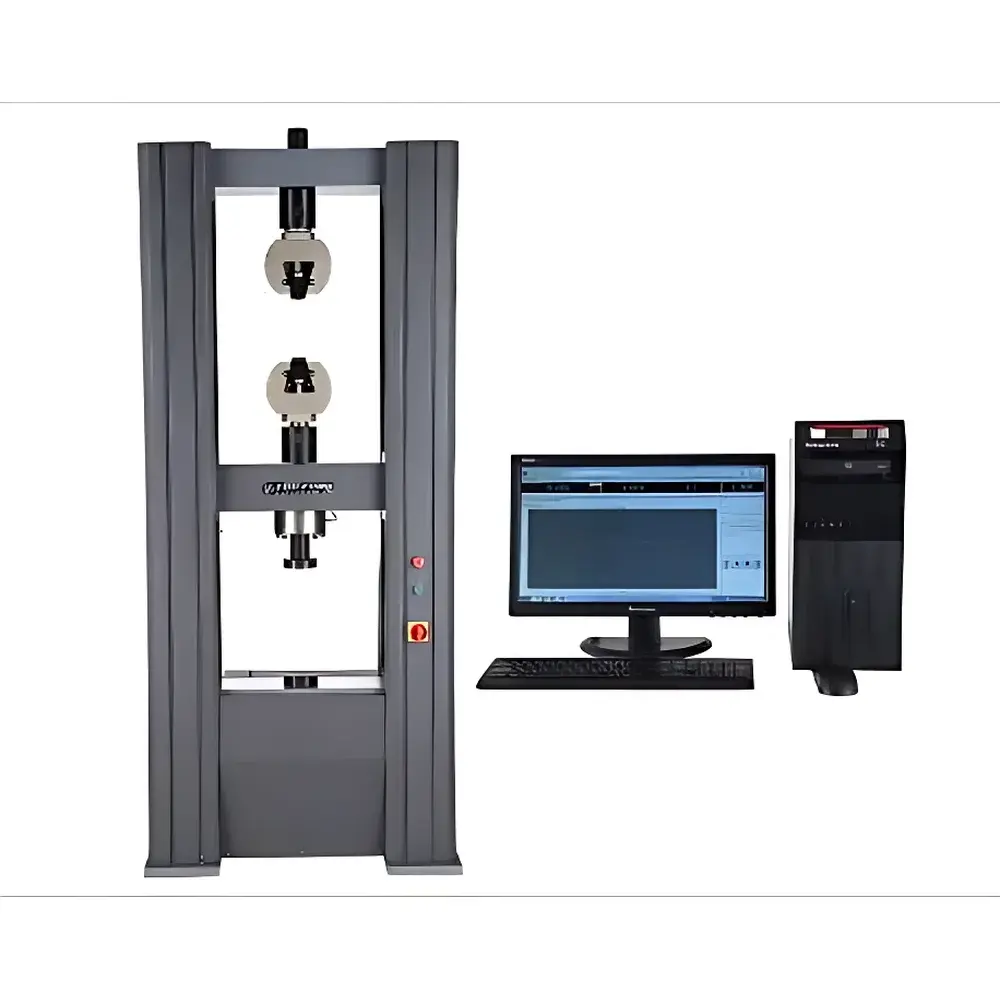
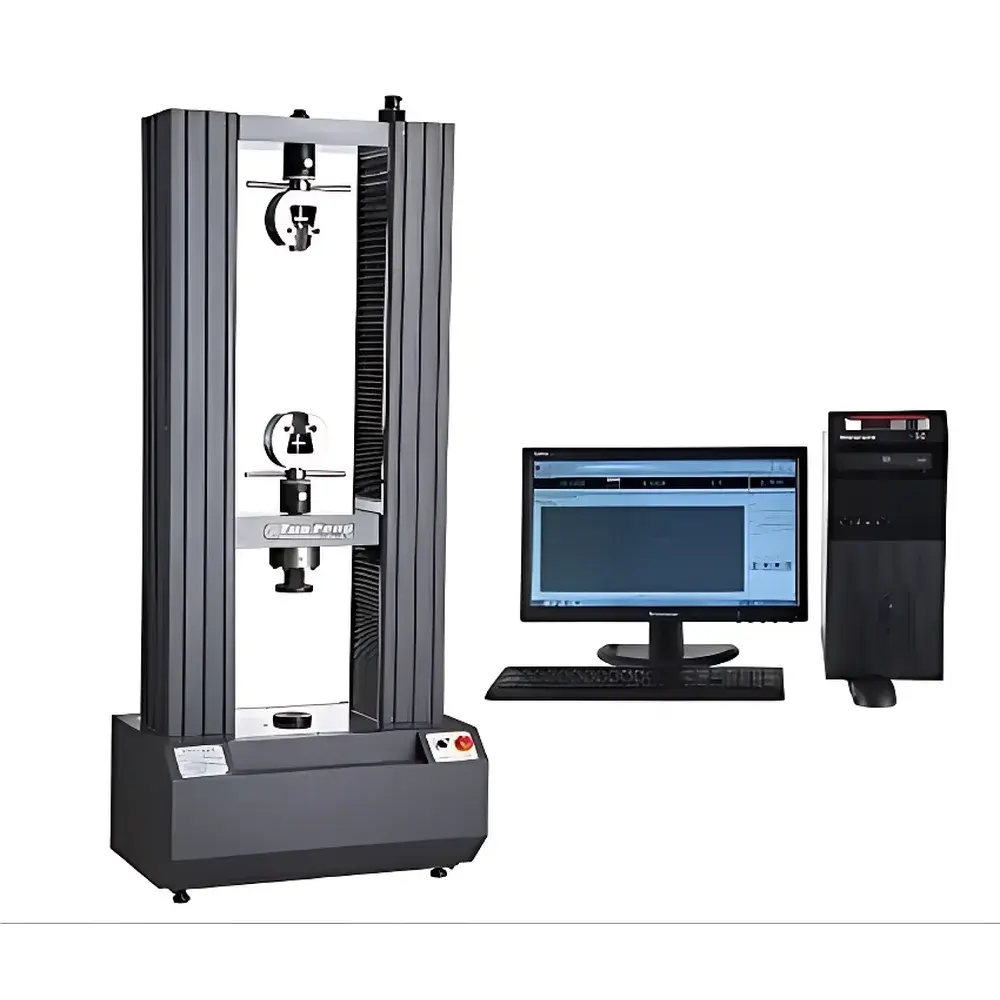
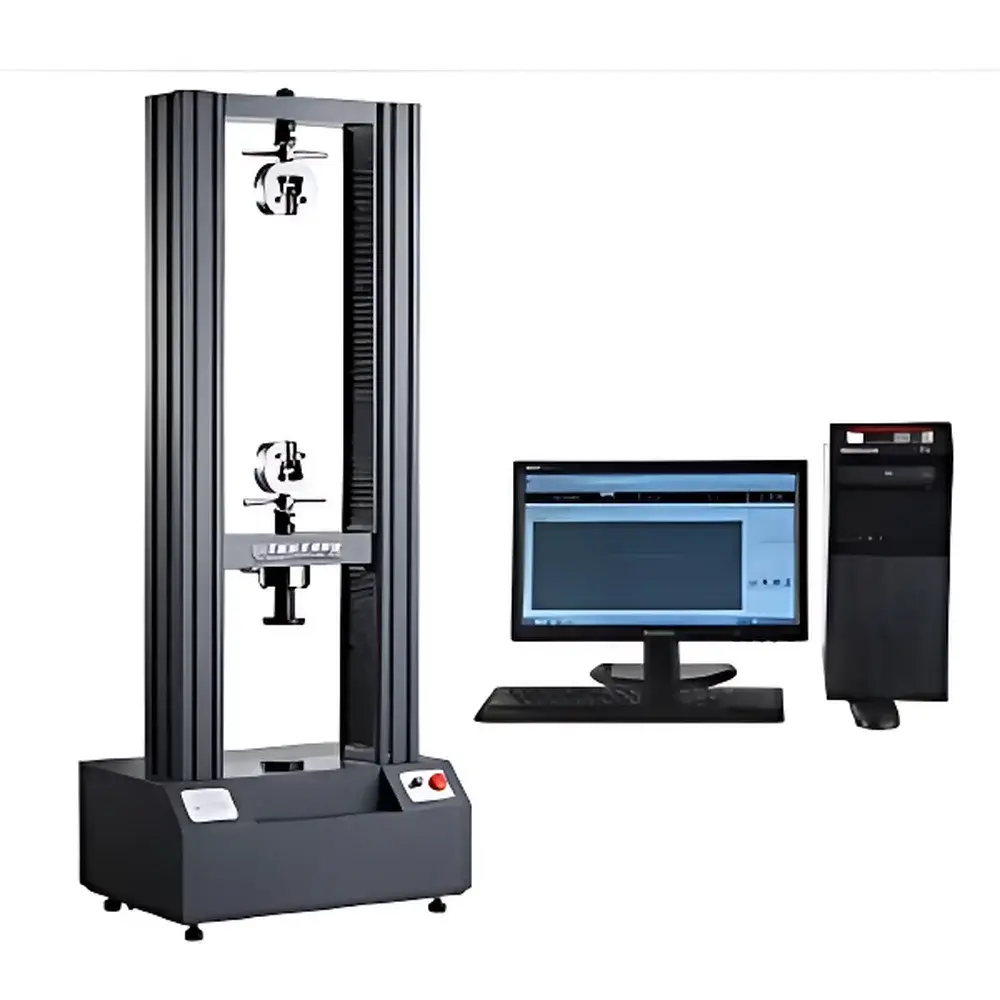
Tuofeng TFW-39 Microcomputer-Controlled Servo-Electric Universal Testing Machine
| Brand | Tuofeng |
|---|---|
| Origin | Shanghai, China |
| Manufacturer Type | Direct Manufacturer |
| Equipment Type | Electromechanical Universal Testing Machine |
| Model | TFW-39 |
| Force Capacity | 39 kN (derived from model nomenclature |
| Accuracy Class | ISO 7500-1 / ASTM E4 Class 0.5 |
| Compliance | GB/T 16491–2008, JJG 475–2008, ISO 6892-1, ASTM E8/E9/E21, EN 10002-1 |
| Control System | Closed-loop servo motor + precision ball screw drive |
| Test Speed Range | 0.001–500 mm/min (infinitely variable) |
| Effective Test Width | 400 mm (expandable to 600 mm) |
| Max Stroke | 800 mm (extendable) |
| Load Cell Resolution | 1 part in 500,000 full scale, no range switching |
| Load Measurement Uncertainty | ±0.005% of reading |
| Displacement & Strain Measurement Accuracy | ±0.005% of reading (with optional extensometer or large-deformation sensor) |
| Safety Systems | Dual electronic limit switches, emergency stop, overload protection (110% F.S.), motor torque limiting |
| Software | Windows-based, multi-language (EN/CN/TC), compliant with FDA 21 CFR Part 11 audit trail requirements (optional configuration), GLP/GMP-ready data logging |
Overview
The Tuofeng TFW-39 Microcomputer-Controlled Servo-Electric Universal Testing Machine is an electromechanical force-testing platform engineered for high-fidelity static mechanical characterization of engineering materials. It operates on the principle of closed-loop load and displacement control, utilizing a high-torque AC servo motor coupled to a preloaded precision ground ball screw transmission system. This architecture ensures minimal backlash, exceptional positional repeatability (< ±0.005 mm), and dynamic response suitable for both quasi-static tensile/compression testing and controlled-rate deformation protocols. Designed in strict conformance with ISO 7500-1:2018 (static calibration of force-proving instruments) and ASTM E4-23 (practices for force verification of testing machines), the TFW-39 delivers traceable, metrologically sound results across its full 39 kN capacity range. Its dual-column rigid frame—constructed from high-strength cast iron and reinforced steel crossheads—minimizes deflection under load, supporting accurate modulus determination and strain-controlled experiments per ISO 527-2 and ASTM D638.
Key Features
- Rigid dual-column structural design with optimized moment resistance and thermal stability for long-term dimensional integrity.
- High-resolution load measurement system: 500,000-count A/D conversion, zero-range-switching architecture ensuring uniform resolution from 0.2% to 100% of full-scale load (39 kN).
- Precision-ground recirculating ball screw assembly with integrated backlash compensation, enabling sub-micron positioning accuracy and smooth low-speed operation down to 0.001 mm/min.
- Integrated safety subsystems: programmable electronic upper/lower limits, hardware-triggered emergency stop circuitry, real-time torque monitoring, and automatic overload shutdown at 110% F.S.
- Intelligent crosshead actuation: dual-speed motor control (fast return + fine-adjustment modes) with position memory and programmable homing sequence.
- Modular transducer interface supporting ISO 23788-compliant extensometers (clip-on or non-contact), digital video extensometry (DVE), and large-deformation sensors for strain measurement beyond yield.
Sample Compatibility & Compliance
The TFW-39 accommodates standardized and custom specimens across metallic alloys (steel, aluminum, titanium), polymers (thermoplastics, elastomers, composites), ceramics, textiles, adhesives, and biomedical scaffolds. Standardized test fixtures—including wedge-action tensile grips, compression platens, bend supports (3-point/4-point), shear blocks, peel fixtures, and puncture probes—are available per ASTM D1709, ISO 1133, EN ISO 179, and GB/T 2567. The system fully supports international test method execution: tensile testing per ISO 6892-1 and ASTM E8; compression per ISO 13314 and ASTM E9; flexural analysis per ISO 178 and ASTM D790; and fracture toughness per ASTM E399 (with appropriate crack-tip instrumentation). Calibration certificates are NIST-traceable, and machine validation documentation satisfies ISO/IEC 17025 laboratory accreditation requirements.
Software & Data Management
The embedded Windows-based testing software provides full compliance-ready operation. It supports configurable test methods with user-defined control loops (load-controlled, displacement-controlled, strain-controlled, or hybrid ramp-hold sequences). Real-time visualization includes synchronized multi-curve plotting (force–time, stress–strain, displacement–time, etc.) with on-the-fly parameter calculation: ultimate tensile strength (UTS), yield strength (0.2% offset), Young’s modulus, Poisson’s ratio, elongation at break, reduction in area, compressive yield, flexural modulus, and peel/adhesion strength. All raw data—including timestamps, operator ID, environmental metadata (optional), and instrument calibration status—are stored in encrypted SQLite databases with immutable audit trails meeting FDA 21 CFR Part 11 requirements when enabled. Reports export to PDF, CSV, and XML formats; batch analysis tools support statistical comparison (max/min/mean/stdev) across specimen groups. Software updates are delivered remotely with version-controlled release notes and validation documentation.
Applications
The TFW-39 serves as a primary mechanical characterization tool in R&D laboratories, quality control departments, and third-party testing facilities. Typical use cases include: qualification of aerospace-grade aluminum extrusions per AMS 4027; validation of automotive polymer composites against SAE J2231; tensile evaluation of medical device grade stainless steel per ASTM F138; peel strength assessment of pressure-sensitive adhesives per PSTC-107; compression testing of pharmaceutical tablets per USP ; and mechanical screening of additive-manufactured metal parts per ASTM F3049. Its adaptability to industry-specific jigs and regulatory workflows makes it equally suitable for ISO 9001-certified production lines and GLP-governed preclinical material studies.
FAQ
What standards does the TFW-39 comply with for calibration and verification?
It conforms to ISO 7500-1:2018 (force measurement accuracy), JJG 475–2008 (Chinese national verification regulation), and GB/T 16491–2008 (Chinese universal testing machine standard). Optional factory calibration includes NIST-traceable load cell certification.
Can the system be integrated into an existing LIMS or MES environment?
Yes—via TCP/IP or RS232 communication protocols, with configurable ASCII or XML data output formats compatible with LabWare, Thermo Fisher SampleManager, and Siemens Opcenter.
Is strain measurement included as standard equipment?
No—extensometry is an optional module. Standard configuration includes encoder-based crosshead displacement; contact extensometers (e.g., ASTM E83 Class B-1) or non-contact video extensometers may be added.
What is the typical lead time for customized fixtures or software modules?
Standard fixtures ship within 5 business days; application-specific jigs require 10–15 days engineering review and fabrication; validated software add-ons (e.g., fatigue module, creep analysis) require 3–4 weeks including IQ/OQ documentation.
Does the system support automated testing sequences for unattended operation?
Yes—the software supports script-driven multi-step tests with conditional logic, auto-gripping, specimen recognition (via barcode input), and pass/fail decision trees based on user-defined acceptance criteria.



