
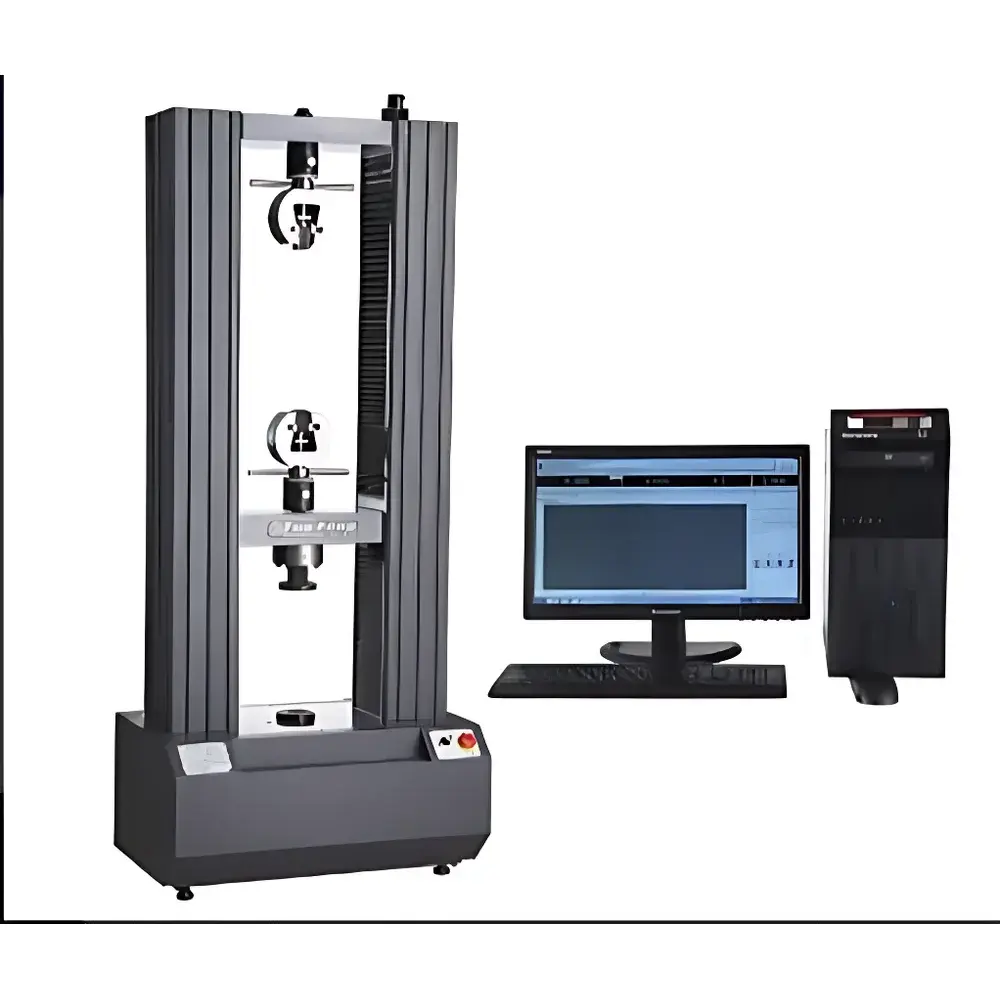
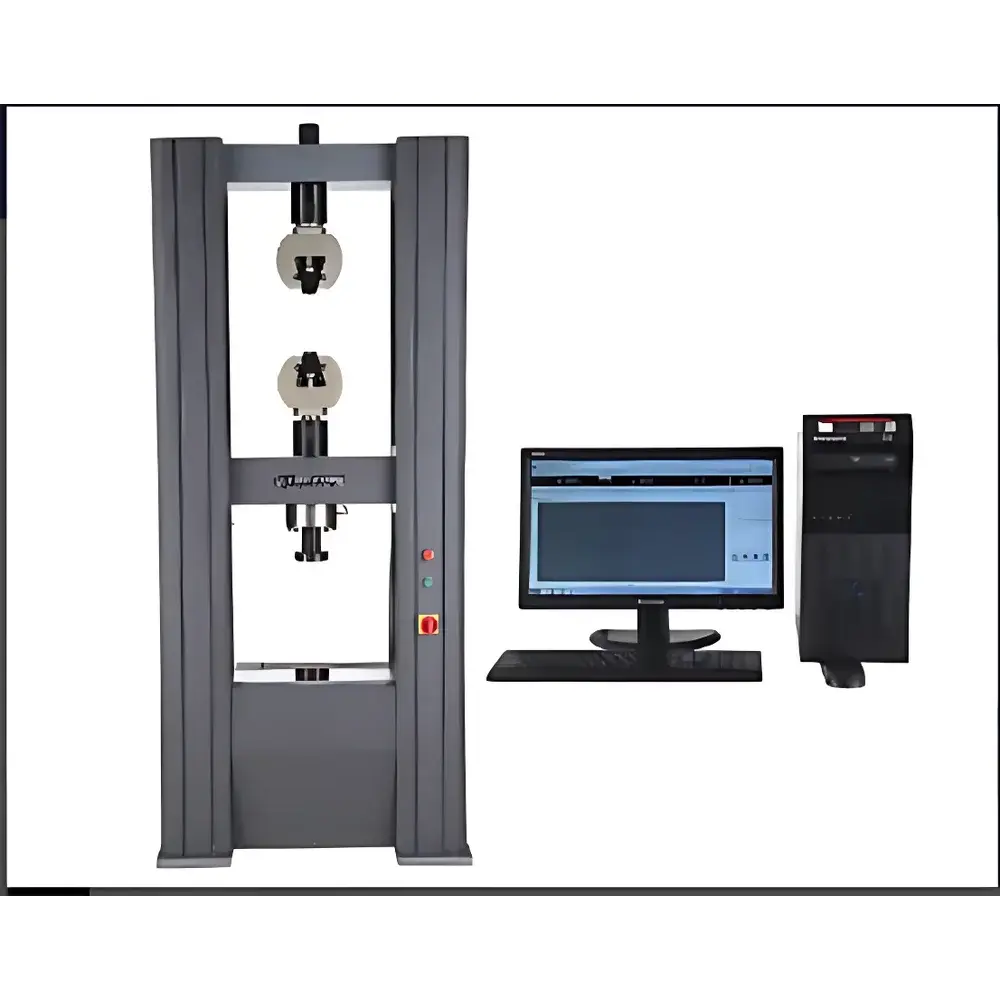
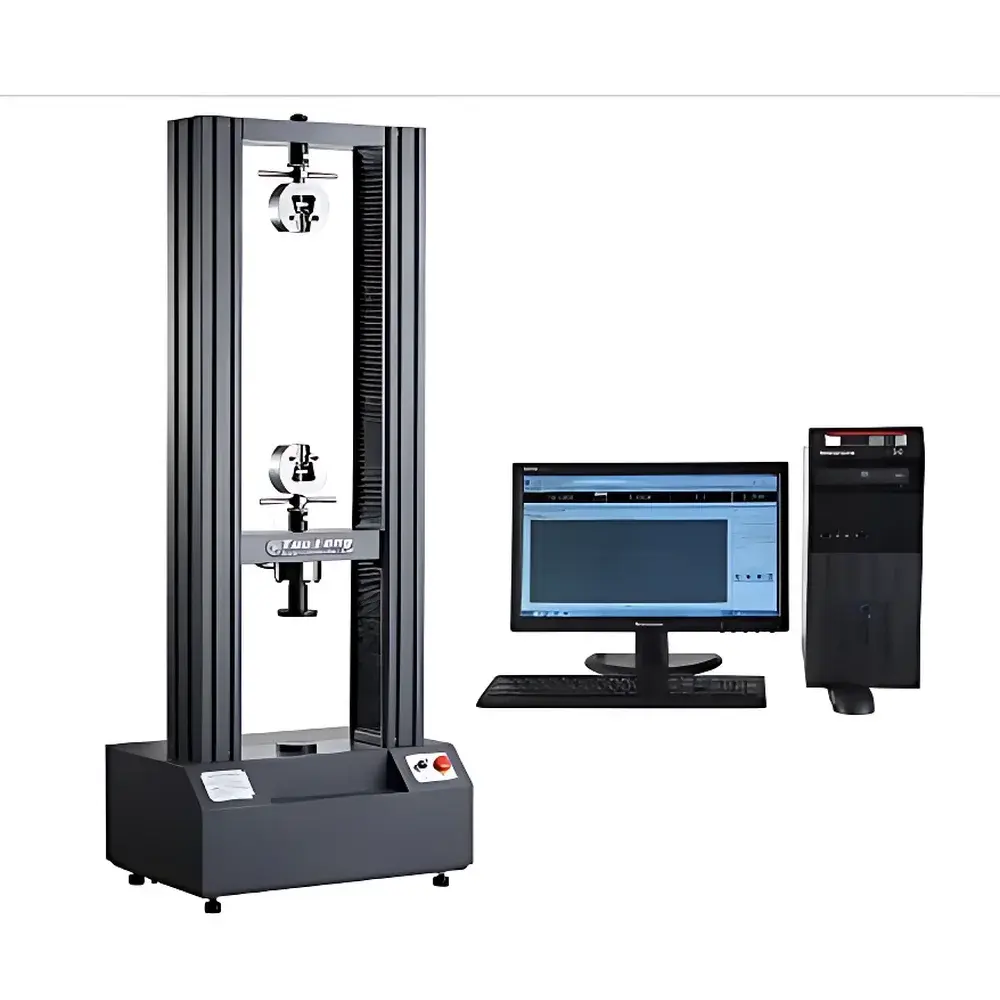
Tuofeng TFW-92 Microcomputer-Controlled Universal Testing Machine
| Brand | Tuofeng |
|---|---|
| Origin | Shanghai, China |
| Manufacturer Type | Direct Manufacturer |
| Product Category | Domestic |
| Model | TFW-92 |
| Instrument Type | Electromechanical Universal Testing Machine |
| Load Capacity Range | 5–200 kN (configurable by model) |
| Accuracy Class | ISO 7500-1 / ASTM E4 Class 0.5 |
| Force Measurement Range | 0.2%–100% of full scale |
| Force Resolution | 1/500,000 full-scale code (single-range, no auto-ranging) |
| Speed Range | 0.001–500 mm/min (infinitely variable) |
| Crosshead Travel | 800 mm (extendable) |
| Effective Test Width | 400–600 mm (customizable) |
| Displacement & Strain Accuracy | ±0.005% of reading |
| Drive System | Imported servo motor + precision worm-gear reducer |
| Actuation Mechanism | High-precision preloaded ball screw |
| Safety Protection | Dual-limit electronic positioning, emergency stop, overload cutoff (>110% FS), automatic return post-test |
| Software Compliance | Supports ASTM D638, D790, D3039, ISO 6892-1, GB/T 228.1, GB/T 16491, JJG 475, and configurable test protocols per USP <1041>, FDA 21 CFR Part 11 audit trail (optional module) |
Overview
The Tuofeng TFW-92 Microcomputer-Controlled Universal Testing Machine is an electromechanical static materials testing system engineered for high-fidelity mechanical property characterization under tension, compression, bending, shear, peel, tear, and puncture loading conditions. Based on the principle of controlled displacement actuation via a precision ball-screw-driven crosshead, the system applies calibrated force through a high-stiffness load frame while simultaneously capturing real-time load, displacement, and strain data with metrological traceability to international standards. Its dual-column rigid frame architecture ensures minimal deflection during high-load testing, supporting reproducible measurement of modulus, yield strength, ultimate tensile strength, elongation at break, compressive yield, flexural modulus, and interfacial adhesion metrics across metallic, polymeric, ceramic, composite, and elastomeric specimens.
Key Features
- ISO 7500-1 and ASTM E4 Class 0.5 certified force measurement system with ±0.005% FS accuracy and 1/500,000 internal resolution—no range switching required across full capacity.
- Imported high-torque servo motor coupled with a backlash-free worm-gear reducer and preloaded ground ball screw for smooth, low-noise, and highly repeatable motion control.
- Dual-speed motorized crosshead adjustment (fast/slow modes) with jog functionality and programmable auto-return to initial position post-test.
- Integrated safety architecture: triple-redundant protection including electronic upper/lower limit switches, hardware-based emergency stop circuitry, and software-enforced overload cutoff at 110% of full-scale load.
- Modular extensometry support: compatibility with both clip-on electronic extensometers (for high-resolution strain measurement per ISO 9513 Class 1) and large-deformation video or contact-type extensometers.
- Thermally stable load cell design with temperature compensation to minimize drift during extended-duration creep or relaxation tests.
Sample Compatibility & Compliance
The TFW-92 accommodates standardized and custom geometries—from ASTM E8 dog-bone coupons and ISO 527 bars to ASTM D638 Type I specimens, ASTM D790 rectangular beams, and non-standard composites or biomedical scaffolds. Fixture adaptability includes wedge-action tensile grips, compression platens with self-aligning spherical seats, 3-/4-point bend fixtures, peel test jigs, and pneumatic clamping options. The system complies with GB/T 16491–2008 (Chinese national standard for UTM design), JJG 475–2008 (verification regulation), and supports automated test execution per ASTM D638, D790, D3039, ISO 6892-1, ISO 178, EN 10002-1, and JIS Z2241. Optional GLP/GMP-ready software modules provide 21 CFR Part 11-compliant user access control, electronic signatures, and immutable audit trails for regulated environments.
Software & Data Management
The Windows-based TFW TestSuite v4.x offers multi-language UI (English, Simplified/Traditional Chinese), unit-agnostic parameter input (N/kN/lbf, mm/in, MPa/psi), and synchronized real-time plotting of up to four independent axes—including load-time, stress-strain, displacement-time, and extension-load. Test sequences may be programmed using conditional logic (e.g., hold at 80% yield for 60 s, then ramp to failure), and results are automatically calculated per selected standard: tensile strength, Young’s modulus, offset yield (0.2%), fracture toughness indices, secant modulus, and adhesion energy (peel/tear). Raw data exports to CSV, XML, or proprietary .tdf format; reports include statistical summaries (mean, SD, CV%) across batches, curve superposition for comparative analysis, and PDF/printer-ready documentation with embedded metadata (operator ID, calibration date, environmental conditions).
Applications
This system serves as a primary mechanical characterization platform in R&D laboratories and QC departments across aerospace (composite laminate validation), automotive (seat belt webbing, gasket compression set), medical device manufacturing (suture tensile integrity, hydrogel swelling mechanics), construction materials (rebar yield verification, concrete flexural strength), and polymer processing (film tear resistance, fiber tensile modulus). It is routinely deployed for incoming raw material inspection, in-process quality gate checks, accelerated aging correlation studies, and failure root-cause analysis—particularly where repeatability, regulatory compliance, and long-term data integrity are mission-critical.
FAQ
What standards does the TFW-92 natively support?
The system includes preconfigured test methods for ASTM D638, D790, D3039, ISO 6892-1, ISO 178, GB/T 228.1, and GB/T 16491, with customizable protocol templates for proprietary or emerging standards.
Can the system perform creep or relaxation testing?
Yes—via time-controlled hold segments within programmable test sequences, supported by thermal drift-compensated load cells and high-stability crosshead positioning.
Is 21 CFR Part 11 compliance available?
An optional validated software module provides role-based authentication, electronic signatures, and tamper-evident audit logs meeting FDA requirements for regulated pharmaceutical and biotech applications.
What extensometer options integrate with the TFW-92?
Standard support includes ASTM E83 Class B1 clip-on extensometers; optional integration with non-contact digital image correlation (DIC) systems or laser-based large-strain sensors is available upon request.
Does the machine require annual recalibration?
Per ISO/IEC 17025 recommendations, force calibration is advised annually using NIST-traceable deadweight standards; displacement and strain channels should be verified semiannually using certified gauge blocks or reference extensometers.



