
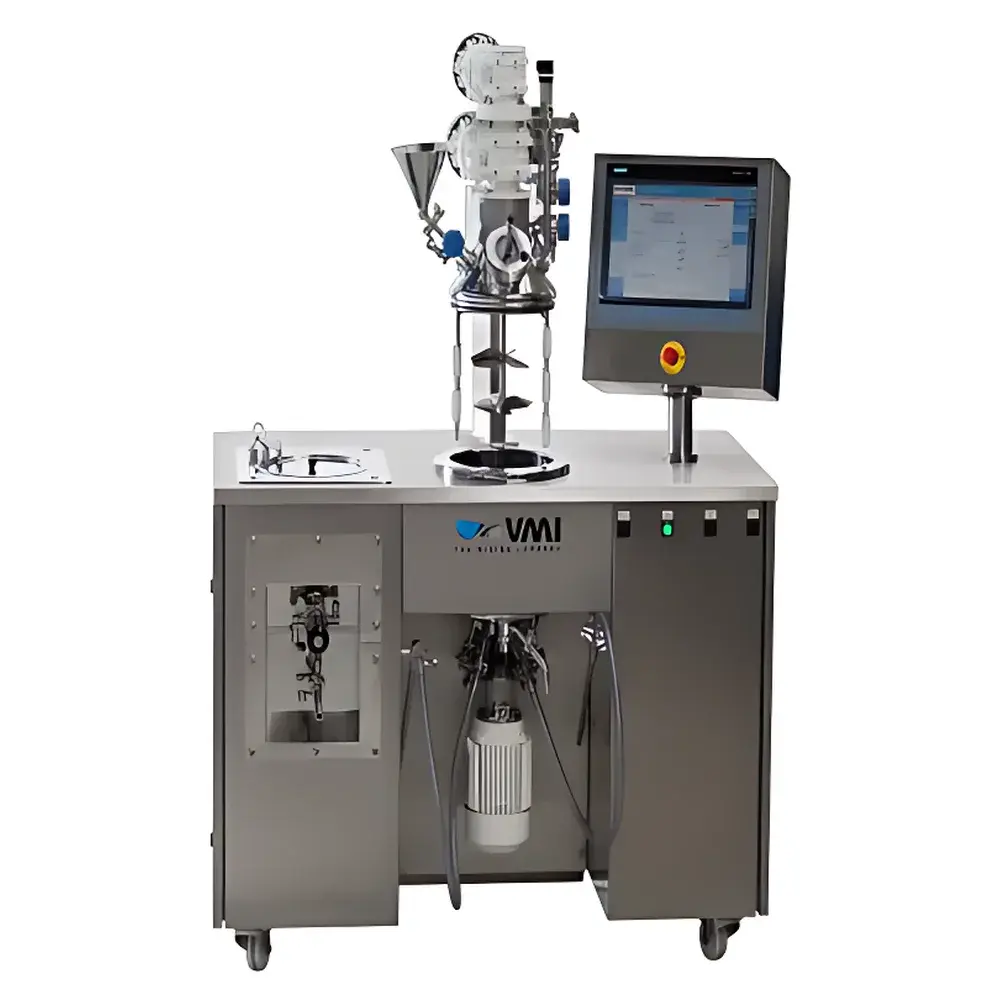
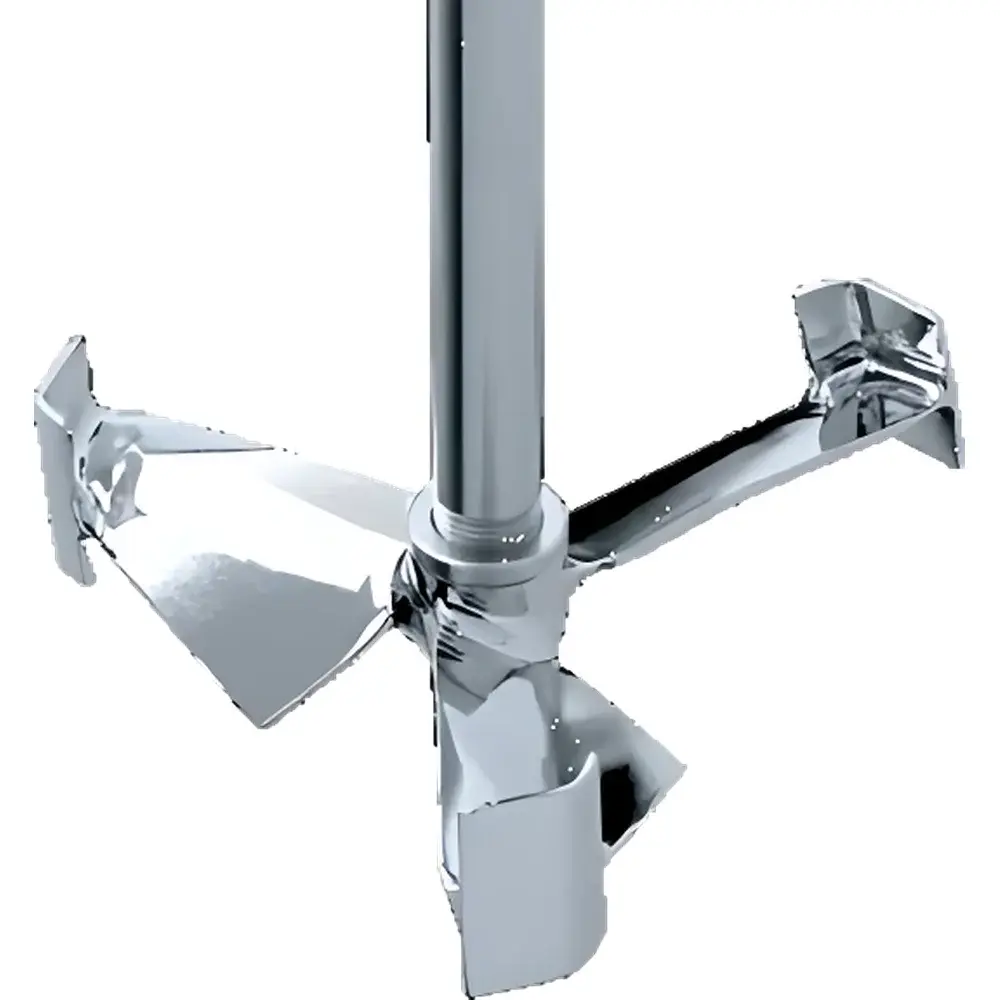
Turbotest & Supertest High-Shear Mixing Tools by VMI (France)
| Key | Brand: VMI (France) |
|---|---|
| Origin | France |
| Model | Turbotest |
| Instrument Type | Probe-type Rotor-Stator Homogenizer |
| Dimensions (W×D×H) | 998 × 447 × 430 mm |
| Processing Volume Range | 50–3300 mL |
Overview
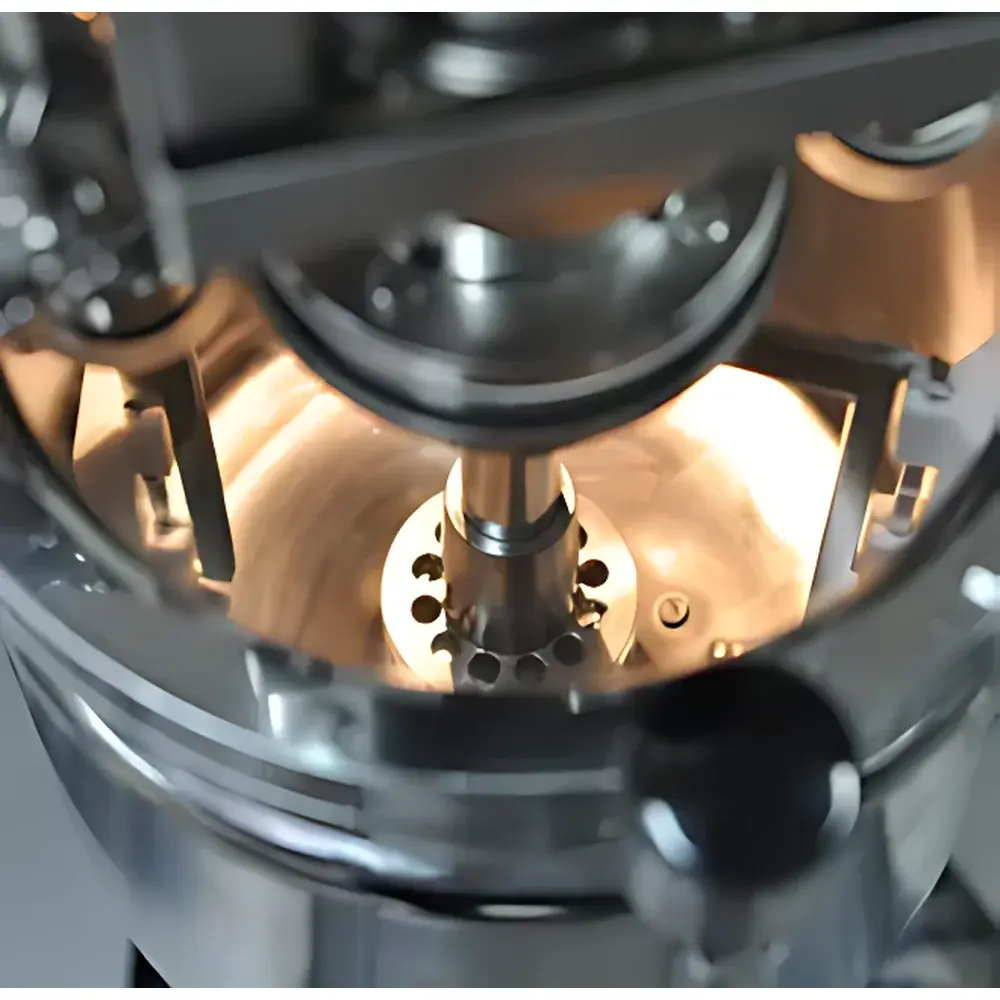
The Turbotest and Supertest high-shear mixing tools are precision-engineered probe-type rotor-stator homogenizers developed by VMI, a French manufacturer specializing in laboratory-scale mixing, dispersion, and emulsification systems. These instruments operate on the principle of controlled hydrodynamic cavitation and intense shear generation within a narrow rotor-stator gap—typically ranging from 50 to 200 µm—enabling efficient particle size reduction, phase dispersion, and stabilization of heterogeneous systems. Designed for reproducible scalability from benchtop development to pilot-scale process validation, the Turbotest platform supports modular tooling interchangeability, allowing users to select optimized geometries (e.g., radial-flow turbines, axial-flow propellers, or fine-emulsifying rotors) based on rheological behavior, viscosity range (1–50,000 mPa·s), and target dispersion quality. The system is engineered for precision control of rotational speed (up to 2500 rpm), torque feedback, and thermal management during extended operation—critical for heat-sensitive formulations such as pharmaceutical suspensions, cosmetic emulsions, and nanomaterial dispersions.
Key Features
- Modular probe design with quick-lock coupling for rapid interchange of rotor-stator assemblies without recalibration
- Stainless-steel (AISI 316L) wetted parts compliant with ISO 8504-2 and FDA-compliant surface finish (Ra ≤ 0.4 µm)
- Variable-speed drive with digital tachometer feedback and programmable ramp profiles (0–2500 rpm, ±1 rpm resolution)
- Integrated overload protection and real-time torque monitoring to prevent motor stall and ensure consistent energy input
- Tooling library includes radial-flow turbines (55–100 mm diameter), axial-flow propellers (65–160 mm), and fine-emulsifying rotors with stator orifices down to 0.2 mm
- Ergonomic base unit with vibration-damping feet and IP54-rated enclosure for laboratory environments
Sample Compatibility & Compliance
The Turbotest system accommodates samples ranging from low-viscosity aqueous solutions (1–10 mPa·s) to highly viscous pastes (up to 50,000 mPa·s), including non-Newtonian fluids requiring controlled shear history. It supports compliance-critical workflows under GLP and GMP frameworks: all firmware logs timestamped operational parameters (speed, duration, torque, temperature if equipped with optional sensor port), satisfying audit requirements per 21 CFR Part 11 when paired with validated data acquisition software. Tool geometries conform to ASTM D3418 (viscoelastic characterization support) and ISO 1628-1 (polymer solution viscosity preparation). For regulatory submissions involving particle size distribution (PSD) in drug product development, the system enables repeatable sample preparation aligned with USP for emulsion droplet sizing.
Software & Data Management
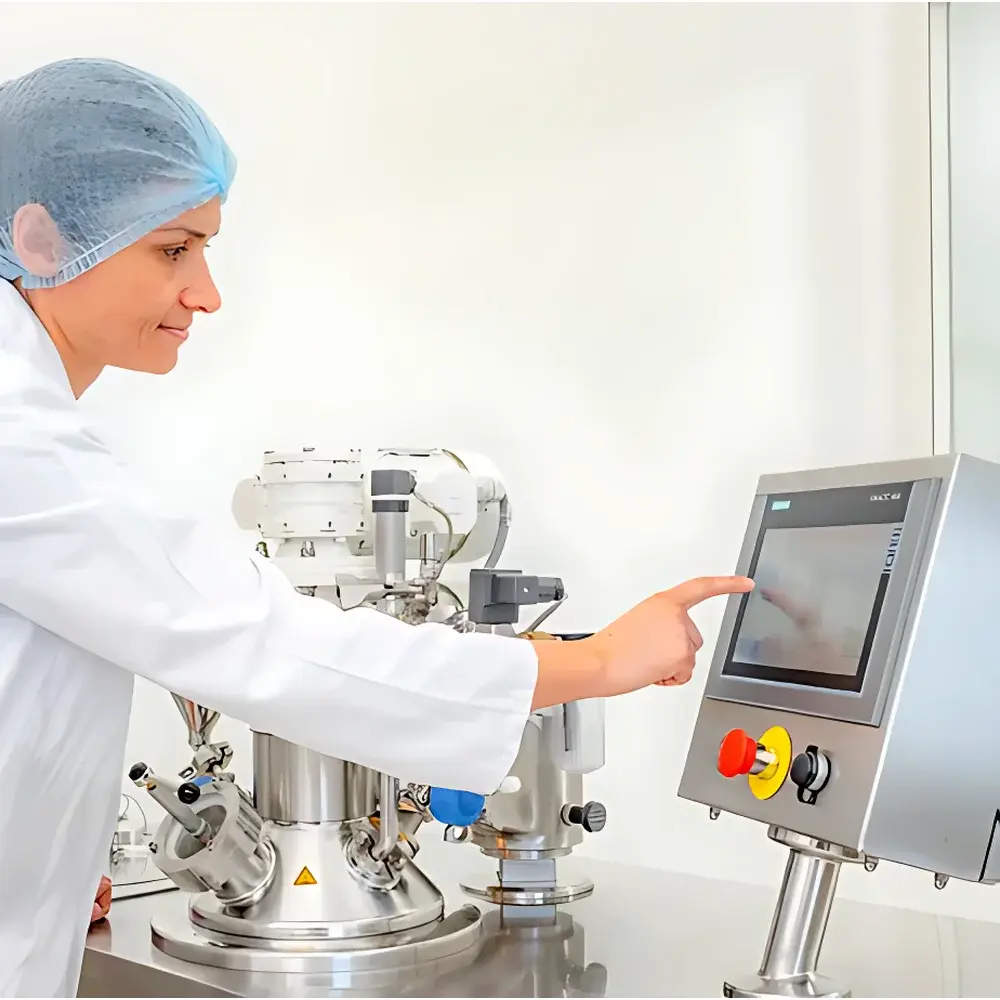
While the base Turbotest unit operates via front-panel controls, optional connectivity modules enable integration with VMI’s LabControl Suite v3.2—a Windows-based application supporting method storage, execution logging, and CSV export of time-stamped process variables. The software enforces user role-based access (administrator/operator), electronic signature capture, and automatic backup to network drives—features essential for laboratories operating under ISO/IEC 17025 or ICH Q5C guidelines. Audit trails record all parameter modifications, session start/stop events, and tool identification codes, ensuring full traceability across batches and analysts.
Applications
- Rapid dissolution and deagglomeration of active pharmaceutical ingredients (APIs) in oral suspension development
- Preparation of stable oil-in-water and water-in-oil emulsions for topical and injectable dosage forms
- Dispersion of carbon nanotubes, graphene oxide, or silica nanoparticles into polymer matrices
- Homogenization of cell lysates and tissue homogenates for proteomic analysis (compatible with ice-jacketed vessels)
- Re-suspension and uniform redispersion of sedimented catalysts or pigment concentrates in R&D paint formulation
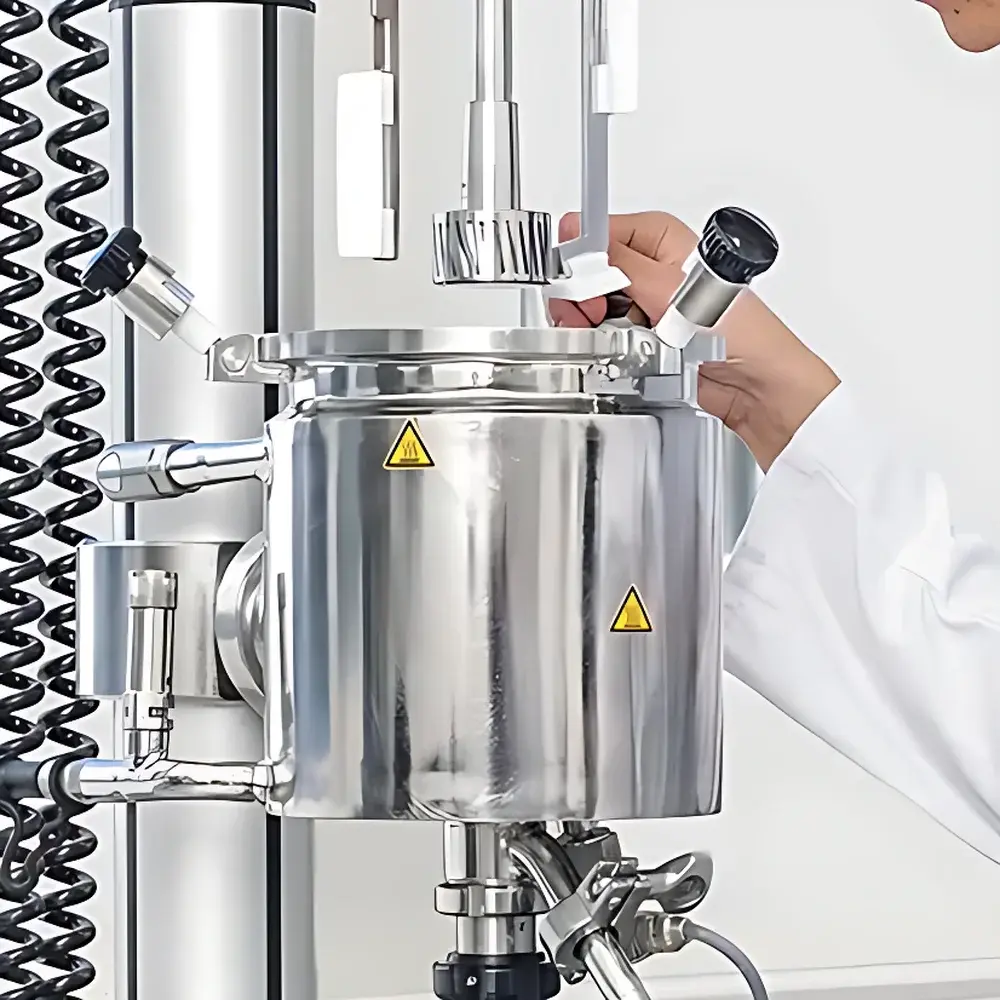
- Thermal mixing trials with jacketed reactor compatibility (optional circulation ports for external chiller integration)
FAQ
What distinguishes Turbotest from conventional overhead stirrers?
Turbotest generates localized shear rates exceeding 10⁵ s⁻¹ within the rotor-stator zone—orders of magnitude higher than magnetic or paddle stirrers—enabling true nano-dispersion rather than bulk blending.
Can Turbotest tools be sterilized for aseptic processing?
Yes; all stainless-steel probes and stators withstand autoclaving at 121°C for 20 minutes (EN 285-compliant cycles); gasket materials (EPDM/FKM) are selected for repeated steam exposure.
How is tool selection guided for emulsification vs. powder wetting?
Fine-emulsifying rotors (small-orifice stators, high tip speed >15 m/s) optimize droplet breakup; wide-gap dispersing rotors (larger clearance, lower shear) enhance powder incorporation with minimal air entrainment.
Is calibration required before each use?
No routine calibration is needed; however, annual verification of speed accuracy (±0.5% tolerance) and torque linearity is recommended per ISO/IEC 17025 internal procedure.
Does VMI provide application support for method development?
Yes; VMI’s Technical Application Center offers remote protocol optimization, shear-rate modeling, and comparative testing against alternative homogenization technologies (e.g., ultrasonics, microfluidics).
Related Products



