
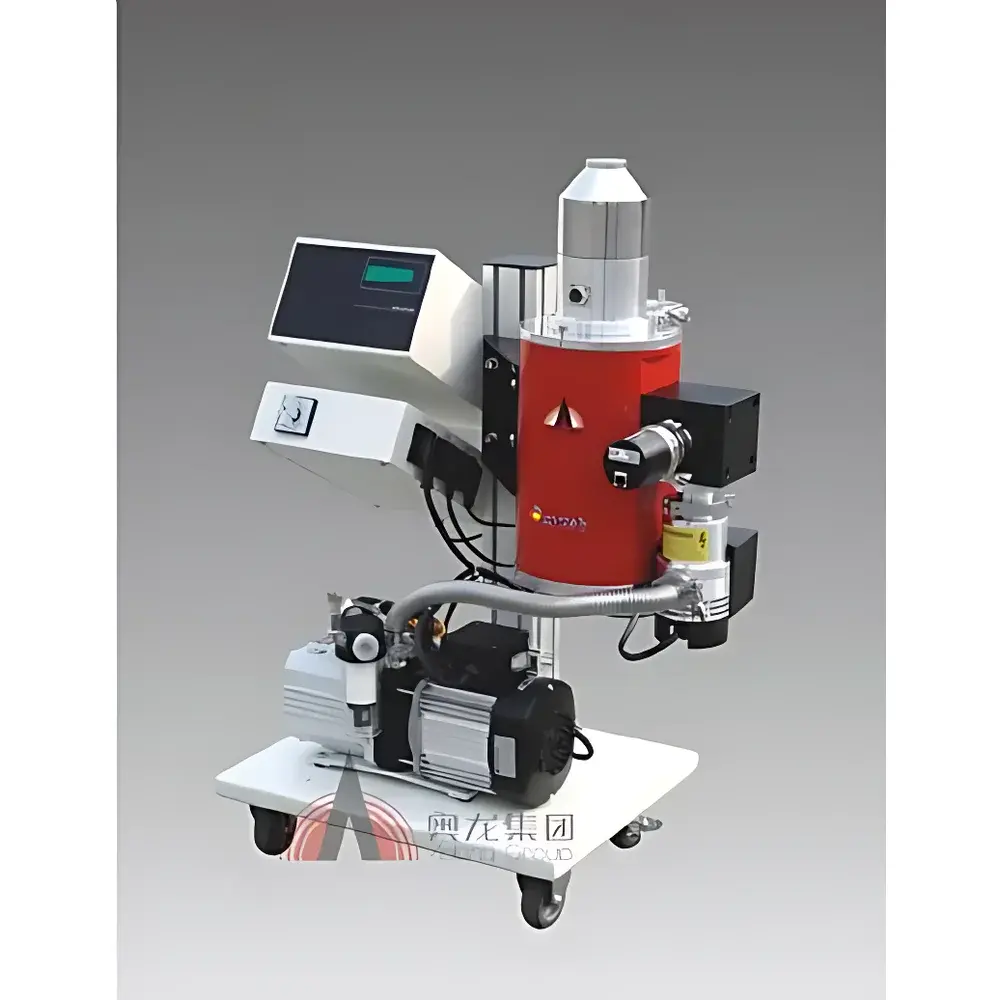


Along TX-160 / TX-225 Open-Geometry Transmission Target Microfocus X-ray Tube for NDT
| Brand | Along |
|---|---|
| Origin | Liaoning, China |
| Manufacturer Type | Direct Manufacturer |
| Country of Origin | China |
| Model | TX-160 |
| Voltage Range | 10–160 kV / 10–225 kV |
| Current Range | 0.1–1.0 mA |
| Beam Divergence Angle | ~160° |
| Max. Output Power | 60 W |
| Standard Target Power | 10 W |
| Focal Spot Size | <1 µm |
| Focus-to-Object Distance (FOD) | 0.25 mm |
| Geometric Magnification | up to 2800× |
| Filament Material | Tungsten |
| Vacuum System | Dual-Stage High/Low Vacuum Pump |
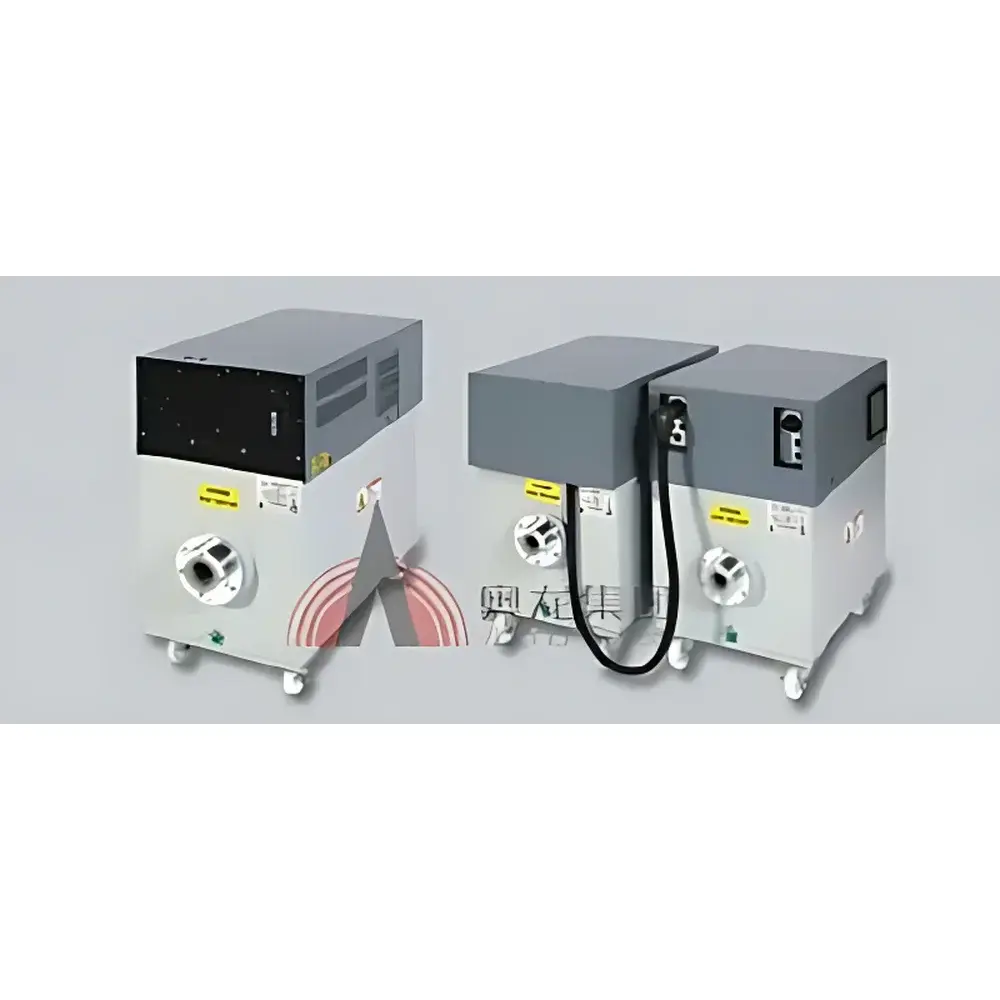
| Optional Accessories | High-Voltage Generator, HV Cable, X-ray Tube Controller |
Overview
The Along TX-160 and TX-225 are open-geometry, transmission-target microfocus X-ray tubes engineered for high-resolution non-destructive testing (NDT) and industrial computed tomography (CT) applications. Unlike sealed-tube or reflection-target configurations, these systems utilize a transmission geometry where electrons strike a thin metallic target (typically tungsten or tungsten-rhenium alloy) from one side, and X-rays are emitted perpendicularly through the target — enabling sub-micron focal spot definition and minimal focal spot blooming under high thermal load. The microfocus design (<1 µm effective focal spot) supports geometric magnification up to 2800×, making it suitable for inspecting fine internal structures in electronics (e.g., solder joint integrity, wire bonding, void detection), additive manufacturing parts (porosity and layer fusion analysis), aerospace composites, and precision castings. Operating across two voltage platforms — 10–160 kV (TX-160) and 10–225 kV (TX-225) — the tubes deliver tunable photon energy spectra optimized for material-specific contrast, particularly in low-to-medium Z materials such as aluminum alloys, polymers, ceramics, and PCB substrates.
Key Features
- Transmission-target architecture with <1 µm focal spot size, verified per ISO 17394-2:2021 for microfocus X-ray source characterization
- Open-tube design enables direct access to the target and filament for maintenance, target replacement, and customized anode configuration
- Dual-stage vacuum system (low-vacuum roughing + high-vacuum turbo-molecular pumping) ensures stable electron beam trajectory and long-term emission stability
- Integrated tungsten filament with precise thermionic emission control, supporting repeatable current regulation from 0.1 to 1.0 mA
- Beam divergence angle of ~160° facilitates wide-field radiography without mechanical repositioning, reducing scan time in CT reconstruction workflows
- Maximum power rating of 60 W (with 10 W standard target-rated mode) balances thermal management and resolution requirements for extended duty cycles
- Minimum focus-to-object distance (FOD) of 0.25 mm allows close-coupling with flat-panel detectors or scintillator-optical lens assemblies, maximizing spatial resolution
Sample Compatibility & Compliance
The TX-160/TX-225 is compatible with standard NDT sample stages (including motorized XYZ translation and rotary axes), digital radiography detectors (amorphous silicon flat panels, CMOS-based detectors), and indirect-conversion scintillator systems. Its compact form factor and open geometry support integration into custom-built CT gantries, inline production inspection cells, and laboratory-grade micro-CT systems. The tube complies with IEC 61331-1:2014 (radiation protection for X-ray equipment), EN 62495:2015 (safety requirements for industrial X-ray systems), and meets electromagnetic compatibility (EMC) requirements per EN 61326-1:2013. When operated within specified voltage/current limits and integrated with interlocked shielding enclosures, the system supports compliance with local radiation safety regulations including national implementations of IAEA Safety Standards Series No. GSR Part 3.
Software & Data Management
While the tube itself is hardware-only, its operation is fully compatible with industry-standard NDT control software environments including GE phoenix datos|x 2.0, Waygate Technologies efX-CT, and open-source frameworks such as Octopus Reconstruction and TomoPy. Integration is achieved via TTL/RS-422 trigger interfaces and analog feedback signals for real-time dose monitoring. All optional controllers (X-ray tube controller, HV generator) provide programmable exposure sequencing, ramped voltage/current profiles, and hardware-level fault logging. Audit trails, user access levels, and parameter change history can be maintained when interfaced with LIMS or QMS platforms compliant with FDA 21 CFR Part 11 (electronic records/signatures) and ISO/IEC 17025:2017 (calibration traceability and data integrity).
Applications
- High-magnification radiographic inspection of microelectronic packages (QFN, BGA, SiP) and semiconductor interconnects
- Porosity and inclusion analysis in investment-cast turbine blades and Ti-6Al-4V AM components
- Adhesive bond line thickness measurement and delamination detection in carbon-fiber-reinforced polymer (CFRP) laminates
- Real-time dynamic imaging of fluid flow in porous media (e.g., fuel cell gas diffusion layers)
- Reverse engineering of legacy mechanical assemblies via micro-CT volume reconstruction (voxel resolution down to 0.5 µm isotropic)
- Quality assurance in medical device manufacturing (stent strut uniformity, polymer catheter wall thickness variation)
FAQ
What distinguishes a transmission-target microfocus tube from a reflection-target design?
In transmission geometry, electrons penetrate a thin target and X-rays exit the opposite side — enabling smaller effective focal spots and reduced heel effect. Reflection targets emit X-rays from the same side as electron impact, limiting minimum spot size due to heat dissipation constraints.
Can the TX-225 be used for steel casting inspection?
Yes — at 225 kV, the tube provides sufficient beam penetration for castings up to ~45 mm thick in low-alloy steel, though optimal contrast requires careful filtration (e.g., 0.5 mm Cu) and detector quantum efficiency matching.
Is focal spot size certified per ISO standards?
Yes — focal spot measurement follows ISO 17394-2:2021 using pinhole camera or edge-spread function methods; calibration reports are available upon request with traceability to NIM (National Institute of Metrology, China).
Does the system support pulsed operation?
Pulsed operation (down to 10 µs pulse width) is supported when paired with compatible high-voltage generators and external TTL triggering; duty cycle limitations apply based on average power dissipation.
What vacuum level is maintained during operation?
The dual-stage system achieves and sustains ≤5 × 10⁻⁶ mbar in the electron gun region and ≤2 × 10⁻⁵ mbar in the target chamber, ensuring stable thermionic emission and minimizing target oxidation.



