
UGT RTG Ready-to-Go Portable Lysimeter
| Brand | UGT |
|---|---|
| Origin | Germany |
| Model | RTG |
| Type | Portable Weighing Lysimeter |
| Cylinder Dimensions (D×H) | 300/500/800 mm × 300/600/900 mm |
| Weighing Resolution | 0.01 mm |
| Tensiometer Range | 0–1500 kPa (pF 0–4.2) |
| Soil Moisture Sensor (SM100) | 0–60 % vol, ±3 % accuracy |
| Data Logger | 16-channel, 15-bit ADC, 512 kB RAM |
| Compliance | ISO 10381-3, ASTM D5887, FAO Irrigation and Drainage Paper No. 56 |
Overview
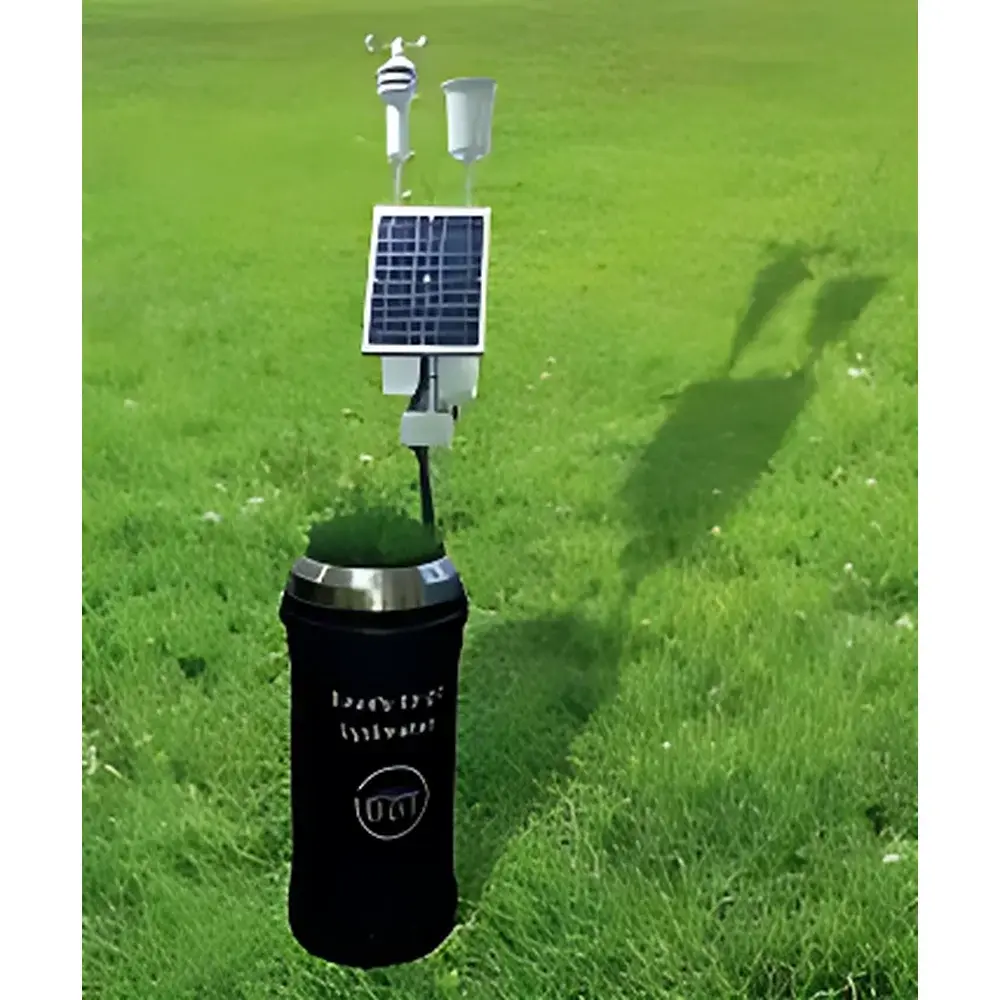
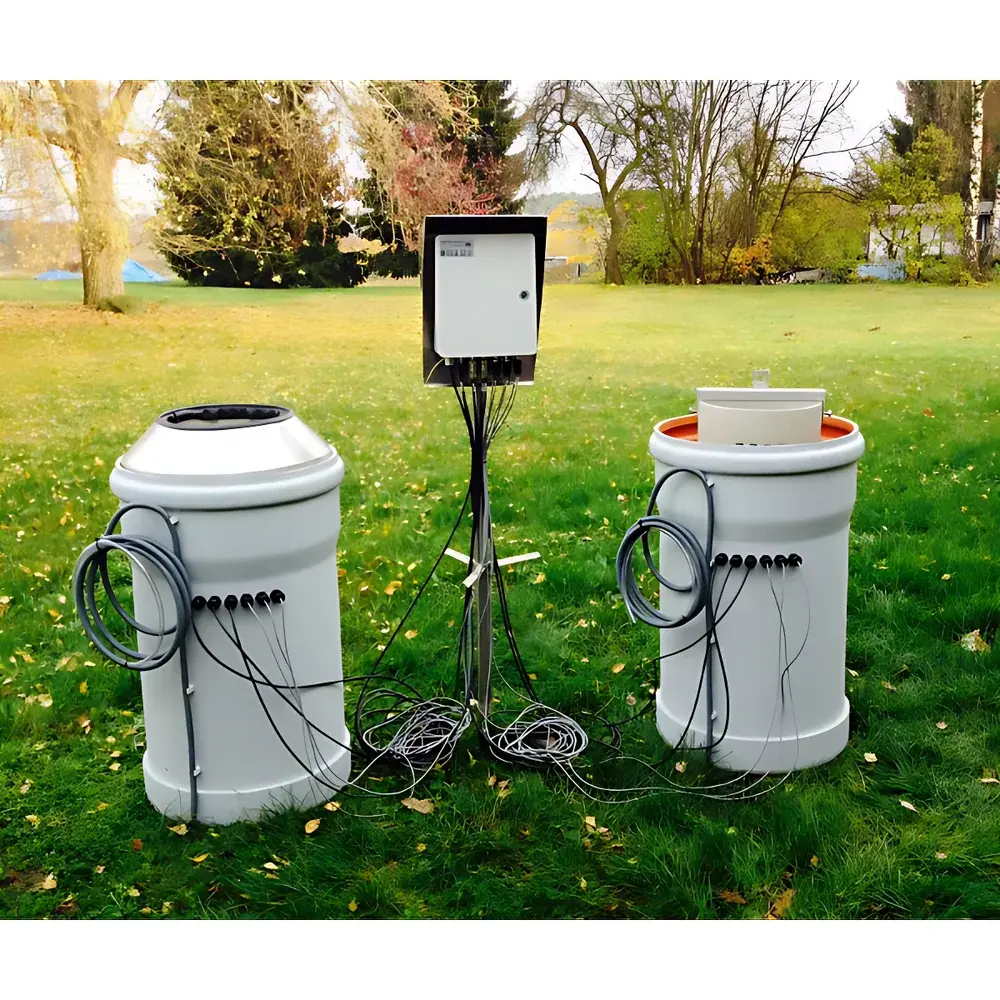
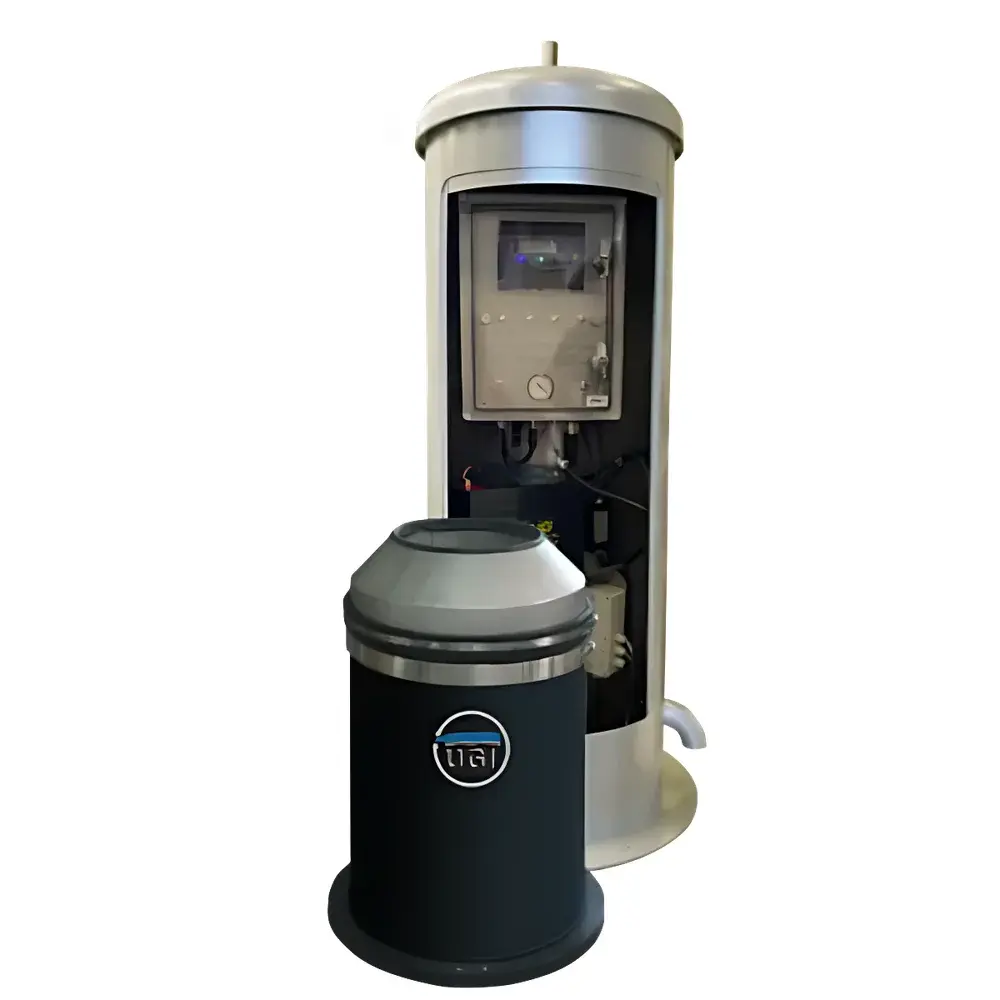
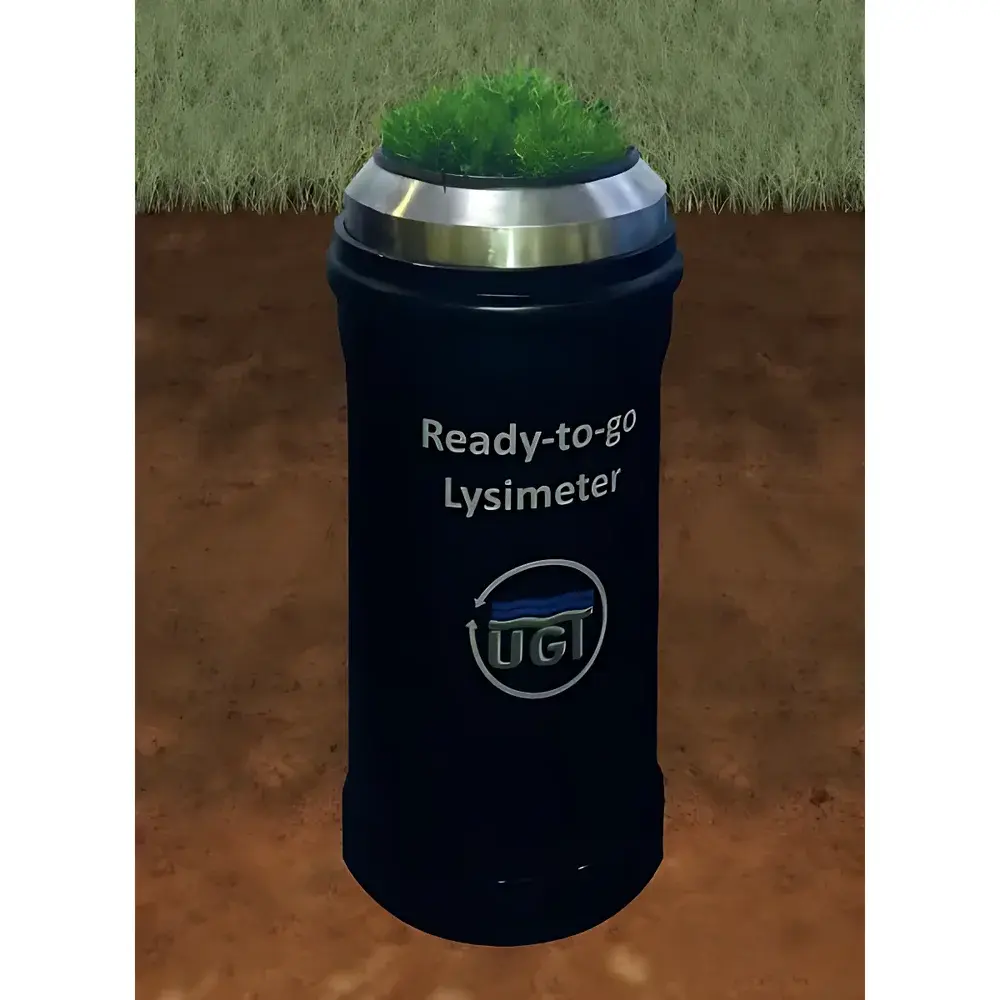
The UGT RTG Ready-to-Go Portable Lysimeter is a field-deployable, high-precision weighing lysimeter system engineered for direct, in-situ quantification of evapotranspiration (ET), drainage, and soil water balance under natural or controlled boundary conditions. Based on the Couette-type gravimetric principle, the RTG measures real-time mass changes of intact or repacked soil monoliths with sub-millimeter hydrological resolution—enabling detection of dew deposition, light fog interception, and low-rate ET fluxes (<0.05 mm/day). Designed for rapid deployment without specialized tools or technical support, the RTG integrates a stainless-steel lysimeter vessel, a vibration-damped high-stability load cell system, a tipping-bucket percolate collector with 5 mL resolution, and a modular sensor suite—including full-range tensiometers, SM100 volumetric water content probes, and temperature sensors—fully synchronized via the UGT EcoLog data acquisition platform.
Key Features
- Modular, standardized design supporting cylinder configurations of 300 mm, 500 mm, or 800 mm diameter × 300 mm, 600 mm, or 900 mm height—compatible with both disturbed (hand-packed) and undisturbed soil cores.
- Vibration-isolated weighing system with torque-free shear-force compensation, delivering ≤0.01 mm mass resolution across 0–100 kg or 0–500 kg ranges; calibrated for thermal drift, mechanical bending, and ambient microseismic noise.
- Patented polymer-based full-range tensiometers (0–1500 kPa, pF 0–4.2) with integrated temperature measurement—requiring no refilling, resistant to saline media, and validated for long-term field operation in arid and semi-arid zones.
- Three-layer sensor profiling as standard (tensiometers + SM100 + temperature), configurable up to six layers; optional UMP-2 multi-parameter probes add bulk electrical conductivity (0–5 mS/cm, ±1 % accuracy).
- Bottom boundary control module featuring dual-mode operation: free-drainage mode for natural leaching assessment, or active suction-controlled mode using pressure-regulated ceramic suction plates and reference tensiometers at 600 mm or 800 mm depth.
- Integrated tipping-bucket percolate meter (5 mL bucket, Reed switch, 250 mL PE collection vial) enabling quantitative and qualitative analysis of leachate volume, timing, and chemical composition.
Sample Compatibility & Compliance
The RTG accommodates undisturbed soil monoliths extracted using UGT’s patented core extraction methodology—validated for mineral soils, organic peats, and hydromorphic wetland profiles—with minimal structural disturbance and preserved macroporosity. Standardized gravel filter layers (UGT-3 layer design) ensure uniform drainage and prevent clogging at the base. The system conforms to ISO 10381-3 (soil sampling—lysimeter methods), ASTM D5887 (standard test method for determination of saturated hydraulic conductivity of porous materials), and supports FAO-56 Penman-Monteith reference ET validation workflows. All sensor outputs meet GLP-compliant traceability requirements, with timestamped metadata, audit logs, and configurable data integrity flags aligned with FDA 21 CFR Part 11 principles for environmental research datasets.
Software & Data Management
Data acquisition is managed through the UGT EcoLog 16-channel logger (15-bit ADC, 512 kB RAM), supporting programmable sampling intervals from 1 second to 1 hour and statistical aggregation windows from 15 seconds to 10 days. Real-time values are displayed on an integrated LCD interface. Configuration, visualization, and export are handled via UGT-Log software—a Windows-based application supporting parameter scripting, multi-sensor time-series overlay, automatic ET calculation (via mass-balance closure), and CSV/Excel-compatible output. Optional wireless telemetry (LoRaWAN or cellular) enables remote monitoring without on-site visits. All raw and processed datasets include embedded calibration certificates, sensor serial IDs, and environmental context tags—ensuring reproducibility and regulatory readiness.
Applications
- Field-scale validation of satellite-derived and model-predicted evapotranspiration (e.g., SEBAL, METRIC, TSEB).
- Soil-plant-atmosphere continuum (SPAC) studies across land-use gradients: cropland, grassland, afforestation sites, and post-mining rehabilitation zones.
- Salinity impact assessment on root-zone water dynamics and solute leaching thresholds in irrigated agriculture.
- Climate change response experiments: quantifying dew/fog contribution to water budgets in Mediterranean and semi-arid ecosystems.
- Calibration and verification of vadose zone models (HYDRUS-1D, SWAP, RSWMS) using high-resolution drainage and matric potential time series.
- Integration with UGT EcoLab 500 systems for sequential field-to-lab experimental continuity—enabling controlled manipulation of CO₂, temperature, or nutrient regimes post-field deployment.
FAQ
What soil column dimensions does the RTG support?
Standard configurations include 300 mm, 500 mm, or 800 mm internal diameter, with heights of 300 mm, 600 mm, or 900 mm—custom dimensions available upon request.
Can the RTG operate without connection to mains power?
Yes—the EcoLog data logger supports 12 V DC input and is compatible with solar-charged battery systems for autonomous operation exceeding 6 months.
Is the full-range tensiometer truly maintenance-free in saline soils?
Yes—its solid-state polymer sensing element eliminates ceramic pore blockage and electrolyte depletion, enabling stable operation at EC > 8 dS/m without recalibration.
How is bottom boundary condition controlled during experiments?
Via a dual-path hydraulic module: passive free drainage (with tipping-bucket quantification) or active suction control using programmable vacuum pumps and ceramic suction plates referenced to in-situ tensiometers.
Does UGT provide support for undisturbed core extraction?
Yes—UGT offers certified field technicians trained in its patented monolith extraction protocol, including site-specific logistical planning, equipment transport, and post-extraction stabilization guidance.
Related Products







