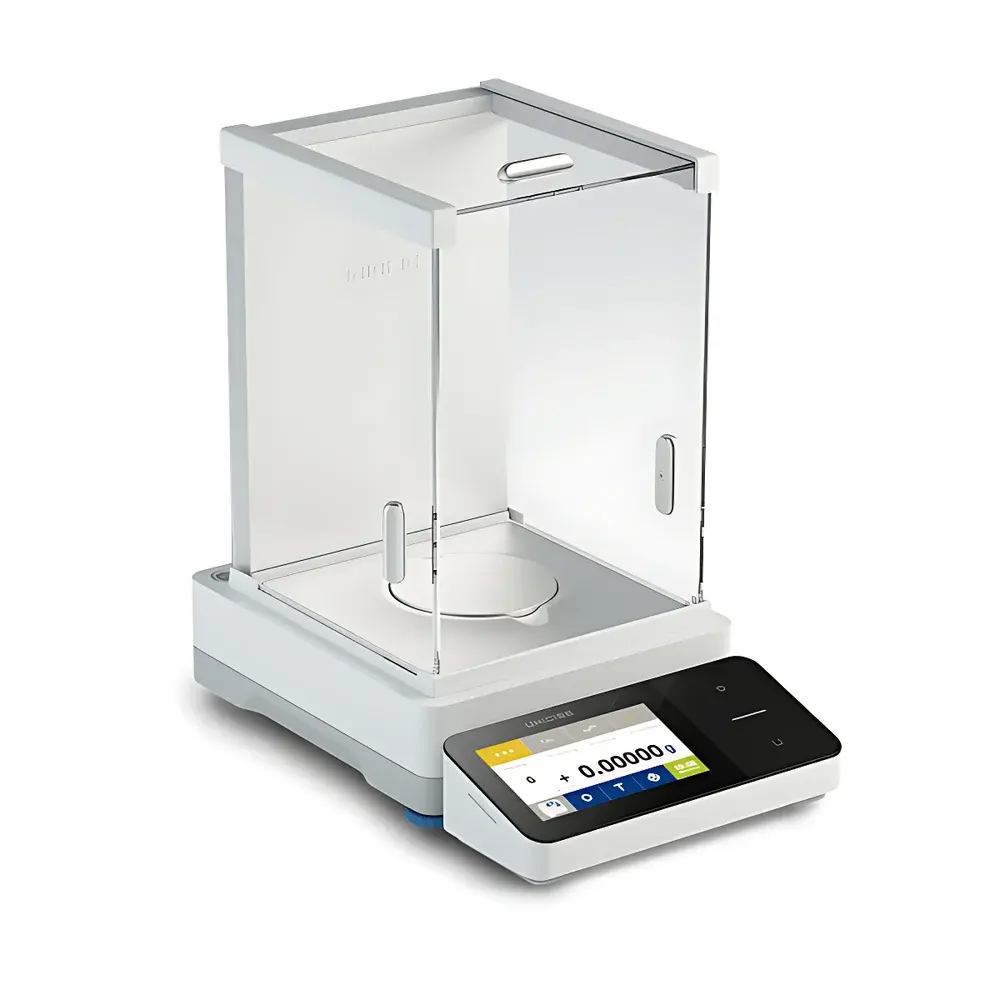
Unicise UBS Series 0.01 mg Semi-Micro Balances
| Key | Brand: Unicise Precision Measurement |
|---|---|
| Origin | Jiangsu, China |
| Model Range | UBS35 / UBS35-I / UBS65 / UBS65-I / UBS125 / UBS125-I |
| Capacity | 30 g / 60 g / 120 g |
| Readability | 0.01 mg |
| Repeatability (5% load) | 0.01 mg (UBS35/UBS65), 0.02 mg (UBS125) |
| Repeatability (full load) | 0.02 mg (all models) |
| Linearity | 0.02 mg (UBS35/UBS65), 0.03 mg (UBS125) |
| Stabilization Time | ≤3.5 s |
| Temperature Sensitivity | ±0.5 ppm/K (10–30 °C) |
| Calibration | External or internal (I-series only) |
| Compliance | GLP/GMP-compliant data output, audit trail (I-series), user management (I-series), min-weight warning |
| Connectivity | DB9 (RS-232/SBI) & USB-C (SICS protocol) |
| Power | AC adapter or portable power bank |
Overview
The Unicise UBS Series semi-micro balances are engineered for laboratories requiring high-resolution mass measurement in the 0.01 mg readability range—ideal for pharmaceutical formulation, reference standard preparation, catalyst dosing, and analytical sample weighing where trace-level precision is non-negotiable. These balances employ a proprietary electromagnetic force compensation (EMFC) transducer with integrated dynamic temperature compensation (DTC), ensuring consistent metrological performance across ambient fluctuations from +10 °C to +30 °C. Unlike conventional strain-gauge systems, the monolithic EMFC sensor delivers superior linearity (<0.03 mg), low drift (±0.5 ppm/K), and rapid stabilization (≤3.5 s), enabling reliable operation in regulated environments where throughput and traceability coexist as primary requirements.
Key Features
- Electromagnetic force compensation sensor with real-time thermal drift correction, delivering stable 0.01 mg resolution across all models (UBS35/65/125).
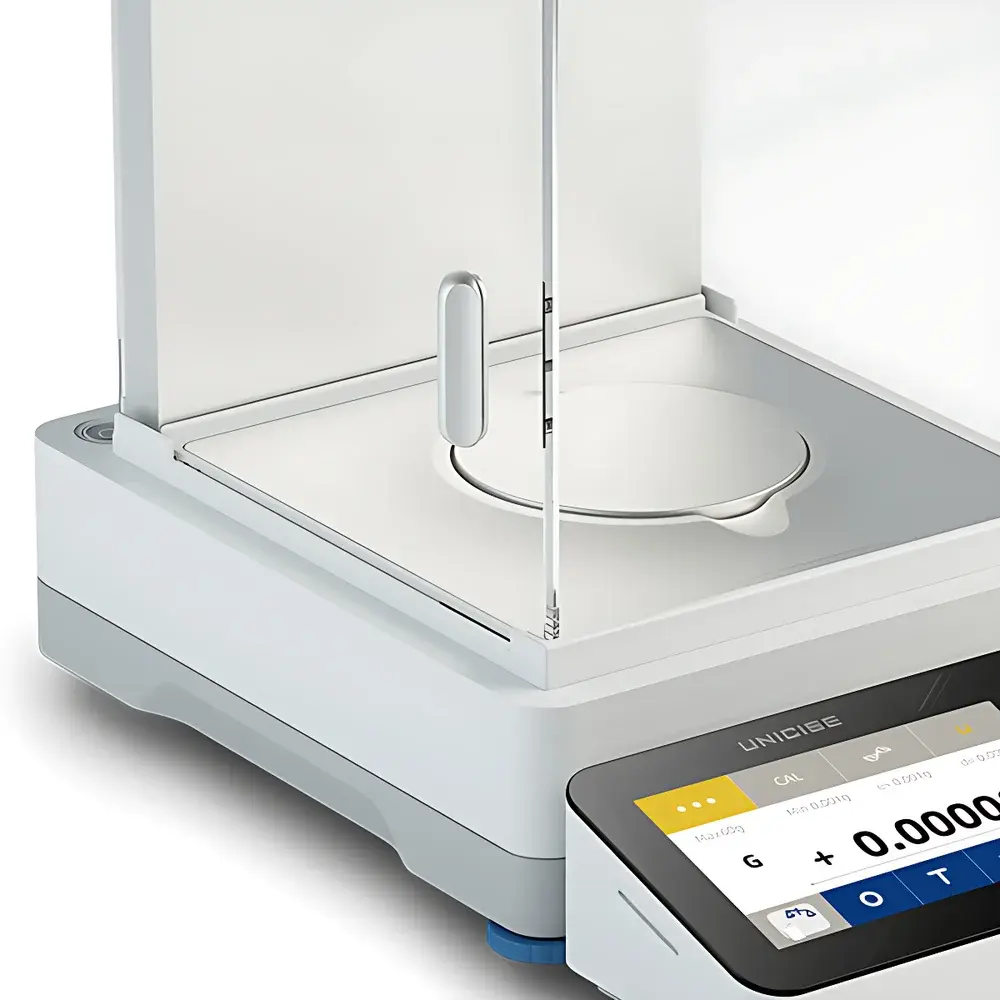
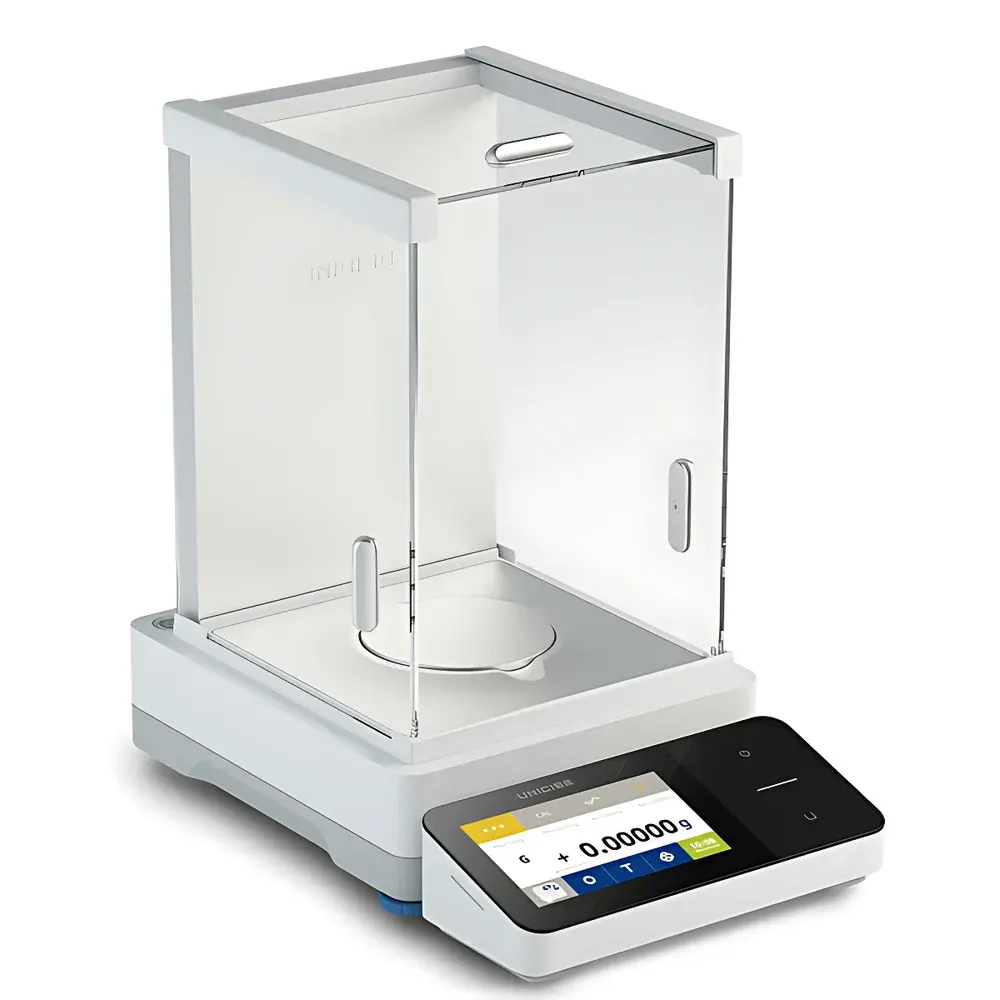
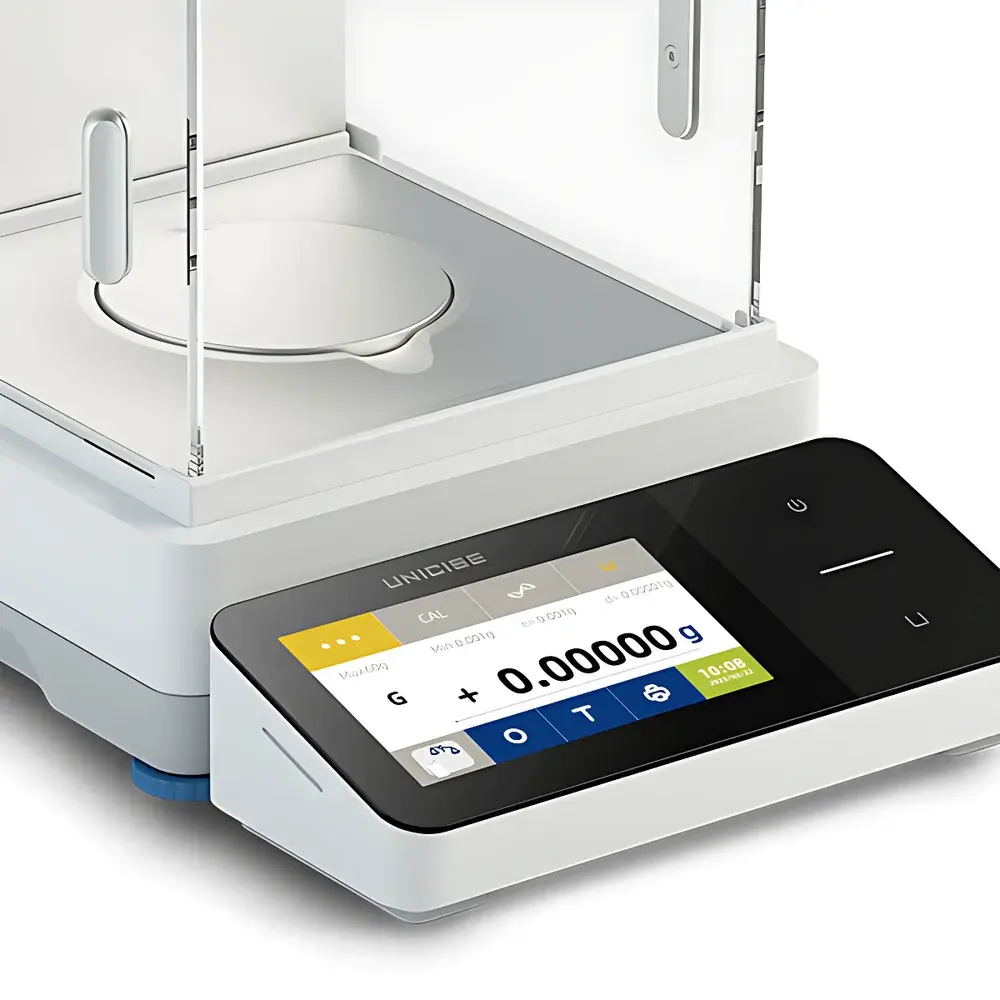
- Modular architecture: detachable high-brightness color touchscreen display with customizable hotkeys and LED status indicators; corrosion-resistant 316L stainless steel pan and baseplate.
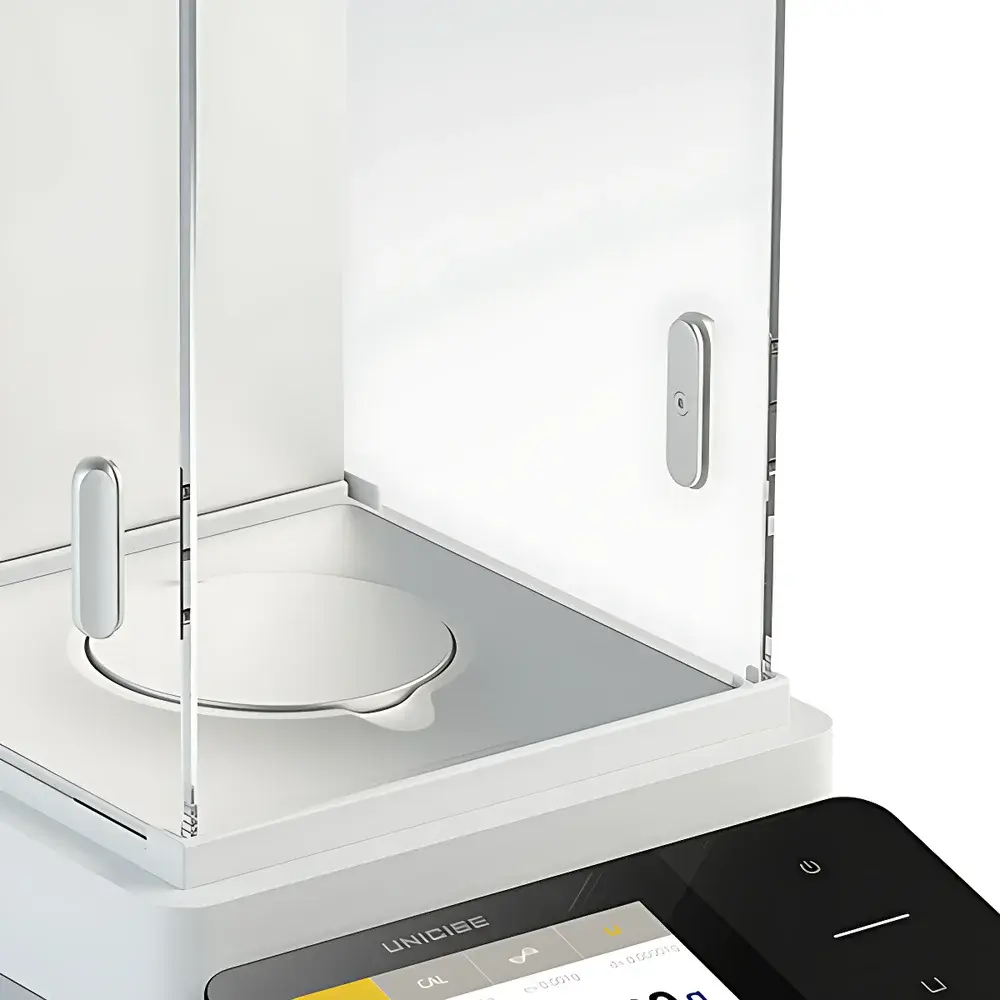
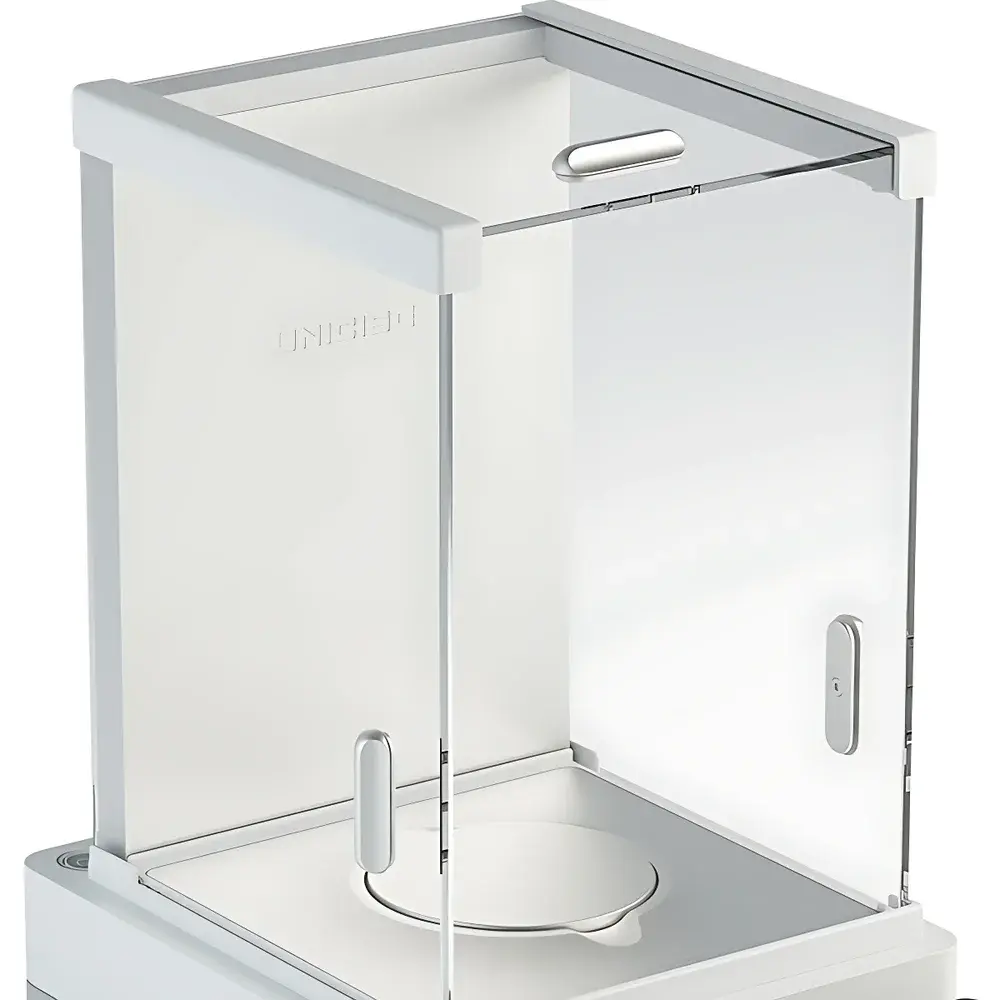
- Optimized draft shield design featuring ultra-clear anti-static tempered glass and a patented volcanic vent base—enhancing airflow control while minimizing electrostatic interference and facilitating full disassembly for ISO-cleanroom-compatible cleaning.
- Two-tier calibration strategy: external calibration with guided on-screen prompts (all models); automated internal calibration (I-series only) triggered by time intervals or ΔT thresholds per ISO 17025 Clause 5.5.2.
- Dual communication interface: RS-232 (DB9, SBI protocol compliant) and USB-C (SICS protocol), enabling seamless integration into LIMS, ELN, or centralized QC networks without additional hardware gateways.
- Robust security framework: password-protected access, three-tier user permission levels (I-series), and immutable audit trail logging of ≥3000 entries—including calibration events, weight records, parameter changes, and login attempts—exportable in tamper-evident CSV format per FDA 21 CFR Part 11 Annex 11 requirements.
Sample Compatibility & Compliance
The UBS Series accommodates diverse sample types—from hygroscopic powders and volatile solvents to static-prone nanomaterials—thanks to its grounded anti-static housing, optional stainless-steel weighing platform, and configurable minimum weight alert (MinWeigh™). Each balance supports GLP/GMP-aligned workflows through mandatory metadata tagging: device ID, operator ID, sample ID, batch ID, timestamp, and environmental conditions (when paired with optional external sensors). All I-series instruments meet ISO/IEC 17025:2017 metrological traceability requirements when used with certified calibration weights (Class E2 or better), and their audit logs satisfy ALCOA+ principles (Attributable, Legible, Contemporaneous, Original, Accurate, Complete, Consistent, Enduring, Available) for regulatory inspections.
Software & Data Management
Embedded firmware provides 12 validated application modes—including statistical weighing, density determination (with auxiliary kit), percentage weighing, parts counting, animal weighing, and peak-hold—each fully configurable without third-party software. Direct PC data transfer eliminates manual transcription: weight values auto-populate designated Excel cells or database fields via SICS-compliant drivers. Audit trail exports include digital signatures and hash verification metadata, ensuring integrity during FDA or EMA audits. Optional Unicise Connect software enables remote monitoring, firmware updates, and centralized calibration scheduling across multi-site deployments.
Applications
- Pharmaceutical R&D: Accurate dispensing of active pharmaceutical ingredients (APIs) at sub-milligram levels for pre-formulation studies and stability testing per ICH Q5C.
- Reference Material Certification: Weighing certified reference materials (CRMs) in accordance with ISO Guide 35 and EURACHEM/CITAC guidelines.
- Materials Science: Quantifying catalyst loading in heterogeneous catalysis experiments where mass variation <0.02 mg directly impacts reaction kinetics modeling.
- Environmental Testing Labs: Preparing trace-metal standard solutions (e.g., EPA Method 200.8) under ISO/IEC 17025-accredited conditions.
- Academic Research: Teaching quantitative analytical techniques with metrologically transparent instrumentation aligned with ASTM E898 and USP <41> standards.
FAQ
What is the difference between UBS and UBS-I models?
The “-I” suffix denotes internal calibration capability: UBS-I models feature a built-in motorized calibration mass and automatic recalibration logic triggered by time or temperature deviation, whereas standard UBS models require external weights for calibration.
Is the UBS Series compliant with FDA 21 CFR Part 11?
Yes—the I-series implements electronic signatures, role-based access control, and audit-trail immutability required for Part 11 compliance; non-I models support basic electronic record generation but lack embedded signature functionality.
Can the balance operate on battery power?
Yes—USB-C port supports power input from certified portable power banks (5 V / ≥2 A), enabling field use or mobile QC stations without AC infrastructure.
Does it support density determination?
Yes—built-in density mode uses Archimedes’ principle; requires optional density kit (sinkers, thermometer, immersion vessel) and supports both solid and liquid sample protocols per ISO 1183.
How is minimum weight determined and enforced?
The MinWeigh™ function calculates minimum weighable quantity based on repeatability (2 × SD at 5% load) and displays real-time warnings when sample mass falls below the threshold—configurable per SOP and logged in audit trail.