
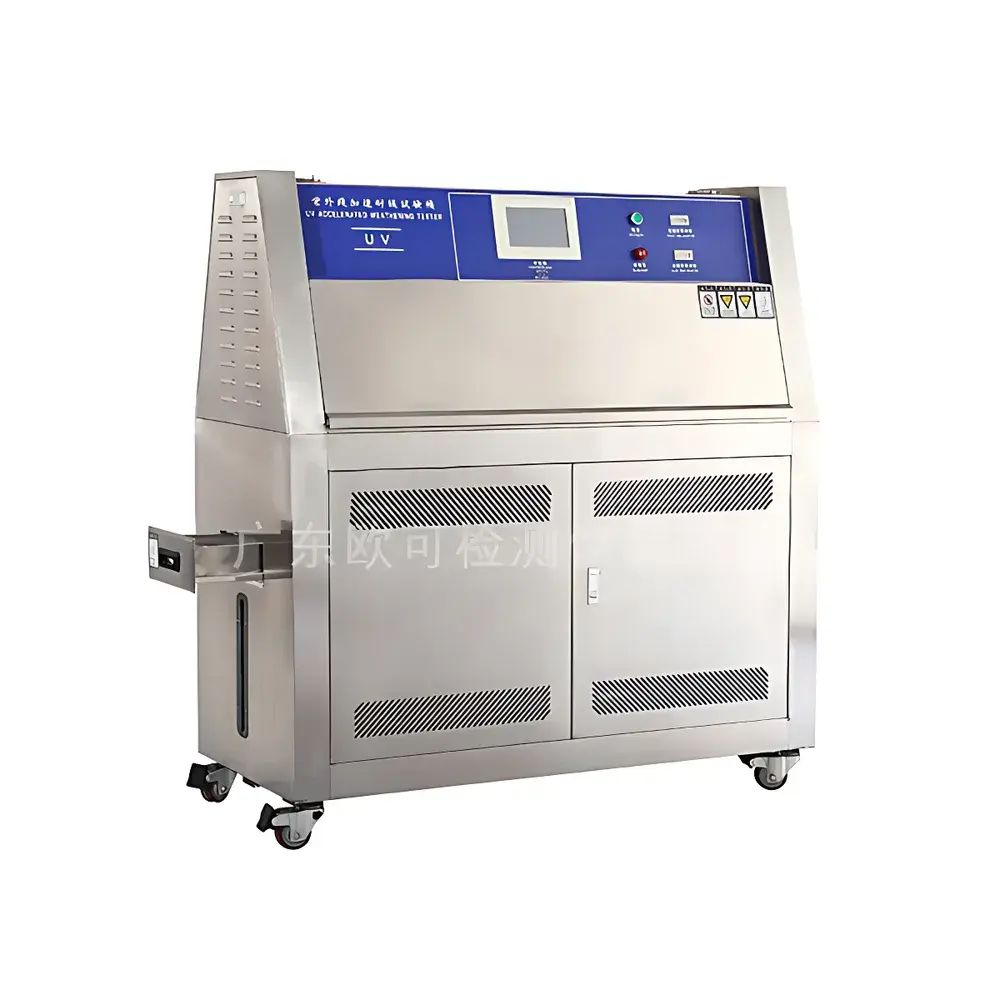
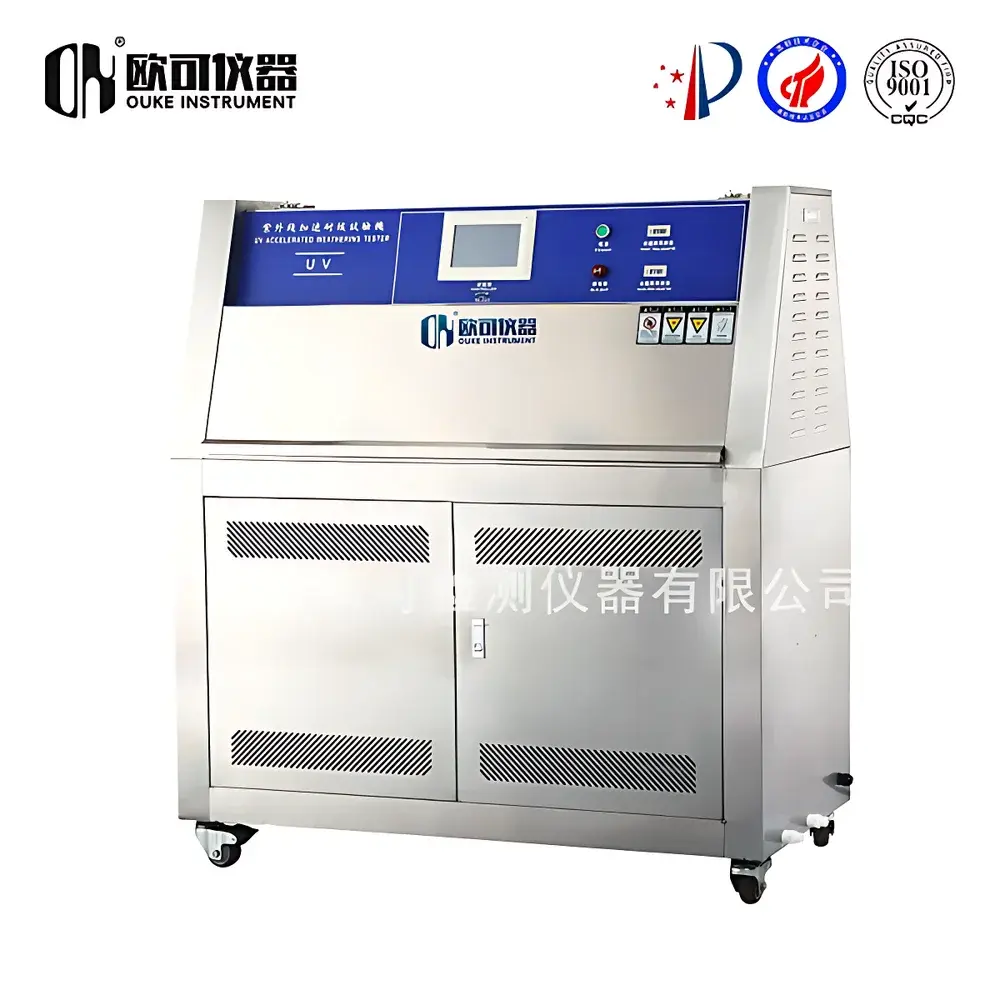
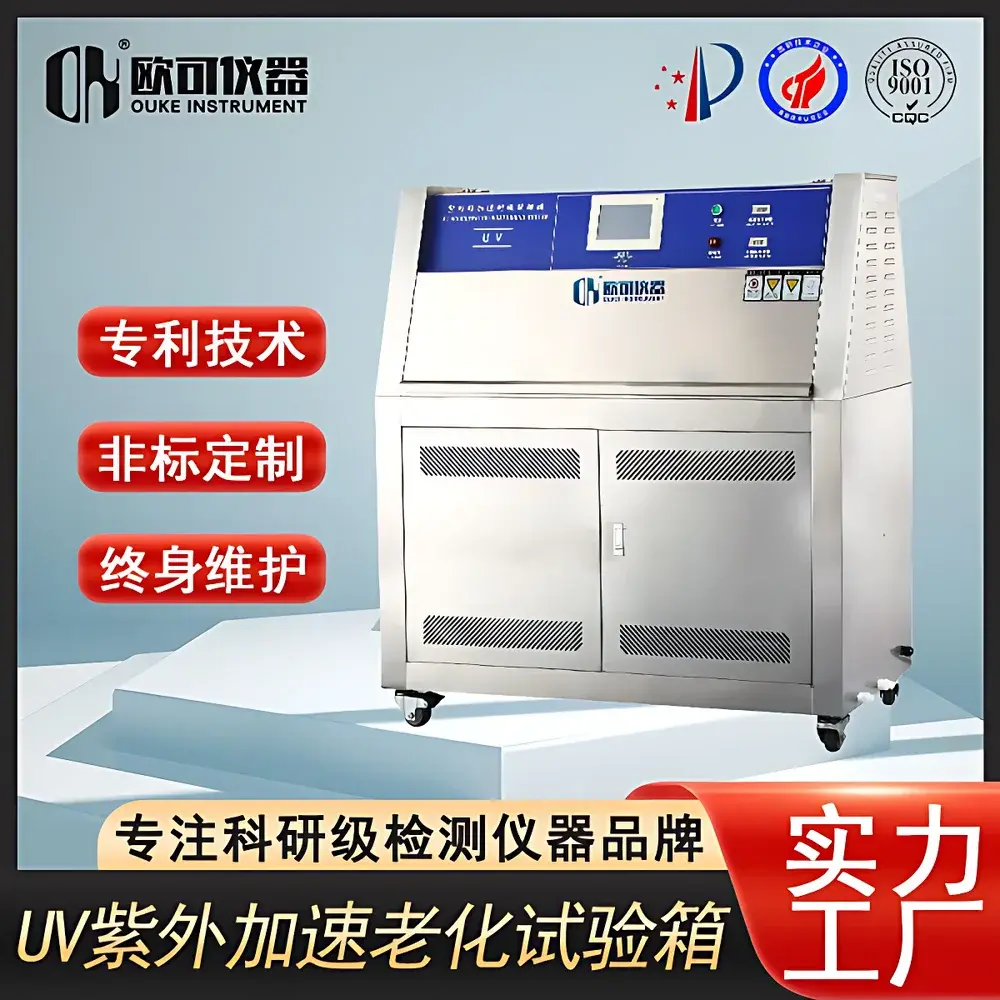
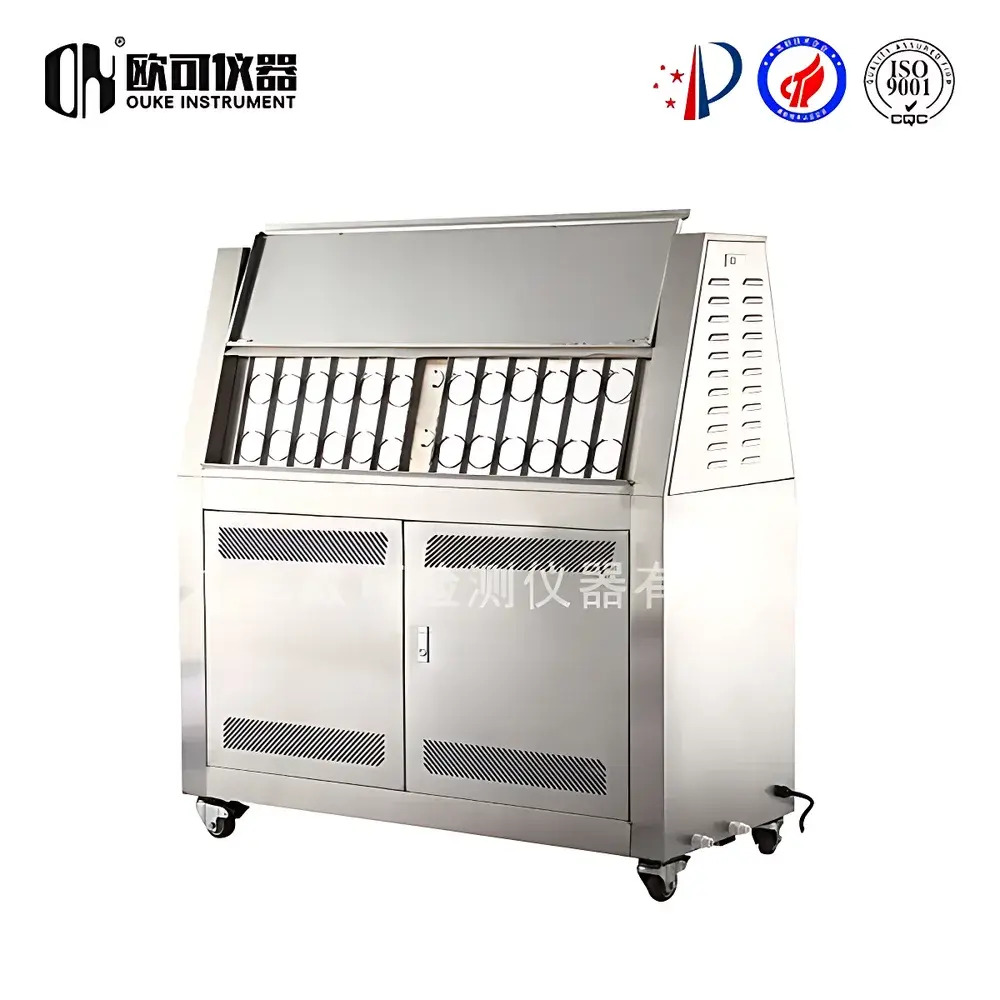
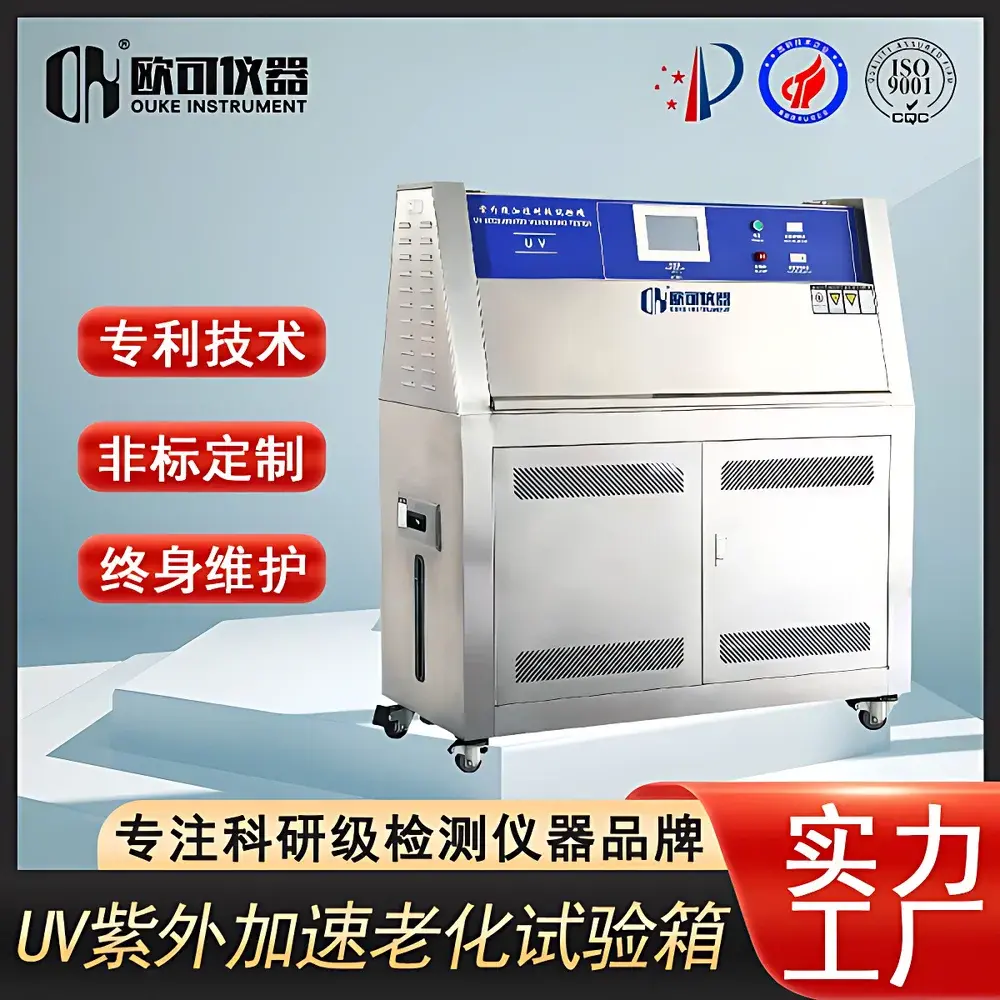
OK UV-290.000 UV Aging Test Chamber
| Brand | OK Instruments |
|---|---|
| Origin | Guangdong, China |
| Manufacturer Type | Direct Manufacturer |
| Country of Origin | China |
| Model | OK-UV-290.000 |
| Humidity Range | ≥95% RH (in-chamber actual value) |
| Lamp Power | 40 W per tube |
| Irradiance Range | 0.72 W/m² |
| Test Duration | 1–9999 h (adjustable) |
| Illumination Temperature Range | RT to 70 °C |
| UV Wavelength Range | 280–400 nm |
| Chamber Dimensions (L×W×H) | 1170 × 400 × 400 mm |
Overview
The OK UV-290.000 UV Aging Test Chamber is an engineered environmental test system designed for accelerated weathering evaluation of polymeric, coated, and organic materials under controlled ultraviolet (UV) irradiation, temperature, and humidity stressors. It operates on the principle of fluorescent UV lamp-based photochemical degradation—mimicking the most damaging segment of terrestrial solar radiation (280–400 nm)—to induce photooxidative reactions that replicate long-term outdoor exposure in compressed timeframes. Unlike full-spectrum xenon arc or carbon arc testers, this chamber specializes in UV-driven degradation mechanisms, making it particularly suitable for screening formulation stability, pigment resistance, and surface integrity in applications where UV photons dominate failure initiation. The system supports programmable irradiance-controlled cycles integrating UV exposure, condensation (via heated water pan), and optional water spray—enabling compliance with key international standards including ASTM G154, ASTM D4329, SAE J2020, and ISO 4892-3.
Key Features
- Stainless steel interior chamber (1170 × 400 × 400 mm) ensuring corrosion resistance and uniform thermal/irradiance distribution
- UV fluorescent lamp array (UVA-340 or UVB-313 compatible; 40 W per lamp) delivering calibrated irradiance up to 0.72 W/m² at 340 nm
- Precision temperature control from ambient (RT) to 70 °C during irradiation phase, with independent condensation cycle capability down to ambient dew point
- Humidity generation via heated water pan, achieving ≥95% RH during condensation phases to simulate nocturnal dew formation
- Digital touchscreen controller supporting multi-step program definition (up to 9999 hours total test duration), real-time parameter logging, and password-protected user profiles
- Over-temperature, over-humidity, and lamp fault protection circuits compliant with IEC 61000-6-2 EMC requirements
Sample Compatibility & Compliance
The OK UV-290.000 accommodates flat-panel specimens up to 1100 mm × 350 mm × 25 mm (L×W×T), with standardized mounting fixtures for ASTM G154-compliant specimen racks. It supports testing of plastics (PP, ABS, PC), automotive coatings, architectural sealants, textile fibers, and wood finishes. All operational parameters—including irradiance setpoint, temperature ramp rate, condensation dwell time, and cycle sequencing—are traceable to NIST-traceable calibration references. The system architecture permits integration into GLP/GMP environments: audit trail functionality, electronic signature support, and configurable data export (CSV/Excel) align with FDA 21 CFR Part 11 readiness when paired with validated software modules. Routine performance verification follows ASTM G151 procedures using calibrated radiometers and reference material controls (e.g., polyethylene film degradation rate monitoring).
Software & Data Management
The embedded controller firmware includes built-in data acquisition at 1-minute intervals for irradiance, chamber temperature, and relative humidity. Exported datasets include timestamped metadata (test ID, operator, calibration date, lamp usage hours). Optional PC-based software (OK-UV Control Suite v3.2) provides advanced features: comparative curve overlay across multiple test runs, statistical analysis of color shift (ΔE* CIE L*a*b*), gloss retention (% initial), and automated report generation compliant with ISO/IEC 17025 documentation requirements. All configuration changes are logged with user ID and timestamp, satisfying internal quality system requirements for change control and revision history.
Applications
- Automotive: Accelerated qualification of exterior trim, headlamp lenses, and UV-stabilized thermoplastic elastomers per SAE J2020
- Paint & Coatings: Quantification of chalking, gloss loss, and hue shift in architectural and industrial coatings per ASTM D4329
- Plastics & Elastomers: Evaluation of tensile strength retention, elongation-at-break decay, and yellowing index (YI) in PVC, EPDM, and TPO compounds
- Textiles & Nonwovens: Assessment of photolytic bond scission in polyester, nylon, and UV-treated cotton fabrics
- Building Materials: Durability validation of PVC window profiles, roofing membranes, and silicone sealants per ISO 4892-3 Annex A
FAQ
What UV lamp types are supported, and how do they differ?
The chamber accepts both UVA-340 and UVB-313 fluorescent tubes. UVA-340 lamps replicate solar UV from 365 nm to 295 nm cutoff and provide superior correlation with outdoor exposure for most polymers. UVB-313 lamps emit shorter wavelengths (down to 280 nm) and induce more aggressive degradation—used primarily for rapid QC screening or highly stabilized materials.
Is condensation cycle mandatory, or can UV-only exposure be run?
Both modes are supported. Condensation is enabled by default in ASTM G154 Cycle 1 but may be disabled programmatically for UV-only protocols required by certain OEM specifications.
How often must irradiance sensors be recalibrated?
Annual recalibration against a NIST-traceable reference radiometer is recommended. Field verification using OK-certified reference panels should be performed before each critical test series.
Does the system meet CE or UL safety certification requirements?
The OK UV-290.000 complies with EN 61000-6-2 (EMC) and EN 61000-6-3 (emissions). UL listing is available upon request with additional factory certification testing.
Can test data be exported to LIMS platforms?
Yes—CSV-formatted logs include ISO 8601 timestamps, parameter units, and test metadata, enabling direct ingestion into common LIMS architectures via FTP or USB transfer.



