
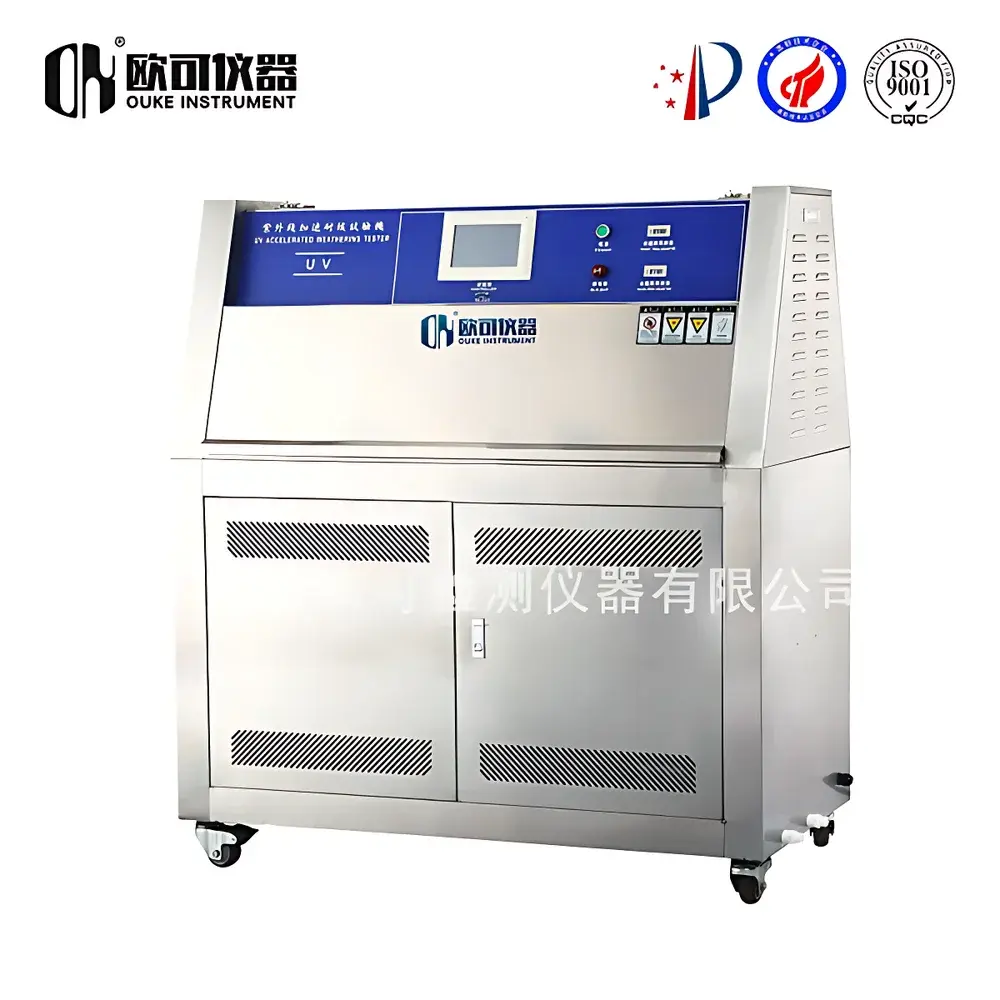
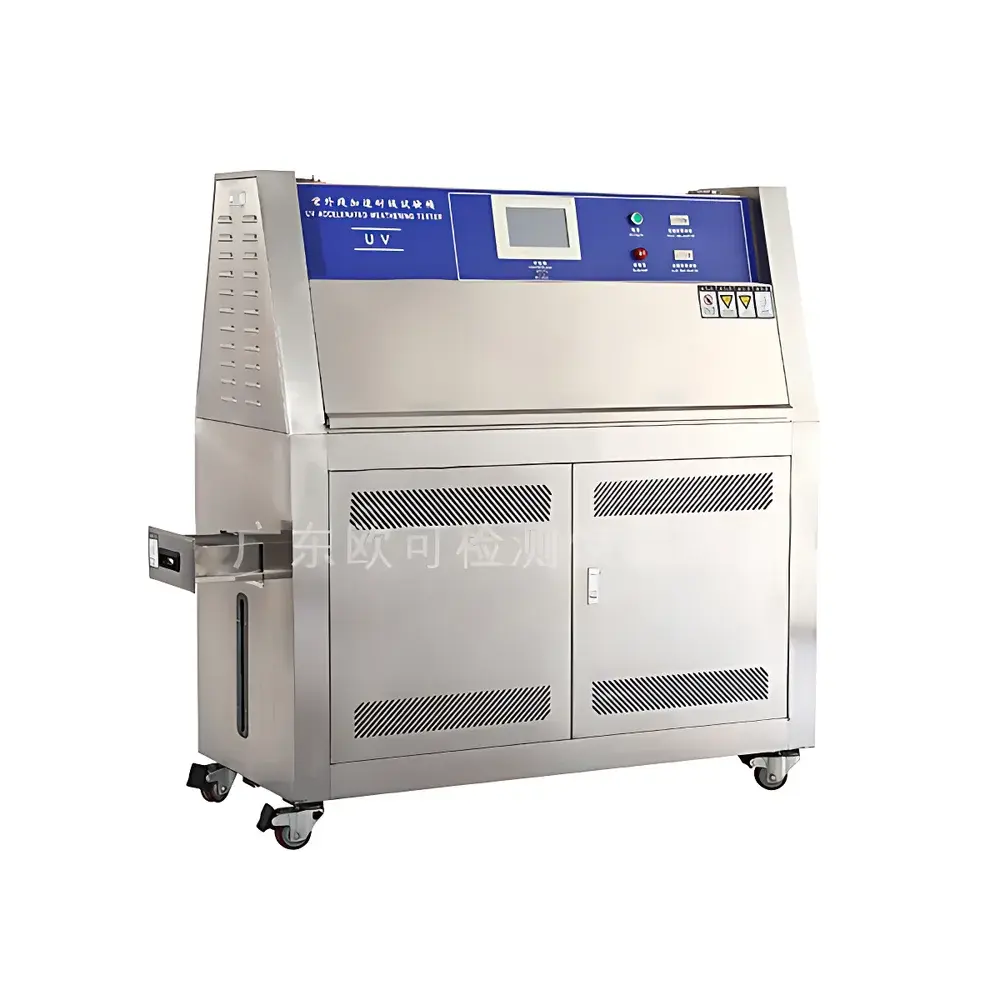
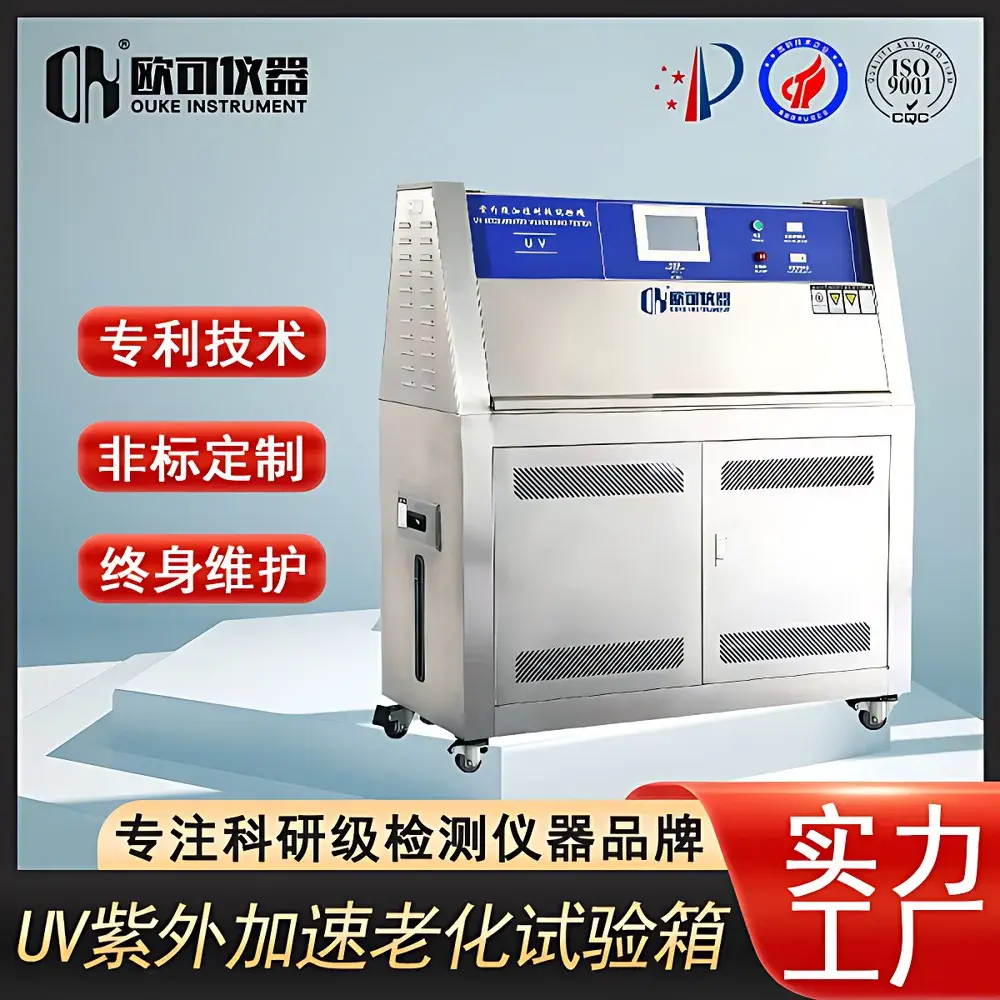
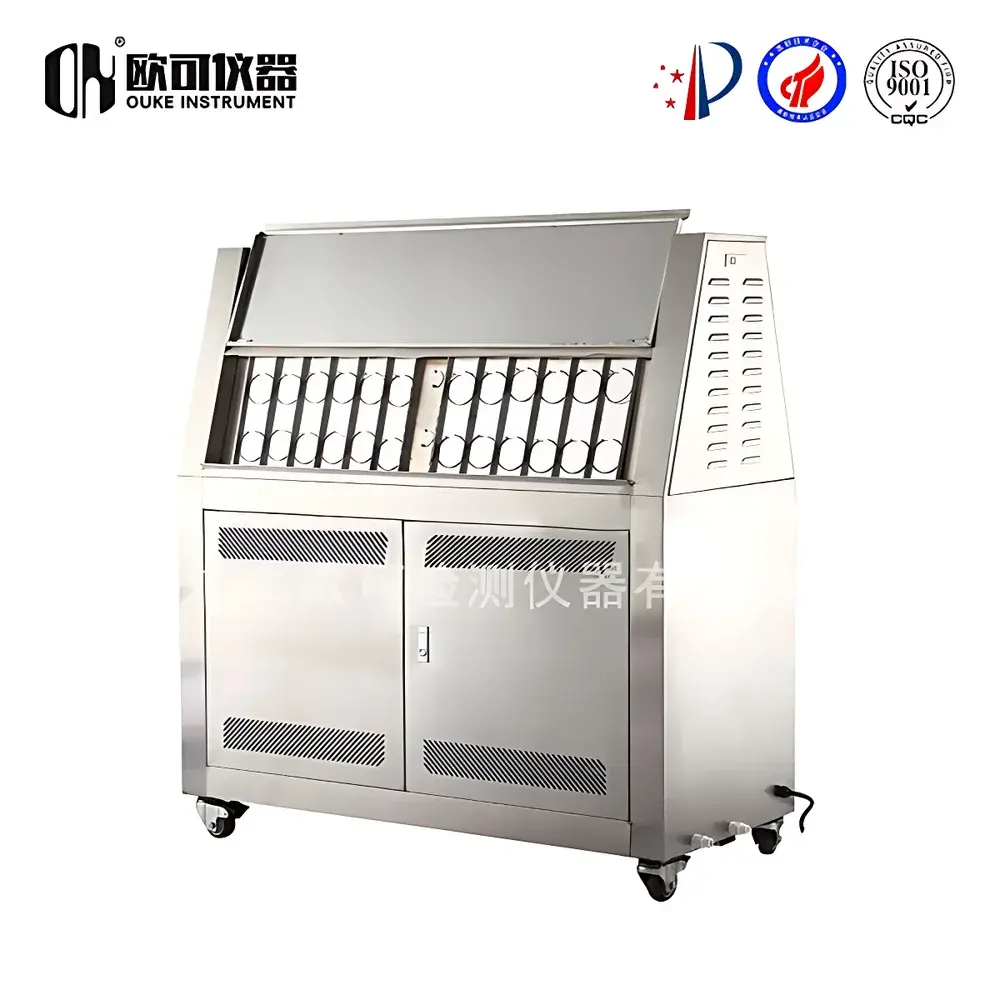
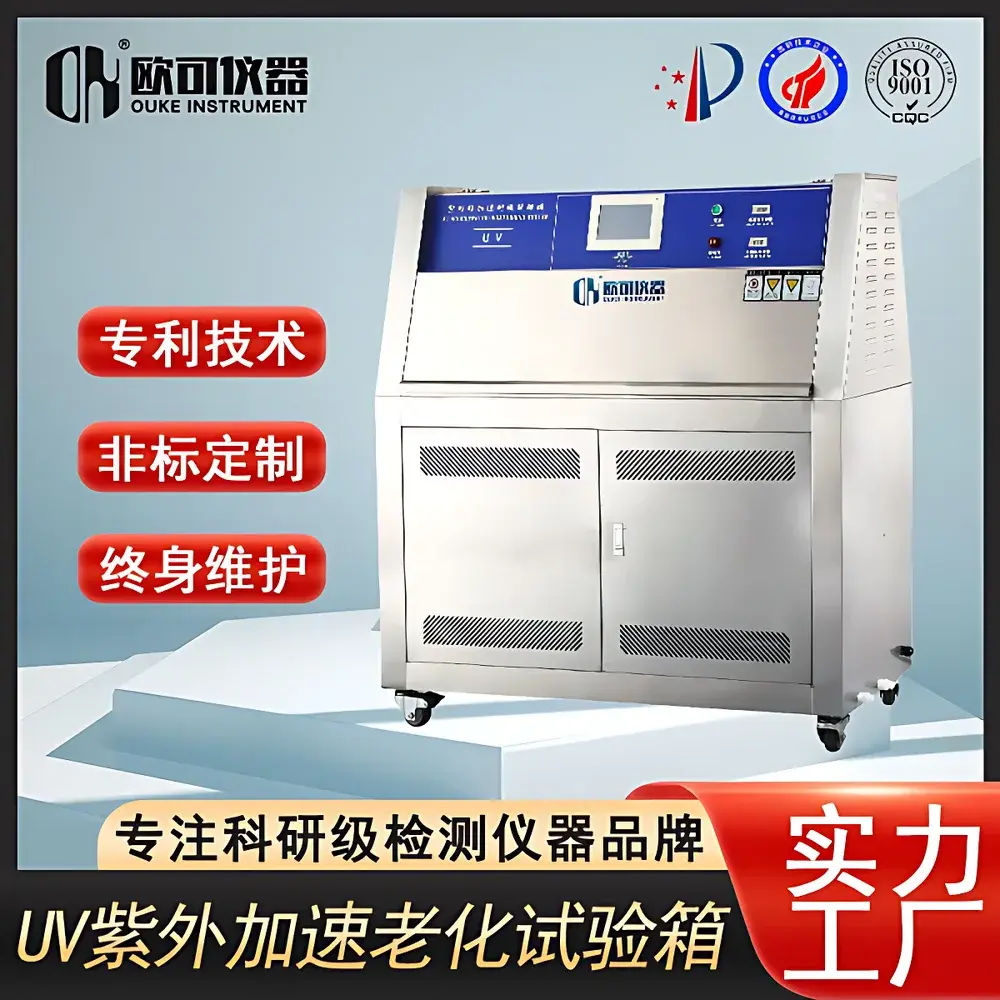
OK-UV-290 Fluorescence Inspection System
| Brand | OK Instruments |
|---|---|
| Origin | Guangdong, China |
| Manufacturer Type | Direct Manufacturer |
| Model | OK-UV-290 |
| Humidity Range | ≥95% RH (in-chamber actual value) |
| UV Lamp Power | 40 W per lamp |
| Irradiance | 0.72 W/m² |
| Illumination Temperature Range | RT to 70 °C |
| UV Wavelength | 300 nm |
| Chamber Dimensions (L×W×H) | 1170 × 400 × 400 mm |
Overview
The OK-UV-290 Fluorescence Inspection System is an engineered solution for non-destructive surface and subsurface defect detection based on ultraviolet-induced fluorescence excitation. Unlike UV aging test chambers—which accelerate material degradation under controlled irradiation—the OK-UV-290 operates as a precision inspection platform optimized for real-time visual or machine-vision-based identification of fluorescent responses. It emits narrowband UVC radiation at 300 nm, enabling high-contrast excitation of trace organic contaminants, penetrants, security inks, biological residues, and adhesive residues that exhibit characteristic visible-light emission upon UV absorption. Designed for integration into quality control workflows, the system features a sealed chamber with internal reflective surfaces, adjustable irradiance delivery, and thermal stabilization up to 70 °C—ensuring consistent fluorescence yield across temperature-sensitive samples such as medical device components or polymer assemblies. Its architecture conforms to fundamental principles of photoluminescence metrology, where signal-to-noise ratio is maximized through spectral isolation, environmental light suppression, and calibrated irradiance output.
Key Features
- Stable 300 nm UVC source with 40 W per lamp configuration, delivering uniform 0.72 W/m² irradiance across the full inspection volume
- Temperature-controlled chamber (RT to 70 °C) supporting thermal stability-critical applications including adhesive cure verification and thermal stress-induced fluorescence shift analysis
- High-humidity capability (≥95% RH) enabling evaluation of moisture-dependent fluorescence behavior in coatings, sealants, and hygroscopic substrates
- Robust stainless-steel chamber interior with matte black non-reflective coating to minimize stray UV scatter and enhance contrast sensitivity
- Modular lamp mounting system allowing configurable irradiation geometry—suitable for both top-down and side-illumination inspection protocols
- Compliance-ready design with interlocked access door and integrated UV shielding to meet IEC 62471 Photobiological Safety requirements for Class 3B UV sources
Sample Compatibility & Compliance
The OK-UV-290 accommodates a broad range of sample geometries and materials, including metallic castings, plastic housings, silicon wafers, glass optics, and biomedical implants. Its 1170 × 400 × 400 mm working volume supports batch inspection of medium-sized automotive components or multi-position trays for semiconductor packaging. The system supports ASTM E1417 (Standard Practice for Liquid Penetrant Testing) and ISO 3452-2 (Non-destructive testing — Penetrant testing — Part 2: Testing of penetrant materials) when used in conjunction with certified penetrants and developers. For regulated environments—including ISO 13485-certified medical device manufacturing or IATF 16949 automotive production lines—the chamber’s humidity and temperature logging capability (via optional external data logger) facilitates traceability aligned with GLP and GMP documentation standards. While not inherently FDA 21 CFR Part 11 compliant, its hardware architecture permits integration with validated software platforms supporting electronic signatures and audit trails.
Software & Data Management
The OK-UV-290 operates as a hardware platform designed for seamless integration with third-party imaging and analysis systems. It does not include proprietary software but provides standardized electrical interfaces (24 V DC trigger input, relay-controlled lamp enable, analog 0–10 V irradiance modulation) compatible with industrial vision controllers from Cognex, Keyence, and Basler. When paired with monochrome CMOS cameras and bandpass filters (e.g., 450 ± 20 nm), it enables quantitative fluorescence intensity mapping. Users may deploy open-source frameworks such as OpenCV or commercial packages like HALCON for defect classification, threshold-based anomaly detection, and statistical process control (SPC) charting. All operational parameters—including exposure duration, lamp activation cycles, and environmental setpoints—are externally programmable and loggable, supporting full digital record retention per ISO/IEC 17025 clause 7.5.2.
Applications
- Aerospace & Automotive: Detection of surface-breaking cracks in turbine blades and weld joints via fluorescent penetrant inspection (FPI)
- Medical Device Manufacturing: Verification of cleaning efficacy on surgical instruments and implant surfaces using fluorescent soil simulants per ISO 15883-5
- Electronics Assembly: Localization of uncured UV-curable adhesives on PCBs and optoelectronic modules
- Pharmaceutical Packaging: Validation of tamper-evident seal integrity using UV-responsive inks
- Semiconductor Front-End: Identification of photoresist residue or particle contamination on wafer edges
- Forensic Science: Visualization of latent biological traces—including semen, saliva, and fingerprint matrices—under controlled UVC excitation
FAQ
Is the OK-UV-290 suitable for UV aging or weathering tests?
No. This system is purpose-built for fluorescence-based inspection—not accelerated degradation testing. UV aging chambers require broadband UV spectra (UVA/UVB), higher irradiance stability over extended durations, and cyclic humidity/temperature profiles not supported by this model.
What safety certifications apply to the 300 nm output?
The system complies with IEC 62471 Risk Group 3B for optical radiation hazards. Mandatory use of ANSI Z87.1-compliant UV-blocking eyewear and skin protection is required during operation.
Can the irradiance be adjusted below 0.72 W/m²?
Yes—via external dimming control (0–10 V analog input) or pulsed operation mode, enabling optimization for photosensitive samples without compromising fluorescence signal fidelity.
Does the chamber support vacuum or inert gas purging?
Not natively. However, custom porting (e.g., KF-25 flanges) can be added upon request for integration into nitrogen-purged or low-oxygen inspection environments.
What is the expected lifetime of the UV lamps?
Rated for ≥2,000 hours at nominal power; output degrades gradually and should be recalibrated every 500 operating hours using NIST-traceable radiometric sensors.



