
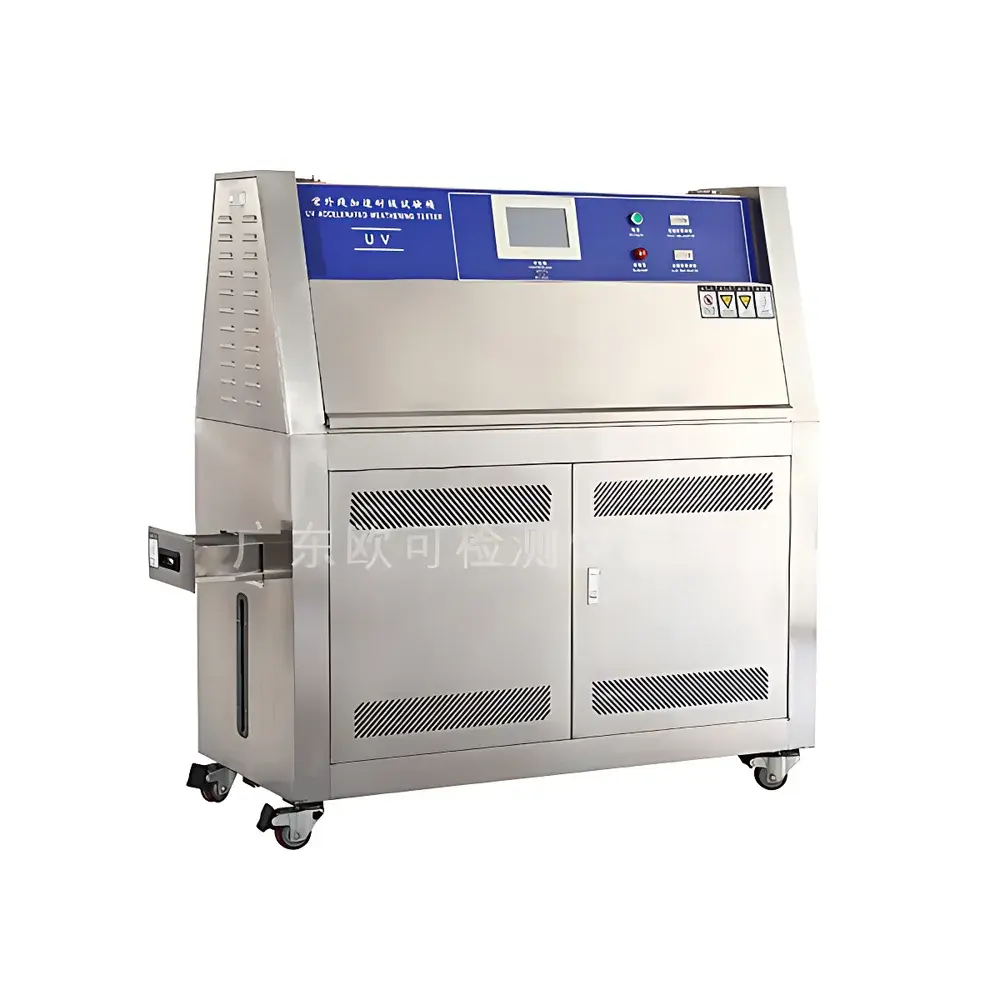
OK-UV-291.2 UV Aging Test Chamber
| Brand | OK Instruments |
|---|---|
| Origin | Guangdong, China |
| Manufacturer Type | Direct Manufacturer |
| Product Category | Domestic |
| Model | OK-UV-291.2 |
| Humidity Range | ≥95% RH (in-chamber actual value) |
| Lamp Power | 40 W per tube |
| Irradiance Range | 0.72 W/m² |
| Exposure Time | 1–9999 h (adjustable) |
| Light Temperature Range | RT to 70°C |
| UV Wavelength Range | 280–400 nm |
| Chamber Dimensions (L×W×H) | 1170 × 400 × 400 mm |
Overview
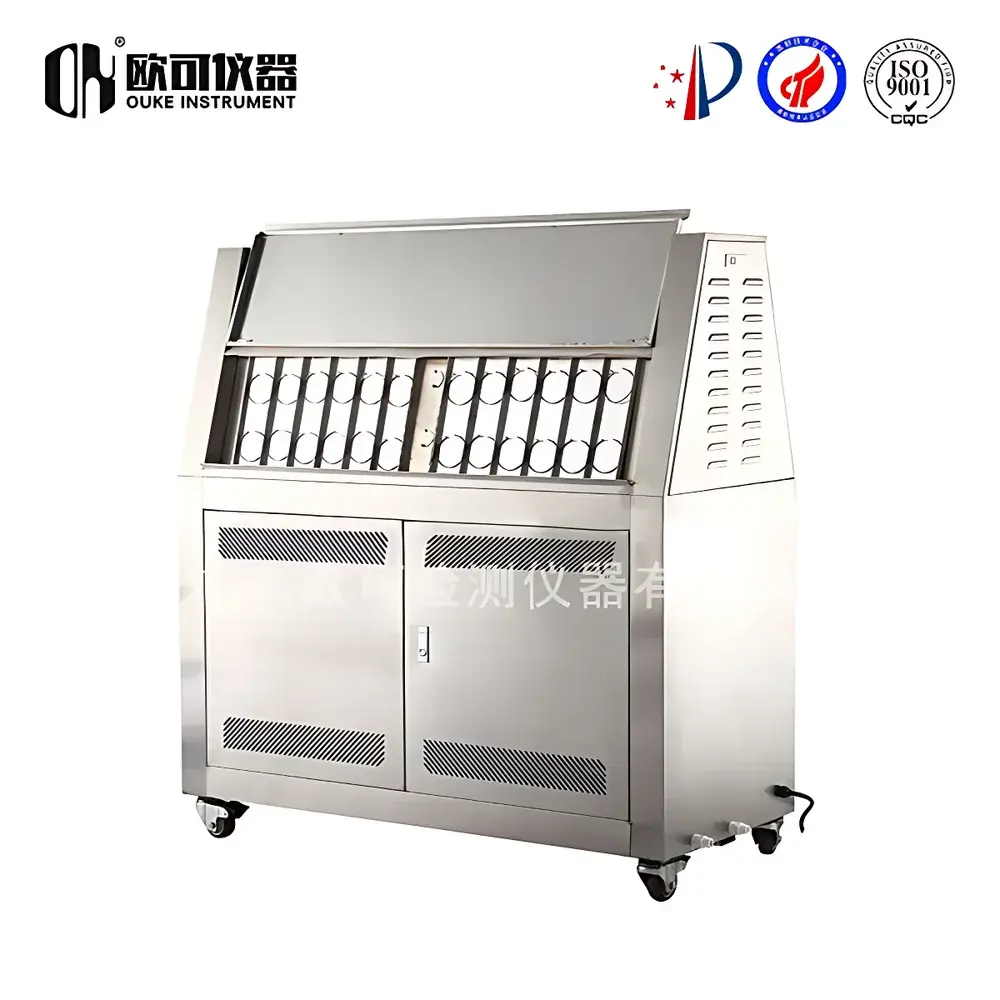
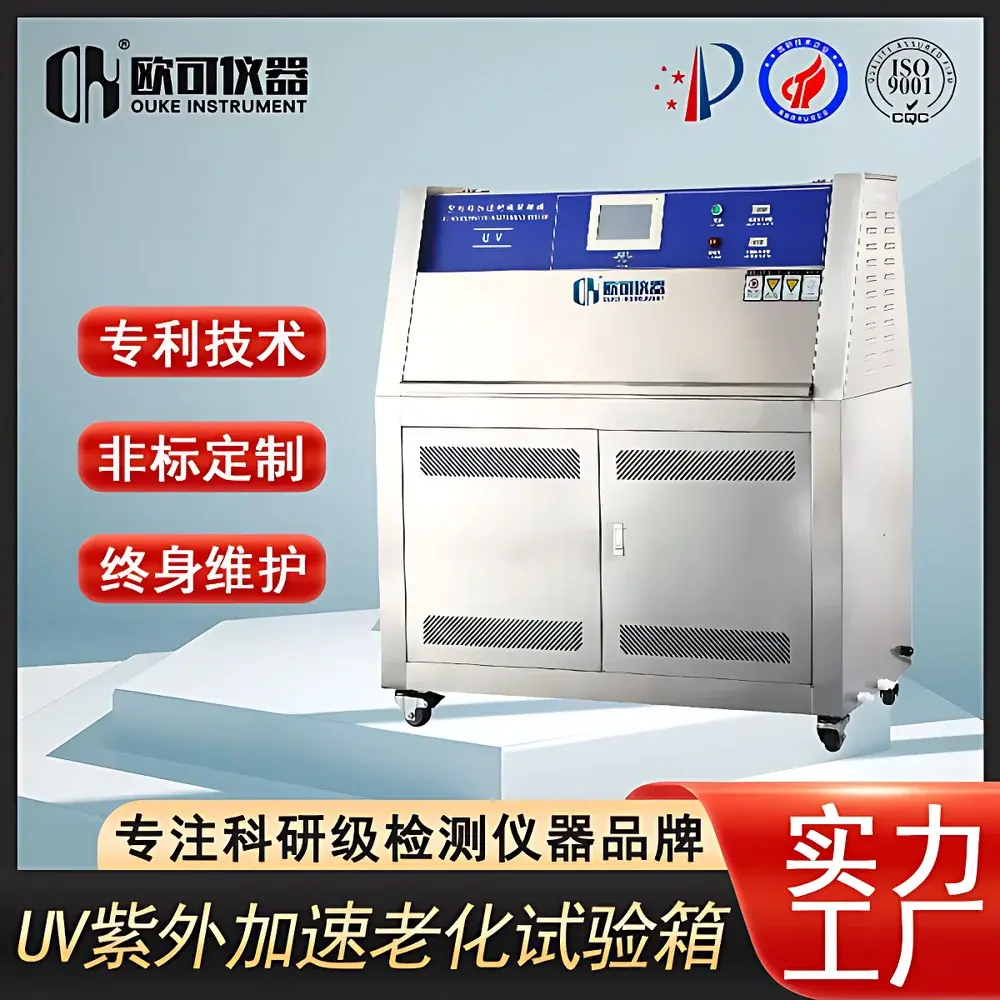
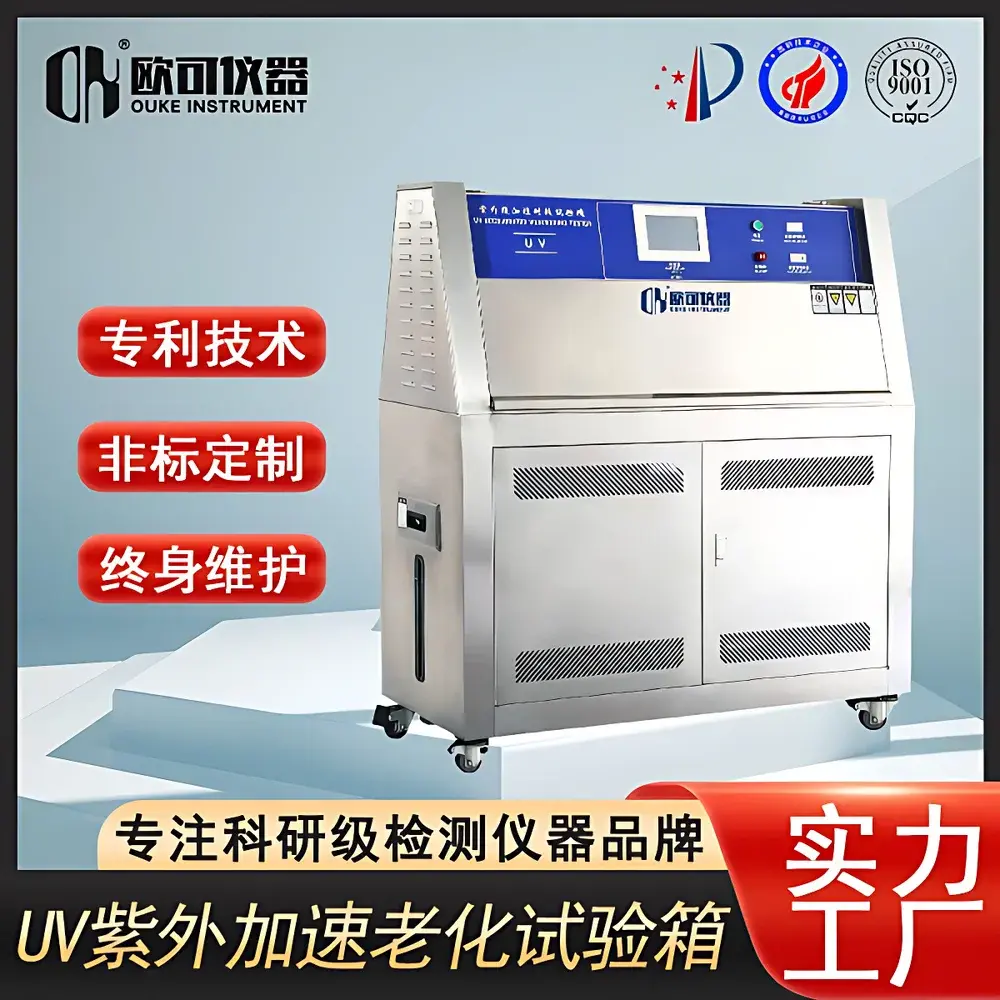
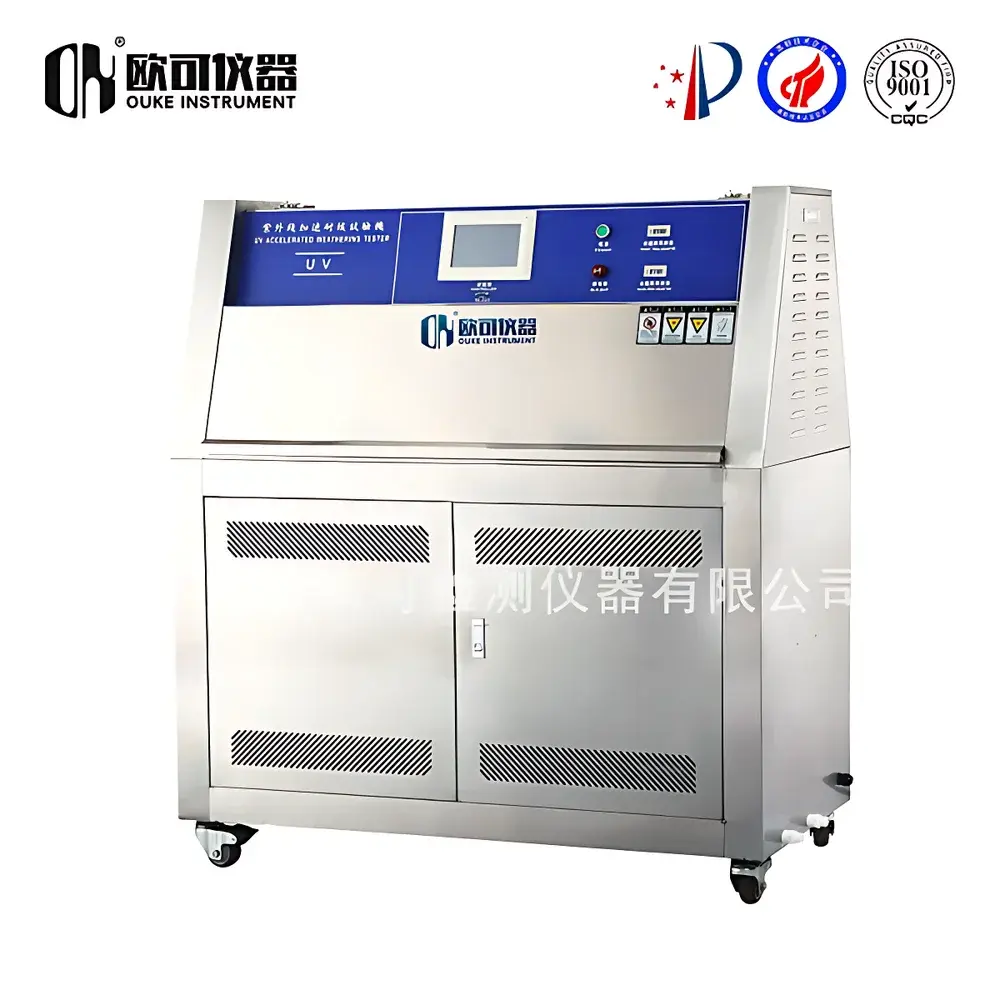
The OK-UV-291.2 UV Aging Test Chamber is an engineered environmental test system designed to accelerate material degradation through controlled exposure to ultraviolet radiation, elevated temperature, and cyclic humidity—primarily condensation and optional water spray. It operates on the fundamental principle that although UV radiation constitutes only ~5% of total solar energy, it drives the majority of photochemical degradation in organic polymers, coatings, elastomers, and composites. By employing fluorescent UV lamps with spectral output closely aligned to terrestrial solar UV (280–400 nm), the chamber replicates key weathering stressors under reproducible laboratory conditions. Unlike full-spectrum xenon arc testers, this system focuses specifically on UV-dominated failure mechanisms—making it ideal for comparative durability screening, QC pass/fail verification, and early-stage formulation development where cost-efficiency and cycle time are critical.
Key Features
- Fluorescent UV lamp array (UVA-340 or UVB-313 compatible) delivering calibrated irradiance at 0.72 W/m² (typically measured at 340 nm), compliant with ASTM G154 and ISO 4892-3 spectral requirements.
- Precise thermal control system with PID-regulated heating elements and forced-air circulation, maintaining stable chamber temperatures from ambient to 70°C during irradiation cycles.
- Integrated condensation subsystem: heated water reservoir generates saturated vapor; cooled specimen surfaces induce dew formation—mimicking nocturnal dew deposition as specified in ASTM D4329 and ISO 4892-3.
- Optional programmable spray function using deionized water, enabling simulation of thermal shock and mechanical erosion during light or dark phases.
- Stainless steel interior chamber (1170 × 400 × 400 mm) with corrosion-resistant construction, optimized airflow design, and removable sample racks accommodating standard ASTM/ISO specimen holders.
- Intelligent microprocessor-based controller supporting multi-step exposure programs—including alternating UV irradiation, condensation, and spray intervals—with real-time logging of temperature, humidity, and elapsed time.
Sample Compatibility & Compliance
The OK-UV-291.2 accommodates flat-panel specimens up to 150 mm × 75 mm × 10 mm (standard ASTM D4329 dimensions), including painted metal panels, polymer sheets, textile swatches, automotive trim components, and architectural sealants. Its operational envelope meets the physical constraints and procedural requirements of major international standards: ASTM G154 (Standard Practice for Operating Fluorescent Ultraviolet (UV) Lamp Apparatus for Exposure of Nonmetallic Materials), ASTM D4329 (Standard Practice for Fluorescent UV Exposure of Plastics), ISO 4892-3 (Plastics — Methods of Exposure to Laboratory Light Sources — Part 3: Fluorescent UV Lamps), and GB/T 16422.3 (equivalent to ISO 4892-3). While not inherently GLP/GMP validated, the system supports traceable calibration protocols for irradiance sensors (e.g., NIST-traceable UV radiometers) and temperature/humidity transducers—enabling audit-ready documentation when integrated into regulated quality systems.
Software & Data Management
The embedded controller records time-stamped environmental parameters (chamber temperature, relative humidity, cumulative UV dose estimation) at user-defined intervals (1–60 min). Data export is supported via USB interface in CSV format for post-processing in Excel or statistical analysis platforms. Although no proprietary PC software is bundled, the controller’s program memory retains up to 10 independent test profiles—each configurable with up to 99 sequential steps (light/dark/condensation/spray), dwell times, setpoints, and ramp rates. For laboratories requiring electronic records compliance (e.g., FDA 21 CFR Part 11), third-party SCADA or LIMS integration is feasible via RS-485 Modbus RTU communication (optional module).
Applications
- Coatings & Paints: Quantifying gloss retention, chalking, color shift (ΔE), and adhesion loss in automotive clearcoats, industrial primers, and architectural finishes.
- Plastics & Elastomers: Monitoring tensile strength decay, surface cracking, embrittlement, and yellowing index (YI) in polyolefins, PVC, TPEs, and EPDM seals.
- Automotive Interiors/Exteriors: Validating long-term performance of instrument panel substrates, door trims, headlamp lenses, and exterior body panels per SAE J2020.
- Textiles & Leather: Assessing photofading resistance of dyed fabrics and hydrolytic stability of synthetic leathers under humid UV stress.
- Construction Materials: Evaluating UV resistance of roofing membranes, window gaskets, PVC siding, and wood coatings per ASTM D6695 and ISO 11341.
- Electronics Enclosures: Screening polycarbonate and ABS housings for haze development, stress cracking, and electrical insulation integrity.
FAQ
What UV lamp types are supported?
The chamber accepts industry-standard 40 W fluorescent UV tubes—including UVA-340 (optimal solar simulation, 295–365 nm) and UVB-313 (accelerated short-wave output, peak at 313 nm). Lamp selection must align with target test standard requirements.
Is irradiance monitoring included?
The base configuration uses open-loop operation (fixed lamp replacement schedule). A calibrated UV radiometer with 340 nm filter and data logger can be added for closed-loop irradiance control and traceable dose reporting.
Does the system meet ISO 17025 calibration requirements?
While the chamber itself is not ISO/IEC 17025 accredited, all critical sensors (PT100 temperature probes, capacitive RH sensors, UV radiometers) are supplied with individual factory calibration certificates—enabling users to establish internal metrological traceability per ISO/IEC 17025 Clause 6.6.
Can I run ASTM G154 Cycle A without modification?
Yes. The controller includes preloaded templates for ASTM G154 Cycle A (4 h UV at 60°C / 4 h condensation at 50°C), Cycle B, and ISO 4892-3 default sequences. Custom cycles may be defined with sub-hour resolution.
What maintenance is required?
Recommended routine maintenance includes quarterly cleaning of the water reservoir and condensate tray, biannual replacement of UV lamps (typical service life: 1600–2000 h), annual verification of temperature/humidity sensor accuracy, and periodic inspection of gasket integrity and fan operation.



