
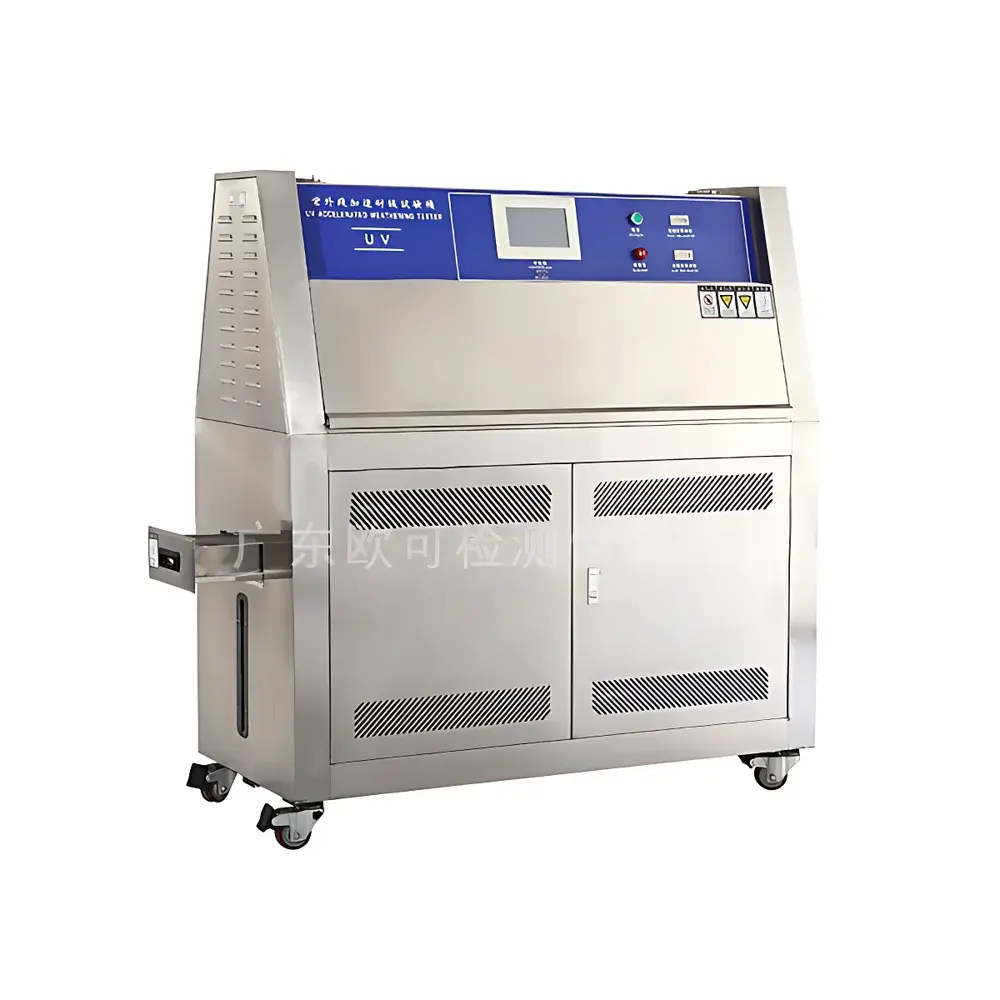
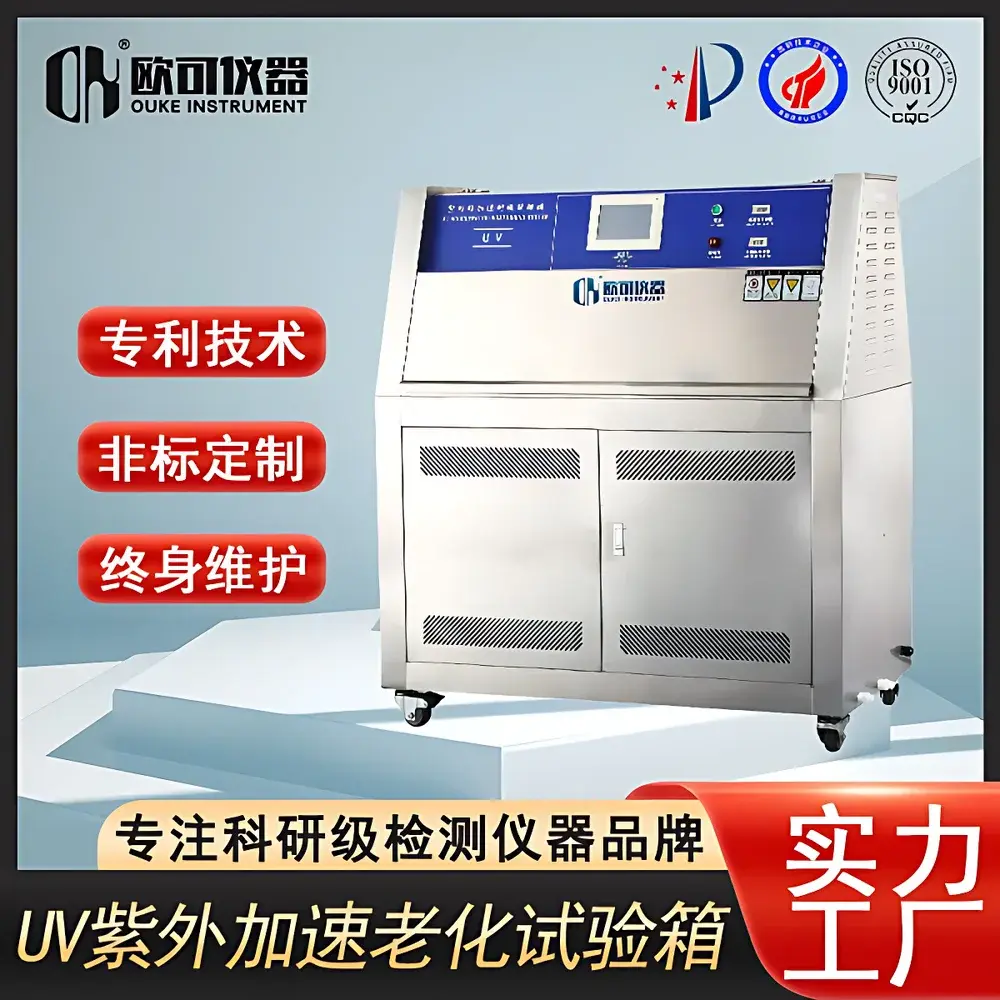
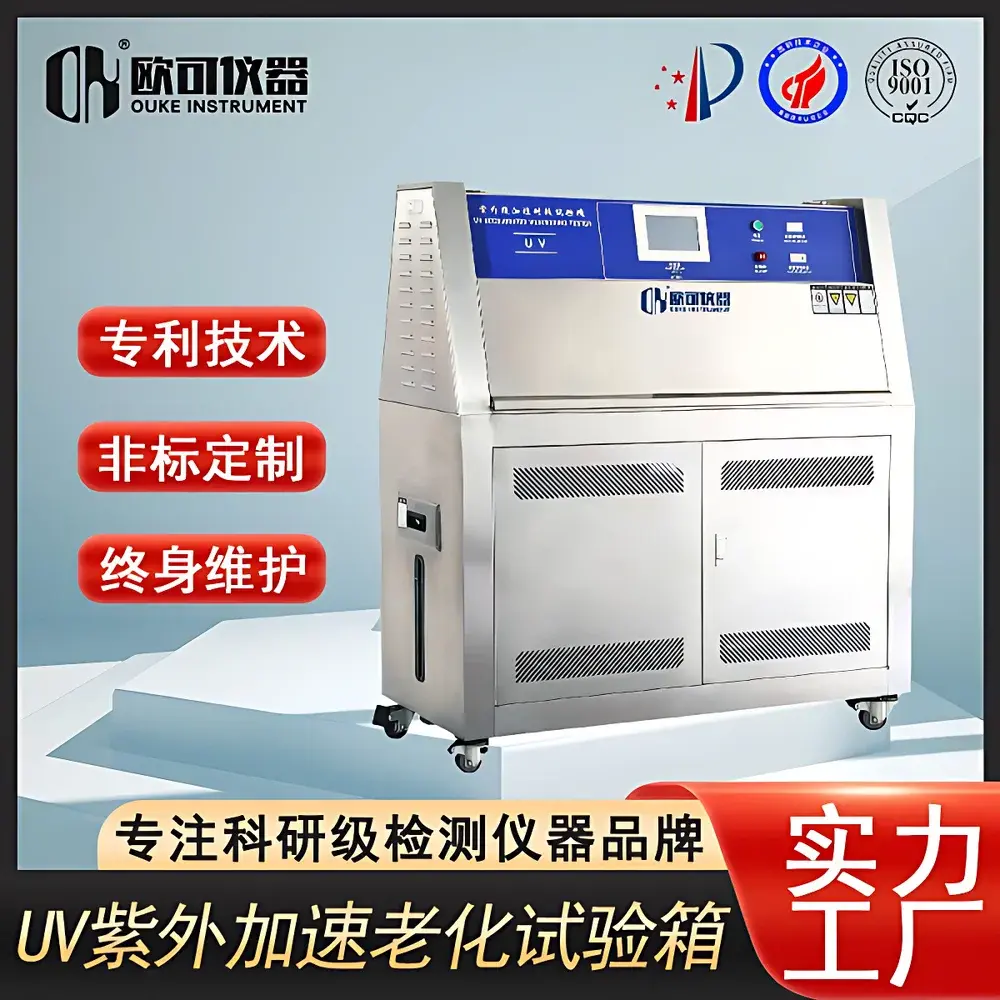
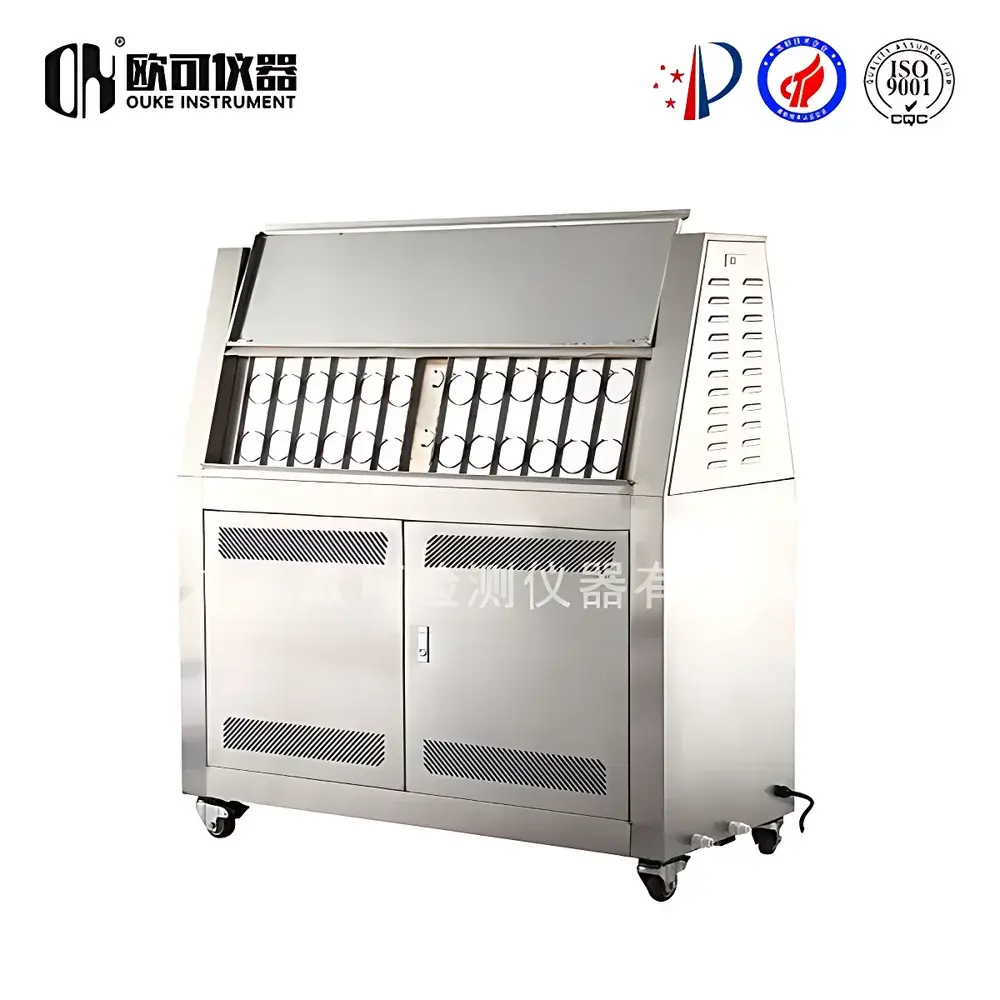
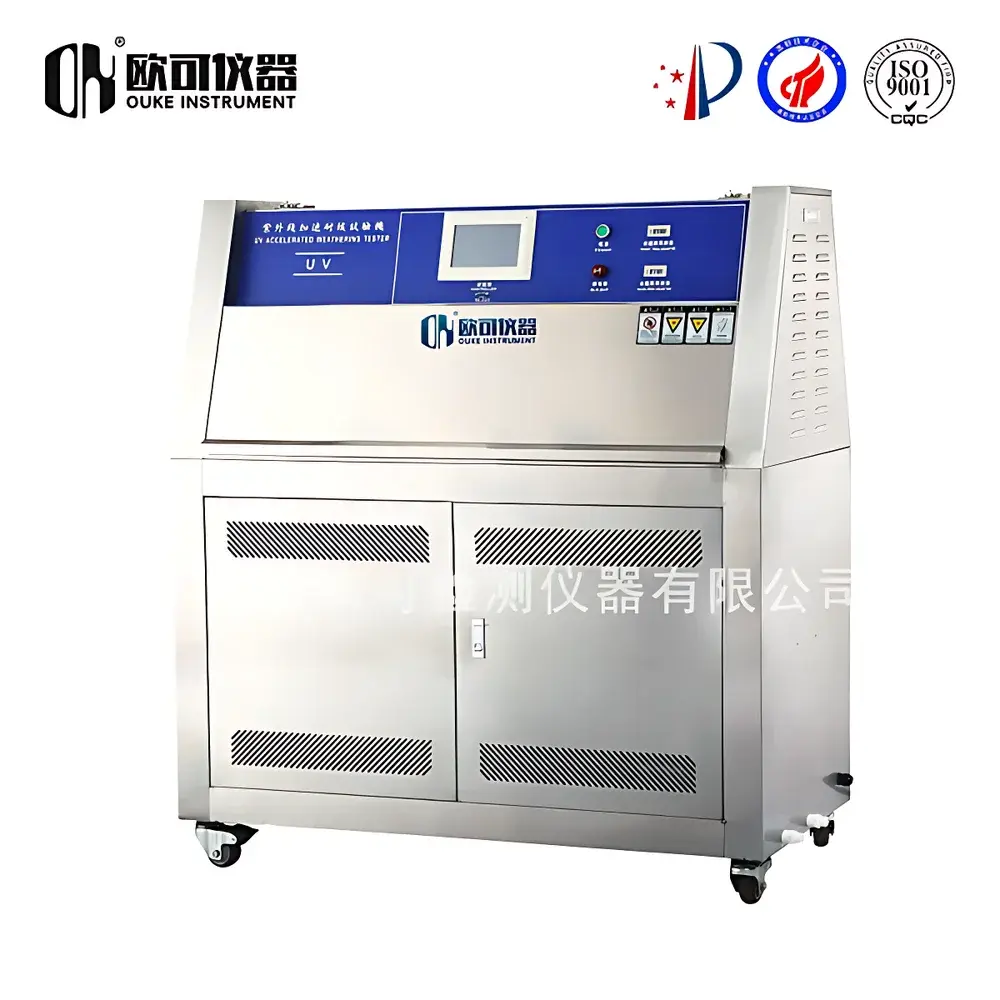
OK UV-293 Automotive Paint UV Aging Test Chamber
| Brand | OK Instruments |
|---|---|
| Origin | Guangdong, China |
| Manufacturer Type | Direct Manufacturer |
| Model | OK-UV-293 |
| Price | USD 2,650 (FOB) |
| Humidity Range | ≥95% RH (chamber internal humidity) |
| Lamp Power | 40 W per tube |
| Irradiance Range | 0.72 W/m² (at sample plane, UVA-340 weighted) |
| Exposure Time Setting | 1–9999 h (programmable) |
| Illuminated Temperature Range | RT to 70 °C |
| UV Wavelength Range | 280–400 nm |
| Chamber Internal Dimensions (L×W×H) | 1170 × 400 × 400 mm |
Overview
The OK UV-293 Automotive Paint UV Aging Test Chamber is an engineered environmental simulation system designed to accelerate the photochemical degradation of automotive coating systems under controlled ultraviolet radiation, temperature, and moisture conditions. It operates on the principle of fluorescent ultraviolet (UV) irradiation—specifically utilizing UVA-340 or UVB-313 lamp arrays—to replicate the most damaging short-wavelength segment of terrestrial solar spectrum (295–365 nm), where polymer chain scission, chromophore breakdown, and crosslinking in organic binders predominantly occur. Unlike full-spectrum xenon arc testers, this chamber isolates UV-driven aging mechanisms, enabling rapid, reproducible evaluation of gloss retention, color shift (ΔE), chalking, microcracking, and adhesion loss in OEM and aftermarket automotive paints, clearcoats, plastics, and elastomeric trim materials. Its design conforms to the core physical requirements of ISO 4892-3, ASTM G154, and SAE J2527 Annex A for fluorescent UV exposure protocols.
Key Features
- UVA-340 lamp configuration (standard), with optional UVB-313 upgrade—both compliant with spectral output specifications defined in ISO 4892-3:2013 Table 2;
- Precise black panel temperature control (RT to 70 °C) with ±1.5 °C uniformity across sample plane;
- Condensation cycle generation via heated water reservoir and controlled chamber wall cooling—enabling realistic dew formation on vertically mounted specimens;
- Programmable multi-step test sequences: independent control of UV irradiation duration, condensation phase timing, and dark/cool-down intervals;
- Stainless steel 304 interior chamber with removable sample racks accommodating standard 150 × 75 mm or 100 × 100 mm test panels;
- Digital touchscreen controller with real-time logging of irradiance, chamber temperature, and relative humidity (≥95% RH during condensation);
- Compliance-ready data export (CSV format) supporting GLP-aligned recordkeeping and audit trails.
Sample Compatibility & Compliance
The OK UV-293 accommodates flat or moderately curved automotive substrates—including steel, aluminum, and plastic panels coated with basecoat/clearcoat systems, powder coatings, and two-component polyurethane finishes. Specimen mounting fixtures ensure consistent 20°–30° angle orientation relative to lamp axis, aligning with SAE J2527 geometric requirements. The chamber satisfies essential hardware prerequisites for executing test methods referenced in major OEM specifications: Volkswagen PV 3930 (UV condensation cycle), General Motors GMW 14124 (UVA-340 exposure), Ford CETP 00.00-L-467, and Toyota TSL 0201G. While not a Class I metrology instrument, its irradiance stability (<±5% over 1,000 h lamp life) and thermal uniformity meet the performance thresholds required for comparative QC screening and R&D benchmarking per ISO/IEC 17025 Clause 5.4.
Software & Data Management
The embedded controller firmware supports up to 10 user-defined test programs, each with up to 99 cycle steps. All operational parameters—including elapsed time, accumulated UV dose (J/m²), black panel temperature setpoint deviation, and condensation event timestamps—are stored internally for ≥30 days. Data export via USB interface generates timestamped CSV files compatible with LIMS integration and statistical process control (SPC) platforms. Optional PC-based software (OK-UVLink v2.1) provides remote monitoring, alarm notification (SMS/email), and automated report generation aligned with FDA 21 CFR Part 11 electronic record requirements—including operator ID, audit trail, and electronic signature fields.
Applications
- R&D formulation screening: Accelerated comparison of pigment dispersions, UV absorbers, HALS stabilizers, and resin architectures under identical UV/condensation stress;
- In-line quality assurance: Batch release testing of incoming paint lots against reference standards using fixed-dose UV exposure (e.g., 250 kJ/m² @ 340 nm);
- Failure root cause analysis: Reproducing field-observed delamination or blistering by correlating lab-induced moisture ingress (via condensation cycles) with interfacial FTIR and cross-section SEM;
- Supplier qualification: Validating Tier-1 component suppliers’ coating durability claims per contractual OEM test plans;
- Regulatory documentation support: Generating repeatable, traceable aging data for IATF 16949 clause 8.3.4.2 (design verification) and IMDS material compliance reporting.
FAQ
Does the OK UV-293 comply with ISO 4892-3 for fluorescent UV exposure?
Yes—the chamber meets all mandatory hardware provisions of ISO 4892-3:2013, including lamp spectral distribution, sample plane irradiance uniformity (±15%), and black panel temperature control range. Calibration certificates for UVA-340 lamps are provided with each unit.
Can it run ASTM G154 Cycle 1 (UV only) and Cycle 4 (UV + condensation)?
Yes—both cycles are preconfigured in the controller menu, with adjustable dwell times and temperature setpoints per phase.
Is black standard thermometer (BST) or black panel thermometer (BPT) used for temperature measurement?
The system uses a calibrated black panel thermometer (BPT) mounted at specimen level, traceable to NIST standards; BST option available upon request.
What maintenance is required for long-term irradiance stability?
Lamp replacement every 1,600–2,000 h of operation is recommended; chamber reflectivity inspection and water reservoir cleaning biweekly ensures consistent condensation dynamics.
Does the unit support third-party calibration services?
Yes—OK Instruments maintains partnerships with ISO/IEC 17025-accredited labs in Shenzhen and Singapore for annual irradiance and thermal mapping validation.



