
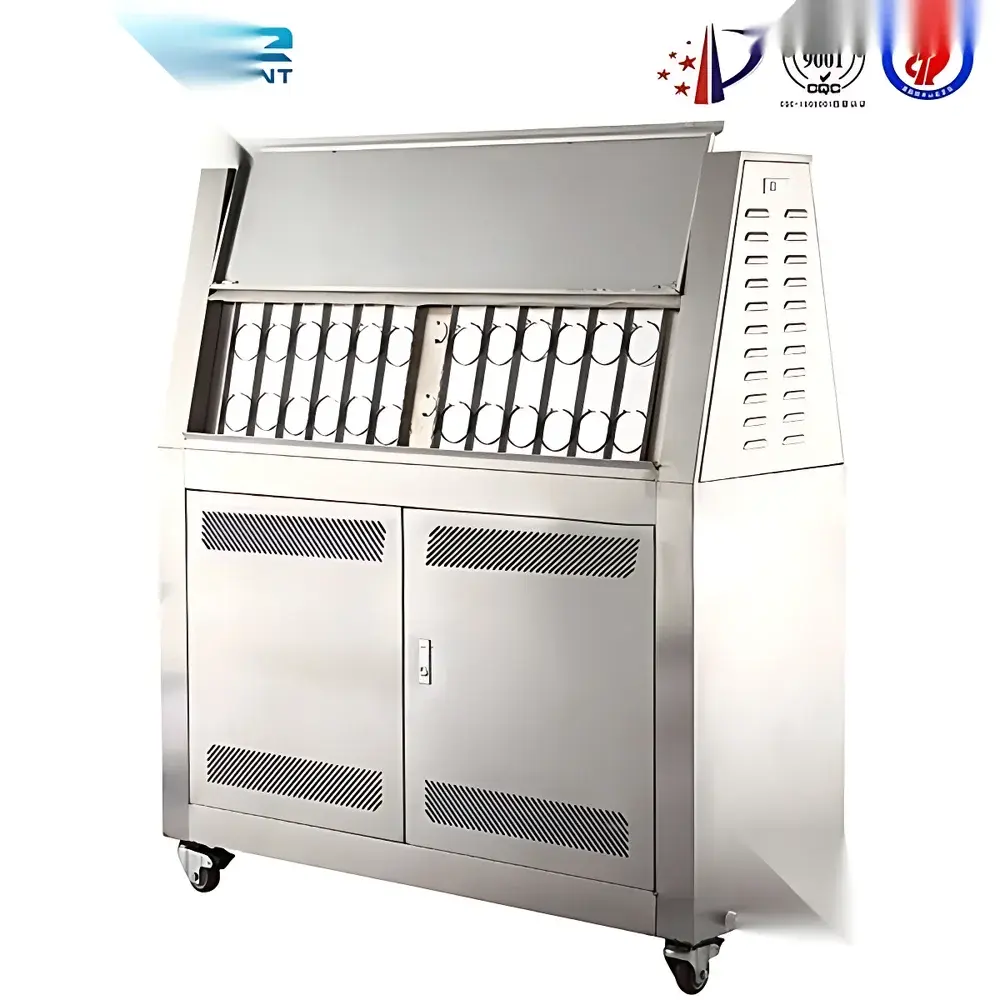
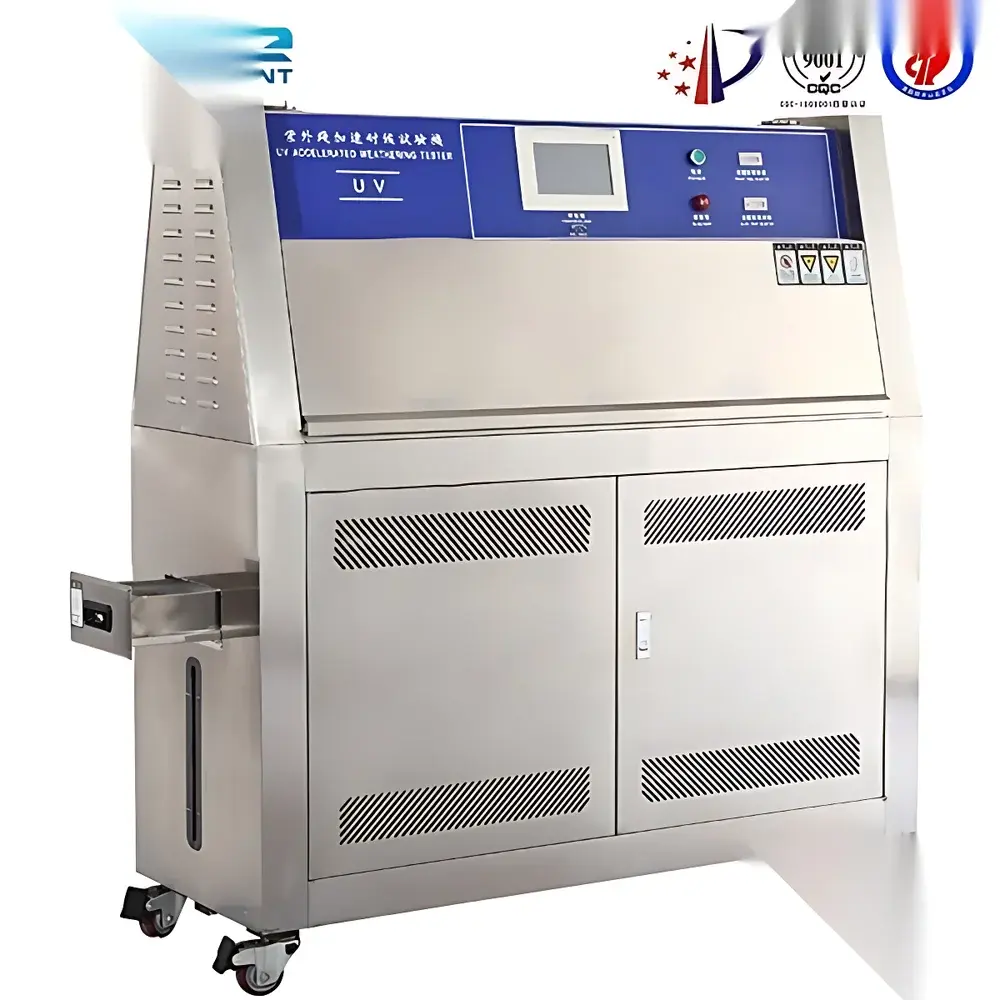
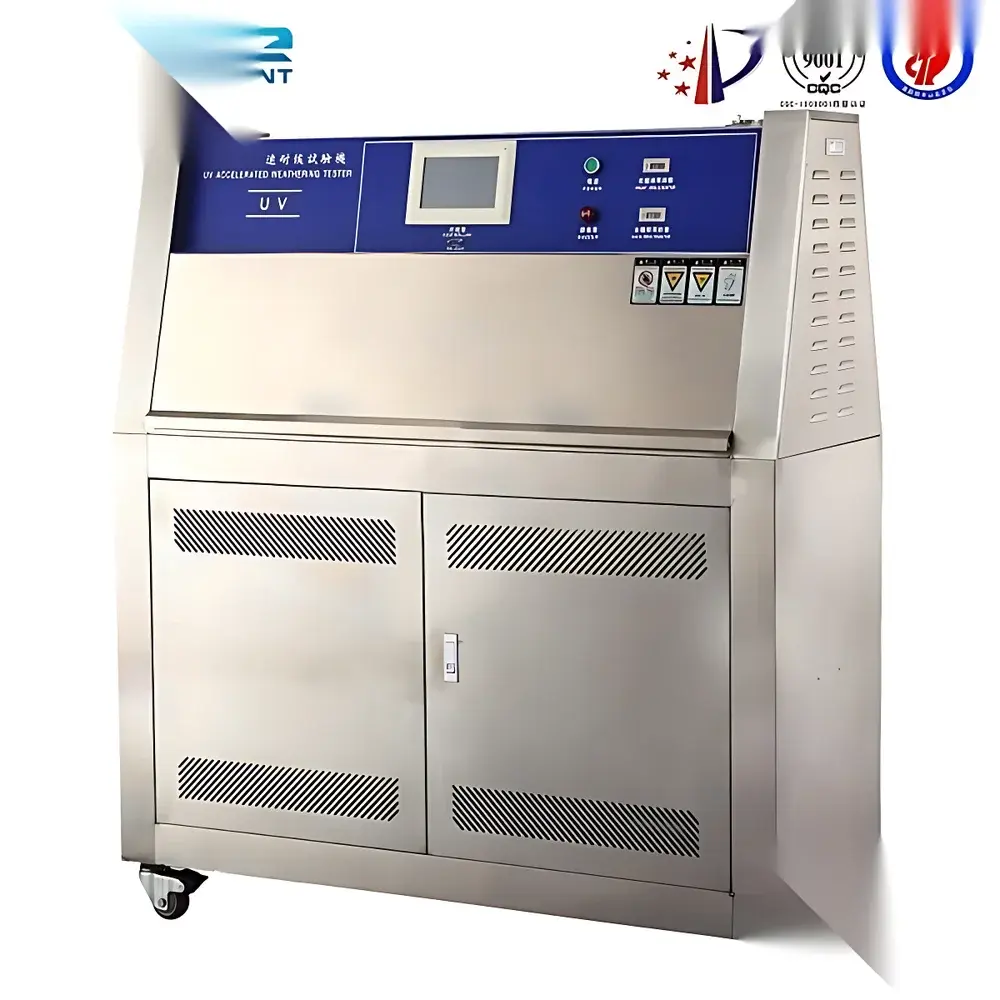
UV Aging Test Chamber for Eyewear and Optical Components
| Brand | OEM / Custom-Branded |
|---|---|
| Origin | Imported |
| Manufacturer Type | Authorized Distributor |
| Price | USD 2,650 (Reference Only |
Overview
The UV Aging Test Chamber for Eyewear and Optical Components is a purpose-engineered environmental test system designed to simulate accelerated ultraviolet (UV) radiation exposure under controlled temperature and humidity conditions. It operates on the principle of controlled UV irradiation—primarily using UVA-340 fluorescent lamps—to replicate the critical short-wave spectral region of natural sunlight (295–360 nm), which is responsible for photo-oxidative degradation in polymeric lens materials, anti-reflective coatings, frame resins (e.g., TR90, acetate, polycarbonate), and adhesives. Unlike broad-spectrum UV sources, UVA-340 provides spectrally accurate output matching terrestrial solar UV, enabling high-fidelity aging correlation per ISO 4892-3 and SAE J2020. The chamber integrates black-panel temperature monitoring (BPT), condensation cycling, and independent irradiance control to emulate real-world diurnal weathering stressors—including thermal cycling, moisture absorption/desorption, and photolytic bond scission—critical for evaluating yellowing, haze development, coating delamination, and mechanical embrittlement.
Key Features
- UVA-340 lamp array with calibrated spectral output (295–360 nm), traceable to NIST-standard radiometric calibration protocols
- Fixed-position UV radiometer probe with integrated digital display, eliminating repositioning errors between test cycles
- Black-panel temperature control system using embedded thermocouples in anodized aluminum sensor plates, ensuring ±0.5 °C stability across 40–70 °C operational range
- Independent programmable control of UV irradiance (≤50 W/m²), condensation duration, and dark/cool-down phases—each adjustable in 1-minute increments up to 1000 hours
- Stainless steel (SUS304) interior chamber with seamless welds and electropolished finish to prevent corrosion and UV-induced surface degradation
- BTHC (Balanced Temperature and Humidity Control) system with auto-fill purified water reservoir, deionized water delivery, and overflow protection
- PID-controlled air-heating via stainless steel finned heaters and custom-engineered axial airflow distribution for uniform thermal profile (±2 °C uniformity at sample plane)
- Intelligent microprocessor controller with LED interface, 0.2-class measurement accuracy, RS-485 communication port for SCADA integration, and non-volatile cycle memory
- Customizable sample rack assembly: stainless steel frame with spring-tensioned mounting brackets compatible with plano-curved lenses (up to Ø80 mm), temple pieces, and full-frame assemblies
Sample Compatibility & Compliance
This chamber accommodates optical components including ophthalmic lenses (CR-39, polycarbonate, high-index plastics), coated substrates (AR, hydrophobic, oleophobic films), spectacle frames (acetate, nylon, titanium composites), and sealants used in lens mounting. Its design conforms to international standards governing UV exposure testing of polymeric optical materials: ISO 4892-3 (Methods A & B), ASTM G53 (Practice for Fluorescent UV–Condensation Apparatus), SAE J2020 (Accelerated Exposure of Automotive Exterior Materials Using Fluorescent UV and Condensation), EN 534 (Rubber—Determination of Resistance to Artificial Weathering), ISO 11507 (Paints and Varnishes—Exposure of Coatings to Artificial Weathering), and GB/T 14522 (Mechanical Properties of Plastics—Artificial Weathering).
Software & Data Management
The embedded controller supports audit-ready data logging with timestamped records of irradiance (W/m²), black-panel temperature (°C), chamber humidity (%RH), cycle phase status, and elapsed runtime. Optional Modbus RTU or Ethernet/IP protocol enables integration into LIMS or MES platforms compliant with FDA 21 CFR Part 11 requirements—supporting electronic signatures, user access levels, and immutable event logs. All test parameters are stored with checksum verification to ensure GLP/GMP traceability during regulatory submissions or internal quality audits.
Applications
- Accelerated lifetime prediction of anti-reflective coating durability under UV/humidity stress
- Comparative evaluation of yellowing resistance across lens substrate formulations (e.g., MR-8 vs. Trivex)
- Validation of UV-stabilizer efficacy in frame polymers subjected to cyclic condensation
- Pre-certification testing for CE marking compliance (EN ISO 12312-1:2022 for sunglasses)
- Root-cause analysis of premature lens haze or interlayer delamination in laminated safety eyewear
- Development-stage screening of new photo-initiators in UV-curable lens adhesives
FAQ
What UV spectrum does the UVA-340 lamp replicate, and why is it preferred for eyewear testing?
UVA-340 lamps emit energy exclusively within 295–360 nm—the biologically and chemically active portion of solar UV reaching Earth’s surface. This spectral fidelity enables realistic simulation of polymer chain scission and chromophore formation in lens materials, unlike broader UVB-313 sources that over-accelerate degradation and reduce correlation to field performance.
Can the chamber perform condensation-only cycles without UV exposure?
Yes. The system allows fully decoupled programming of condensation (via controlled humidification and cooling) and UV irradiation, supporting ISO 4892-3 Method B (alternating UV/condensation) and Method A (simultaneous exposure).
Is calibration documentation provided for the radiometer and temperature sensors?
Each unit ships with factory calibration certificates traceable to national metrology institutes (NMI), including uncertainty budgets for irradiance (±3.5% k=2) and black-panel temperature (±0.4 °C k=2). On-site recalibration services are available under ISO/IEC 17025-accredited procedures.
What maintenance intervals are recommended for lamp replacement and water purification filters?
UVA-340 lamps require replacement after 1,600 hours of cumulative operation (per IEC 60068-2-5); the integrated water purifier cartridge must be exchanged every 3 months or after 500 L of dispensed water, whichever occurs first.



