
UV Aging Test Chamber – Fluorescent Ultraviolet Accelerated Weathering Tester
| Brand | Other Brands |
|---|---|
| Origin | Imported |
| Manufacturer Type | Authorized Distributor |
| Price | USD 2,650 (Reference Only) |
| UV Lamp Type | UVA-340 or UVB-313 Fluorescent Lamps |
| Temperature Range | 40–70°C (Irradiation), 30–60°C (Condensation) |
| Humidity Control | Condensation Cycle via Water Reservoir |
| Sample Capacity | Standard 3–5 Specimen Holders (75 × 150 mm) |
| Compliance | ASTM G154, ISO 4892-3, JIS D0205, GB/T 14522 |
| Optional Features | Water Spray System, Irradiance Monitoring Sensor, Programmable Cycling Controller |
Overview
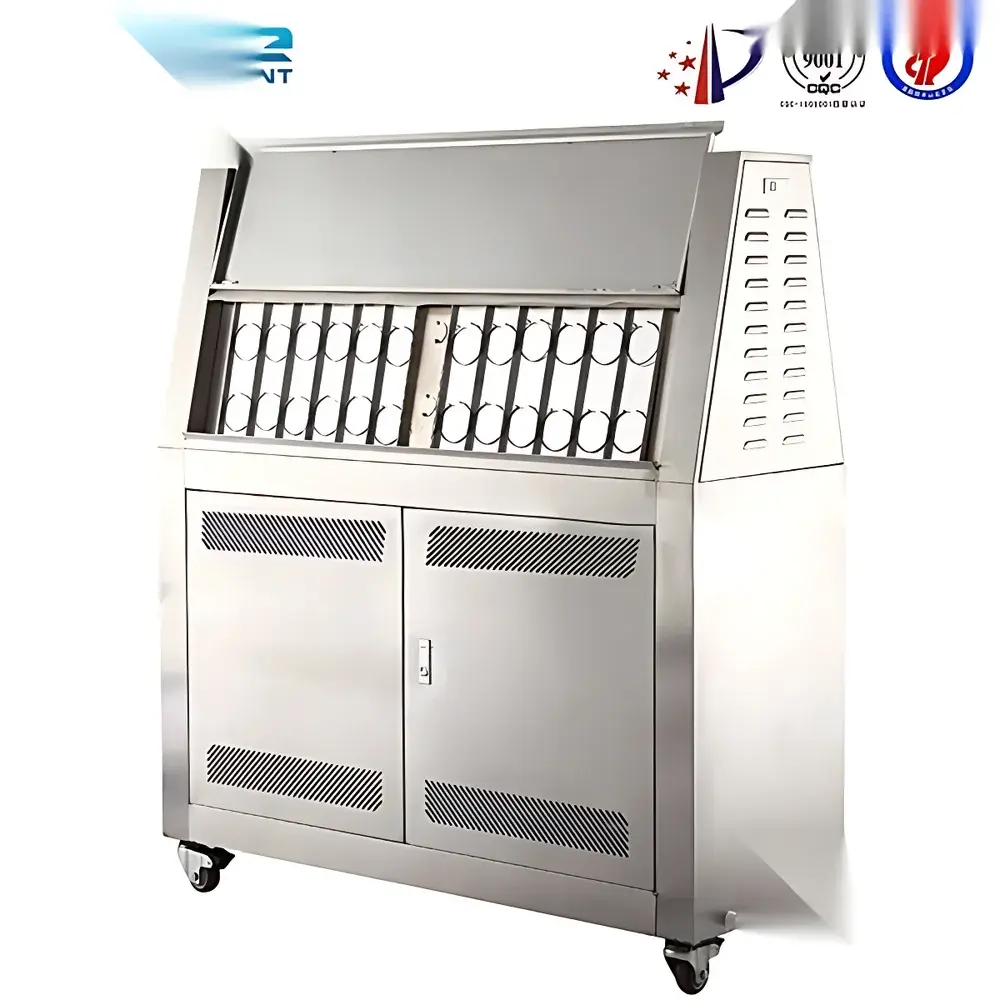
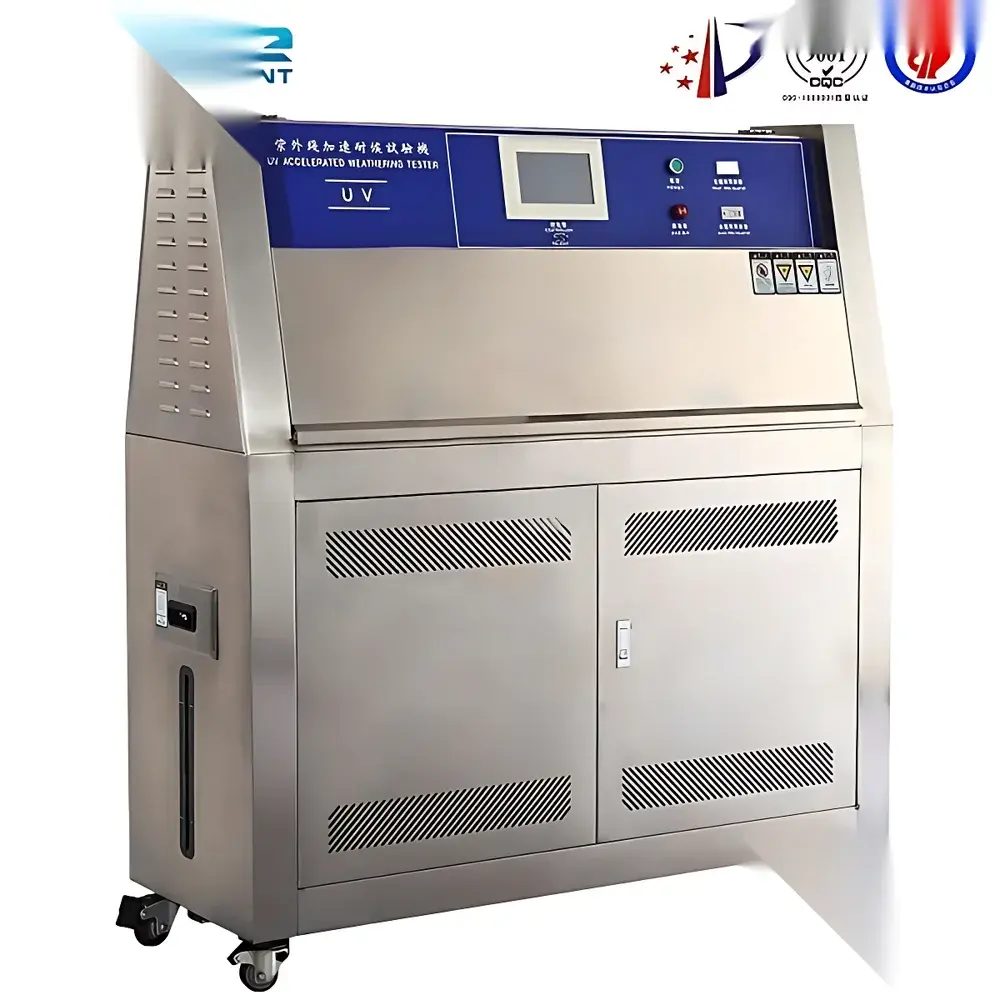
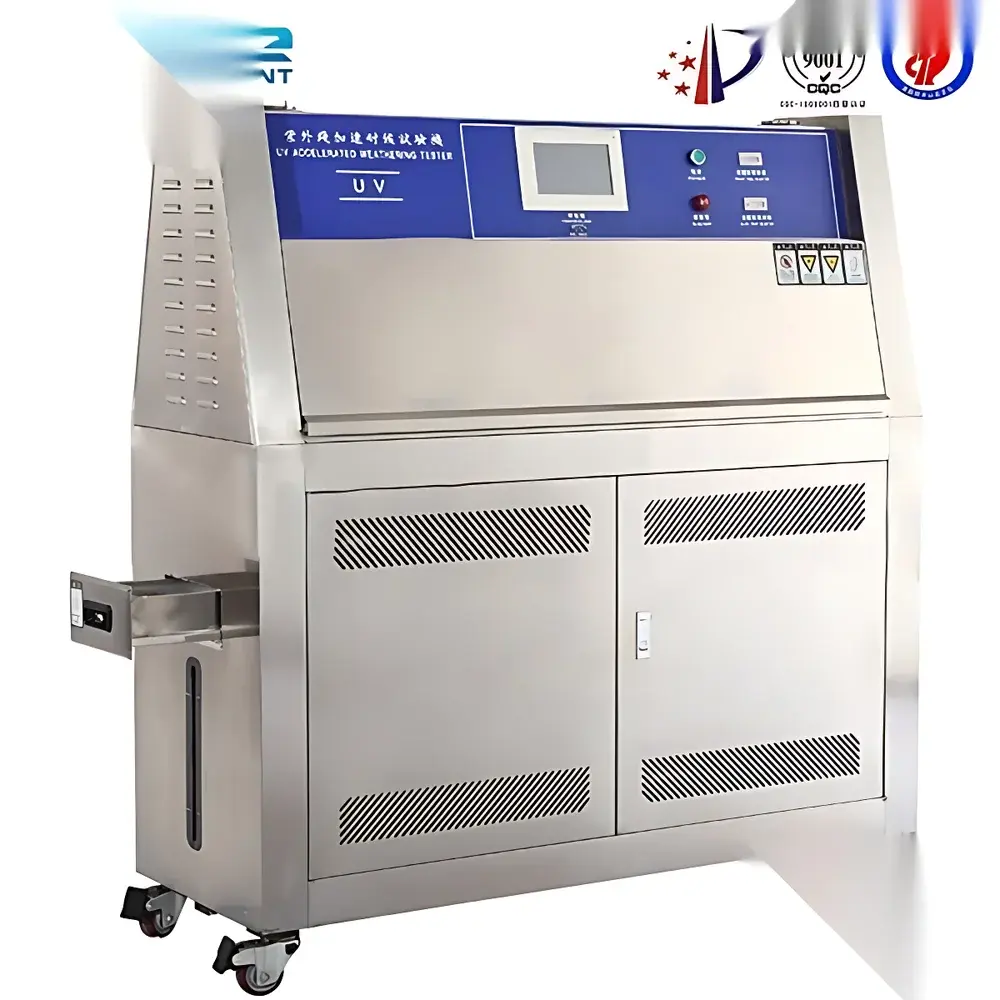
The UV Aging Test Chamber – Fluorescent Ultraviolet Accelerated Weathering Tester is an engineered environmental test system designed to simulate the damaging effects of solar ultraviolet radiation and moisture exposure on polymeric, coating, automotive, and architectural materials. Based on the principle of controlled fluorescent UV irradiation combined with condensation humidity cycles, this chamber accelerates photodegradation mechanisms—including photooxidation, chain scission, and surface embrittlement—by replicating the spectral output of terrestrial sunlight in the critical 290–400 nm range. Unlike xenon arc or carbon arc testers, this system employs calibrated UVA-340 (sunlight-simulating) or UVB-313 (harsher, accelerated) fluorescent lamps, enabling precise, repeatable exposure profiles aligned with international weathering standards. The chamber operates through alternating irradiation and condensation phases: during irradiation, specimens are exposed to regulated UV intensity at elevated temperatures; during condensation, saturated humid air cools the specimen surface, forming dew-like moisture—mimicking nocturnal dampness that exacerbates hydrolytic degradation. This dual-stress methodology enables rapid assessment of material durability under outdoor service conditions, compressing years of natural exposure into days or weeks.
Key Features
- Fluorescent UV lamp array with selectable UVA-340 (340 nm peak, sunlight-relevant) or UVB-313 (313 nm peak, high-energy acceleration) configurations
- Integrated condensation cycle generated by heated water reservoir and controlled chamber wall cooling—no external humidifier required
- Optional water spray function for simulating thermal shock and surface erosion during wet/dry transitions
- Precise black-panel temperature control (40–70°C) and condensation temperature regulation (30–60°C)
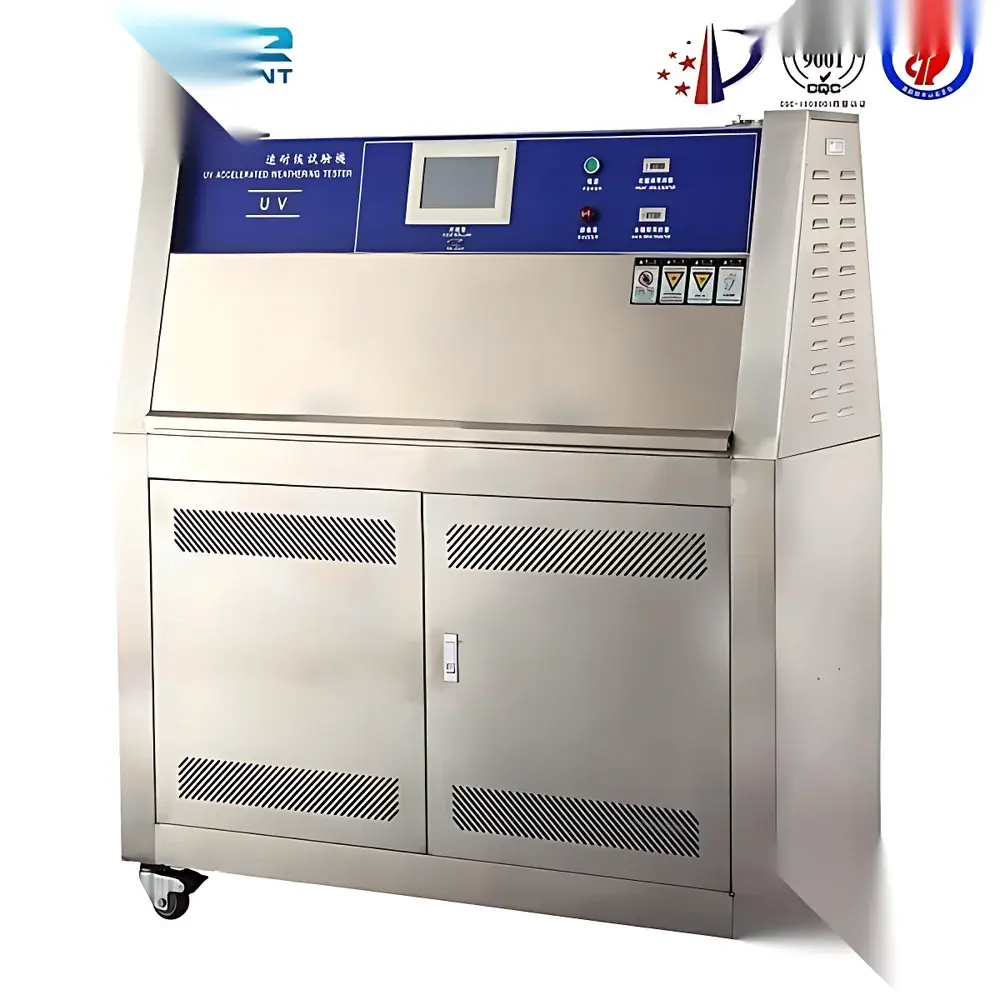
- Digital programmable controller supporting multi-step exposure profiles: irradiation duration, condensation time, spray intervals, and ramp rates
- Stainless steel 304 inner chamber with quartz glass UV-transmissive viewing window and corrosion-resistant hardware
- Compliance-ready architecture: built-in irradiance monitoring port (for optional radiometer calibration), audit trail logging, and password-protected parameter settings
Sample Compatibility & Compliance
This tester accommodates flat, rigid, or semi-flexible specimens up to 75 × 150 mm (standard holder dimensions), including paints, varnishes, plastics, textiles, adhesives, roofing membranes, and automotive trim components. Specimens are mounted vertically on non-reflective aluminum racks to ensure uniform irradiance distribution and minimize shadowing. The system conforms to core international weathering test standards: ASTM G154 (Standard Practice for Operating Fluorescent Ultraviolet (UV) Lamp Apparatus for Exposure of Nonmetallic Materials), ISO 4892-3 (Plastics — Methods of Exposure to Laboratory Light Sources — Part 3: Fluorescent UV Lamps), JIS D0205 (Automotive exterior materials), and GB/T 14522 (Chinese national standard for UV aging of coatings). For regulated industries, the chamber supports GLP-compliant operation when paired with validated software: all exposure parameters, lamp hours, temperature/humidity logs, and user actions are timestamped and exportable in CSV format—facilitating FDA 21 CFR Part 11 readiness upon integration with compliant data management systems.
Software & Data Management
The embedded microprocessor controller provides real-time display of irradiance (mW/cm²), black-panel temperature, chamber humidity, and elapsed exposure time. Optional PC-based software enables remote monitoring, profile scheduling, automated report generation (PDF/Excel), and historical trend analysis across multiple test runs. All data entries include operator ID, date/time stamps, and change logs—ensuring traceability for quality audits. The system supports manual calibration verification via NIST-traceable UV radiometers and includes lamp life tracking to prompt scheduled replacement before irradiance drift exceeds ±5% tolerance—critical for maintaining measurement reproducibility per ISO/IEC 17025 requirements.
Applications
This UV aging chamber serves R&D laboratories, QC departments, and third-party testing facilities evaluating long-term stability of organic materials subjected to outdoor environments. Typical use cases include: comparative ranking of pigment fade resistance in automotive clearcoats; validation of UV stabilizer efficacy in polyolefin films; qualification of sealant adhesion retention after cyclic UV/moisture exposure; screening of photoinitiator performance in UV-curable resins; and compliance testing for building product certifications (e.g., ENERGY STAR, LEED, or CE marking). Its reproducibility and standard alignment make it suitable for internal specification development, supplier qualification, and pre-certification testing prior to outdoor field trials.
FAQ
What UV lamp types are supported, and how do they differ?
UVA-340 lamps replicate solar UV down to 295 nm and are recommended for realistic outdoor simulation. UVB-313 lamps emit shorter, more energetic wavelengths (down to 280 nm) and are used for aggressive, accelerated testing—common in automotive and aerospace qualification.
Is irradiance calibration required, and how often?
Yes. Calibration using a NIST-traceable UV radiometer is recommended before each test series and after lamp replacement. Annual third-party calibration is advised for ISO/IEC 17025-accredited labs.
Can the chamber operate unattended for extended periods?
Yes—provided the water reservoir is filled, drain lines are unobstructed, and ambient room conditions remain within 15–35°C and 72-hour tests.
Does the system meet FDA 21 CFR Part 11 requirements?
The base unit does not include electronic signature or audit trail features; however, when integrated with validated third-party LIMS or ELN software, full Part 11 compliance—including role-based access, electronic signatures, and immutable audit logs—is achievable.
What safety precautions apply during operation?
Operators must wear UV-blocking safety goggles and nitrile gloves. Direct skin or ocular exposure to UV lamps must be avoided; interlocked door switches automatically deactivate lamps when opened. The chamber must be installed in a well-ventilated area with dedicated exhaust ducting for ozone dissipation.



