
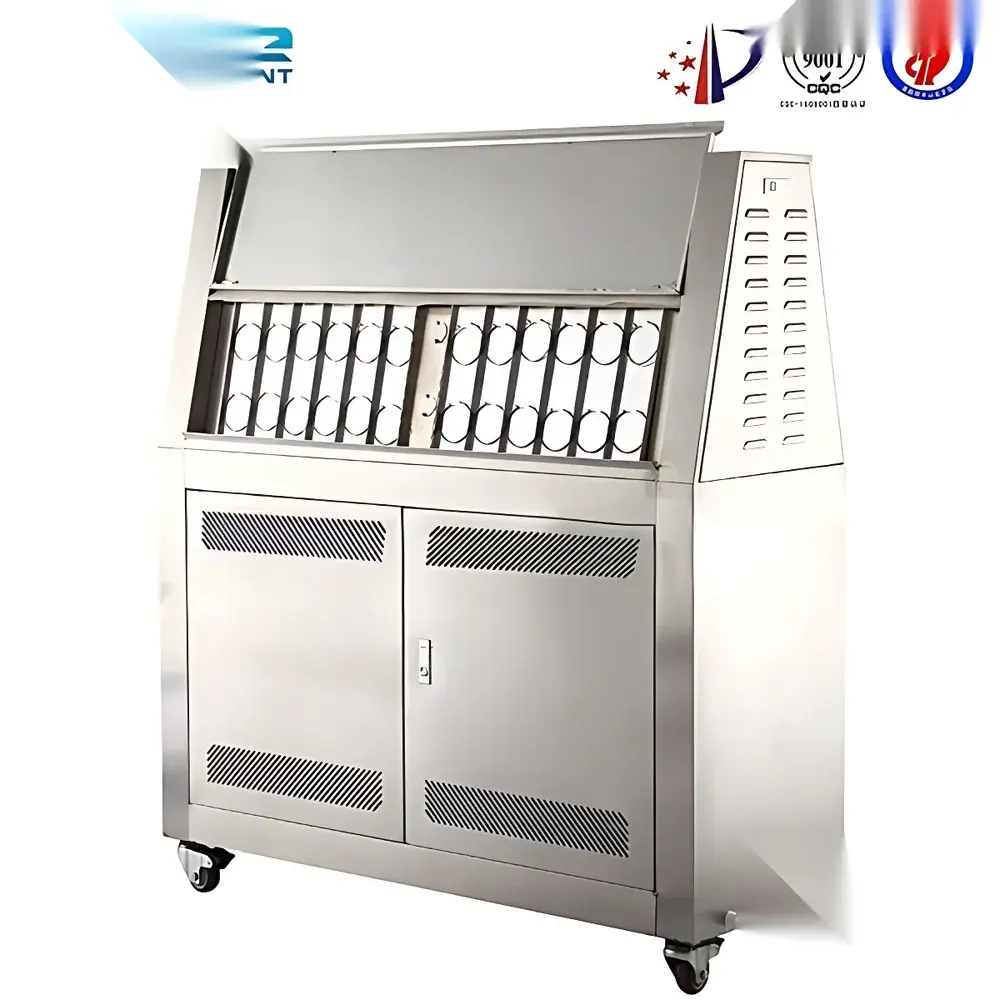
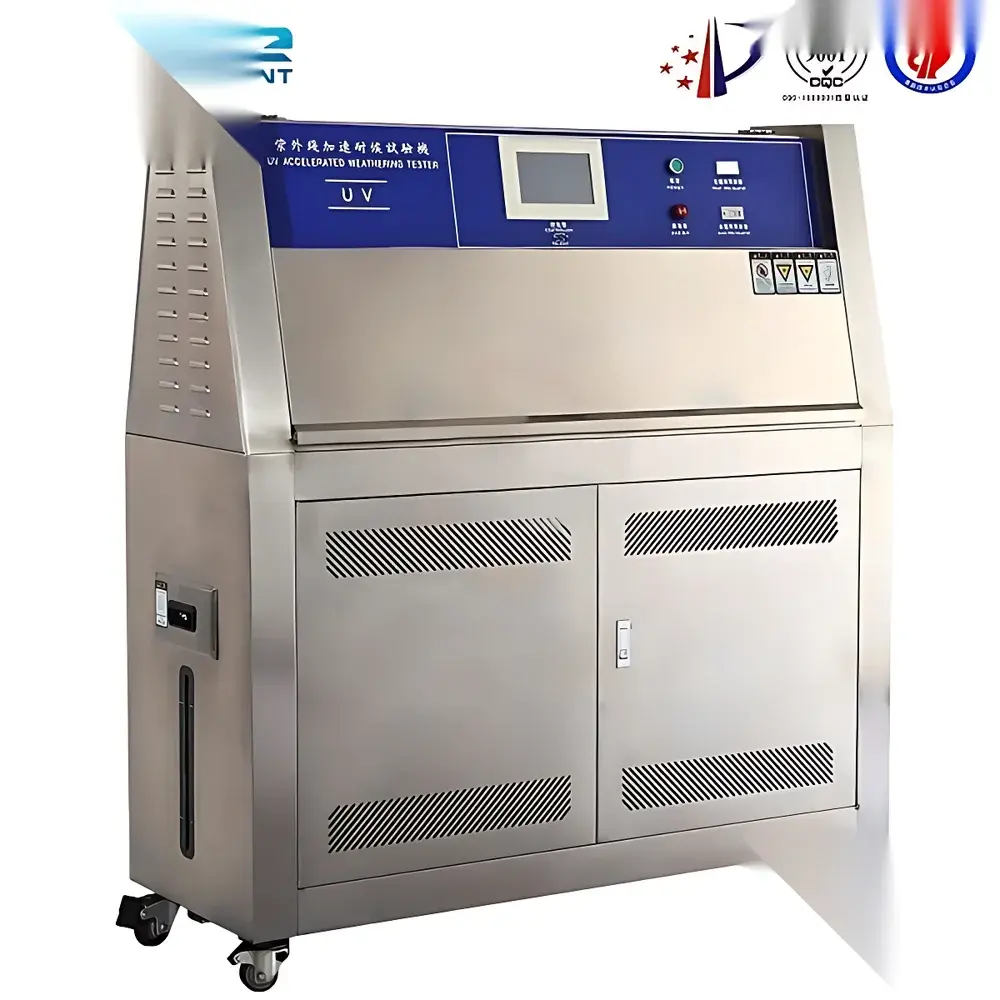
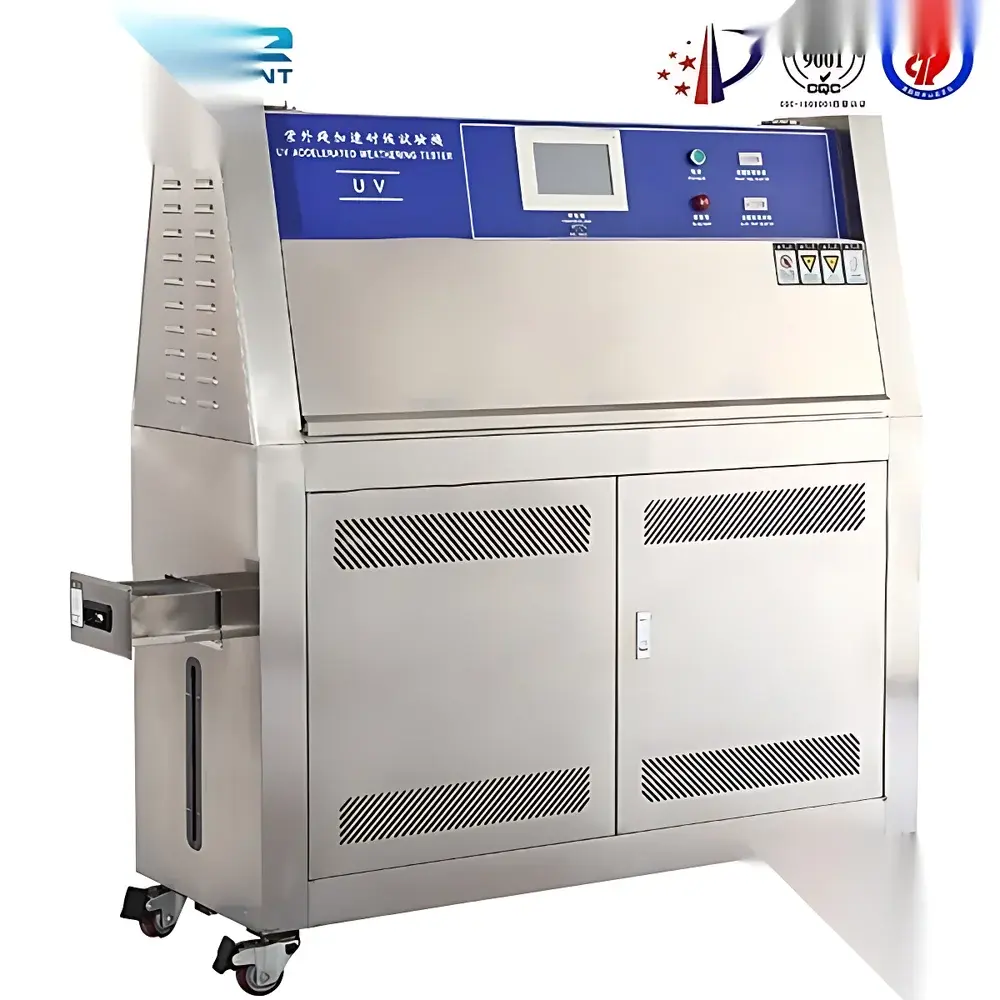
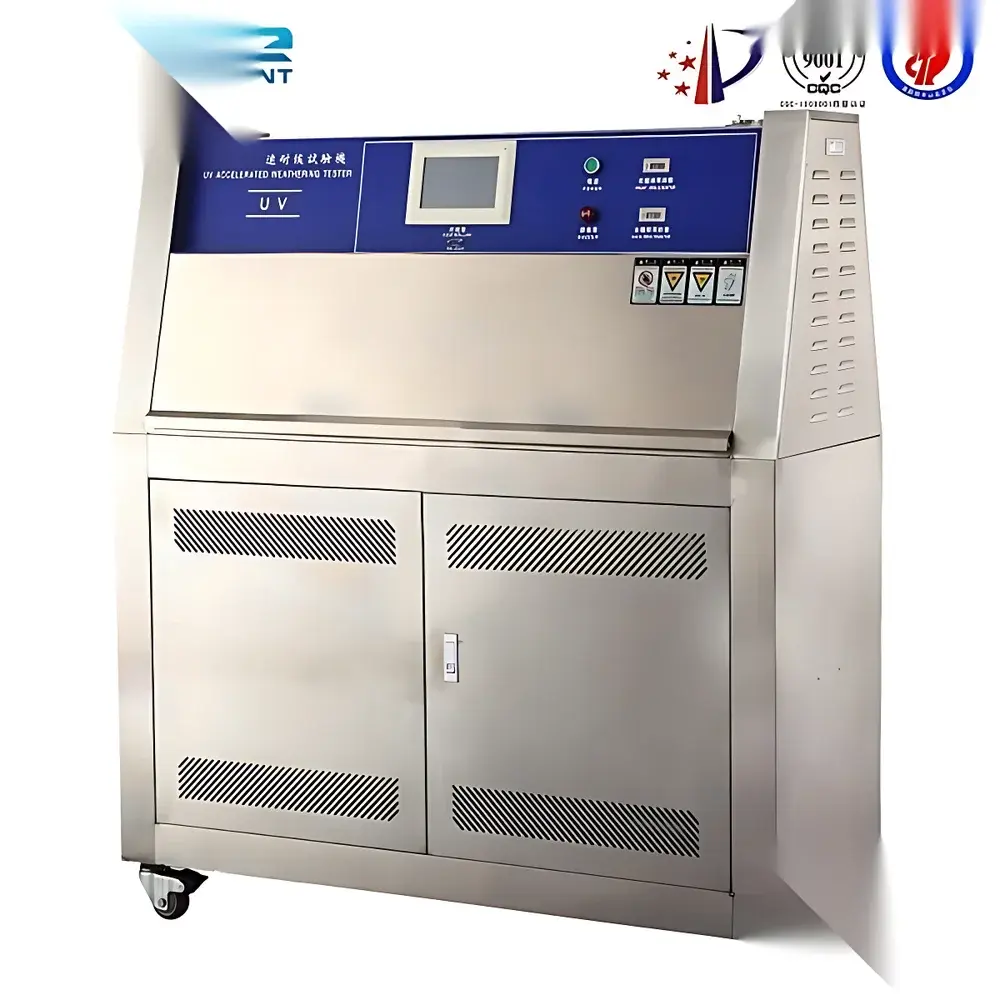
UV Aging Test Chamber – Fluorescent UV Accelerated Weathering Tester
| Brand | Other Brands |
|---|---|
| Origin | Imported |
| Manufacturer Type | General Distributor |
| Price | USD 2,600 (Reference Only) |
| UV Source | Fluorescent UVA-340 / UVB-313 Lamps |
| Condensation Mechanism | Integrated Cold Condensation System |
| Temperature Range | 40–70 °C (Irradiation), 40–60 °C (Condensation) |
| Humidity Control | 90–100% RH during Condensation Cycle |
| Cycling Modes | UV Irradiation / Condensation / Optional Water Spray |
| Compliance | ASTM G154, ISO 4892-3, JIS D0205, GB/T 14522 |
| Safety Features | UV Interlock Door Switch, Over-Temp Protection, Emergency Stop, Ocular UV Shielding |
Overview
The UV Aging Test Chamber – Fluorescent UV Accelerated Weathering Tester is an engineered environmental test system designed to replicate the photochemical degradation effects of natural sunlight, specifically the short-wave ultraviolet (UV) spectrum (290–400 nm), in combination with thermal cycling and moisture condensation. Unlike broad-spectrum xenon arc or carbon arc testers, this chamber employs calibrated fluorescent UV lamps—primarily UVA-340 (simulating terrestrial solar UV down to 295 nm) and UVB-313 (extending to 280 nm for aggressive stress testing)—to deliver reproducible, spectrally defined irradiance. The test principle follows the photooxidative degradation pathway: UV photons initiate bond cleavage in polymer matrices, generating free radicals that react with atmospheric oxygen and moisture, leading to chain scission, crosslinking, and surface morphology changes. By accelerating exposure cycles—typically 8 hours UV irradiation at controlled black-panel temperature followed by 4 hours condensation at elevated humidity—the chamber compresses years of outdoor exposure into days or weeks, enabling rapid comparative evaluation of material durability under standardized conditions.
Key Features
- Modular fluorescent UV lamp array with interchangeable UVA-340 and UVB-313 lamp options, each calibrated per ASTM E1710 for spectral irradiance uniformity
- Integrated cold condensation system using deionized water reservoir and temperature-controlled stainless-steel walls to simulate nocturnal dew formation without external humidifiers
- Optional programmable water spray function for simulating rain-induced thermal shock and surface washing effects
- Digital PID-controlled black-panel thermometer (BPT) and chamber air temperature sensor with ±0.5 °C accuracy, ensuring compliance with ASTM G154 Class I/II exposure profiles
- UV-resistant quartz viewing window with integrated optical filter to attenuate non-UV wavelengths and prevent operator exposure
- Stainless-steel interior chamber (304 grade) with seamless welds and sloped floor for complete drainage; exterior powder-coated steel housing
- Microprocessor-based controller with password-protected parameter locking, real-time cycle logging, and USB data export capability
Sample Compatibility & Compliance
The chamber accommodates flat-panel specimens up to 120 mm × 240 mm × 20 mm (standard rack configuration), supporting rigid plastics, coatings, automotive trim, roofing membranes, textiles, and aerospace composites. Sample mounting fixtures are non-reactive (anodized aluminum or ceramic-coated) to avoid catalytic interference. All operational protocols align with internationally recognized weathering standards: ASTM G154 (Standard Practice for Operating Fluorescent Ultraviolet (UV) Lamp Apparatus for Exposure of Non-Metallic Materials), ISO 4892-3 (Plastics — Methods of Exposure to Laboratory Light Sources — Part 3: Fluorescent UV Lamps), JIS D0205 (Automotive Paint Durability), and GB/T 14522 (Chinese national standard for UV aging of polymer materials). The system supports GLP-compliant audit trails when paired with optional data acquisition software meeting FDA 21 CFR Part 11 requirements for electronic records and signatures.
Software & Data Management
The embedded controller stores full-cycle parameters—including irradiance setpoint (W/m² @ 340 nm), BPT temperature profile, condensation duration, and elapsed test time—with timestamped logs retained for ≥10,000 hours. Optional PC-based software enables remote monitoring, multi-chamber synchronization, automated report generation (PDF/CSV), and trend analysis of irradiance decay over lamp lifetime (typical rated life: 1,600–2,000 hours). Calibration certificates traceable to NIST standards are provided with each lamp batch. Data integrity safeguards include write-protected memory, cyclic redundancy check (CRC) validation, and user-level access control (operator, technician, administrator).
Applications
This tester serves quality assurance laboratories, R&D departments, and third-party certification bodies evaluating photostability across regulated and industrial sectors. Key use cases include: accelerated qualification of automotive clearcoats per SAE J2527; UV resistance validation of PV module encapsulants (IEC 61215); shelf-life prediction for pharmaceutical packaging films; colorfastness assessment of architectural coatings (ASTM D4303); and comparative ranking of polymer stabilizer packages in polyolefins and PVC formulations. It is not intended for biological or volatile organic compound (VOC) emission testing.
FAQ
What safety precautions are required when operating the UV Aging Test Chamber?
Operators must wear ANSI Z87.1-compliant UV-blocking safety goggles and nitrile gloves; direct skin or ocular exposure to unfiltered UVB radiation must be limited to <60 seconds per session. The chamber door interlock automatically de-energizes lamps upon opening.
How often should UV lamps be replaced?
Lamp output declines progressively; replacement is recommended after 1,600 hours of cumulative operation or when irradiance falls below 90% of initial calibration value—verified using a calibrated UV radiometer.
Can tap water be used for condensation or spray functions?
No. Deionized or distilled water (conductivity ≤5 µS/cm) is mandatory to prevent mineral deposition on lamps and sensors, which would distort spectral output and impair temperature control.
Is the chamber suitable for testing metallic substrates?
Yes, provided the coating or finish under evaluation is non-reflective and adheres uniformly; bare metals may cause localized heating or reflectivity artifacts and require substrate-specific validation per ISO 4892-3 Annex B.
Does the system support custom exposure cycles beyond ASTM G154?
Yes—user-defined programs allow variable UV intensity ramping, asymmetric condensation intervals, and integration of spray events, subject to hardware thermal limits and lamp spectral constraints.
Related Products



