
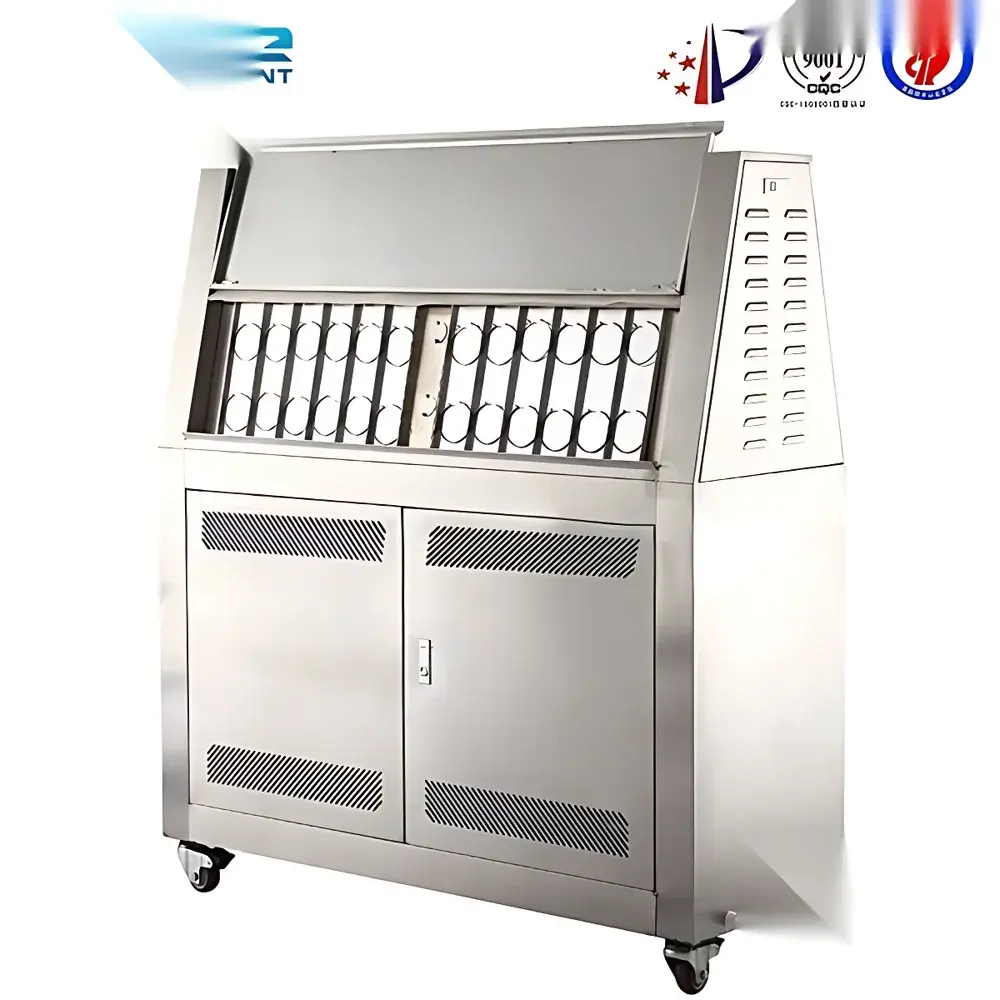
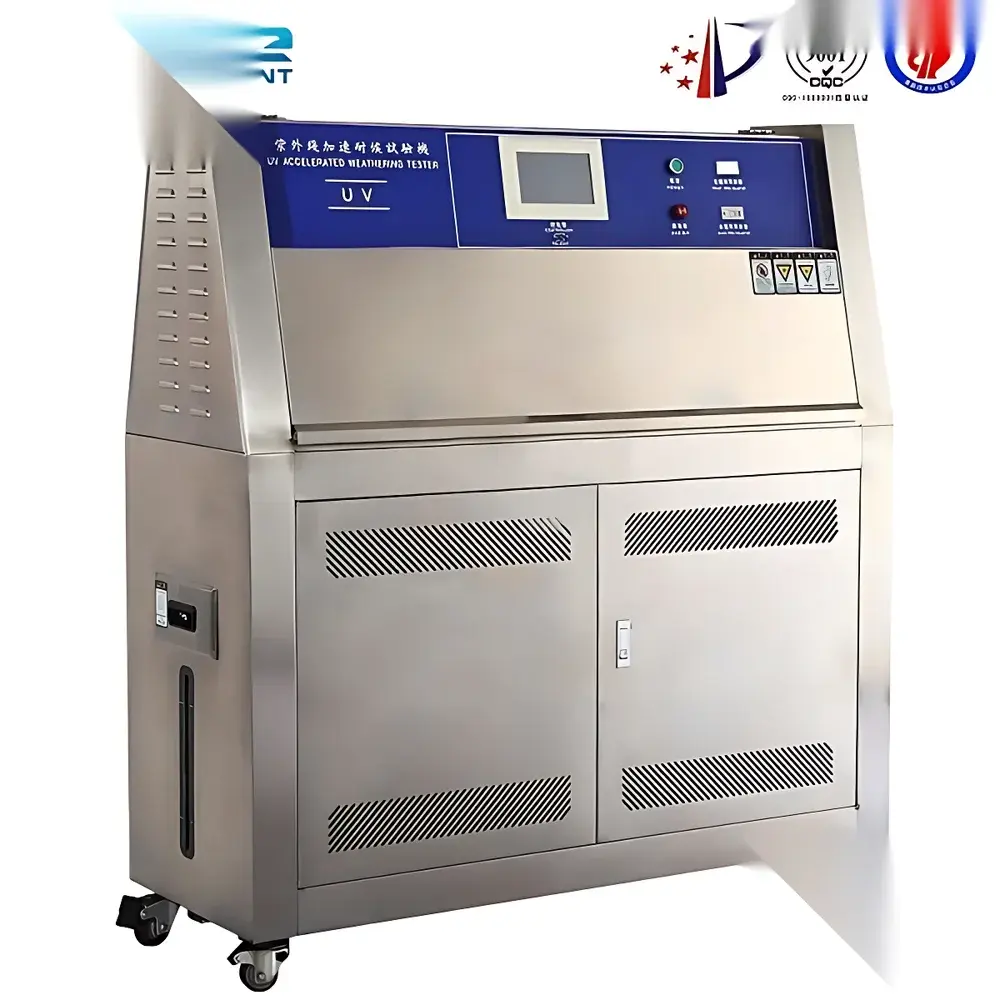
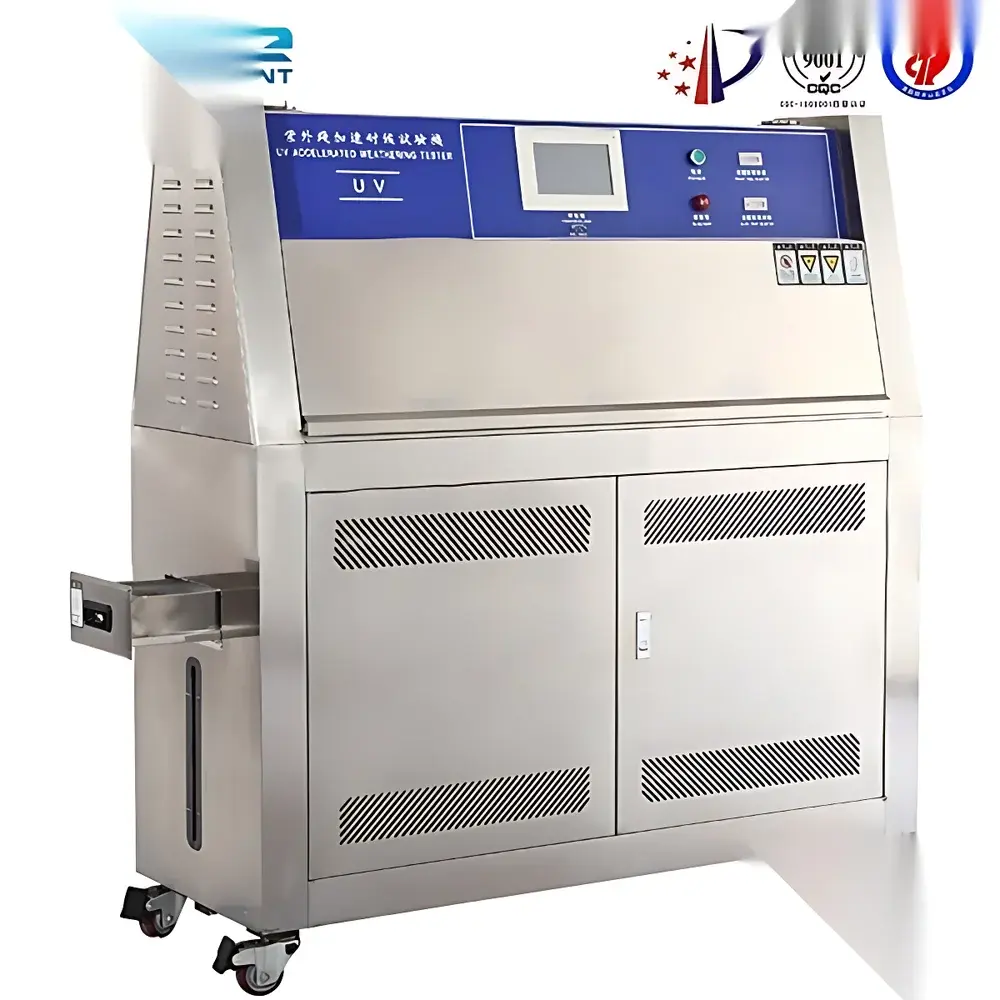
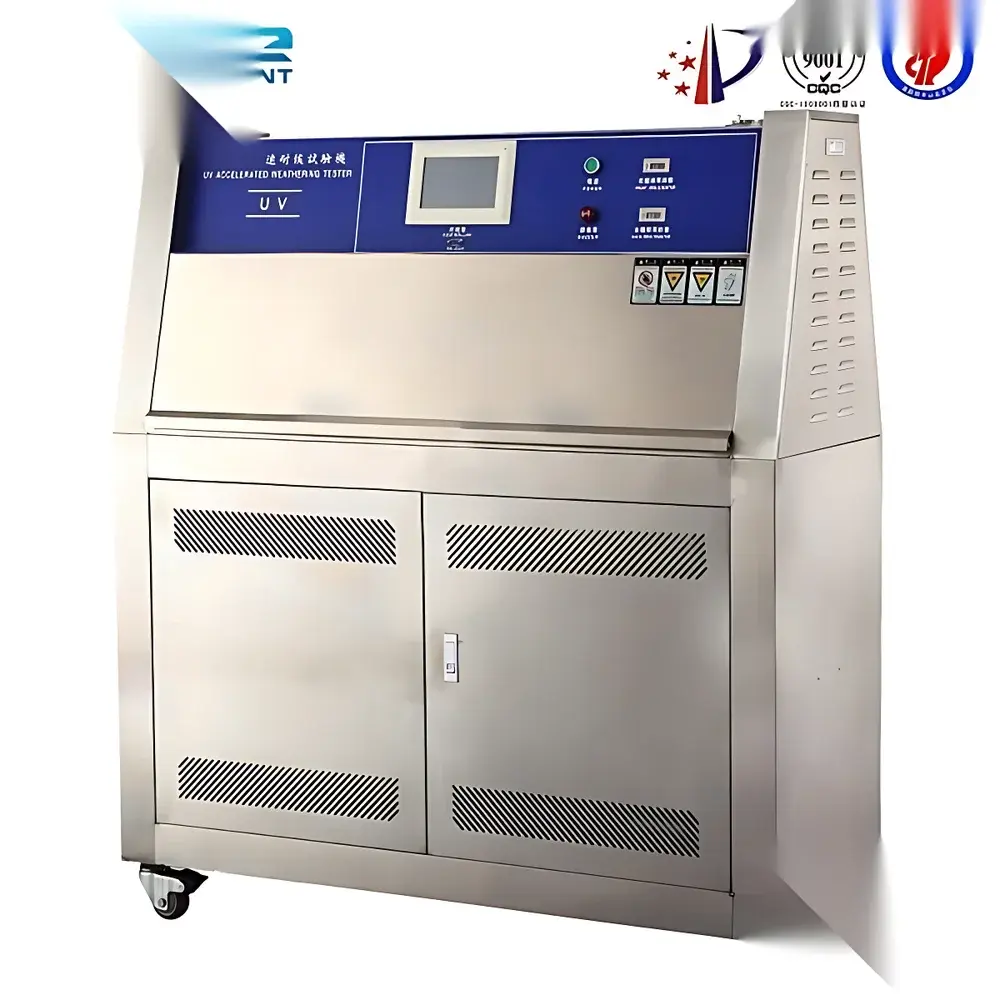
UV Aging Test Chamber with Fluorescent UV Lamps
| Brand | Other Brands |
|---|---|
| Origin | Imported |
| Manufacturer Type | Authorized Distributor |
| Price | USD 2,600 (Reference Only) |
| Light Source | Fluorescent UV-A (340 nm) and UV-B (313 nm) Lamps |
| Temperature Range | 40–70 °C (Controllable) |
| Humidity Control | Condensation Cycle (50–95% RH) |
| Irradiance Control | Yes (via calibrated sensor) |
| Spray Function | Integrated Water Spray System |
| Compliance | ASTM G154, ISO 4892-3, JIS D0205, GB/T 14522 |
| Chamber Volume | Standard 400 L (Customizable) |
Overview
The UV Aging Test Chamber with Fluorescent UV Lamps is an engineered environmental test system designed to accelerate the photodegradation and moisture-induced aging of polymeric, coating, automotive, and architectural materials under controlled ultraviolet radiation and condensation cycles. It operates on the principle of xenon-free UV exposure simulation—utilizing fluorescent UV lamps (UVA-340 and UVB-313) that replicate the most damaging short-wavelength region of terrestrial solar UV spectrum (295–365 nm). Unlike broad-spectrum xenon arc systems, this chamber delivers high-intensity, spectrally stable UV irradiance with minimal infrared heating, enabling precise thermal management during exposure. The integrated condensation cycle generates dew-like moisture on specimen surfaces via saturated humid air at elevated temperature, while optional water spray simulates thermal shock and surface washing effects. This dual-stress methodology conforms to internationally recognized accelerated weathering protocols, allowing laboratory-based replication of months or years of outdoor degradation in days or weeks.
Key Features
- Fluorescent UV lamp arrays with selectable spectral output (UVA-340 for daylight simulation; UVB-313 for aggressive, high-energy exposure)
- Precisely regulated black-panel temperature control (40–70 °C) with PID feedback loop and NIST-traceable calibration
- Programmable exposure/condensation cycles: independent timing for UV irradiation, dark condensation, and optional water spray phases
- Real-time irradiance monitoring via broadband UV sensor with automatic lamp output compensation
- Stainless steel 304 interior chamber with seamless welded construction and corrosion-resistant insulation
- Integrated water spray system with adjustable nozzle pattern, pressure regulation, and deionized water compatibility
- Front-access viewing window with UV-blocking laminated glass and internal LED illumination for safe sample observation
- Dual safety interlocks: door switch cutoff and UV lamp shutdown upon chamber opening
Sample Compatibility & Compliance
This chamber accommodates flat-panel specimens up to 150 mm × 75 mm × 25 mm (standard rack configuration), with optional multi-tier racks for increased throughput. Compatible substrates include thermoplastics, elastomers, paints, inks, adhesives, textiles, and composite laminates. All operational parameters—including irradiance setpoints, temperature profiles, and cycle sequencing—are fully traceable and auditable, supporting GLP-compliant testing environments. The system meets the technical requirements of ASTM G154 (Standard Practice for Operating Fluorescent Ultraviolet (UV) Lamp Apparatus for Exposure of Non-Metallic Materials), ISO 4892-3 (Plastics — Methods of Exposure to Laboratory Light Sources — Part 3: Fluorescent UV Lamps), and JIS D0205 (Automotive Exterior Parts Weathering Test). Optional validation packages support IQ/OQ documentation per FDA 21 CFR Part 11 and ISO/IEC 17025 requirements.
Software & Data Management
The chamber is equipped with an embedded industrial-grade controller featuring a 7-inch color touchscreen HMI interface. Test programs are created using intuitive drag-and-drop logic for defining multi-step UV/condensation/spray sequences. Real-time data logging records black-panel temperature, chamber air temperature, relative humidity, UV irradiance (W/m²), and elapsed cycle time at user-defined intervals (1 s to 60 min). Export formats include CSV and PDF reports compliant with laboratory information management system (LIMS) ingestion standards. Audit trail functionality logs all operator actions, parameter changes, and alarm events with timestamp and user ID. Remote monitoring is supported via Ethernet TCP/IP connection with Modbus RTU protocol for integration into centralized facility monitoring platforms.
Applications
- Accelerated evaluation of UV stabilizers and HALS additives in polyolefins and PVC formulations
- Correlation studies between lab-scale UV exposure and real-world field performance of automotive clearcoats
- Qualification testing of exterior signage films, roofing membranes, and façade sealants per AAMA 2605
- Comparative ranking of pigment fade resistance in architectural coatings under standardized UV-B stress
- Validation of packaging material integrity for pharmaceutical primary containers exposed to ambient light storage conditions
- Failure mode analysis of polymer matrix composites subjected to combined UV/thermal/humidity cycling
FAQ
What UV lamp types are supported, and how often do they require replacement?
The chamber accepts standard F40 UV-A and UV-B fluorescent tubes. Lamp output degrades over time; replacement is recommended every 1,600 hours of operation or after 4,000 cycles—whichever occurs first—to maintain irradiance compliance with ASTM G154 Annex A2.
Is distilled or deionized water required for the condensation and spray systems?
Yes. Use Type II or higher purity water (resistivity ≥1 MΩ·cm) to prevent mineral deposits on lamps, sensors, and specimen surfaces. A built-in water level sensor and low-conductivity alarm prevent operation with substandard water.
Can the chamber operate unattended for extended periods?
Yes—provided the facility maintains stable power, ambient temperature (15–30 °C), and humidity (<80% RH non-condensing). An optional UPS interface and remote alarm relay output enable integration with building management systems.
How is UV exposure uniformity verified across the specimen plane?
Uniformity is validated per ASTM G154 Section 7.3 using a calibrated UV radiometer grid scan. Typical spatial irradiance variation across the standard test area is ≤±15% of mean value when lamps are properly aged and aligned.
Does the system support third-party software integration for automated reporting?
Yes. The controller provides OPC UA and Modbus TCP interfaces for direct communication with LabVIEW, MATLAB, or custom MES/LIMS platforms. Raw log files are timestamped and digitally signed to ensure data integrity.



