
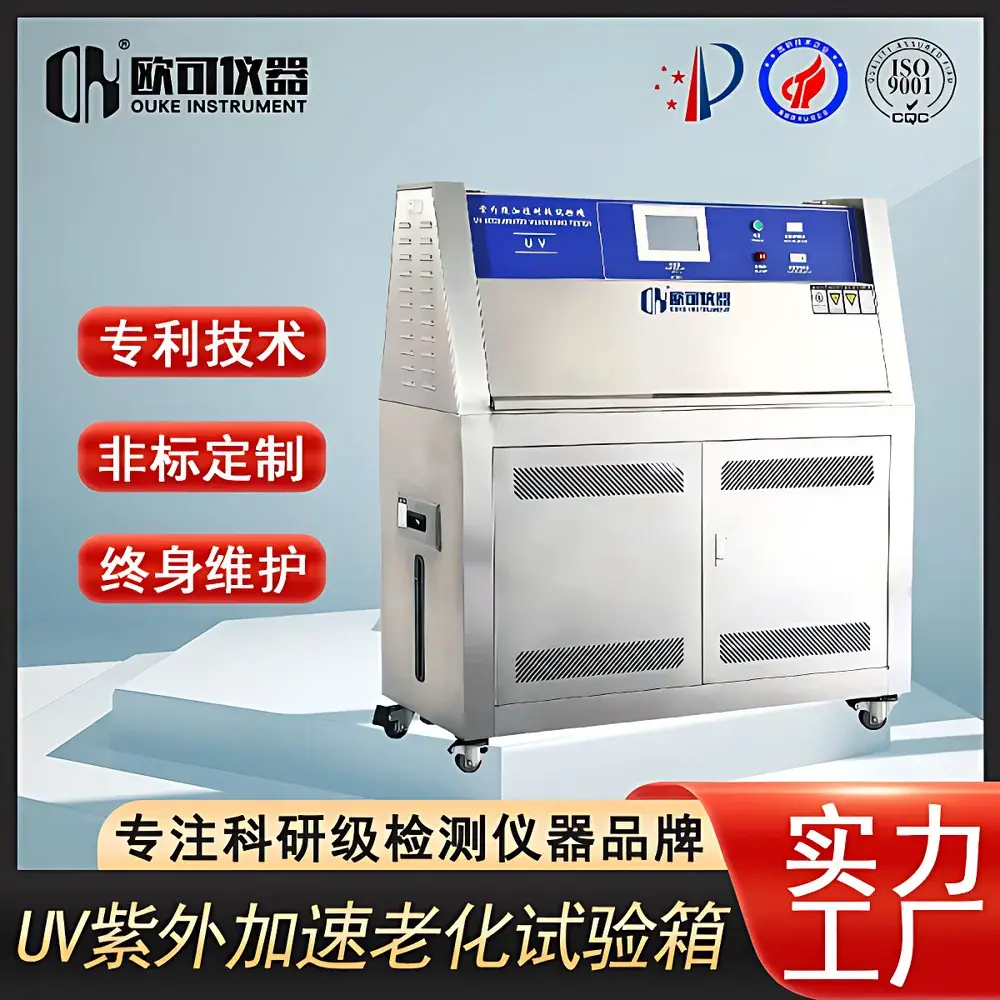
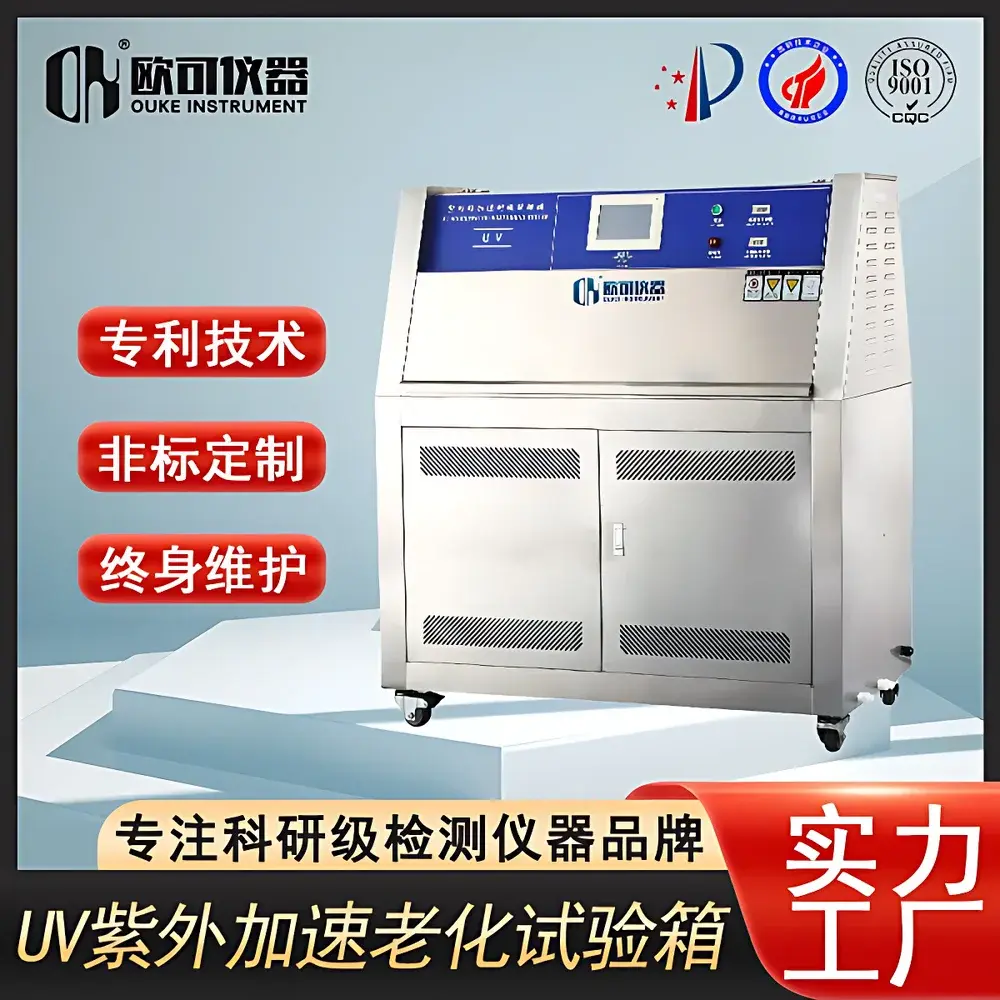
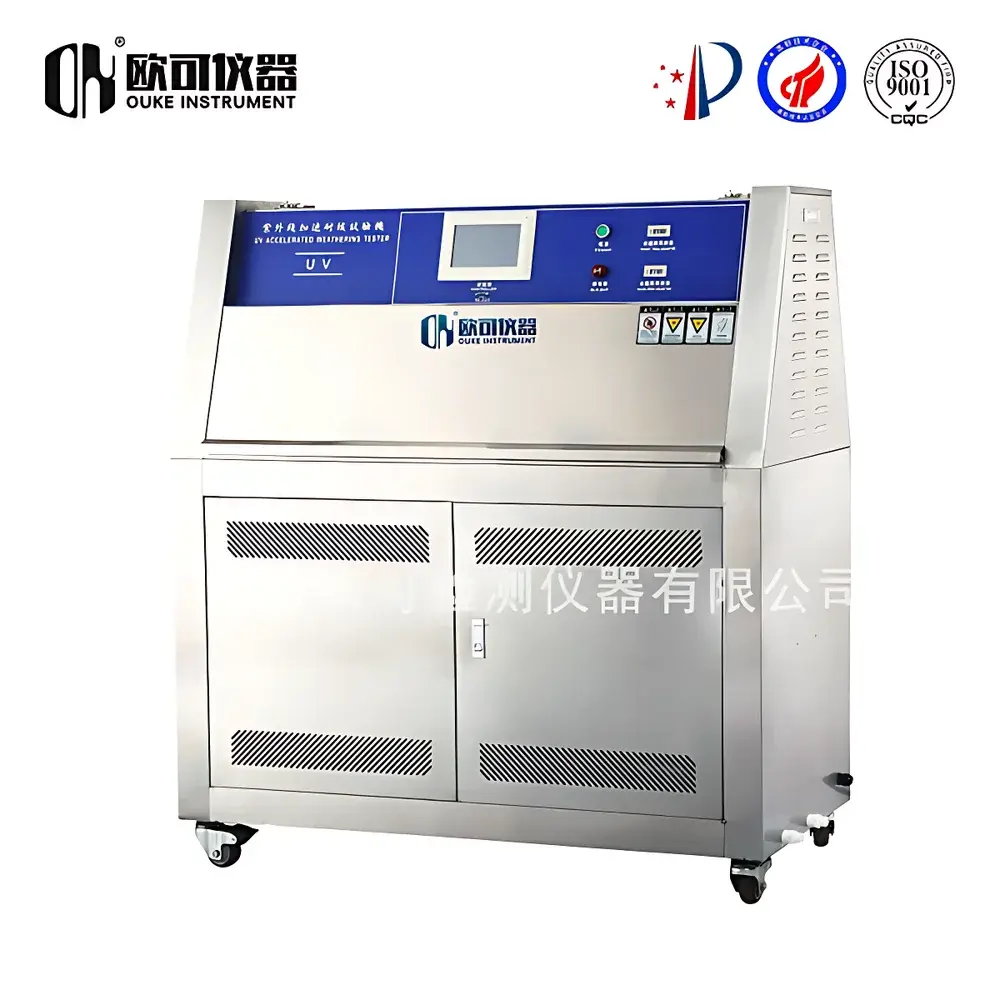
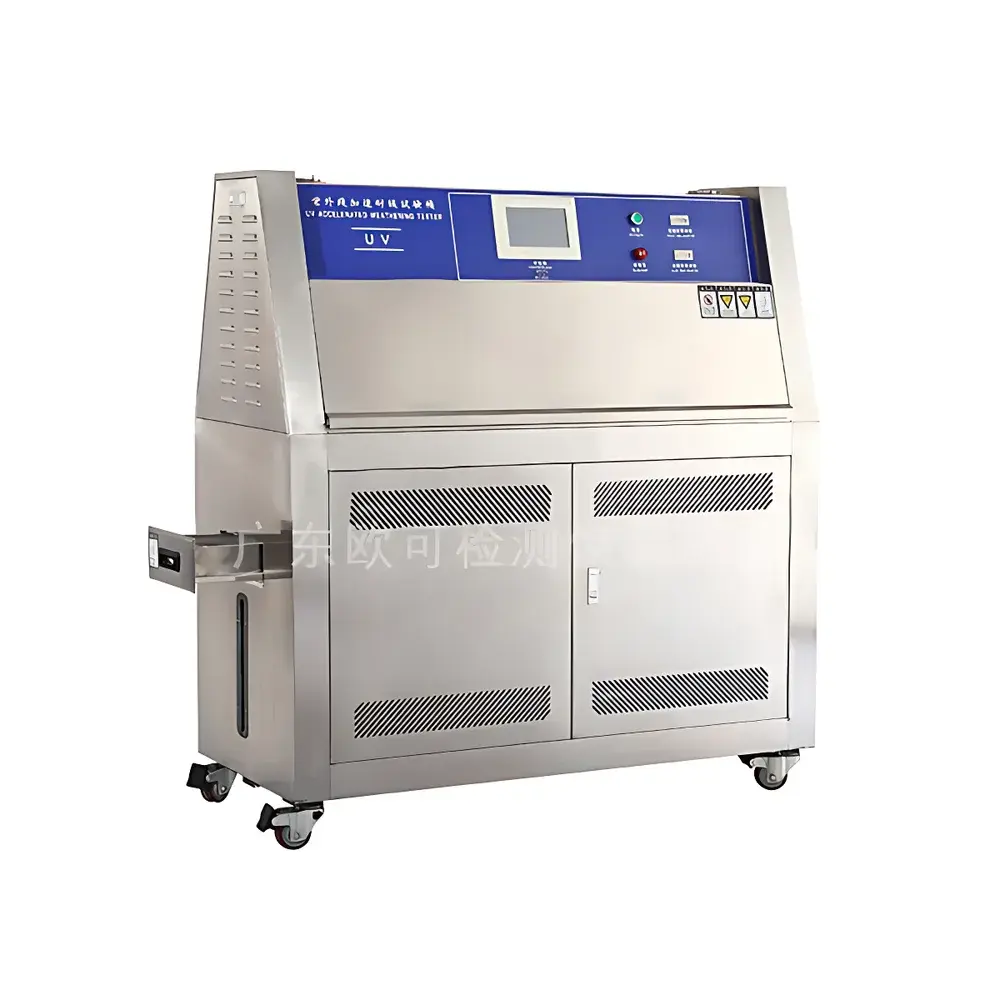
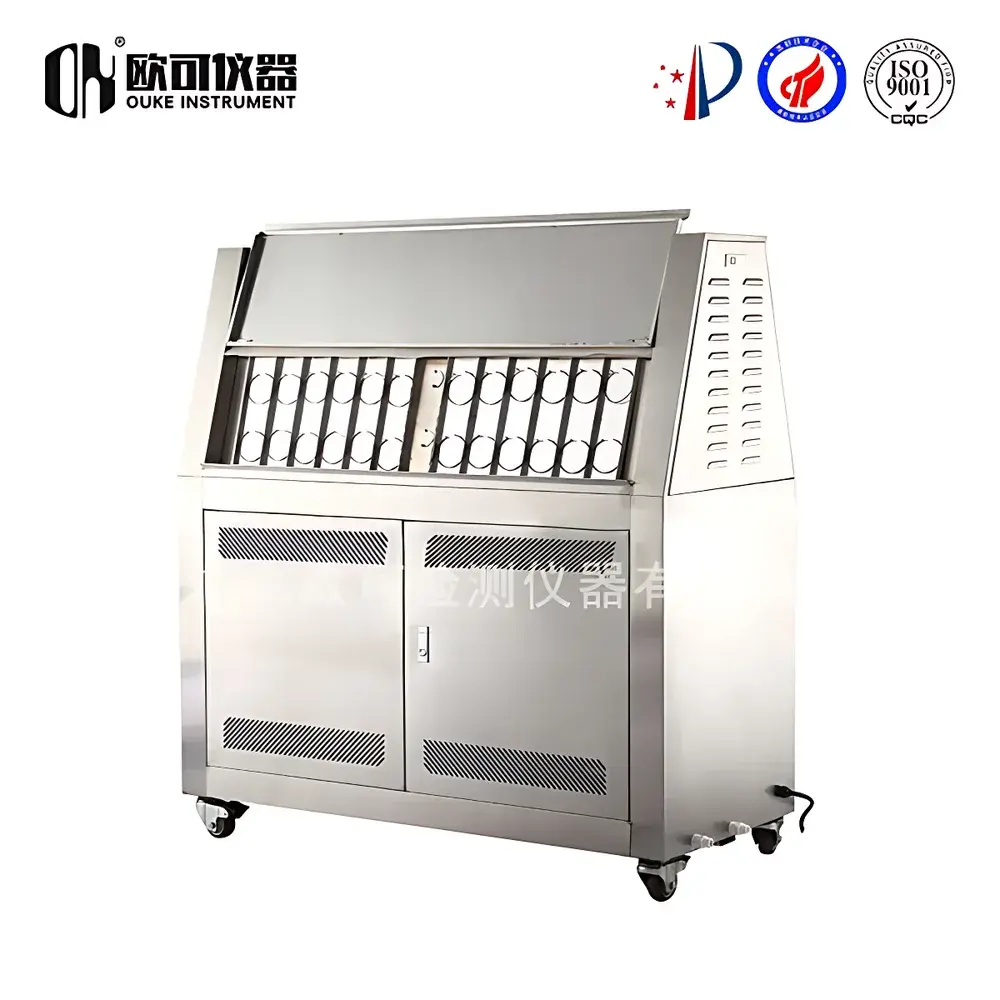
OK UV Aging Test Chamber OK-UV-290.00
| Brand | OK Instruments |
|---|---|
| Origin | Guangdong, China |
| Manufacturer Type | Direct Manufacturer |
| Product Origin | Domestic (China) |
| Model | OK-UV-290.00 |
| Humidity Range | ≥95% RH (in-chamber actual value) |
| Lamp Power | 40 W per tube |
| Irradiance Range | 0.72 W/m² (typically measured at 340 nm) |
| Exposure Time | 1–9999 h (adjustable) |
| Illuminated Temperature Range | RT to 70 °C |
| UV Wavelength Range | 280–400 nm |
| Chamber Internal Dimensions (L×W×H) | 1170 × 400 × 400 mm |
Overview
The OK UV Aging Test Chamber OK-UV-290.00 is a precision-engineered environmental test system designed for accelerated ultraviolet (UV) weathering evaluation of polymeric, coated, and organic materials. It operates on the principle of controlled fluorescent UV irradiation—mimicking the most photochemically aggressive portion of terrestrial solar radiation—combined with cyclic condensation humidity and thermal regulation. Unlike broad-spectrum xenon arc or carbon arc sources, this chamber employs narrowband fluorescent UV lamps to isolate and intensify exposure within the 280–400 nm spectral region, where photon energy is sufficient to drive photooxidative degradation mechanisms such as chain scission, crosslinking, and chromophore disruption. The system enables reproducible simulation of outdoor UV exposure under standardized conditions aligned with ASTM G154, ISO 4892-3, and GB/T 16422.3, making it an essential tool for R&D laboratories, QC departments, and certification testing facilities requiring rapid, high-fidelity aging data.
Key Features
- Fluorescent UV lamp array with selectable UVA-340 or UVB-313 spectral output—UVA-340 replicates terrestrial solar UV down to 295 nm; UVB-313 delivers higher-energy short-wave UV for accelerated stress testing.
- Precisely regulated irradiance control at 0.72 W/m² (typically referenced at 340 nm), compliant with Class I irradiance requirements per ISO 4892-3 Annex A.
- Integrated condensation cycle via heated water pan system, maintaining ≥95% RH in-chamber during dark/cool phases to simulate nocturnal dew formation and moisture absorption.
- Independent black-panel temperature control (RT to 70 °C during irradiation), calibrated to meet ASTM G154 Section 6.3 specifications for specimen surface temperature monitoring.
- Programmable microprocessor-based controller supporting multi-step UV/condensation cycles (e.g., 4 h UV @ 60 °C / 4 h condensation @ 50 °C), with non-volatile memory and real-time parameter logging.
- Stainless steel 304 interior chamber (1170 × 400 × 400 mm internal volume) ensuring corrosion resistance and long-term dimensional stability under humid UV environments.
- Comprehensive safety architecture including overtemperature cutoff, low-water-level alarm, grounded leakage protection, and interlocked door switch.
Sample Compatibility & Compliance
The OK-UV-290.00 accommodates flat or moderately contoured specimens up to 10 mm thick and 150 mm × 75 mm in footprint—compatible with standard ASTM G154 specimen racks and ISO 4892-3 sample holders. It supports testing of thermoplastics, elastomers, architectural coatings, automotive trim, textile laminates, and exterior-grade adhesives. All operational parameters—including irradiance stability, temperature uniformity (±2 °C across specimen plane), and humidity repeatability—are validated against traceable NIST-traceable calibration protocols. The system’s firmware and data logging architecture support audit-ready documentation required for GLP-compliant studies and FDA 21 CFR Part 11–aligned environments when paired with optional electronic signature modules.
Software & Data Management
Equipped with OK’s proprietary UV-Logix™ control interface, the chamber provides intuitive touchscreen navigation, password-protected parameter editing, and automatic generation of timestamped test reports in CSV and PDF formats. Real-time graphs display irradiance drift, chamber temperature/humidity trends, and cumulative exposure dose (kJ/m²). Data export complies with ASTM E2912 for digital record integrity. Optional Ethernet or RS-485 connectivity enables integration into centralized LIMS or MES platforms, supporting automated report archiving, remote monitoring, and scheduled calibration alerts. Audit trails record all user actions—including setpoint changes, cycle interruptions, and maintenance events—with immutable timestamps.
Applications
- Plastics & Elastomers: Quantification of yellowness index (ASTM D1925), tensile strength retention (ISO 527), and surface microcracking after UV/humidity cycling.
- Coatings & Inks: Evaluation of gloss loss (ASTM D523), color shift (ΔE* CIE L*a*b*), blistering (ASTM D714), and adhesion failure (ASTM D3359).
- Automotive Interiors/Exteriors: Validation of dashboard material cracking, headlight lens haze, and sealant UV resistance per SAE J2020.
- Architectural Materials: Accelerated qualification of roofing membranes, PVC siding, and silicone sealants under cyclic UV/condensation per ASTM D4798.
- Textiles & Composites: Assessment of fiber tensile degradation, dye migration, and matrix delamination in reinforced polymer systems.
FAQ
What UV lamp types are supported, and how do they differ?
The chamber accepts both UVA-340 and UVB-313 fluorescent tubes. UVA-340 closely matches solar UV down to 295 nm and is preferred for outdoor durability prediction. UVB-313 emits more energetic short-wavelength UV below 300 nm and is used for rapid screening and quality assurance where extreme stress is required.
Is irradiance calibrated and traceable to national standards?
Yes—each unit ships with a factory-calibrated UV radiometer (NIST-traceable to 340 nm), and annual recalibration services are available through OK’s accredited metrology lab.
Can the chamber operate unattended for extended durations?
Yes—the controller supports continuous operation up to 9999 hours with built-in fault detection, auto-restart after power recovery, and email/SMS alert integration via optional IoT gateway.
Does the system comply with GLP or ISO/IEC 17025 requirements?
When configured with full audit trail logging, electronic signatures, and documented calibration records, the OK-UV-290.00 meets functional requirements for GLP studies and supports ISO/IEC 17025 accreditation of testing laboratories.
How is temperature uniformity verified across the specimen plane?
Per ISO 4892-3 Clause 7.2, OK performs thermal mapping using 9-point PT100 sensor arrays during commissioning, confirming ±2 °C uniformity at the specimen location under steady-state UV exposure.



