
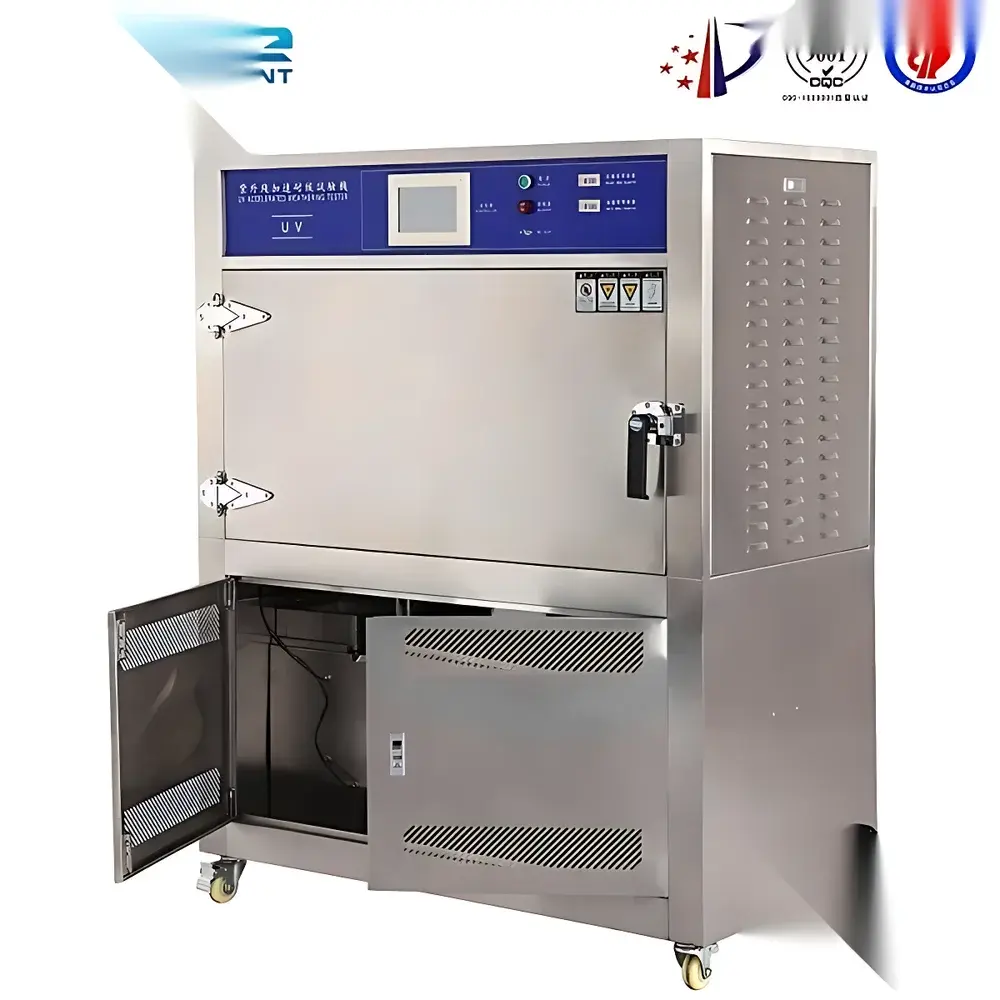
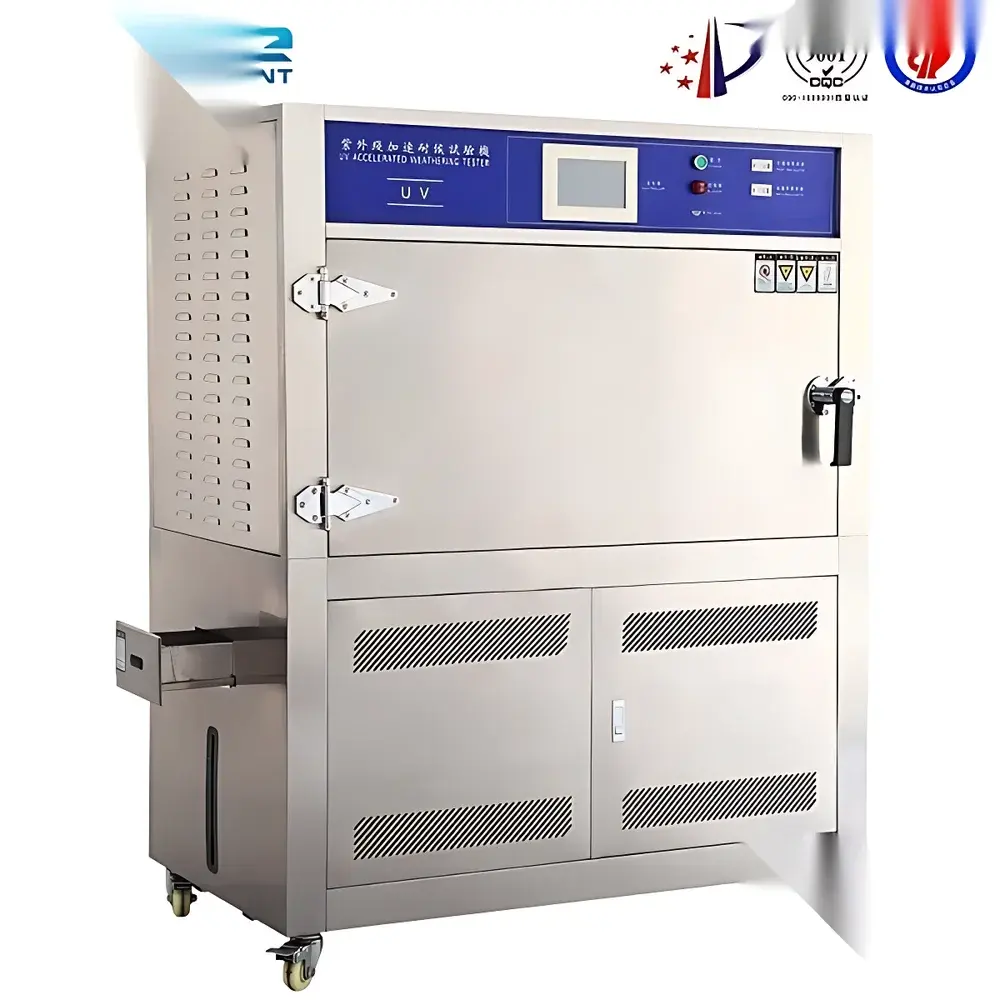
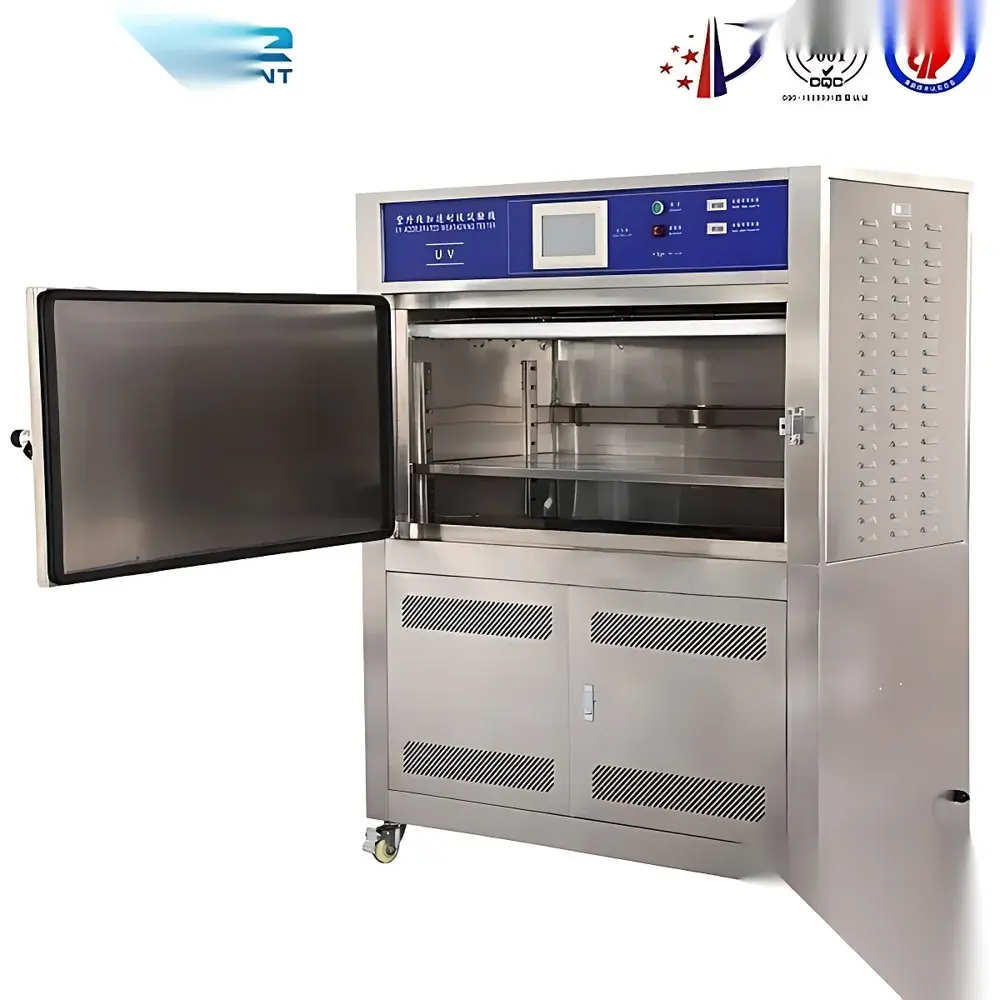
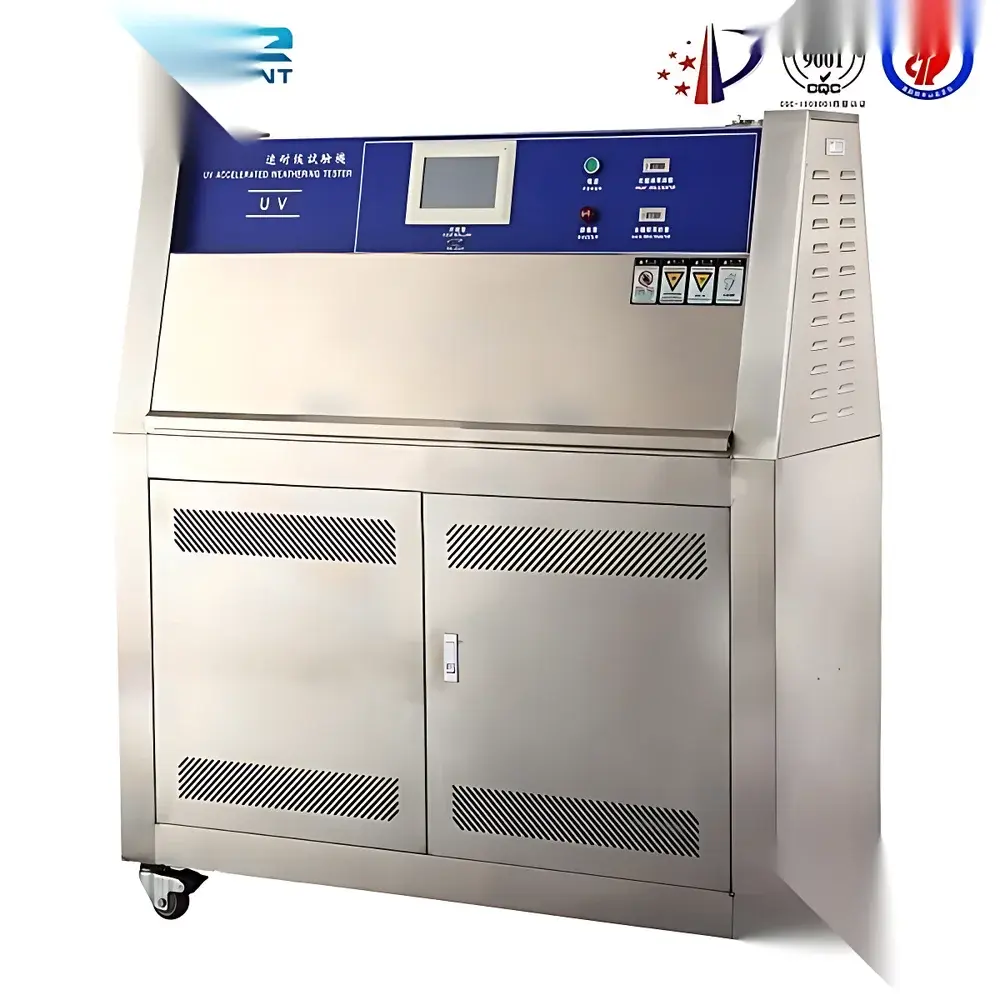
UV Aging Test Chamber OK-UV-290
| Brand | OK Instruments |
|---|---|
| Model | OK-UV-290 |
| Chamber Type | Fluorescent UV Accelerated Weathering Tester |
| Internal Dimensions (W×H×D) | 114 × 40 × 40 cm |
| External Dimensions (W×H×D) | 135 × 140 × 65 cm |
| Temperature Range | Ambient to 70 °C |
| Humidity Range | ≥95% RH |
| Temperature Control Accuracy | ≤±0.5 °C |
| Temperature Uniformity | ≤±2 °C or ≤±3% |
| UV Source | Fluorescent UV lamps (UVA-340 or UVB-313 equivalent, spectral range 280–400 nm) |
| Lamp Lifetime | Approx. 2000 hours |
| Exposure Time Setting | 0–999 hours (digital timer) |
| Construction Material | Interior and exterior chamber walls — SUS#304 stainless steel |
| Heating System | U-shaped titanium alloy high-speed heating elements |
| Safety Protections | UV lamp interlock (auto-shutoff upon door opening), over-temperature protection, low-water-level cutoff |
| Power Supply | AC 220 V ±5%, 50 Hz |
Overview
The OK-UV-290 UV Aging Test Chamber is an accelerated weathering instrument engineered for precision simulation of solar ultraviolet radiation, condensation, and moisture cycling under controlled laboratory conditions. It operates on the principle of fluorescent ultraviolet (UV) irradiation—primarily utilizing UVA-340 (340 nm peak) or UVB-313 (313 nm peak) lamp configurations—to replicate the most damaging short-wavelength UV components of natural sunlight. Concurrently, a saturated condensation cycle—achieved via heated water reservoirs and controlled chamber wall temperature gradients—mimics dew formation, while optional water spray functionality enables rain simulation per ASTM G154 and ISO 4892-3 protocols. Unlike xenon arc or carbon arc testers, this chamber delivers highly reproducible, spectrally stable UV exposure with minimal thermal load variation, making it particularly suitable for comparative durability screening of polymeric coatings, automotive trim, architectural finishes, and industrial adhesives.
Key Features
- Stainless steel construction (SUS#304) for corrosion resistance and long-term chamber integrity
- Dual-mode UV exposure control: adjustable irradiance intensity and programmable exposure/condensation cycles
- Precision temperature regulation (ambient to 70 °C) with ≤±0.5 °C accuracy and uniformity maintained within ±2 °C across test area
- High-humidity condensation system achieving ≥95% RH during dark cycles, replicating nocturnal dew accumulation
- Integrated safety architecture: automatic UV lamp deactivation upon door opening, over-temperature cutoff, and low-water-level sensor shutdown
- U-shaped titanium alloy heating elements for rapid, uniform thermal response and extended service life
- Digital timer with 0–999 hour programmability and non-volatile memory retention
Sample Compatibility & Compliance
The OK-UV-290 accommodates flat-panel specimens up to 110 cm wide × 35 cm tall × 10 cm thick, mounted vertically on adjustable sample racks. It supports standard specimen holders compliant with ASTM D4329, ISO 4892-3, JIS D0205, and GB/T 14522. The chamber’s spectral output and operational parameters are validated against reference radiometers traceable to NIST standards. While not inherently 21 CFR Part 11 compliant, its logging-capable controllers (optional upgrade) support audit-ready timestamped exposure logs required for GLP/GMP-aligned material qualification workflows. All electrical components meet IEC 61000-4 electromagnetic compatibility requirements and IP20 enclosure rating.
Software & Data Management
The base configuration includes a microprocessor-based controller with LED display and manual parameter entry. Optional PC interface modules enable RS-485 or USB connectivity for remote monitoring, real-time data logging (temperature, UV exposure duration, cycle phase), and CSV export. Customizable test profiles—including multi-step sequences with variable UV intensity, condensation duration, and dark/light ratio—can be preloaded and recalled. For regulated environments, the optional software package provides electronic signature capability, user access levels, and immutable audit trails aligned with FDA 21 CFR Part 11 Annex 11 expectations.
Applications
This tester is routinely deployed in R&D labs and QC departments for predictive assessment of photodegradation mechanisms including chain scission, chromophore bleaching, surface oxidation, and hydrolytic embrittlement. Primary application domains include: evaluation of automotive clearcoats and plastic fascia under SAE J2020; qualification of architectural sealants per ASTM C1135; stability testing of UV-curable inks and optical films; accelerated aging of wood composites and PVC window profiles; and comparative ranking of stabilizer packages in thermoplastic elastomers. Correlation studies demonstrate strong rank-order agreement (R² > 0.85) between OK-UV-290 exposure outcomes and 24–36 month Florida outdoor exposure for many organic pigment systems.
FAQ
What UV lamp types are compatible with the OK-UV-290?
Standard configuration uses UVA-340 lamps (peak 340 nm) for daylight-spectrum simulation; UVB-313 lamps (peak 313 nm) are available as optional upgrade for aggressive, high-irradiance testing.
Can the chamber perform cyclic tests with alternating UV and water spray?
Yes—programmable sequences support UV irradiation → condensation → water spray → dark recovery phases, fully configurable via controller interface.
Is calibration documentation provided with shipment?
Each unit ships with factory calibration certificate for temperature sensors and UV irradiance verification using calibrated reference sensors.
What maintenance intervals are recommended for optimal performance?
UV lamps should be replaced every 2000 hours of operation; chamber gaskets and water reservoir filters require inspection every 6 months; stainless steel interior cleaning with deionized water is advised after each test series.
Does the OK-UV-290 meet international regulatory requirements for material certification?
It satisfies core test method requirements of ASTM, ISO, and JIS standards for UV exposure; full compliance with regulatory submission guidelines depends on lab-specific validation protocol execution and data traceability implementation.



