
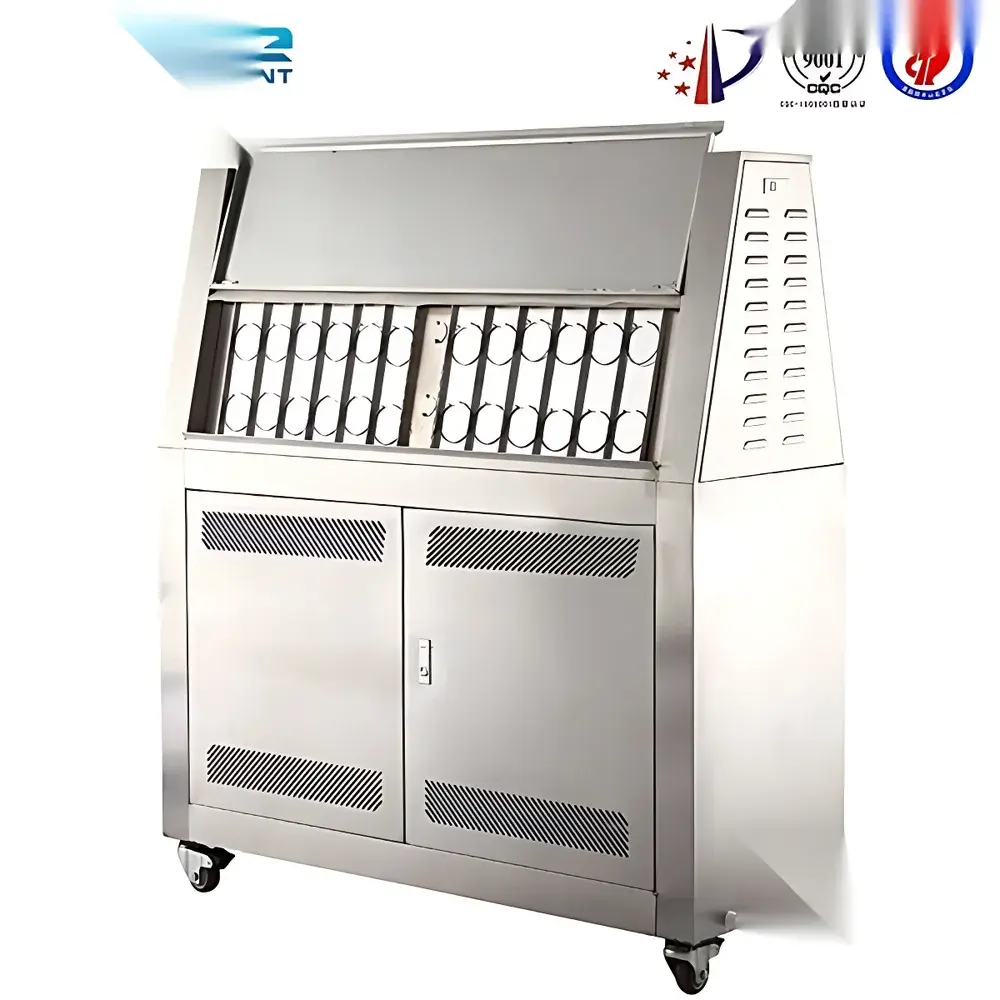
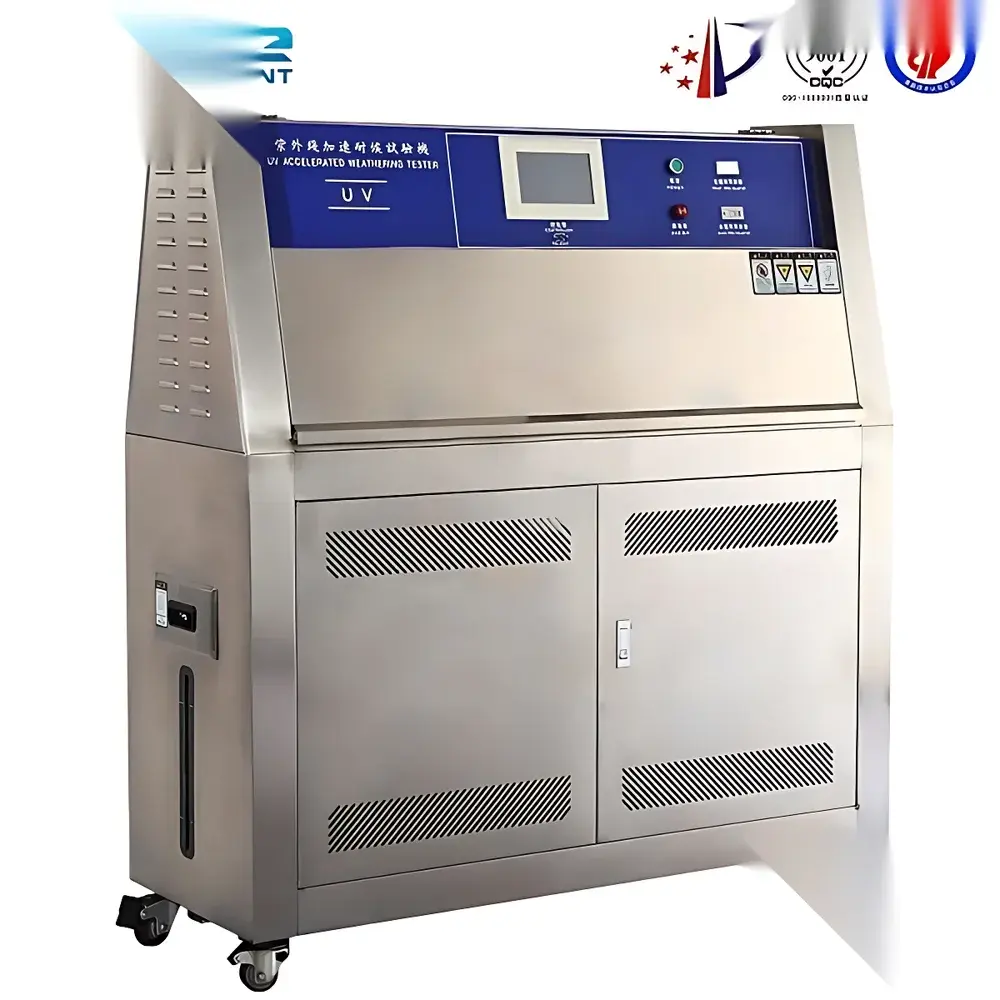
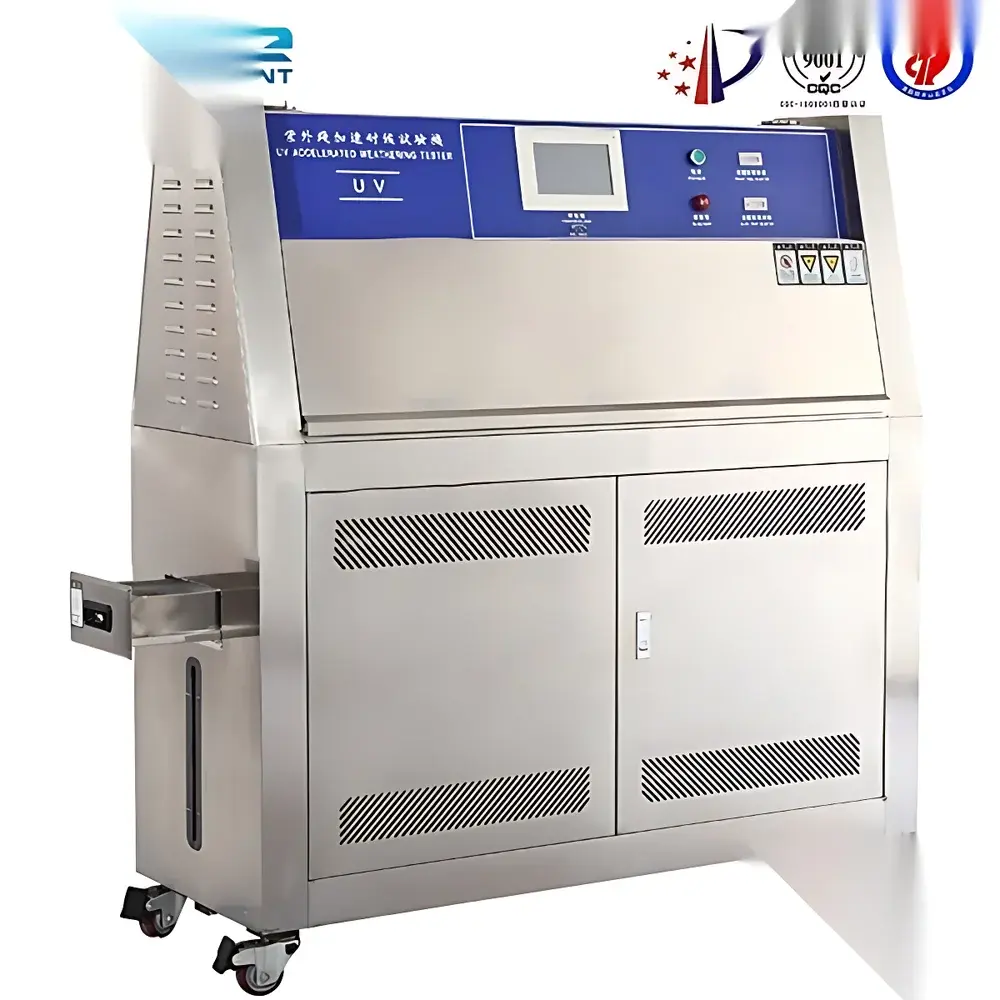
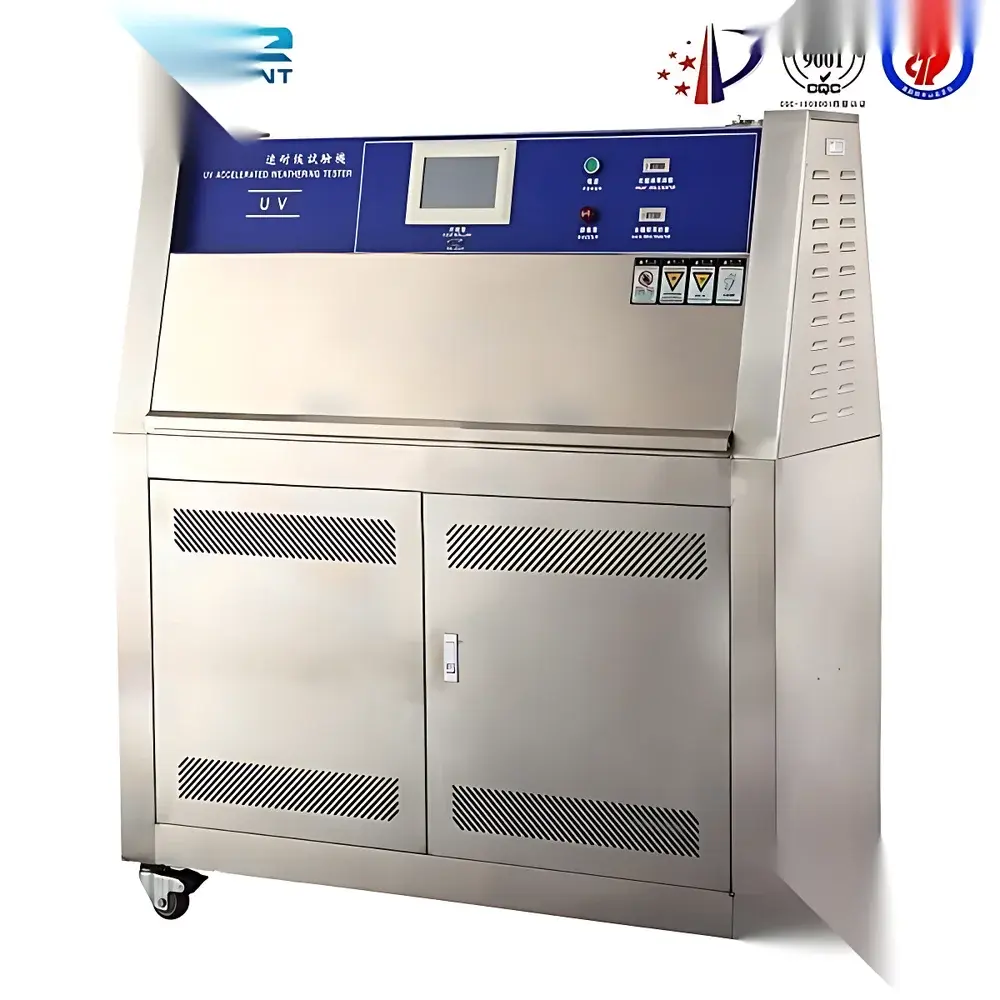
UV Fluorescent Weathering Test Chamber
| Brand | Other Brands |
|---|---|
| Origin | Imported |
| Manufacturer Type | General Distributor |
| Price | USD 2,650 (Reference Only) |
Overview
The UV Fluorescent Weathering Test Chamber is an engineered environmental test system designed to accelerate the evaluation of material degradation under simulated solar ultraviolet (UV) radiation and cyclic condensation humidity. It operates on the principle of controlled UV exposure using fluorescent UV lamps—typically UVA-340 or UVB-313 lamps—which replicate the spectral distribution of terrestrial sunlight in the critical 295–365 nm range. Concurrently, a temperature-regulated condensation cycle generates dew-like moisture on specimen surfaces, mimicking natural nocturnal wetting mechanisms. This dual-stress methodology enables reproducible, laboratory-based simulation of long-term outdoor weathering effects—including photooxidation, polymer chain scission, pigment fading, surface chalking, microcracking, gloss loss, embrittlement, and mechanical property decay—in a fraction of real-time duration (e.g., weeks vs. years).
Key Features
- Fluorescent UV lamp array with selectable spectral output (UVA-340 for daylight simulation or UVB-313 for aggressive accelerated testing)
- Precise black-panel temperature control (typically 30–80 °C) via calibrated thermocouple feedback
- Programmable irradiance control (0.35–1.55 W/m² @ 340 nm) with automatic lamp intensity compensation
- Condensation cycle with saturated humidity generation at elevated temperature (typically 40–60 °C), replicating dew formation
- Optional water spray function for thermal shock and surface erosion simulation (integrated nozzles, deionized water compatible)
- Stainless steel 316L interior chamber with quartz UV-transmissive viewing window
- Digital touch-screen controller with multi-step program storage, real-time monitoring, and data logging (time, irradiance, temperature, humidity)
- Compliance-ready architecture supporting audit trails, user access levels, and event logging per GLP/GMP and ISO/IEC 17025 requirements
Sample Compatibility & Compliance
The chamber accommodates flat or curved specimens up to 75 mm thick and 150 mm × 300 mm in footprint, mounted on adjustable aluminum sample racks. Compatible substrates include polymers (PP, PE, PVC, PC, ABS), coatings (automotive clearcoats, architectural paints), textiles, adhesives, composites, and photovoltaic encapsulants. Test protocols align with major international standards including ASTM G154 (Standard Practice for Operating Fluorescent Ultraviolet (UV) Lamp Apparatus for Exposure of Non-Metallic Materials), ISO 4892-3 (Plastics — Methods of Exposure to Laboratory Light Sources — Part 3: Fluorescent UV Lamps), and SAE J2020 (Automotive Exterior Materials UV Exposure). The system supports full traceability for regulatory submissions requiring documented environmental stress history.
Software & Data Management
The embedded controller firmware records timestamped operational parameters at user-defined intervals (minimum 1-minute resolution) and exports CSV-formatted logs via USB or Ethernet. Optional PC-based software enables remote monitoring, report generation (PDF/Excel), comparative analysis across test runs, and compliance reporting aligned with FDA 21 CFR Part 11 (electronic signatures, audit trail, data integrity controls). All irradiance and temperature calibrations are traceable to NIST-certified reference standards; calibration certificates and uncertainty budgets are provided upon request.
Applications
- Quality assurance of automotive exterior trim, headlamp lenses, and sealants under OEM-specific UV durability specifications
- Formulation development and batch release testing of architectural coatings and roofing membranes
- Accelerated aging validation of medical device packaging materials per ISO 11607
- Photostability assessment of pharmaceutical primary packaging (blister foils, bottles) per ICH Q1B
- Research into UV-induced degradation kinetics of biodegradable plastics and organic photovoltaics
- Failure analysis of field-failed components by correlating lab-induced damage morphology with in-service exposure history
FAQ
What UV lamp types are supported, and how do they differ?
The chamber accepts UVA-340 lamps (peak emission at 340 nm), closely matching solar UV below 365 nm, and UVB-313 lamps (peak at 313 nm), delivering higher-energy photons for extreme acceleration—used only when justified by application-specific standards.
Is operator safety addressed in the design?
Yes: interlocked door switches automatically deactivate UV lamps upon opening; integrated UV-blocking viewport meets ANSI Z87.1; operation requires ANSI-compliant UV-protective eyewear and gloves; exposure time during loading/unloading is limited to <60 seconds per cycle.
How often must the UV lamps be replaced?
Lamp life is rated at 1,600–2,000 hours of continuous operation; replacement is mandatory after this interval or if irradiance drops below 90% of setpoint, verified via calibrated radiometer.
Can the chamber meet ISO/IEC 17025 accreditation requirements?
Yes: with optional calibration package (including lamp spectral output verification, temperature uniformity mapping, and irradiance homogeneity assessment), the system satisfies technical requirements for accredited testing laboratories.
What maintenance is required between test cycles?
Post-test procedures include draining condensate reservoir, wiping stainless interior with deionized water, inspecting lamp sockets and reflectors for corrosion, verifying spray nozzle functionality, and cleaning quartz viewport with ethanol-free optical cleaner.



