
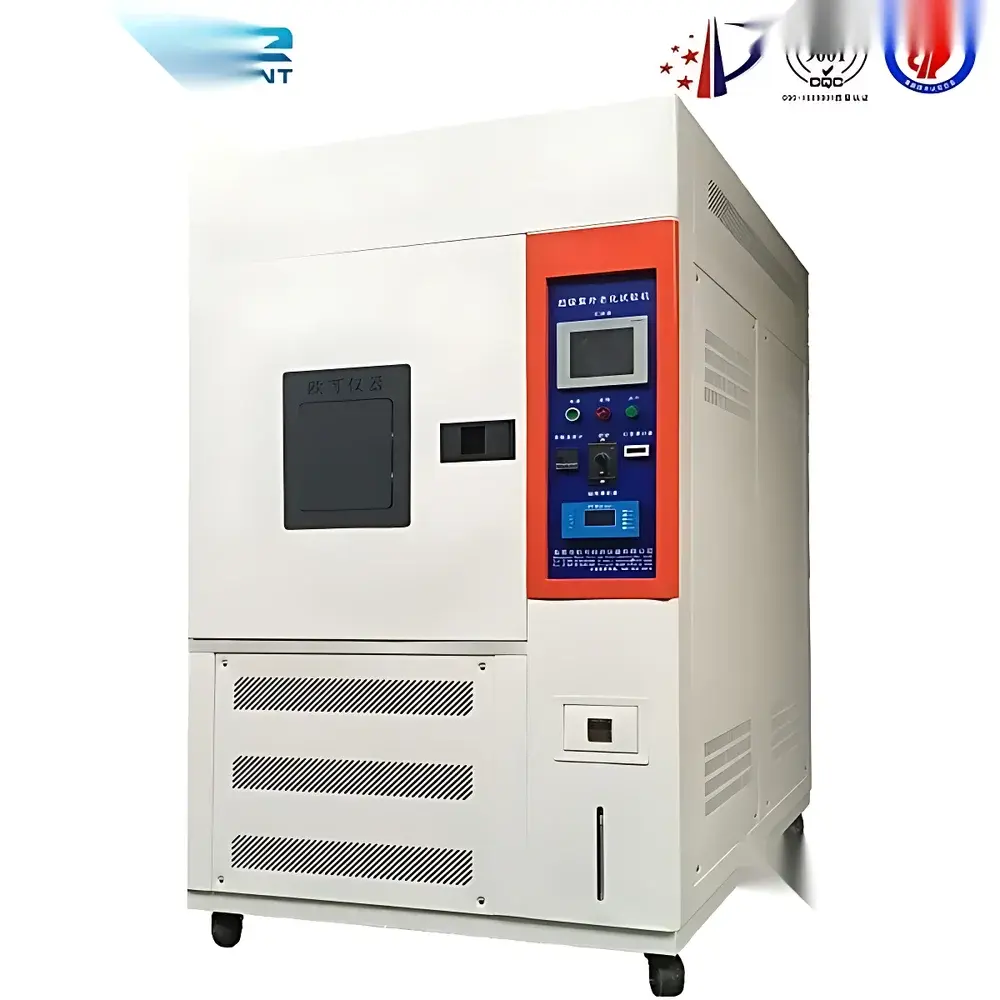
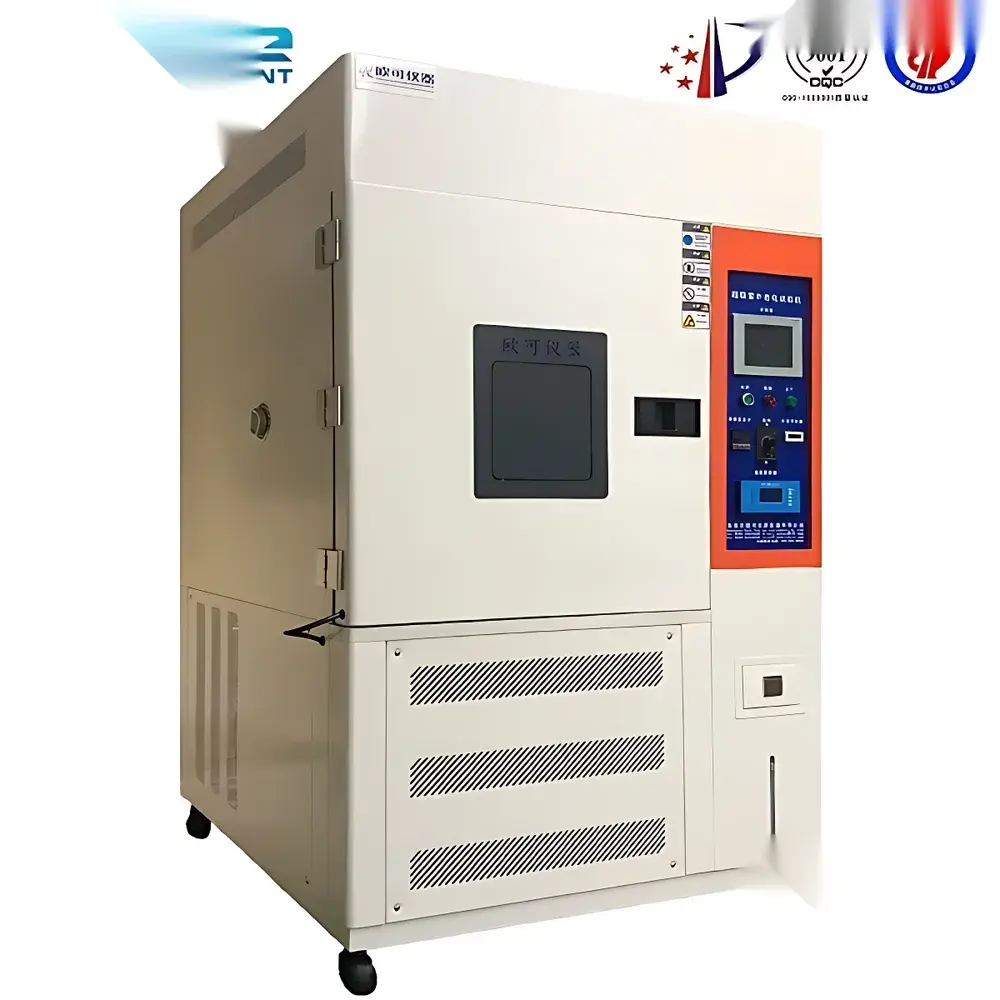
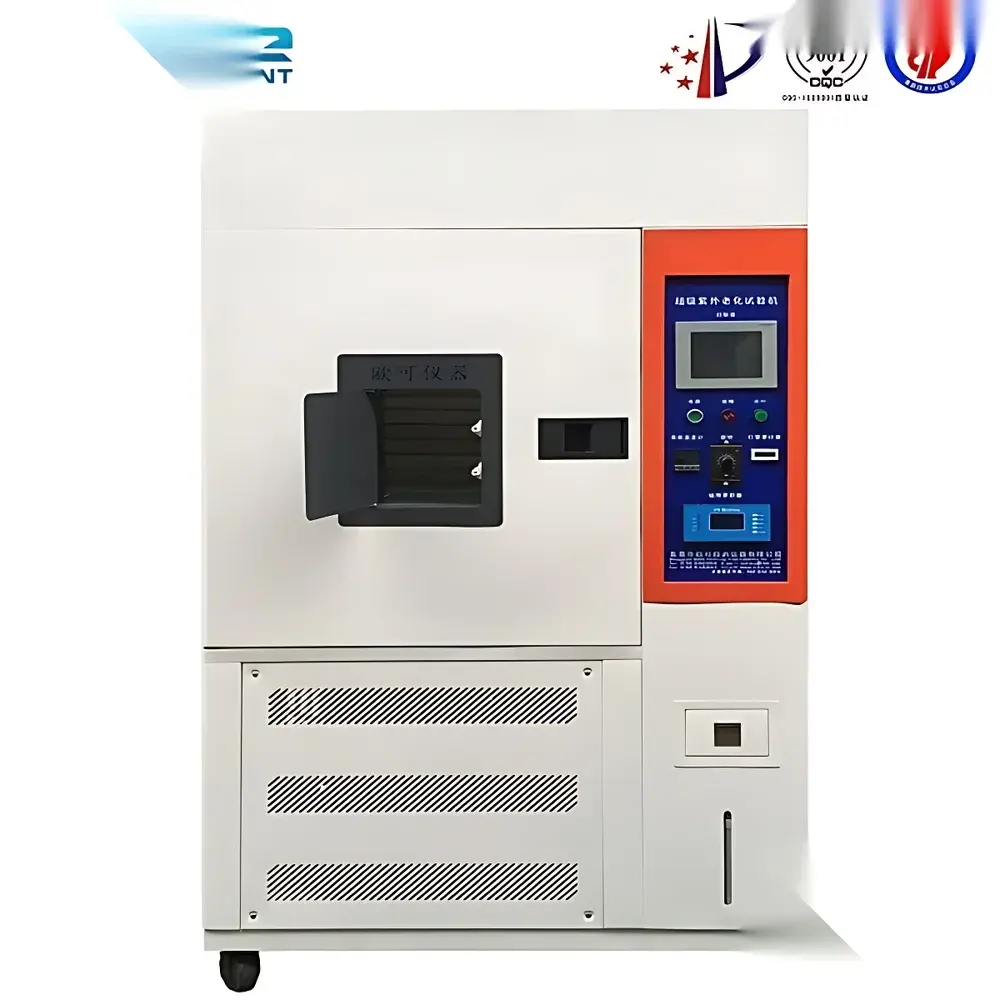
UV Weathering Test Chamber with Metal Halide Lamp – Super UV Climate Aging Tester
| Key | Brand: Other Brands |
|---|---|
| Origin | Imported |
| Manufacturer Type | Authorized Distributor |
| Temperature Range | RT to 85 °C (Operating Range: 50 ±10 °C) |
| Humidity Range | 40–70 % RH (Illuminated), 50–90 % RH (Dark Cycle) |
| Temp. Control Accuracy | ±0.5 °C |
| Humidity Control Accuracy | ±2.0 % RH |
| Temp. Uniformity | ±2.0 °C |
| Humidity Uniformity | ±3.0 % RH |
| Ramp-up Time (RT → 85 °C) | ≤25 min |
| Light Source | 2.5 kW Air-Cooled Metal Halide Lamp (1 unit) |
| Spectral Range | 295–450 nm |
| Irradiance | 200 ±8 W/m² (measured at sample plane) |
| Irradiance Uniformity | ≥90 % |
| Sample Tray Dimensions | 500 × 400 mm |
| Illumination Geometry | Top-mounted lamp with reflective direct irradiation |
| UV Sensor | Calibrated UV spectral irradiance transducer (developed by No. 622 Research Institute) |
Overview
The UV Weathering Test Chamber with Metal Halide Lamp – Super UV Climate Aging Tester is an engineered environmental simulation system designed for accelerated weathering evaluation of materials under controlled, reproducible conditions that replicate critical outdoor exposure factors: solar ultraviolet radiation, thermal cycling, and moisture-induced degradation. Unlike conventional fluorescent UV chambers limited to narrow UVA/UVB bands, this system employs a high-intensity, air-cooled metal halide lamp emitting a broad continuous spectrum from 295 nm to 450 nm — closely matching the relative spectral power distribution of terrestrial sunlight filtered through 3 mm of optical glass. This spectral fidelity enables realistic simulation of photodegradation mechanisms including polymer chain scission, photo-oxidation, pigment bleaching, and surface embrittlement. The chamber integrates synchronized temperature control, humidity modulation, and cyclic water spray or condensation phases to emulate diurnal and seasonal climatic stressors. It is calibrated and validated for compliance with international weathering test standards including ISO 4892-2 (Methods A and B), ASTM G155 (Xenon-Arc Exposure Apparatus), and SAE J2527 (Automotive Exterior Materials).
Key Features
- Broad-Spectrum Metal Halide Illumination: Single 2.5 kW air-cooled lamp delivering stable, spectrally relevant irradiance (200 ±8 W/m²) across 295–450 nm; spectral output verified against CIE standard solar reference data.
- Precision Dual-Parameter Environmental Control: Independent PID-regulated heating and humidification systems maintain temperature accuracy within ±0.5 °C and humidity accuracy within ±2.0 % RH across defined operational cycles.
- High Uniformity Performance: Achieves ≥90 % irradiance uniformity over the 500 × 400 mm sample plane and ±2.0 °C / ±3.0 % RH spatial uniformity throughout the working volume.
- Configurable Exposure Cycles: Programmable sequences combining UV irradiation, dark condensation (via bottom-mounted humidification pan), and optional water spray (simulating rain erosion), enabling full compliance with ISO 4892-2 Cycle 1–4 protocols.
- Traceable Irradiance Monitoring: Integrated UV spectral irradiance transducer (developed by China’s No. 622 Research Institute) provides real-time, NIST-traceable irradiance feedback for closed-loop control and audit-ready calibration records.
- Robust Structural Architecture: Stainless steel inner chamber with double-wall insulation, reinforced quartz-glass viewing window, and corrosion-resistant exterior finish suitable for long-term laboratory or QC facility deployment.
Sample Compatibility & Compliance
This chamber accommodates large-format specimens up to 500 × 400 mm, making it suitable for automotive body panels, solar module laminates, architectural glazing, composite structural components, and industrial electronics enclosures. Its design supports both flat-panel mounting and angled sample orientation per ASTM D4329 and ISO 4892-2 Annex A. All control parameters—including irradiance setpoint, temperature ramp profiles, humidity dwell times, and spray duration—are fully programmable and logged with timestamped metadata. The system architecture supports GLP-compliant operation: audit trails, user access levels, electronic signatures, and data integrity safeguards align with FDA 21 CFR Part 11 requirements when integrated with compliant LIMS or ELN platforms.
Software & Data Management
The embedded controller features a 7-inch TFT touchscreen HMI with intuitive menu navigation, multi-step program creation, and real-time graphical display of irradiance, temperature, and humidity trends. All operational data—including setpoints, actual values, alarm events, and sensor diagnostics—are stored internally for ≥30 days and exportable via USB or Ethernet (Modbus TCP). Optional PC-based software provides advanced analysis tools: spectral irradiance mapping, degradation rate calculation (e.g., ΔE*ab, gloss loss %, tensile strength retention), and automated report generation conforming to ISO 17025 documentation templates. Calibration certificates for UV sensor and temperature/humidity probes are supplied with each unit and include traceability to national metrology institutes.
Applications
- Accelerated aging validation of automotive exterior trim, headlights, paint systems, and PV module encapsulants per SAE J2527 and IEC 61215.
- UV stability assessment of architectural sealants, roofing membranes, and façade cladding materials per ASTM D4329 and EN 1297.
- Photostability testing of medical device housings, packaging films, and sterilization indicators under ISO 10993-12 guidance.
- Material qualification for aerospace interior components subjected to cabin UV exposure (SAE ARP4754A).
- Research into polymer photodegradation kinetics, antioxidant efficacy, and UV stabilizer performance in academic and industrial R&D laboratories.
FAQ
What spectral standard does the metal halide lamp emulate?
It replicates the relative spectral irradiance distribution of global solar radiation transmitted through 3 mm borosilicate glass, as defined in ISO 4892-2 Annex B and CIE Publication No. 85.
Can the chamber operate without water spray or condensation cycles?
Yes — all environmental modules (UV, heat, humidity, spray) are independently controllable, allowing pure UV-only, thermal-only, or custom hybrid test profiles.
Is irradiance recalibration required, and how often?
The UV sensor requires annual recalibration using a certified reference radiometer; calibration interval may be extended to 18 months under documented stable operating conditions per ISO/IEC 17025.
Does the system support remote monitoring and control?
Standard Ethernet connectivity enables integration with building management systems (BMS) or centralized lab monitoring platforms via Modbus TCP or HTTP API.
What safety interlocks are implemented?
Dual redundant door switches, UV lamp overtemperature cutoff, chamber overpressure relief, and emergency stop circuitry comply with IEC 61000-6-2 EMC and IEC 61010-1 safety standards.



