
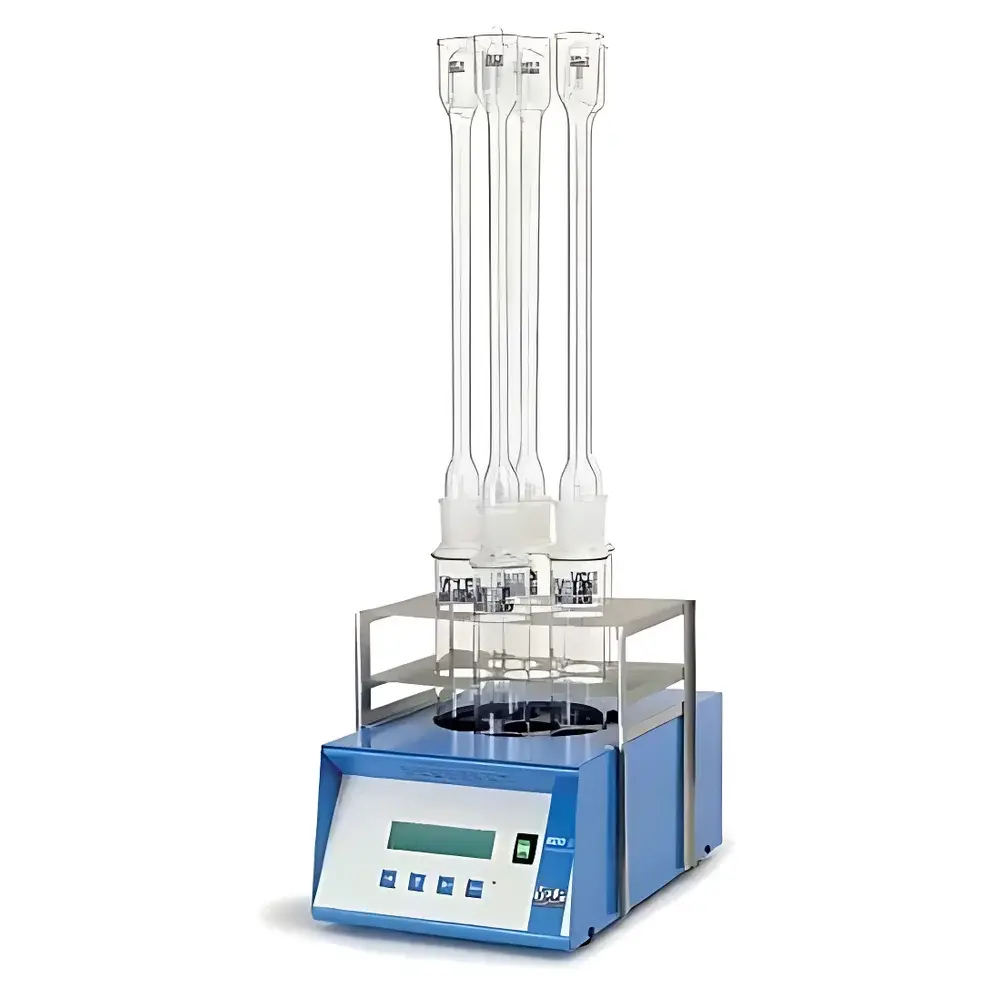
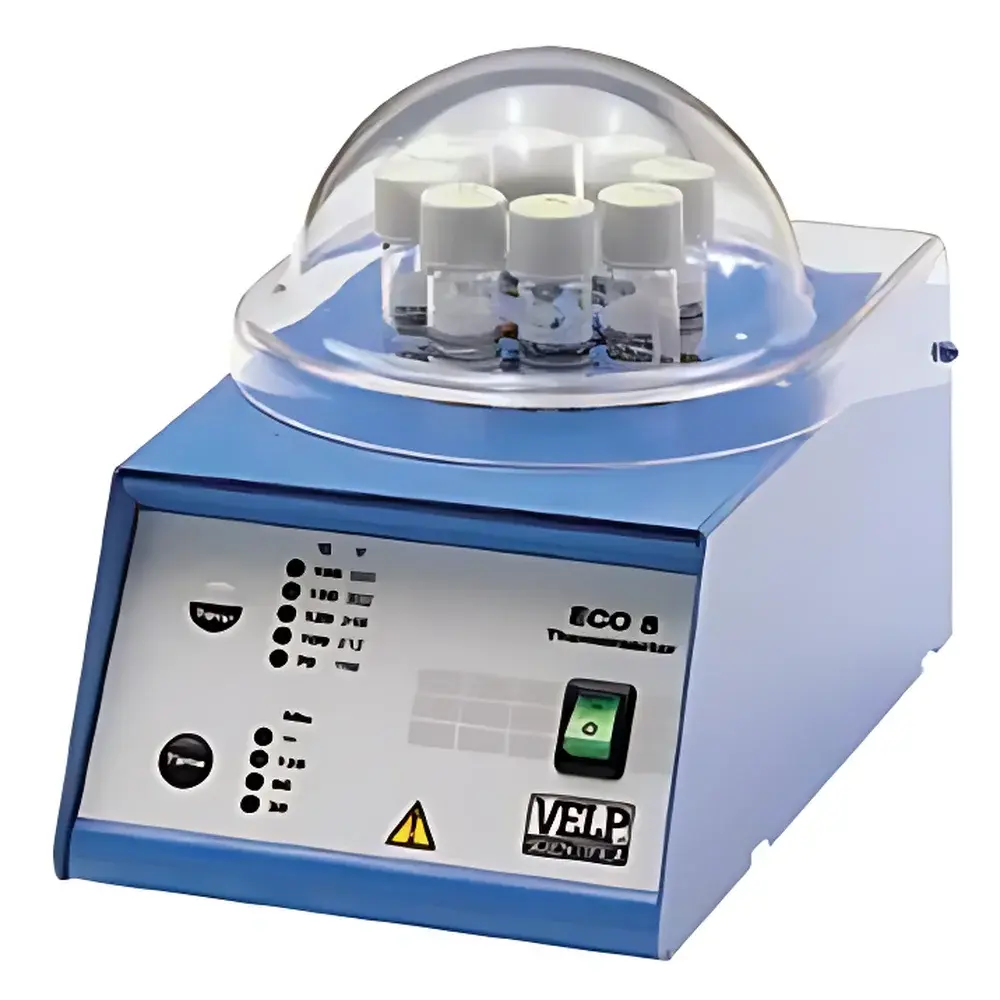
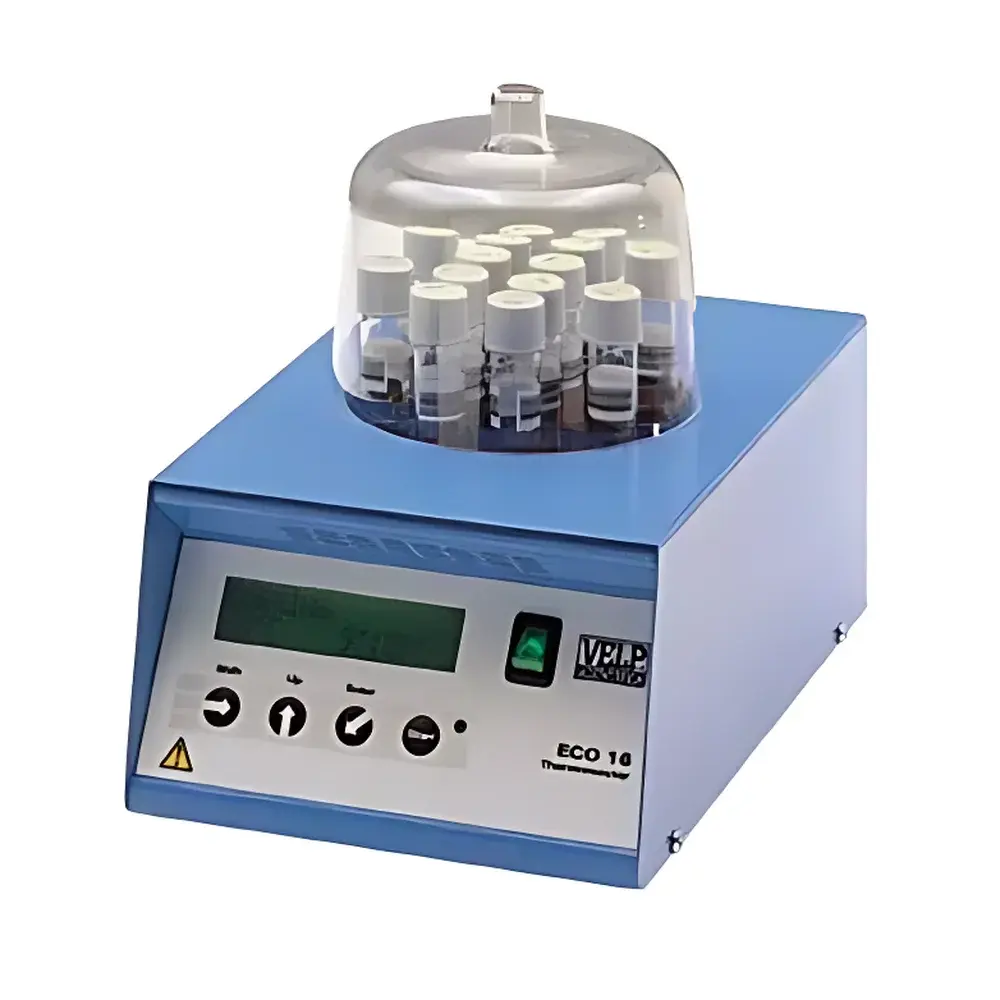
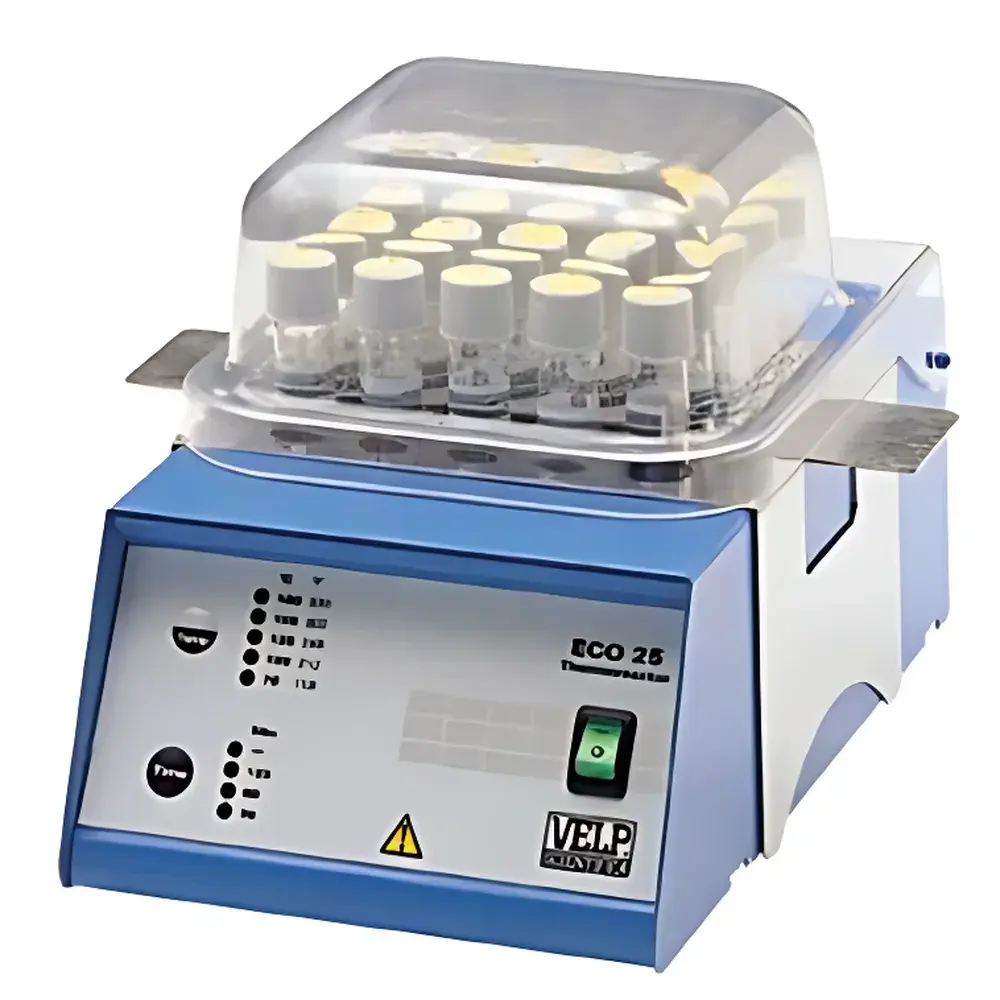
VELP ECO Series Chemical Oxygen Demand (COD) Digestion Block
| Brand | VELP |
|---|---|
| Origin | Italy |
| Model | ECO |
| Instrument Type | Laboratory Digestion Block |
| Digestion Principle | Standard 2-hour Closed-Vessel Oxidation (DIN 38409-H41, ISO 6060, APHA 5220C) |
| Temperature Range | Ambient to 200 °C |
| Thermal Stability | ±0.5 °C (ECO 6/16), ±0.3 °C (ECO 8/25) at 150 °C |
| Heating Time Programmable | 0–199 min |
| Sample Volume Capacity | Up to 200 mL per vial (ECO 6) |
| Batch Capacity | 6 / 8 / 16 / 25 positions |
| Construction | Powder-coated steel housing with chemical-resistant epoxy finish |
| Safety Features | Dual independent overtemperature protection, auto-shutdown on cycle completion, audible end-of-cycle alarm |
| Compliance | Designed for use with EPA Method 410.4, ISO 6060, and DIN 38409-H41 workflows |
Overview
The VELP ECO Series Chemical Oxygen Demand (COD) Digestion Block is a precision-engineered laboratory digestion system designed for reproducible, high-throughput sample preparation in accordance with internationally recognized standard methods—including ISO 6060, DIN 38409-H41, and EPA Method 410.4. Unlike open-reflux or manual hotplate-based digestion, the ECO series employs a microprocessor-controlled, thermostatically regulated heating block that ensures uniform thermal distribution across all digestion positions. Each unit operates via closed-vessel digestion using potassium dichromate (K₂Cr₂O₇) in concentrated sulfuric acid under reflux conditions, enabling complete oxidation of organic matter within a strictly defined 2-hour timeframe. The system’s core function is not direct COD quantification—no photometric or electrochemical detection is integrated—but rather standardized, traceable sample conditioning prior to spectrophotometric or titrimetric analysis. Its architecture supports both routine wastewater monitoring and rigorous environmental compliance testing where method adherence, inter-laboratory reproducibility, and reagent conservation are critical.
Key Features
- Microprocessor-based digital temperature control with real-time display and programmable ramp/soak profiles
- Four modular configurations (ECO 6, ECO 8, ECO 16, ECO 25) to match lab throughput requirements without compromising thermal homogeneity
- High-stability heating elements with dual-stage overtemperature cutoff (mechanical + electronic) certified to IEC 61010-1 safety standards
- Epoxy-powder-coated steel chassis engineered for long-term resistance to H₂SO₄ fumes, Cr(VI) aerosols, and repeated thermal cycling
- Programmable digestion duration (0–199 minutes) and temperature setpoint (ambient to 200 °C) with ±0.3 °C stability at 150 °C (ECO 8/25 models)
- Auto-cycle termination with audible alarm and power-down sequence to prevent post-digestion degradation or evaporation loss
- Integrated support for 200 mL digestion vials (ECO 6); compatible with standard borosilicate glass or PTFE-lined reactors used in accredited COD labs
Sample Compatibility & Compliance
The ECO Digestion Block accommodates a broad spectrum of aqueous and semi-solid matrices beyond municipal and industrial wastewater—including digested sludge, leachates, agricultural runoff, soil extracts, and pretreated biological samples. Its thermal robustness also permits controlled wet digestion of solid environmental specimens (e.g., sediments, plant tissues, feedstuffs) for subsequent elemental analysis (ICP-OES, AAS). All ECO models are validated for use in laboratories operating under ISO/IEC 17025 quality management systems. The instrument supports full auditability when paired with documented SOPs, calibration logs, and operator training records—key prerequisites for GLP-compliant environmental testing and regulatory submissions to agencies such as the U.S. EPA, EU Water Framework Directive bodies, and national accreditation boards.
Software & Data Management
While the ECO series operates as a standalone hardware platform without embedded data logging or PC connectivity, it is fully compatible with external laboratory information management systems (LIMS) and electronic lab notebooks (ELN) through standardized operator documentation protocols. Each unit ships with printed reference methods (including step-by-step COD digestion protocols aligned with ISO 6060 Annex A), calibration certificates for temperature sensors (traceable to NIST or PTB standards), and maintenance logs compliant with 21 CFR Part 11 expectations when manually recorded and signed. For labs requiring automated data capture, optional third-party USB temperature loggers (e.g., HOBO UX100-003) may be deployed alongside the ECO block to record time-temperature profiles per batch—enabling full traceability for QA/QC review and internal audits.
Applications
- Routine COD determination in wastewater treatment plants (influent, effluent, sludge liquor)
- Environmental impact assessments requiring standardized organic load quantification
- Research studies on biodegradability kinetics and oxidation efficiency of novel treatment processes
- Pretreatment of heterogeneous environmental solids prior to heavy metal or nutrient extraction (e.g., total Kjeldahl nitrogen, phosphorus, Cu, Zn, Pb)
- Method validation and interlaboratory comparison exercises under ISO 5725 guidelines
- Training platforms for analytical chemistry curricula emphasizing standard method fidelity and thermal process control
FAQ
Does the ECO system include a spectrophotometer or titrator for COD quantification?
No. The ECO is a dedicated digestion block only. Post-digestion analysis must be performed using an external UV-Vis spectrophotometer (e.g., at 600 nm for dichromate reduction) or standardized titration setup.
Can the ECO be used for Total Organic Carbon (TOC) sample preparation?
Not directly. TOC requires high-temperature catalytic combustion (680–900 °C) or persulfate UV oxidation—processes outside the ECO’s operational envelope. It is strictly intended for dichromate-based COD digestion.
Is the temperature calibration traceable to national metrology institutes?
Yes. Each unit includes a factory calibration certificate referencing either NIST (USA), PTB (Germany), or INRIM (Italy), with uncertainty budgets provided upon request.
What maintenance is required to ensure long-term thermal accuracy?
Annual verification of temperature uniformity across all wells using a calibrated reference thermometer (e.g., Fluke 1523) is recommended. No user-serviceable components require replacement under normal operation.
Are spare parts and consumables available globally?
Yes. VELP-certified digestion vials, silicone gaskets, and replacement heating elements are distributed through authorized partners in over 80 countries, with lead times under 10 business days for standard items.
Related Products







