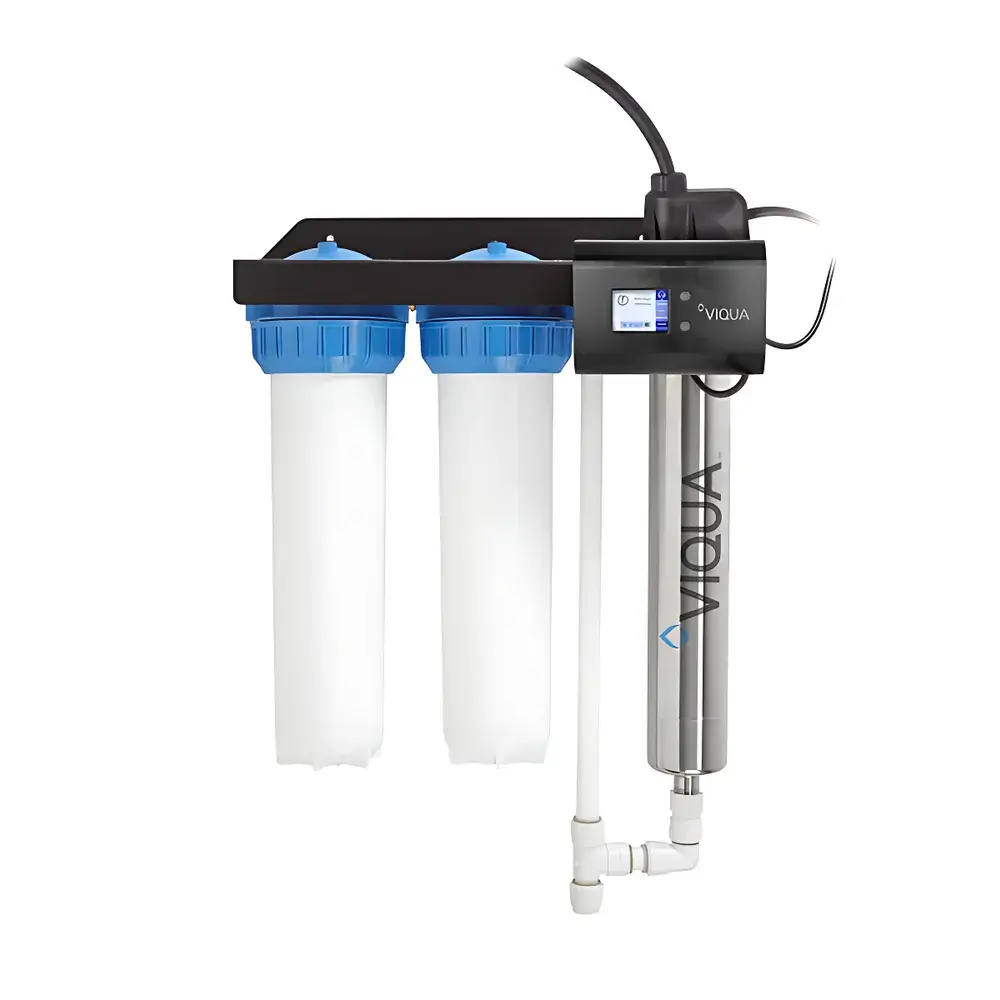
Viqua IHS22-E4 Ultraviolet Water Disinfection System
| Brand | Viqua |
|---|---|
| Origin | Imported |
| Manufacturer Type | Authorized Distributor |
| Model | IHS22-E4 |
| Pricing | Available Upon Request |
Overview
The Viqua IHS22-E4 Ultraviolet Water Disinfection System is an NSF/ANSI 55 Class A certified, low-pressure, high-output UV disinfection unit engineered for continuous, chemical-free microbial inactivation in point-of-entry (POE) applications. Operating at 254 nm — the peak germicidal wavelength for DNA/RNA absorption — the system delivers validated log-reduction performance against bacteria (e.g., E. coli, Legionella pneumophila), viruses (including adenovirus and norovirus surrogates), and protozoan cysts (e.g., Cryptosporidium parvum, Giardia lamblia) without altering water chemistry, taste, odor, or pH. Its stainless steel 304 reactor chamber, quartz sleeve-protected amalgam lamp, and integrated UV intensity sensor ensure stable output across variable flow rates (up to 22 GPM / 83.3 L/min) and inlet water conditions meeting minimum UVT ≥ 75% at 254 nm.
Key Features
- NSF/ANSI 55 Class A certification for microbiological reduction in municipally treated water with supplemental disinfection requirements
- Amalgam UV lamp delivering consistent 30,000-hour service life and stable output across ambient temperatures from 1°C to 40°C
- Real-time UV intensity monitoring via calibrated photodiode sensor with automatic alarm output upon intensity decay below setpoint (typically ≥ 40 mJ/cm² delivered dose)
- Stainless steel 304 reactor body with polished interior surface to minimize biofilm adhesion and facilitate cleaning
- Digital control panel with LED display showing operational status, lamp hours, UV intensity (% of nominal), and fault codes
- Optional data logging module supports time-stamped event recording (lamp on/off, intensity alerts, sensor faults) compliant with GLP audit trails
- CE-marked and RoHS-compliant; designed to meet IEC 60335-1 and IEC 62040-1 safety standards
Sample Compatibility & Compliance
The IHS22-E4 is intended for use with pre-filtered, chlorine-resistant potable water supplies where turbidity ≤ 1 NTU, total iron ≤ 0.3 ppm, manganese ≤ 0.05 ppm, hardness ≤ 7 gpg, and UVT ≥ 75% at 254 nm are maintained upstream. It is not designed for untreated surface water, groundwater with high iron/manganese, or water containing UV-absorbing organics without prior pretreatment (e.g., activated carbon, sediment filtration). The system complies with NSF/ANSI 55 Class A requirements for pathogen inactivation, and its electrical architecture conforms to UL 61010-1 and CSA C22.2 No. 61010-1 for laboratory and commercial equipment safety. Documentation includes full test reports per NSF Protocol P231 for microorganism validation.
Software & Data Management
While the base IHS22-E4 operates as a standalone hardware unit, optional RS-485 Modbus RTU or 4–20 mA analog outputs enable integration into building management systems (BMS) or SCADA platforms. When equipped with the Viqua DataLogger Module (sold separately), the system records timestamped operational parameters including cumulative lamp runtime, average UV intensity, alarm events, and power interruptions — all exportable via USB to CSV format for regulatory review. Audit logs retain ≥ 90 days of history and support FDA 21 CFR Part 11–aligned user access controls when deployed in GMP-regulated environments such as pharmaceutical facility utilities or hospital central sterile supply departments.
Applications
This system serves as a primary or secondary barrier in diverse institutional water systems: municipal water polishing for healthcare facilities (operating rooms, dialysis units, dental chairs), hospitality properties (hotel guestroom POE, kitchen prep sinks), foodservice operations (restaurants, cafeterias, beverage dispensers), educational campuses (dormitory loops, science lab sinks), recreational venues (water parks, aquatic centers), and commercial office buildings. It is frequently specified in LEED v4.1 Water Efficiency credits and aligns with ASHRAE Guideline 12–2020 for controlling Legionella in building water systems.
FAQ
What is the required pretreatment for optimal UV performance?
Pre-filtration to ≤ 5 µm and removal of iron, manganese, and hardness ions are mandatory. Turbidity must remain ≤ 1 NTU; UVT must be ≥ 75% at 254 nm.
Does the IHS22-E4 remove lead or heavy metals?
No. UV irradiation does not remove dissolved metals, chlorine, or chemical contaminants. It is strictly a microbiological control technology. Lead and heavy metal removal requires ion exchange, reverse osmosis, or activated carbon filtration upstream.
Is annual lamp replacement sufficient for compliance?
Lamp replacement is recommended every 12 months or after 9,000 hours of operation — whichever occurs first — but dose verification via UV sensor calibration and third-party bioassay testing (e.g., using MS2 coliphage) is required semiannually per NSF/ANSI 55 and CDC Guidelines for Environmental Infection Control.
Can this unit be installed vertically or horizontally?
Yes. The IHS22-E4 supports both orientations; however, horizontal installation requires unobstructed top access for quartz sleeve maintenance and lamp replacement per manufacturer’s service manual.
Is remote monitoring supported out of the box?
Standard configuration includes local visual indicators only. Remote monitoring requires optional communication modules and integration with external SCADA or BMS infrastructure.